Suro Tomb, Royal burial site in South Gyeongsang, South Korea.
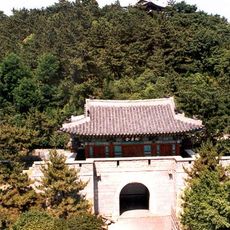
Suro Tomb, called Nangneung, is a circular earthen mound 5 m high in Gimhae, South Gyeongsang. Its grounds hold the Sungseonjeon shrine, the Anhyanggak, Jeonsacheong, Jegigo, Nangneung main gate, Sungjae, Dongjae, Seojae, Sindobigak, hongsalmun and Sunghwamun gates, plus a stele, civil and military stone figures, and a mayanghoseok. A 1647 stele reads "Tomb of King Suro, founder of Garak-guk".
Suro (reigned 42–199) is credited as founder of Garak, or Geumgwan Gaya, and ancestor of the Gimhae Kim clan; his story is told in the Garakgukgi section of the Samguk Yusa. The tomb's construction date is unknown. It was protected by stone markers under Sejong, and in 1580 the descendant Heo Su carried out major repairs. In 1884 King Gojong renamed the shrine Sungseonjeon and restored the tomb and its buildings.
The tomb is called Nangneung, and every autumn the Chunghyang Daeje memorial rite is held here. In front of the Nangneung main gate stand two carved fish facing each other around a central stone monument in Indian style, a reference to Queen Heo Hwang-ok, who according to the Samguk Yusa came from India.
The site has walking paths that allow visitors to explore the mound and surrounding areas at their own pace. Wearing comfortable shoes is important since you will be walking on uneven terrain around the burial mound.
The tomb's stone stele, erected in 1647, bears the inscription "Tomb of King Suro, founder of the state of Karak-kuk." At the Nangneung main gate, two carved fish face each other around a central stone monument in Indian style, a reference to Queen Heo Hwang-ok, who according to the Samguk Yusa came from India.
The community of curious travelers
AroundUs brings together thousands of curated places, local tips, and hidden gems, enriched daily by 94,678 contributors worldwide.