Gwangmyeong Cave, Underground tourist complex in Gwangmyeong, South Korea.
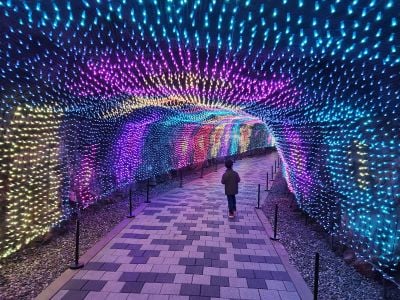
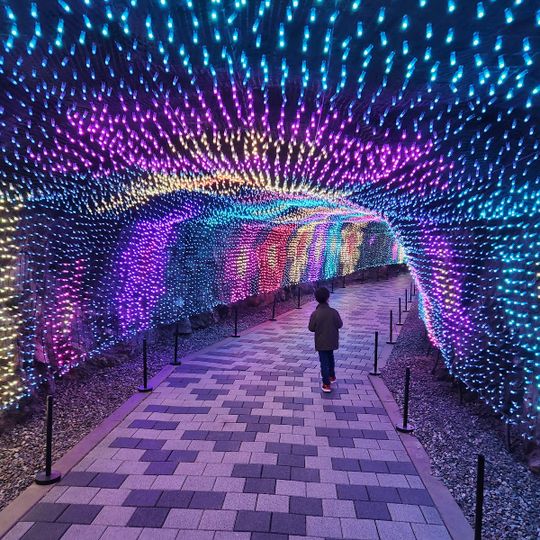
Gwangmyeong Cave is a man-made tunnel system in Gahak-dong, Gwangmyeong, carved into Gahak Mine, which operated from 1912 to 1972. Its 7.8 km of passages descend through seven levels and include an underground lake, a golden waterfall, an aquarium, a wine cave, and a 41-metre-long dragon sculpture. The former mining tunnels now hold exhibition halls and light installations.
The first record of the mine dates to 1903, when Siheung Mine was established at Gahak-ri; in 1912 it was registered under the name of Kobayashi Touemon during Japanese colonial rule. About 500 miners worked there at its peak, and from 1955 to its closure in 1972 it yielded 52 kg of gold. Flooding and pollution of nearby rice paddies forced the mine to shut, and from 1978 to 2010 the tunnels stored salted shrimp before Gwangmyeong city bought the site and reopened it in 2011.
The Arts Center within the complex uses natural rock formations as a backdrop for concerts and multimedia performances. This cultural function transforms the space into a venue where visitors experience art against the cave's natural architecture.
The underground environment maintains a constant temperature around 12 to 13 degrees Celsius year-round, so visitors should bring warm clothing regardless of outdoor weather conditions. Comfortable walking shoes are advisable since you will be navigating through tunnels and over uneven surfaces during your visit.
The cave holds a 41-metre-long, 800-kilogram dragon sculpture billed as the largest in South Korea, shown alongside life-size Gollum and Gandalf figures made by Weta Workshop, the New Zealand studio behind The Lord of the Rings. The tunnels also retain the ore-sorting yard outside, where stone plant walls and concrete machine foundations remain.
The community of curious travelers
AroundUs brings together thousands of curated places, local tips, and hidden gems, enriched daily by 93,469 contributors worldwide.