Jinju Fortress, Stone fortress in Jinju, South Korea
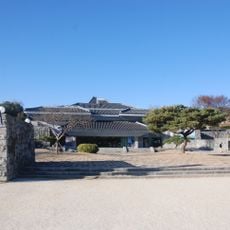
Jinju Fortress is a stone-walled complex on elevated ground above the Nam River, with defensive towers, gates, and command structures. Inside the fortress grounds stands a museum displaying exhibits on regional history, military tactics, and local art collections.
Jinju Fortress began as an earthen wall and was rebuilt in stone in 1379 under magistrate Kim Jung-gwang to repel Japanese pirates. In 1592, during the Imjin War, Kim Si-min led 3,800 soldiers and about 1,000 militia to defeat a Japanese force of some 30,000 in the First Battle of Jinju. The following year, 1593, a Japanese army of 100,000 took the fortress, and around 70,000 defenders and civilians died.
The shrine for Nongae within the fortress walls is where visitors pay respects to a woman who sacrificed herself during an invasion. The memorial shows how deeply this historical figure remains woven into local identity.
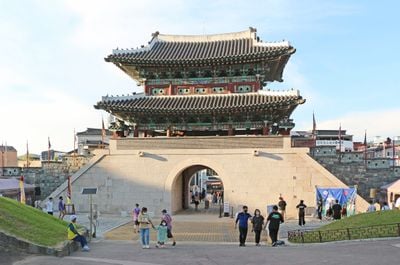
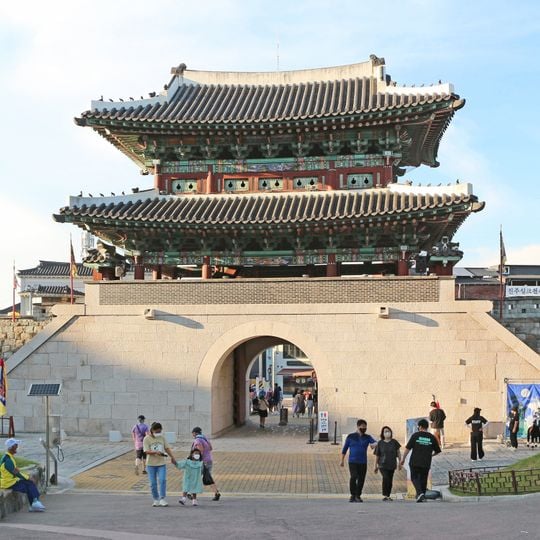
The main entrance is Chokseongmun, the gate with the arched stone passage and two-tiered wooden pavilion; passing through it, Chokseongnu pavilion stands directly ahead. The rear gate, Gongbukmun, was rebuilt in 2002. The walls run about 1,760 m along the Nam River, and the grounds hold the National Jinju Museum, opened in 1984, plus the Uiam rock and Uigisa shrine behind the pavilion.
Each year the fortress becomes a gathering place during a lantern festival when thousands of glowing lanterns illuminate the river. Visitors can taste local foods and try traditional games that echo life in the old fortress.
The community of curious travelers
AroundUs brings together thousands of curated places, local tips, and hidden gems, enriched daily by 93,468 contributors worldwide.