Red Mosque, Oral, Islamic mosque in Oral, Kazakhstan
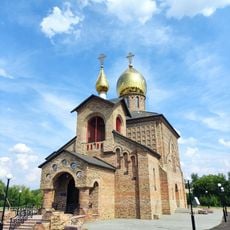
The Red Mosque in Oral is a two-storey mosque built of red brick in the Tatar Quarter, with wooden floors, ceilings and roof trusses under a slate roof. Its upper windows are tall and semicircular, the high cornice is decorated with dentils, and the building stands at an angle to neighbouring houses because it faces Mecca.
Built in 1871 in the Tatar Quarter of Oral, it was the city's third mosque and its first of brick. From 1877 the Cairo-trained preacher Mutigulla Tukhvatullin served as imam, founding the Mutigia madrasa where the poet Gabdulla Tukay studied from 1895 to 1907. Closed in the 1920s and stripped of its minaret, it was restored in 2005-2006 and reopened on 28 August 2006, then renamed after its last repressed imam, Mukhametgarif Tulbayev.
The mosque is known as the Red Mosque (Tatar: Kyzyl mäçet) for its red brick walls, and since 2006 it has officially borne the name of its last imam, Mukhammedgarif Tulbayev, who was repressed. Its madrasa, where the Tatar poet Gabdulla Tukay studied from 1895 to 1907, is remembered in Oral's Tatar community, and the mosque has been part of the city's Gabdulla Tukay Museum since 2006.
Visitors should approach with respect, removing shoes before entering and wearing modest clothing appropriate for a prayer space. The building is located in central Oral and easy to find by its distinctive appearance, making a quiet arrival preferable.
The mosque stands at an angle to the surrounding houses because it is oriented toward Mecca. Its walls are of red brick, while the floors, ceilings, roof trusses and coverings are wooden, and the roof is slate. The name Red Mosque comes from the brick.
The community of curious travelers
AroundUs brings together thousands of curated places, local tips, and hidden gems, enriched daily by 94,255 contributors worldwide.