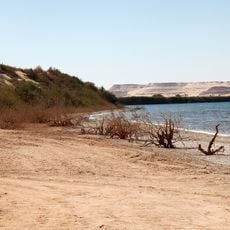
Great Manmade River, Aqueduct network in the Sahara, Libya
The Great Manmade River is a network of pre-stressed concrete cylinder pipes, each 4 m in diameter and 7 m long, buried beneath the Libyan Sahara to carry water from the Nubian Sandstone Aquifer System to the Mediterranean coast. More than 1,300 wells, most over 500 m deep, feed a system of over 2,820 km of pipes and aqueducts. In open stretches the line appears as a thin pale ridge crossing red and dark red irrigated fields and crimson circular plots, linking to small white angular structures.
Construction began in the eighties with the goal of bringing water from the south to the Mediterranean coast. The first phase opened in the early nineties and initially supplied the Benghazi region with fresh water.
The network supplies more than two thirds of Libya's population with drinking water, fundamentally changing daily life in cities and rural areas. People can now live and work in places where this would have been impossible before due to water scarcity.
The system lies entirely underground and is mostly invisible at the surface. In some places, pumping stations and pipelines mark the route of the underground waterway through the desert.
The pipes transport water from aquifers that formed during the last ice age and are thousands of years old. This water does not recharge through rainfall, meaning the system uses a limited resource.
The community of curious travelers
AroundUs brings together thousands of curated places, local tips, and hidden gems, enriched daily by 93,454 contributors worldwide.