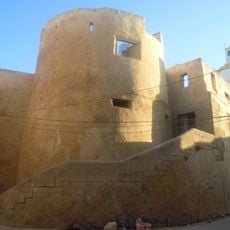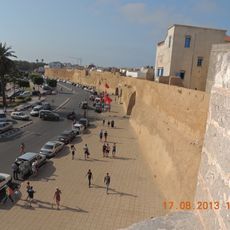
Portuguese cistern, Portuguese water reservoir in El Jadida, Morocco.
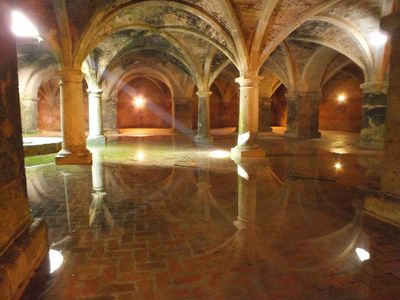
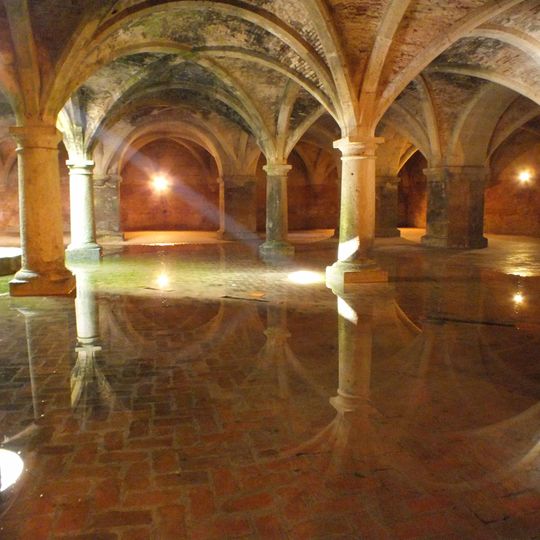
The Portuguese cistern is an underground water chamber beneath Mazagan fortress featuring five rows of stone columns supporting a vaulted ceiling, with a central opening allowing daylight to enter. The structure maintains a constant water level that creates mirror-like reflections across the stone floor.
The cistern was completed in 1514 under architect Miguel de Arruda and initially served as an armory before being converted into a water storage facility. This transformation shows how the Portuguese adapted their fortification to meet changing needs over time.
The underground space reflects Portuguese influence through its late Gothic Manueline style, blended with local building traditions that developed during the colonial period. This mixing of architectural approaches remains visible in how the structure was designed and built.
The location is situated beneath the fortress and requires descending into an underground space that maintains the same temperature year-round. Visitors should expect dim lighting and humid air when exploring this subterranean chamber.
Filmmaker Orson Welles selected this location in 1952 for scenes in his film adaptation of Shakespeare's Othello because of its distinctive architectural character. The subterranean setting gave the scenes a theatrical quality that matched the vision of the renowned director.
The community of curious travelers
AroundUs brings together thousands of curated places, local tips, and hidden gems, enriched daily by 92,891 contributors worldwide.