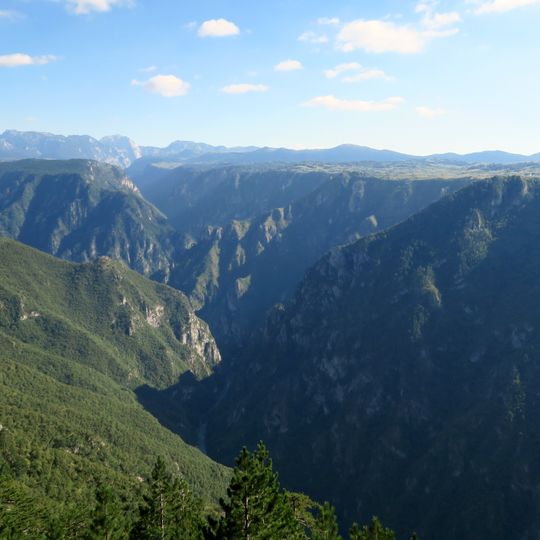
Tara River Canyon, River canyon in Durmitor National Park, Montenegro and Bosnia and Herzegovina
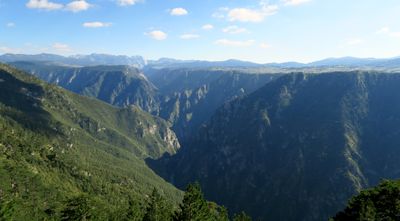
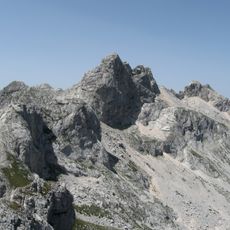
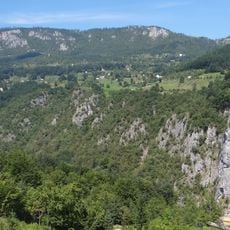
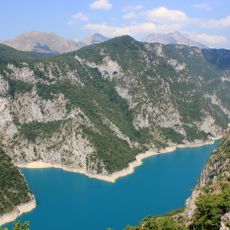
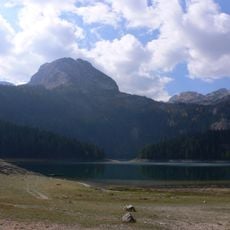
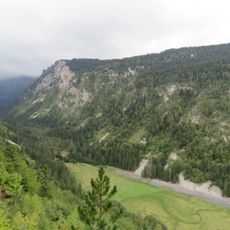
The Tara River Canyon cuts through the landscape for roughly 82 kilometers with limestone walls rising to depths of 1,300 meters. The river carves a path through these stone formations, creating a system of pools, rapids, and narrow passages that shape the entire waterway.
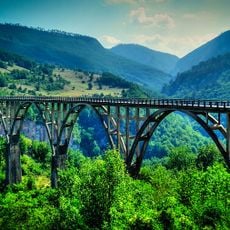
The canyon's protection began in 1937, when the Đurđevića Bridge was built across it and long remained the only road linking southern and northern Montenegro. In 1977 the Tara gorge entered UNESCO's Man and the Biosphere programme as a biosphere reserve. Durmitor National Park, which contains the canyon, became a UNESCO World Heritage Site, and Bosnia and Herzegovina later designated its stretch the Tara Nature Park.
The canyon's name comes from the Tara, whose clear water earned the gorge the nickname "The Tear of Europe." The river and the Drina it feeds are Europe's main spawning ground for the huchen, a large salmonid that local anglers prize. Rafting has been part of life here since the Brštanovica–Sćepan Polje route was established, and the European Rafting Championships used the Tara in 2009.
The one-day rafting route runs 14 km from Brštanovica to Sćepan Polje, with 22 of the 55 rapids in that stretch and the steepest drop in elevation. The longer route covers 60 km, passing the Ljutica waterfalls and beneath the 541-foot Đurđevića Bridge. Whitewater is category 2 to 4; the deepest point lies under Obzir, best seen from the Bajlovića Sige springs.
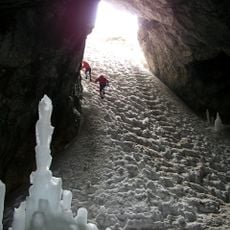
The canyon holds more than 80 caves of varying sizes, from small alcoves to large underground chambers carved into the rock walls. These hidden caverns reveal the complex geological story of the place and offer a glimpse into underground landscapes that few travelers discover.
The community of curious travelers
AroundUs brings together thousands of curated places, local tips, and hidden gems, enriched daily by 94,688 contributors worldwide.