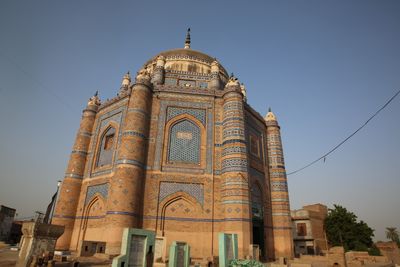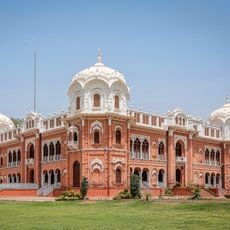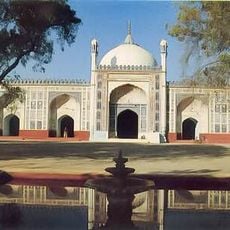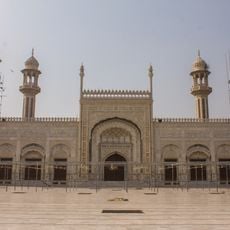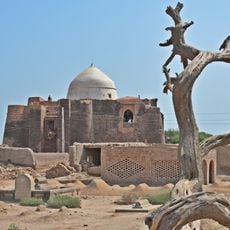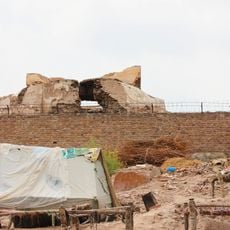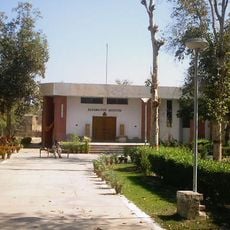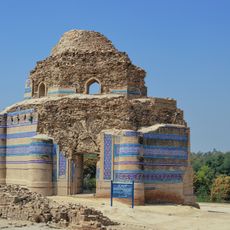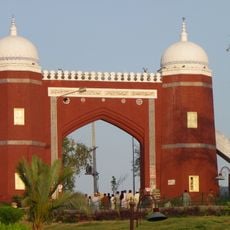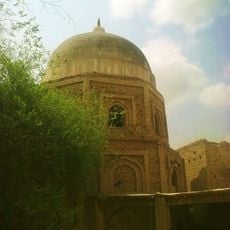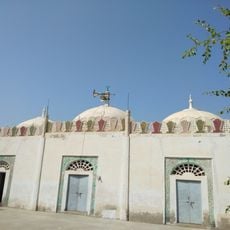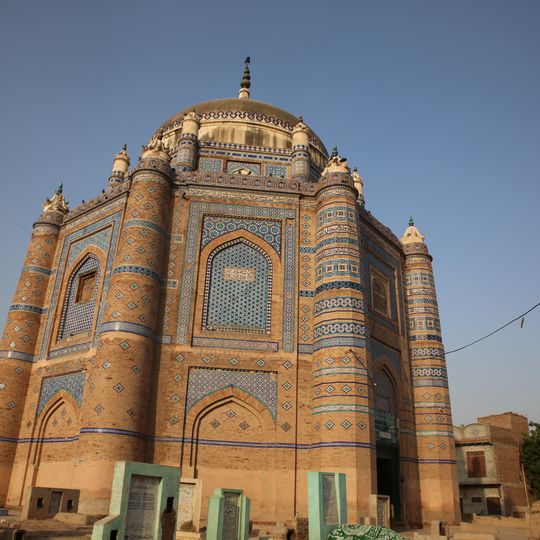
Tomb of Shah Ali Akbar, Islamic tomb in Suraj Miani, Multan, Pakistan
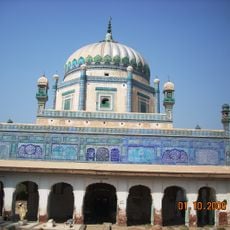
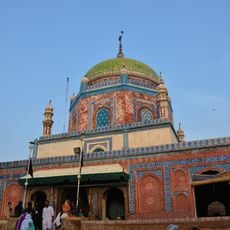
The tomb features an octagonal structure with tapering towers and domes that blend Tughluq architectural style with detailed tilework and plasterwork. The building showcases multiple levels and architectural elements typical of religious structures from this period.
The tomb was built in 1585 under the commission of Shah Ali Akbar, a direct descendant of Shamsuddin Sabzwari who spread Ismaili Islam throughout South Asia. The construction represented an important religious statement by this influential family in the region.
The walls display plaster work and painted designs that reflect artistic techniques from Emperor Akbar's time. Visitors can observe how craftspeople decorated religious spaces with detailed hand-applied ornamentation.
The tomb sits near several other religious monuments in Multan, making it easy to visit multiple sites during one trip. The location in the historic area allows visitors to walk between different structures comfortably.
Two architects from Lahore, Ibrahim and Rajab (sons of Musa), brought innovative plastering techniques to the project that had not been used in Multan before. Their craftsmanship remains visible in the carefully shaped surfaces throughout the structure.
The community of curious travelers
AroundUs brings together thousands of curated places, local tips, and hidden gems, enriched daily by 92,599 contributors worldwide.