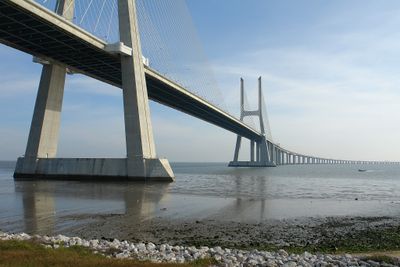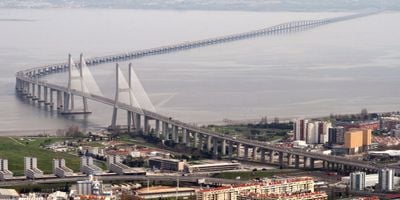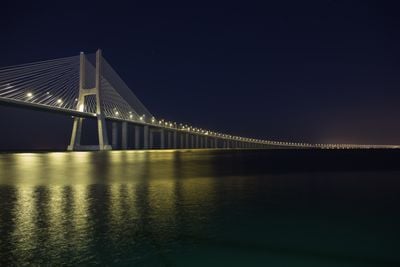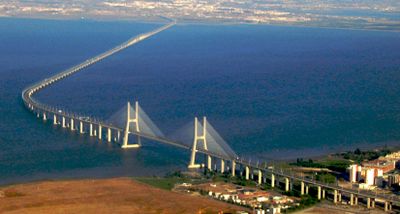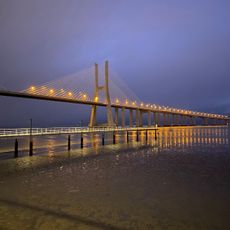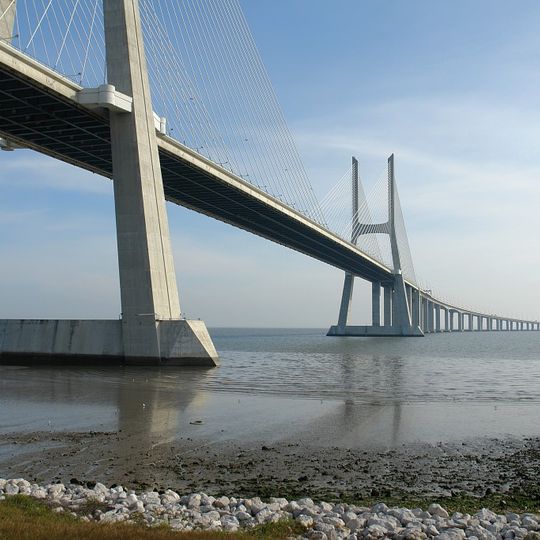
Vasco da Gama Bridge, Cable-stayed bridge across Tagus River in Lisbon, Portugal.
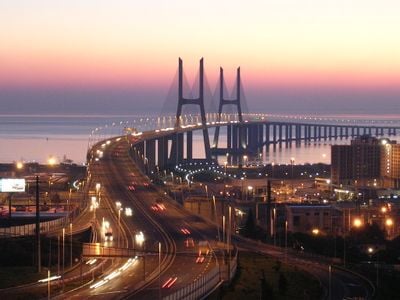
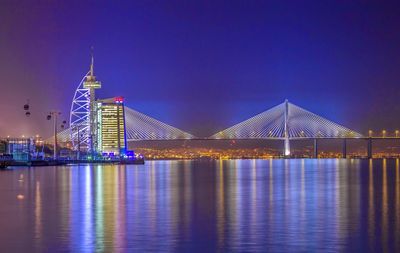
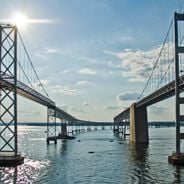
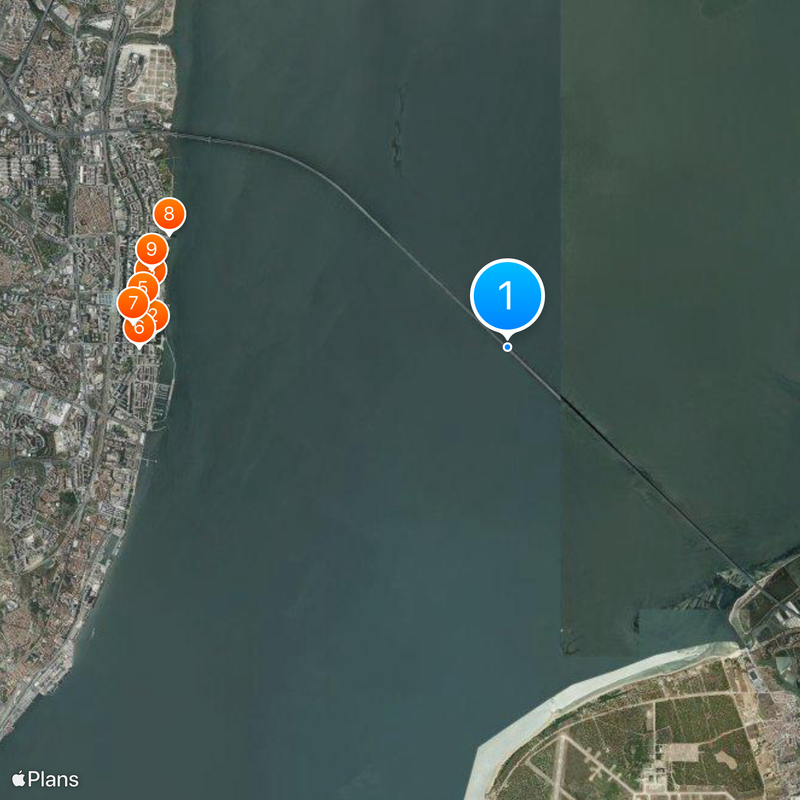
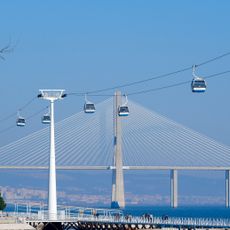
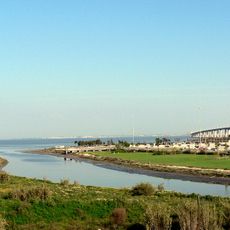
The Vasco da Gama Bridge is a road connection roughly 12 kilometers long that links both banks of the Tagus and rests on reinforced concrete supports north of Lisbon. Tall H-shaped pylons carry the central sections while flatter viaducts form the approach on both shores.
Construction began in the mid-1990s to provide a second crossing of the Tagus for growing traffic. The opening took place in 1998 and marked the 500th anniversary of the navigator's voyage to India.
The structure recalls the explorer who sailed from Portugal in the late 1400s. His name evokes the era when Portuguese ships opened new connections between continents and made Lisbon a major port.
Vehicles heading north pay tolls while the opposite direction remains free. Wind gusts can be strong on exposed days, so motorcyclists and camper drivers should be prepared for changing conditions.
The foundations reach 95 meters below sea level and rest on the riverbed to allow movement during earthquakes. Hydraulic dampers absorb vibrations and let the pylons yield without damaging the roadway deck.
Location: Parque das Nações
Location: Sacavém e Prior Velho
Location: Samouco
Location: Alcochete
Inception: 1995
Architects: Michel Virlogeux, Charles Lavigne, Armando Rito
Official opening: March 29, 1998
Height: 155 m
Length: 12,345 m
Longest Span: 420 m
Made from material: reinforced concrete, prestressed concrete
GPS coordinates: 38.76219,-9.04331
Latest update: December 4, 2025 23:05
Photo license: CC BY-SA 2.5
This collection brings together some of the most outstanding transport structures worldwide, representing engineering ingenuity and technical daring from various eras. From the Akashi Kaikyō Bridge of Japan, which holds the global record for span length at 1,991 meters (6,532 feet), to the Landwasser Viaduct in Switzerland, built in 1902 and opening directly into a mountain tunnel, each structure tells a story of overcoming geographical challenges. These constructions connect areas separated by bays, straits, deep valleys, or waterways. The Hangzhou Bay Bridge in China stretches 36 kilometers (22 miles) across the waters of the East China Sea, while the Chesapeake Bay Bridge-Tunnel in the United States cleverly combines two modes of crossing over 37 kilometers (23 miles). In Scotland, the Forth Bridge has spanned the estuary since 1890 with its three distinctive steel cantilever spans, and in Bordeaux, the Jacques Chaban-Delmas Bridge stands out as Europe's tallest bascule bridge. Beyond facilitating transport, these structures have become visual landmarks and destinations in their own right. The Royal Gorge Bridge in Colorado overlooks the Arkansas River by 955 feet (291 meters), while London's Millennium Bridge offers a direct pedestrian route between the Tate Modern and Saint Paul’s Cathedral. Each of these sites warrants a visit to appreciate the scope of technical achievement they embody.
This collection gathers bridges and engineering structures that mark the history of modern infrastructure worldwide. Structures such as the Akashi-Kaikyo Bridge in Japan, with its span of 3,911 meters, or the 37-kilometer Chesapeake Bay Bridge-Tunnel in Virginia demonstrate technological advances made to cross natural obstacles. These include suspension bridges, cable-stayed bridges, and viaducts that often set records for length or height. From the Confederation Bridge linking Prince Edward Island to New Brunswick in extreme weather conditions, to the Øresund Bridge connecting Denmark and Sweden, these structures change the geography and facilitate exchanges between regions. The Vasco da Gama Bridge in Lisbon, the Norman Bridge crossing the Seine at Honfleur, or the Yavuz Sultan Selim Bridge in Istanbul illustrate how modern engineering addresses transportation needs while adapting to each site's geographic constraints.
This collection presents suspension bridges recognized for their engineering solutions and their role in urban development. The Akashi Kaikyō Bridge in Japan spans 1,991 meters between its two towers, the longest distance of its kind in the world. The Golden Gate Bridge in San Francisco demonstrates 1930s engineering with its 1,280-meter main span. In New York, the Brooklyn Bridge has connected Manhattan to Brooklyn since 1883 and serves as an early reference point in modern bridge construction. The Humber Bridge in England held the record for the longest span from 1981 to 1998. In Istanbul, the Bosphorus Bridge has linked Europe to Asia since 1973 across a span of 1,074 meters. The Tower Bridge in London has combined a bascule bridge with suspension elements since 1894. These structures document the evolution of construction techniques over more than a century and remain important transportation routes in their respective regions.
Lisbon welcomes families with places that educate and entertain children. The city mixes history with hands-on experiences. Visitors can see sea life at the Vasco da Gama Aquarium or explore the Tram Museum to learn about streetcar heritage. The Museum of the Discoveries and the Pavilion of Knowledge teach children about Portugal's exploration and science in engaging ways. Historical landmarks throughout the city capture children's attention. The Castle of São Jorge sits high above the city with space to roam and views to enjoy. The Tower of Belém and Jerónimos Monastery show stone work and stories from centuries past. The Santa Justa Elevator and the 25 de Abril Bridge offer chances to see the city from new angles. Kids can also board the Frigate Dom Fernando II e Glória to experience life at sea. Large parks and gardens provide space for play and rest. The Estrela Garden, Eduardo VII Park, and Lisbon Zoo give children room to run and discover nature. The National Tile Museum and Urban Art Museum introduce art in different forms. Nearby Costa da Caparica offers beaches for swimming and sand play. Lisbon gives families chances to mix learning with fun, indoors and out.
Lisbon Oceanarium
4.4 km
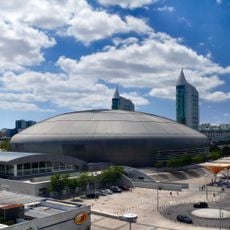
MEO Arena
4.5 km
Gare do Oriente
4.9 km
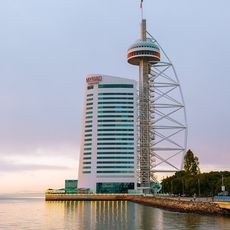
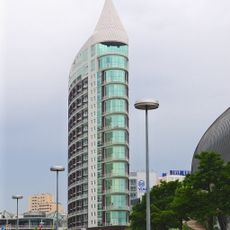
Vasco da Gama Tower
4.4 km
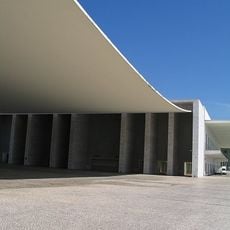
Pavilhão de Portugal
4.5 km
Pavilhão do Conhecimento
4.5 km
Casino Lisboa, Portugal
4.6 km
Mar da Palha
4.1 km
Feira Internacional de Lisboa
4.5 km
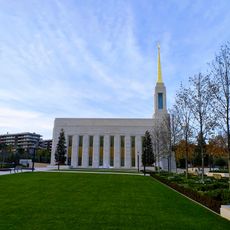
Lisbon Portugal Temple
5.5 km
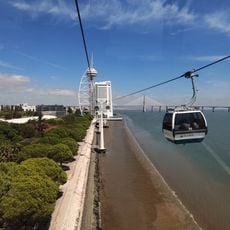
Teleférico do Parque das Nações
4.4 km
Telecabine Lisbon
4.3 km
Church of Nossa Senhora dos Navegantes
5.2 km
Teatro Camões
4.3 km
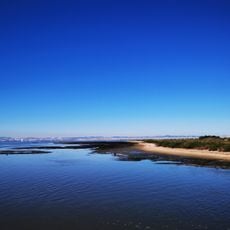
Praia de Samouco
4.7 km
Fábrica Braço de Prata
5.4 km
Parque Urbano do Tejo e do Trancão
5 km
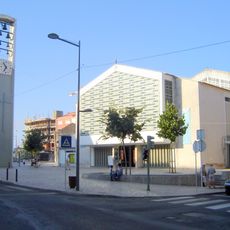
Igreja de Santo António de Moscavide
5.5 km
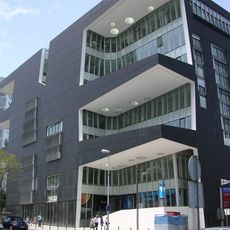
Edificio Mythos
4.7 km
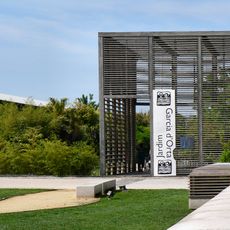
Jardim Garcia d' Orta
4.4 km
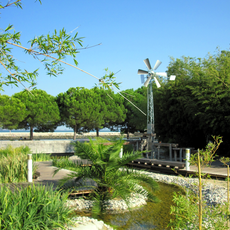
Jardins da Água
4.3 km
Jardim da Praça David Leandro da Silva
5.6 km
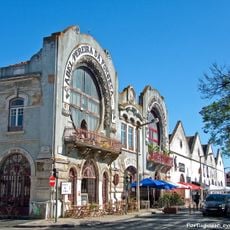
Edifício «Abel Pereira da Fonseca»
5.5 km
Edifício Sede da Fábrica José Domingos Barreiro
5.6 km
D. Catarina de Bragança
4.7 km
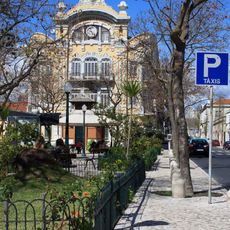
Praça da Viscondessa dos Olivais
5.5 km
Palácio da Mitra
5.8 km
Quinta da Fonte do Anjo
5.9 kmVisited this place? Tap the stars to rate it and share your experience / photos with the community! Try now! You can cancel it anytime.
Discover hidden gems everywhere you go!
From secret cafés to breathtaking viewpoints, skip the crowded tourist spots and find places that match your style. Our app makes it easy with voice search, smart filtering, route optimization, and insider tips from travelers worldwide. Download now for the complete mobile experience.
A unique approach to discovering new places❞
— Le Figaro
All the places worth exploring❞
— France Info
A tailor-made excursion in just a few clicks❞
— 20 Minutes