See the monuments around you in AROpen chests in the app
Around Us is built for your phone — point your camera at the streets and discover the monuments and places around you in augmented reality.Around Us is built for your phone — chests unlock when you walk, explore and capture nearby places.
This collection gathers bridges and engineering structures that mark the history of modern infrastructure worldwide. Structures such as the Akashi-Kaikyo Bridge in Japan, with its span of 3,911 meters, or the 37-kilometer Chesapeake Bay Bridge-Tunnel in Virginia demonstrate technological advances made to cross natural obstacles. These include suspension bridges, cable-stayed bridges, and viaducts that often set records for length or height.
From the Confederation Bridge linking Prince Edward Island to New Brunswick in extreme weather conditions, to the Øresund Bridge connecting Denmark and Sweden, these structures change the geography and facilitate exchanges between regions. The Vasco da Gama Bridge in Lisbon, the Norman Bridge crossing the Seine at Honfleur, or the Yavuz Sultan Selim Bridge in Istanbul illustrate how modern engineering addresses transportation needs while adapting to each site's geographic constraints.
This collection gathers bridges and engineering structures that mark the history of modern infrastructure worldwide. Structures such as the Akashi-Kaikyo Bridge in Japan, with its span of 3,911 meters, or the 37-kilometer Chesapeake Bay Bridge-Tunnel in Virginia demonstrate technological advances made to cross natural obstacles. These include suspension bridges, cable-stayed bridges, and viaducts that often set records for length or height.
From the Confederation Bridge linking Prince Edward Island to New Brunswick in extreme weather conditions, to the Øresund Bridge connecting Denmark and Sweden, these structures change the geography and facilitate exchanges between regions. The Vasco da Gama Bridge in Lisbon, the Norman Bridge crossing the Seine at Honfleur, or the Yavuz Sultan Selim Bridge in Istanbul illustrate how modern engineering addresses transportation needs while adapting to each site's geographic constraints.
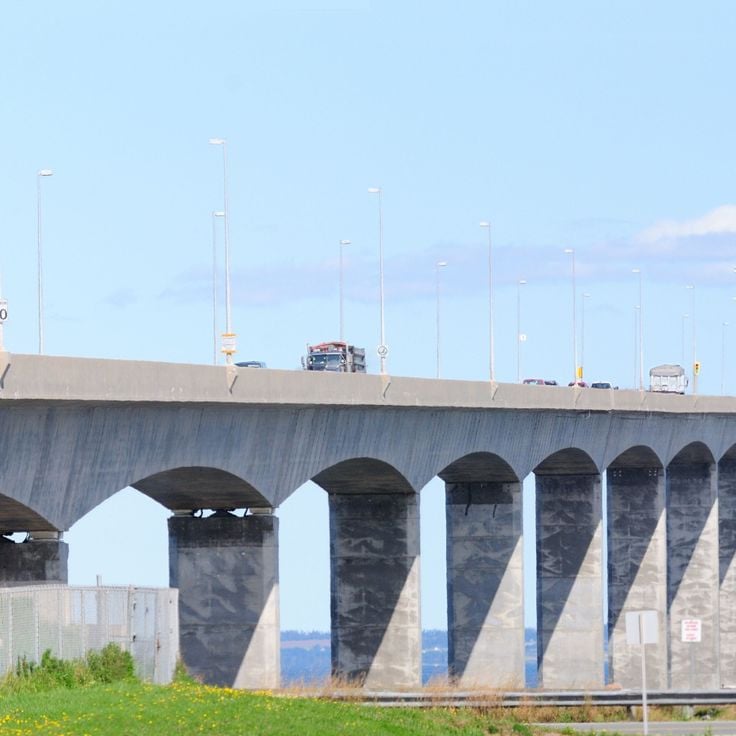
The Confederation Bridge represents the modern engineering structures that mark this collection of bridges spanning the globe. It links Prince Edward Island to New Brunswick across the Northumberland Strait, crossing through extreme weather with temperatures dropping to minus 40 degrees Celsius. This 12.9-kilometer bridge demonstrates how contemporary construction overcomes natural obstacles and connects distant regions.
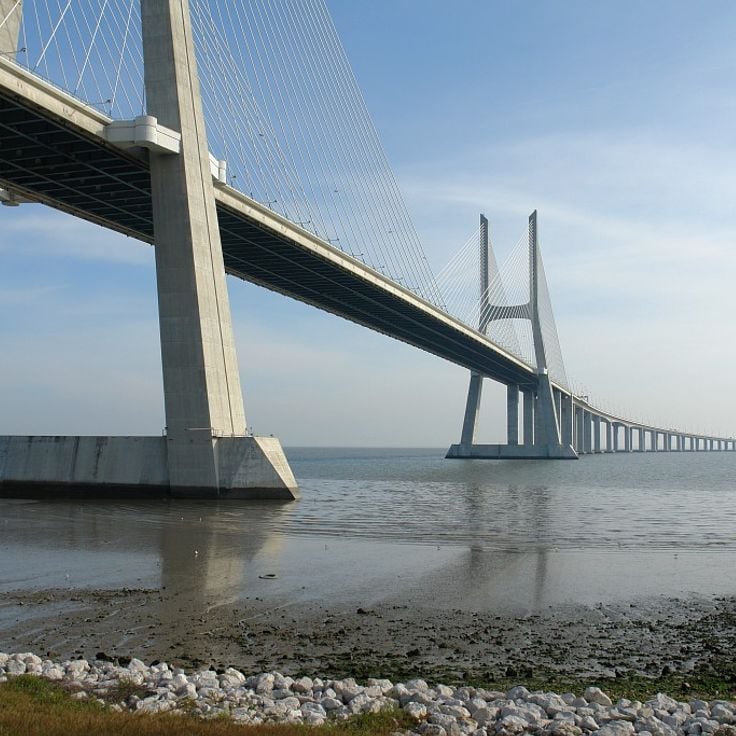
The Vasco da Gama Bridge represents in this collection of modern infrastructure how engineering addresses transportation needs across water. This 17.2 km structure opened in 1998 to connect both sides of the Tagus River, marking 500 years since the discovery of the sea route to India.
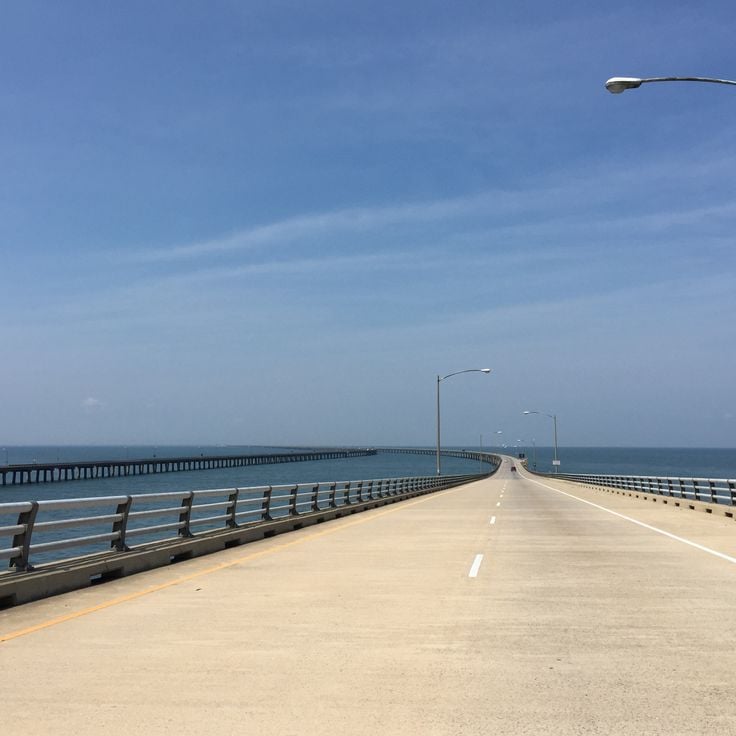
The Chesapeake Bay Bridge-Tunnel is a remarkable engineering feat in this collection of modern infrastructure structures. It connects Virginia Beach with the Eastern Shore across the Chesapeake Bay and stretches 37 kilometers. The structure includes two tunnels that pass beneath the shipping channel and four artificial islands. This construction demonstrates how modern engineering overcomes geographic obstacles and facilitates transportation between regions.
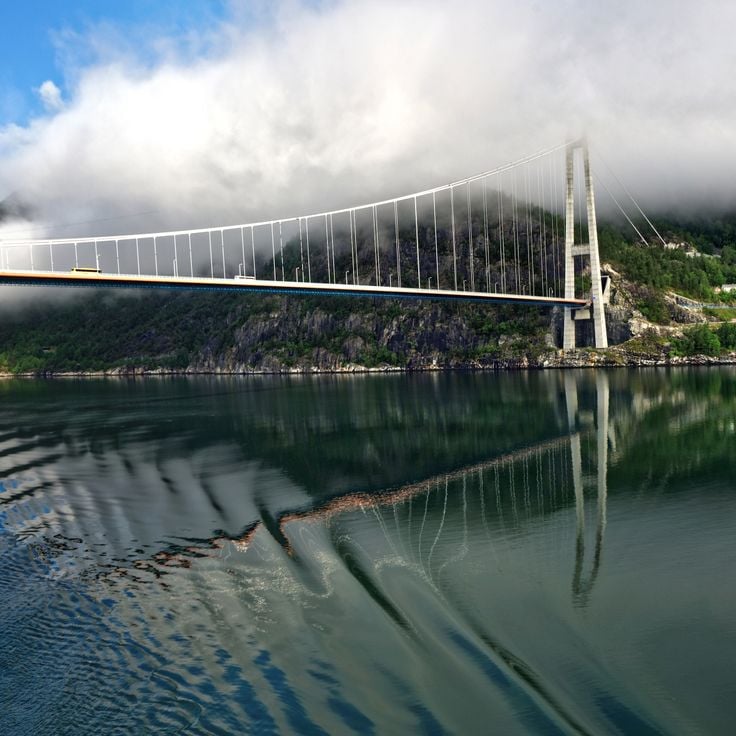
The Hardanger Bridge is a cable-stayed structure that spans the Hardangerfjord in Norway. With a main span of 1310 meters and a total length of 1380 meters, it ranks among Europe's longest suspension bridges. Its pylons rise 200 meters high and shape the visual landscape of the fjord. The bridge connects two areas of Hordaland and allows travelers and commuters to avoid lengthy detours. It stands as an example of modern engineering applied to extreme geographic conditions and harsh weather.
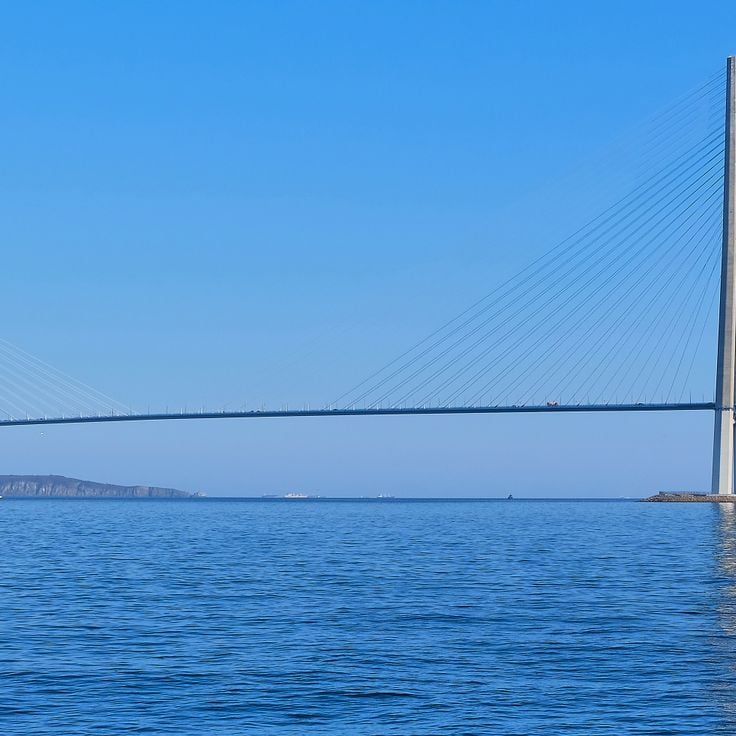
The Russky Bridge belongs to this collection of engineering structures that mark the history of modern infrastructure. With its main span of 1,885 meters, this cable-stayed bridge connects Vladivostok to Russky Island and demonstrates the technical advances needed to cross natural obstacles.
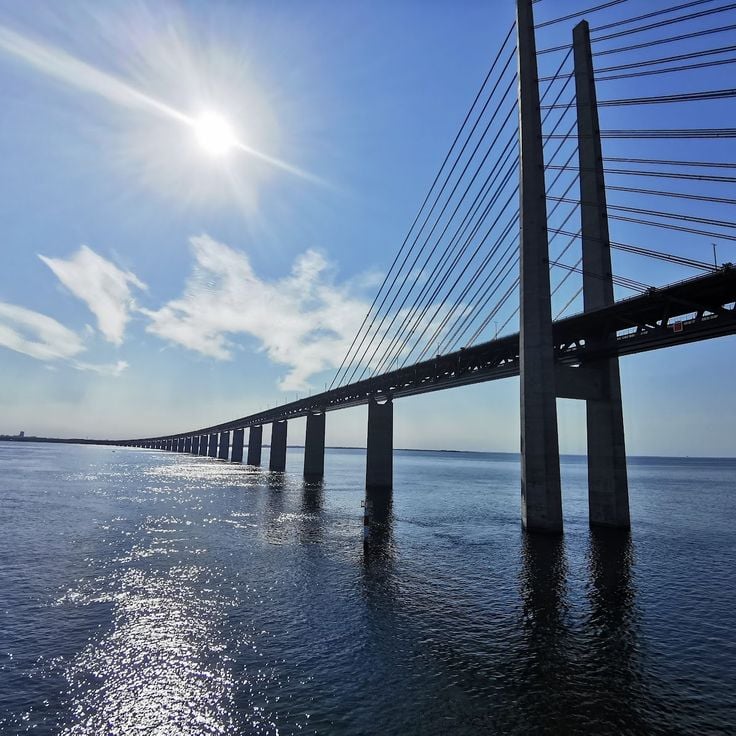
The Øresund Bridge represents the modern engineering structures that mark the history of infrastructure in this collection. This combined road and railway bridge connects Denmark to Sweden, spanning approximately 8 kilometers across water. It demonstrates how contemporary construction overcomes geographic obstacles and links regions together, much like the Confederation Bridge in Canada or the Vasco da Gama Bridge in Lisbon. The bridge reshapes the landscape and facilitates exchange between the two nations.
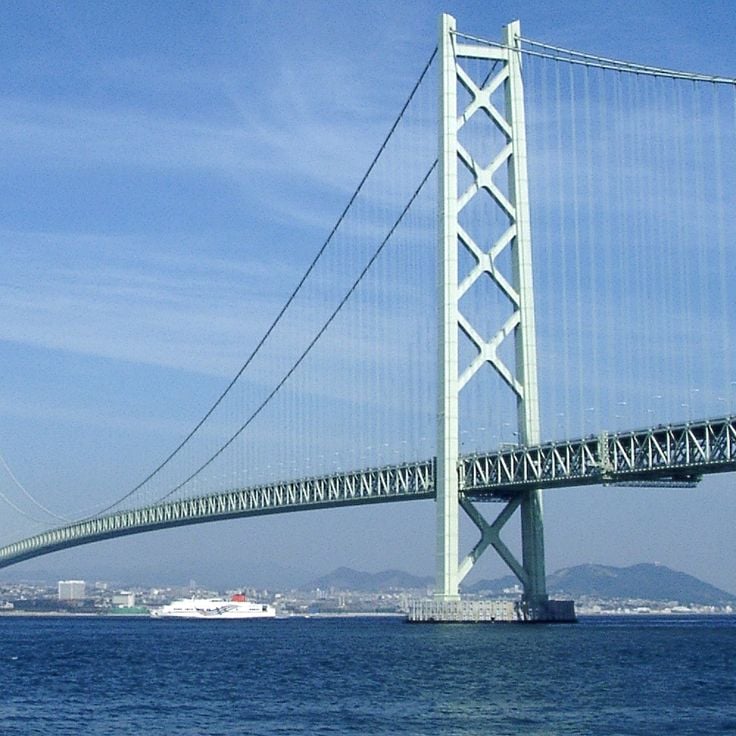
This suspension bridge in the collection of global infrastructure achievements connects Kobe to Awaji Island. With a main span of 3911 meters, it represents a significant engineering accomplishment that made crossing this wide body of water possible. The bridge was built to establish a vital transportation link between these two locations and shows how modern structures overcome natural obstacles.
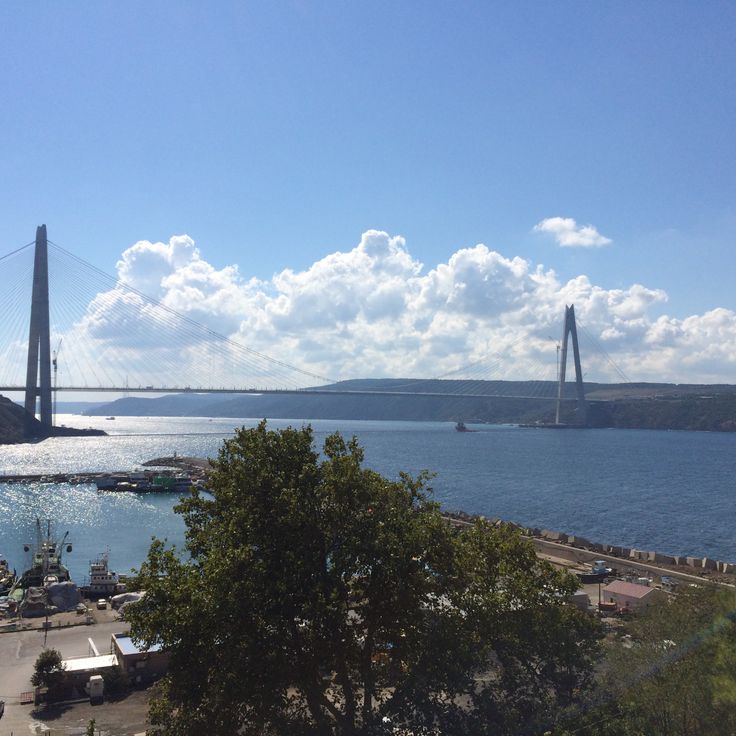
This suspension bridge in Istanbul crosses the Bosporus and links two continents. It carries eight traffic lanes and two railway tracks, with a total width of 59 meters. The bridge demonstrates how modern engineering tackles major geographic challenges and connects distant regions. It reflects the same innovation seen in other significant bridges around the world that have transformed transportation and shaped how people move between areas.
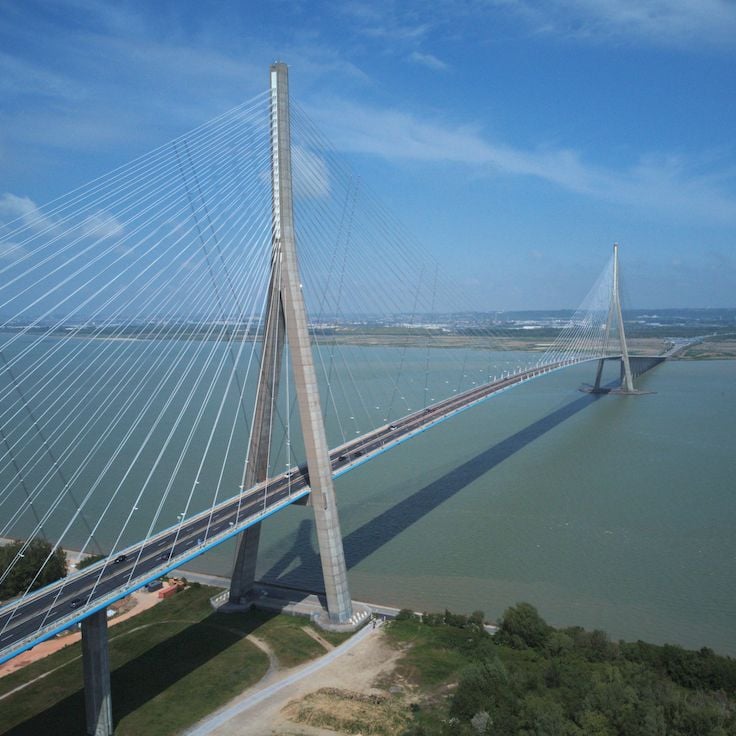
The Pont de Normandie is a cable-stayed bridge that crosses the Seine and demonstrates how modern engineering addresses geographic constraints. With a main span of 856 meters between two 214-meter-high pylons, this bridge stands as an example of technological advances that connect regions and facilitate transportation.
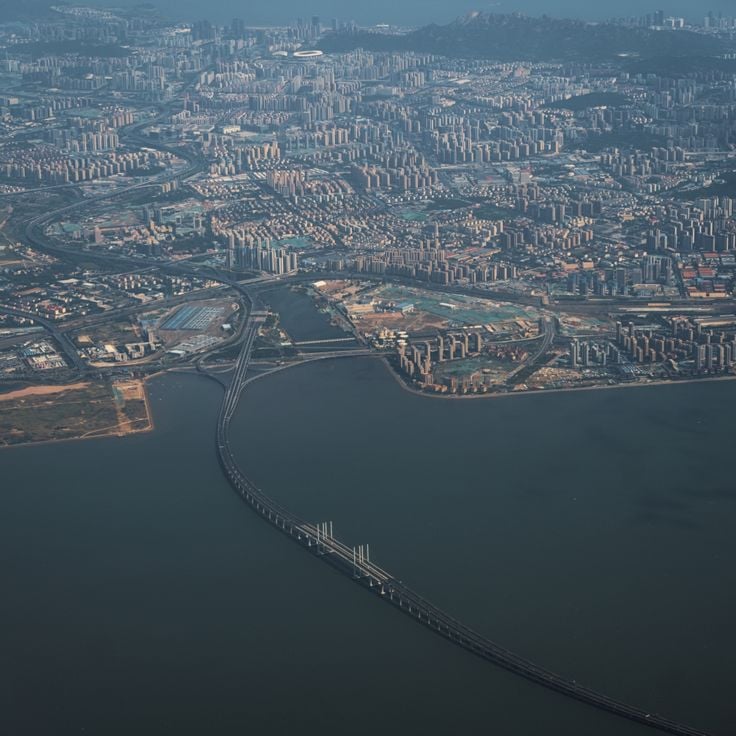
The Jiaozhou Bay Bridge is a road bridge that spans 42.5 kilometers across the bay, connecting Qingdao city with Huangdao district. It is part of a global collection of bridges and engineering structures that have shaped the history of modern infrastructure. This structure demonstrates technological advances in crossing natural obstacles and belongs to a family of works including suspension bridges, cable-stayed bridges, and viaducts that often set records for length or height.
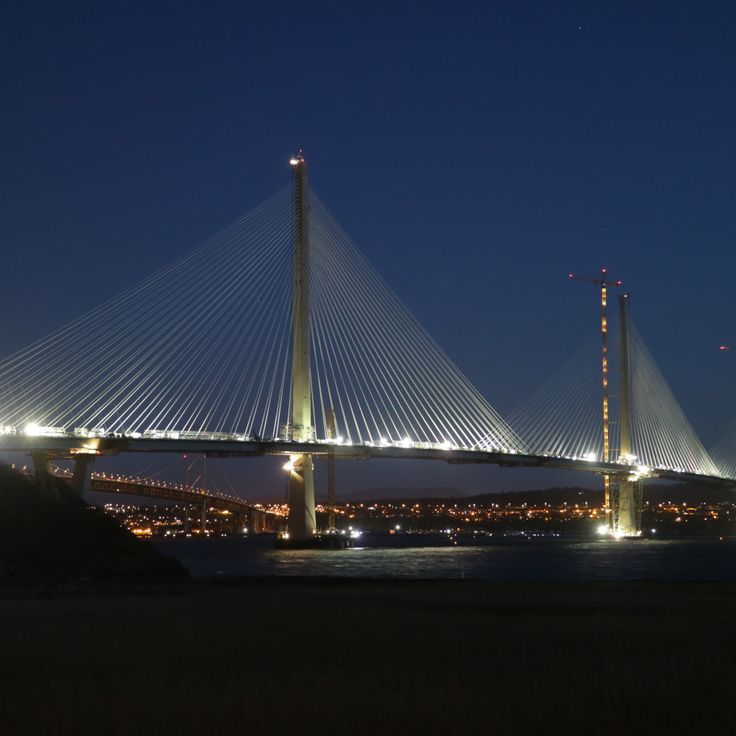
The Queensferry Crossing is a three-tower road bridge spanning 2.7 kilometers of the Firth of Forth, part of this collection of structures that mark the history of modern infrastructure worldwide. It uses an innovative wind deflection system to address the challenges of its geographic location while facilitating transportation between regions.
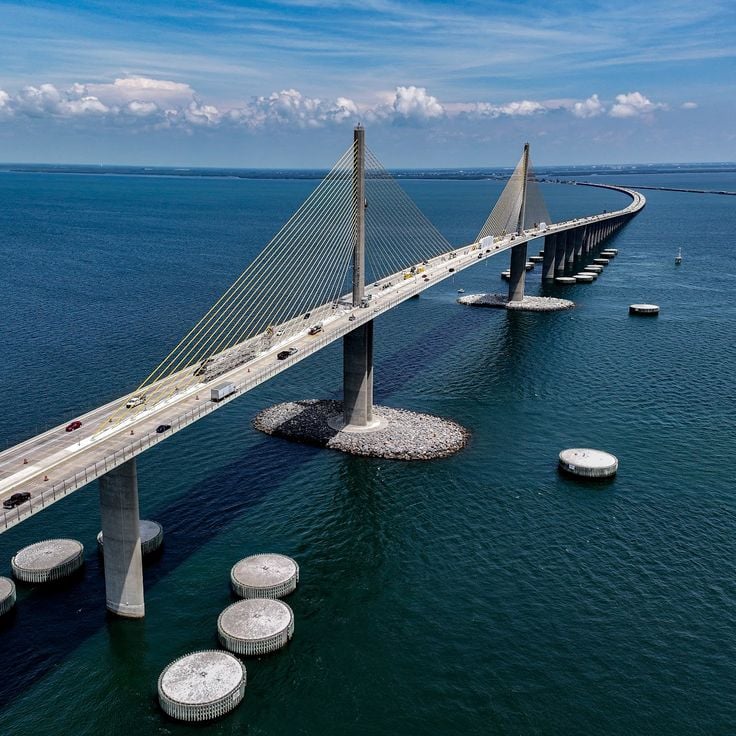
The Sunshine Skyway Bridge is a cable-stayed bridge that crosses Tampa Bay and represents modern engineering solutions in this collection of infrastructure structures. Its distinctive yellow pylons rise prominently above the water, and the bridge connects the areas on either side of the bay. Like the other structures in this collection, it addresses transportation needs while adapting to the geographic challenges of its location.
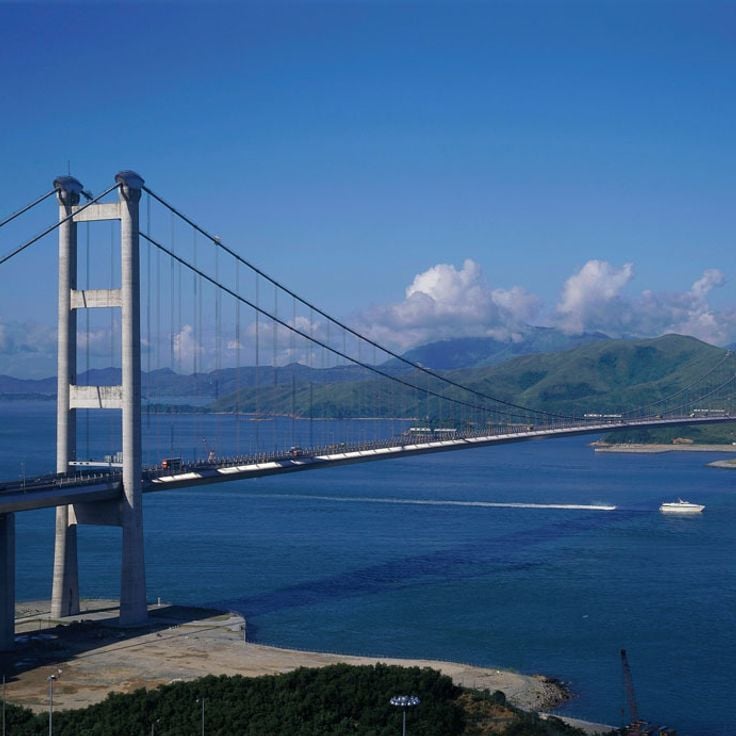
This bridge is part of a collection of engineering structures that mark the history of modern infrastructure worldwide. Completed in 1997, the Tsing Ma Bridge connects Lantau Island and Ma Wan. It carries two decks with both railway tracks and vehicle lanes. Like other structures in this collection, it overcomes natural obstacles and facilitates connections between regions through innovative design.
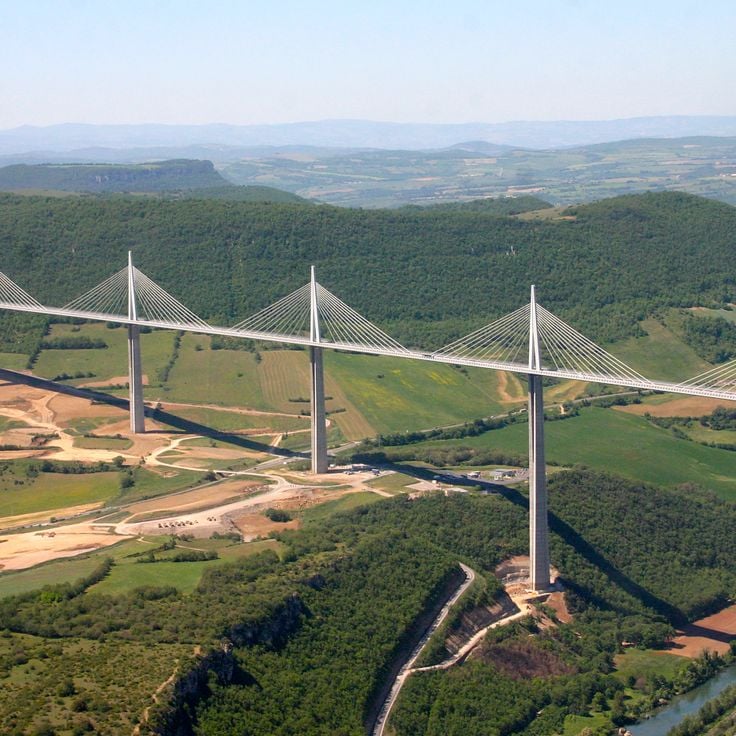
The Millau Viaduct is a cable-stayed bridge that spans the Tarn River valley and stands as an example of modern engineering addressing transportation needs across challenging terrain. At 336.4 meters high and 2.46 kilometers long, this structure shows how contemporary infrastructure adapts to geographic constraints while connecting regions separated by natural obstacles.
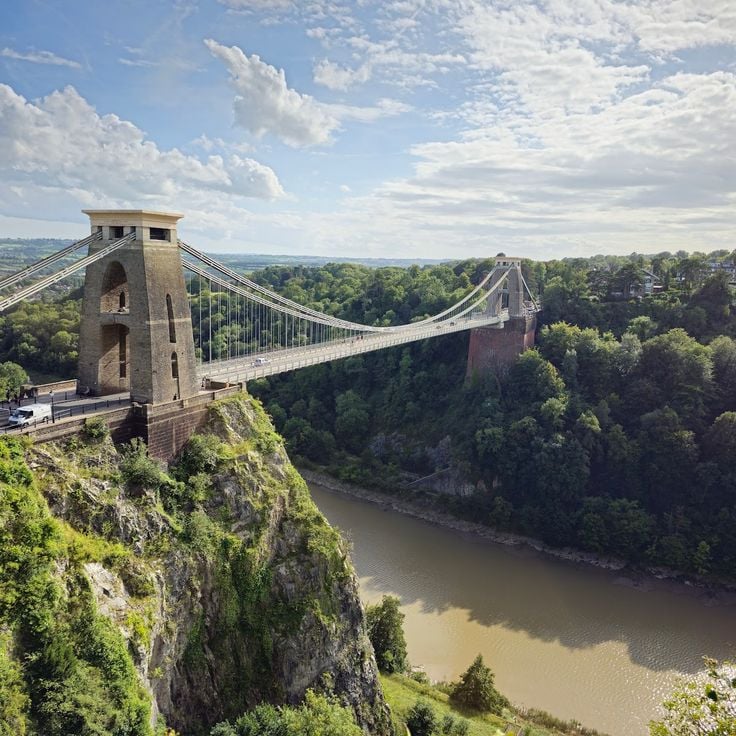
The Clifton Suspension Bridge is a chain bridge that has spanned the Avon Gorge since 1864. It was designed by Isambard Kingdom Brunel and completed after his death. This structure represents the kind of engineering achievement that marks the history of modern infrastructure, demonstrating how people overcome natural obstacles to connect regions.
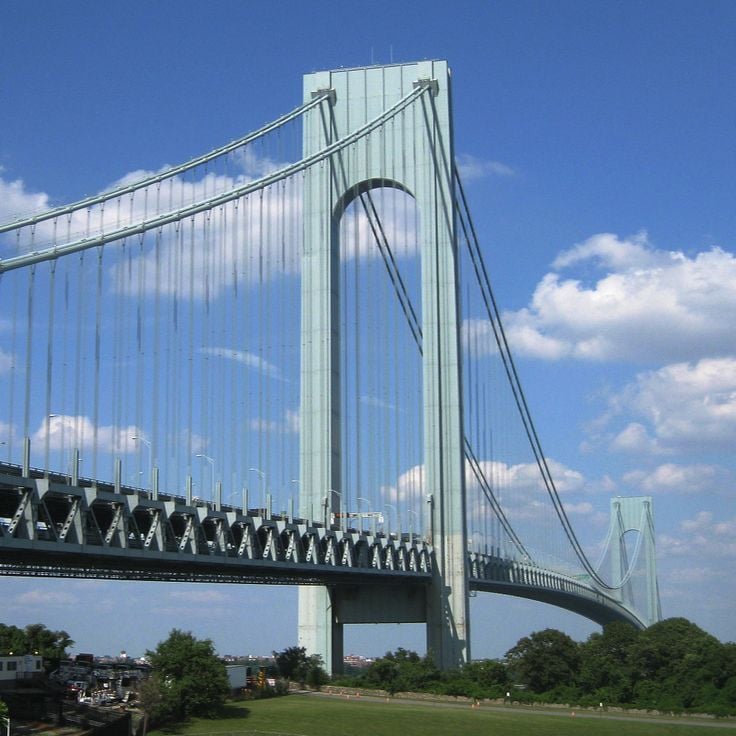
The Verrazano-Narrows Bridge is presented in this collection as a major example of modern infrastructure history. This suspension bridge connects Brooklyn with Staten Island, spanning a significant natural barrier in New York. With its double-deck design and a main span of 1298 meters, the bridge demonstrates the engineering advances that connect regions and facilitate movement across water.
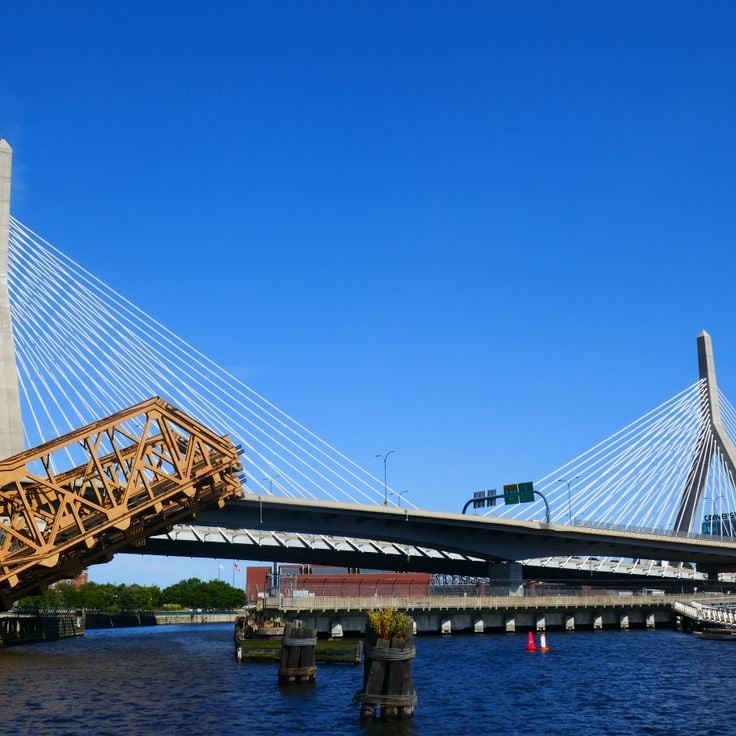
The Leonard P. Zakim Bunker Hill Memorial Bridge demonstrates how modern engineering works in Boston. This cable-stayed bridge crosses the Charles River and connects the city to its northern neighborhoods. Its white towers are visible from many points across Boston and shape the city's skyline. The bridge was built to improve traffic flow and replace older structures that crossed the river. Walking and cycling paths run alongside it, making it more than just a traffic route.
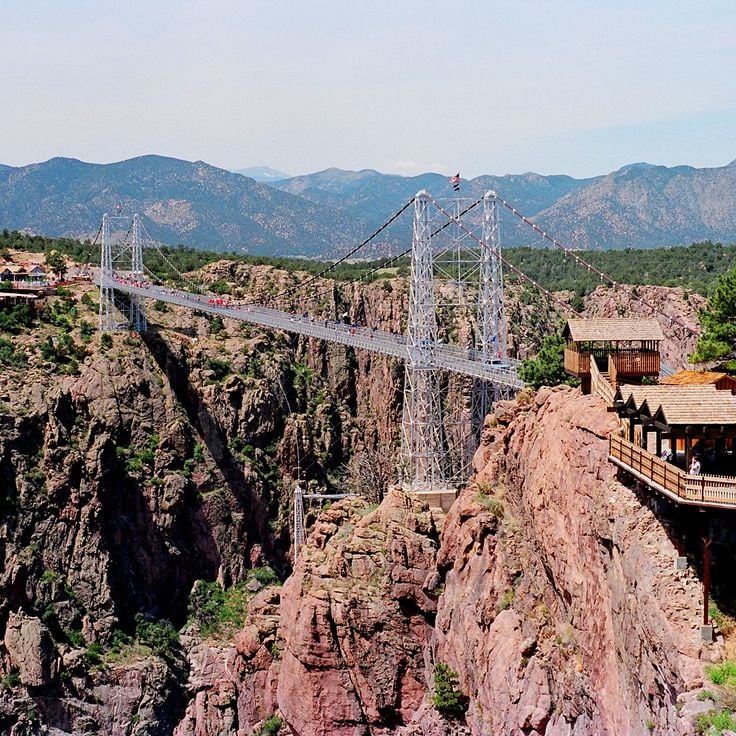
This suspension bridge in Colorado ranks among the world's highest bridges and represents the technological advances in modern bridge construction. The Royal Gorge Bridge connects the rock walls of Royal Gorge Canyon, demonstrating how engineers overcome natural obstacles with innovative building methods. It illustrates the evolution of suspension bridges, which along with cable-stayed bridges and viaducts form an important part of global infrastructure history.
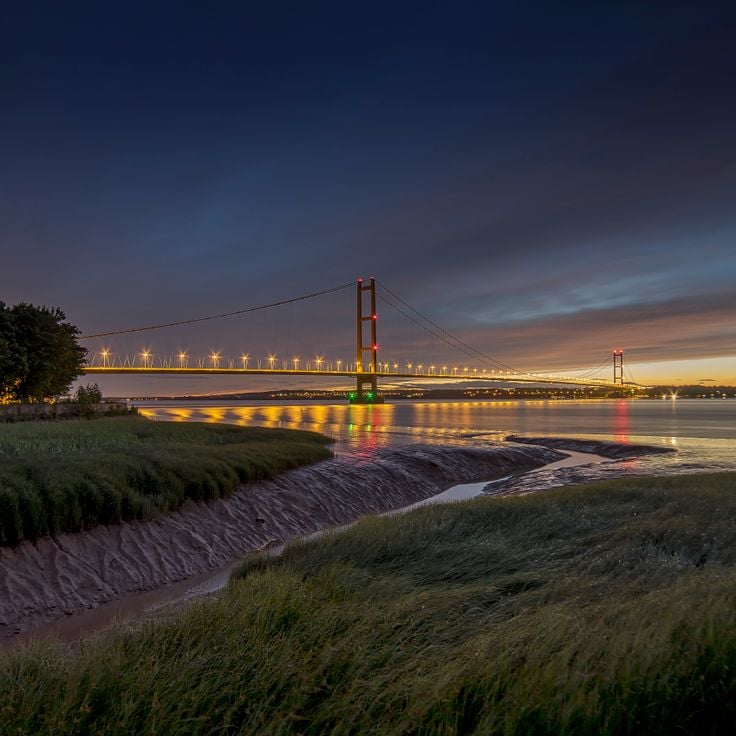
The Humber Bridge is a suspension bridge in England that once held the record for the longest single-span suspension bridge in the world. It connects two shores and demonstrates how modern engineering tackles the challenge of crossing major obstacles. This bridge is part of a worldwide collection of structures that have shaped the history of modern infrastructure.
The Luís I Bridge is a double-deck metal arch bridge spanning the River Douro. It exemplifies the engineering solutions gathered in this collection of structures that mark modern infrastructure history. The bridge connects regions and demonstrates how such structures overcome natural obstacles to facilitate movement between areas, adapting to the geographic constraints of its location.
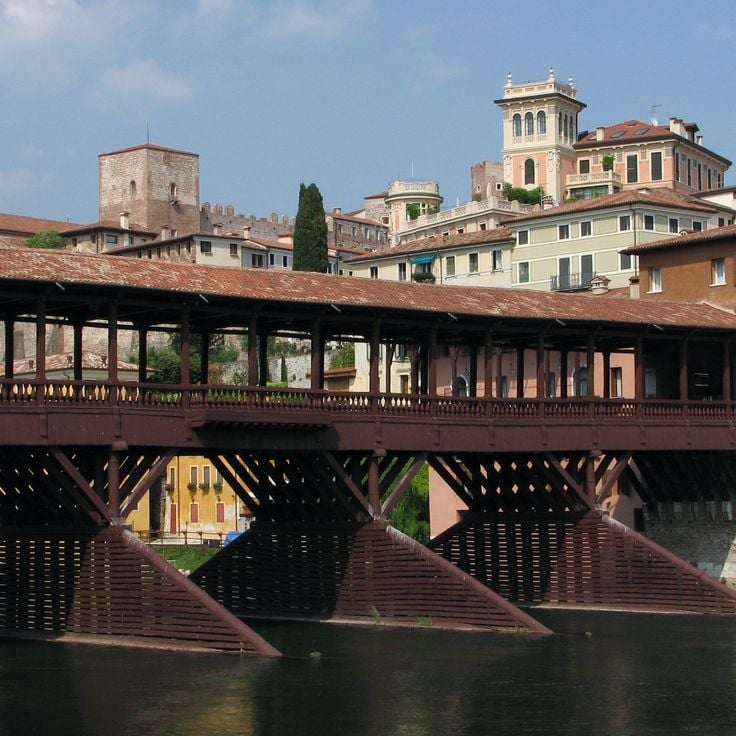
The Ponte Vecchio in Florence is a stone bridge from the 14th century and part of this collection of bridges that mark the history of modern infrastructure worldwide. Unlike technological achievements such as the Akashi-Kaikyo Bridge or the Chesapeake Bay Bridge-Tunnel, this bridge represents centuries of continuous use and adaptation. Shops line both sides of the bridge, and the upper level houses the Vasari Corridor, a private passage connecting palaces across the river.
The Confederation Bridge represents the modern engineering structures that mark this collection of bridges spanning the globe. It links Prince Edward Island to New Brunswick across the Northumberland Strait, crossing through extreme weather with temperatures dropping to minus 40 degrees Celsius. This 12.9-kilometer bridge demonstrates how contemporary construction overcomes natural obstacles and connects distant regions.
The Vasco da Gama Bridge represents in this collection of modern infrastructure how engineering addresses transportation needs across water. This 17.2 km structure opened in 1998 to connect both sides of the Tagus River, marking 500 years since the discovery of the sea route to India.
The Chesapeake Bay Bridge-Tunnel is a remarkable engineering feat in this collection of modern infrastructure structures. It connects Virginia Beach with the Eastern Shore across the Chesapeake Bay and stretches 37 kilometers. The structure includes two tunnels that pass beneath the shipping channel and four artificial islands. This construction demonstrates how modern engineering overcomes geographic obstacles and facilitates transportation between regions.
The Hardanger Bridge is a cable-stayed structure that spans the Hardangerfjord in Norway. With a main span of 1310 meters and a total length of 1380 meters, it ranks among Europe's longest suspension bridges. Its pylons rise 200 meters high and shape the visual landscape of the fjord. The bridge connects two areas of Hordaland and allows travelers and commuters to avoid lengthy detours. It stands as an example of modern engineering applied to extreme geographic conditions and harsh weather.
The Russky Bridge belongs to this collection of engineering structures that mark the history of modern infrastructure. With its main span of 1,885 meters, this cable-stayed bridge connects Vladivostok to Russky Island and demonstrates the technical advances needed to cross natural obstacles.
The Øresund Bridge represents the modern engineering structures that mark the history of infrastructure in this collection. This combined road and railway bridge connects Denmark to Sweden, spanning approximately 8 kilometers across water. It demonstrates how contemporary construction overcomes geographic obstacles and links regions together, much like the Confederation Bridge in Canada or the Vasco da Gama Bridge in Lisbon. The bridge reshapes the landscape and facilitates exchange between the two nations.
This suspension bridge in the collection of global infrastructure achievements connects Kobe to Awaji Island. With a main span of 3911 meters, it represents a significant engineering accomplishment that made crossing this wide body of water possible. The bridge was built to establish a vital transportation link between these two locations and shows how modern structures overcome natural obstacles.
This suspension bridge in Istanbul crosses the Bosporus and links two continents. It carries eight traffic lanes and two railway tracks, with a total width of 59 meters. The bridge demonstrates how modern engineering tackles major geographic challenges and connects distant regions. It reflects the same innovation seen in other significant bridges around the world that have transformed transportation and shaped how people move between areas.
The Pont de Normandie is a cable-stayed bridge that crosses the Seine and demonstrates how modern engineering addresses geographic constraints. With a main span of 856 meters between two 214-meter-high pylons, this bridge stands as an example of technological advances that connect regions and facilitate transportation.
The Jiaozhou Bay Bridge is a road bridge that spans 42.5 kilometers across the bay, connecting Qingdao city with Huangdao district. It is part of a global collection of bridges and engineering structures that have shaped the history of modern infrastructure. This structure demonstrates technological advances in crossing natural obstacles and belongs to a family of works including suspension bridges, cable-stayed bridges, and viaducts that often set records for length or height.
The Queensferry Crossing is a three-tower road bridge spanning 2.7 kilometers of the Firth of Forth, part of this collection of structures that mark the history of modern infrastructure worldwide. It uses an innovative wind deflection system to address the challenges of its geographic location while facilitating transportation between regions.
The Sunshine Skyway Bridge is a cable-stayed bridge that crosses Tampa Bay and represents modern engineering solutions in this collection of infrastructure structures. Its distinctive yellow pylons rise prominently above the water, and the bridge connects the areas on either side of the bay. Like the other structures in this collection, it addresses transportation needs while adapting to the geographic challenges of its location.
This bridge is part of a collection of engineering structures that mark the history of modern infrastructure worldwide. Completed in 1997, the Tsing Ma Bridge connects Lantau Island and Ma Wan. It carries two decks with both railway tracks and vehicle lanes. Like other structures in this collection, it overcomes natural obstacles and facilitates connections between regions through innovative design.
The Millau Viaduct is a cable-stayed bridge that spans the Tarn River valley and stands as an example of modern engineering addressing transportation needs across challenging terrain. At 336.4 meters high and 2.46 kilometers long, this structure shows how contemporary infrastructure adapts to geographic constraints while connecting regions separated by natural obstacles.
The Clifton Suspension Bridge is a chain bridge that has spanned the Avon Gorge since 1864. It was designed by Isambard Kingdom Brunel and completed after his death. This structure represents the kind of engineering achievement that marks the history of modern infrastructure, demonstrating how people overcome natural obstacles to connect regions.
The Verrazano-Narrows Bridge is presented in this collection as a major example of modern infrastructure history. This suspension bridge connects Brooklyn with Staten Island, spanning a significant natural barrier in New York. With its double-deck design and a main span of 1298 meters, the bridge demonstrates the engineering advances that connect regions and facilitate movement across water.
The Leonard P. Zakim Bunker Hill Memorial Bridge demonstrates how modern engineering works in Boston. This cable-stayed bridge crosses the Charles River and connects the city to its northern neighborhoods. Its white towers are visible from many points across Boston and shape the city's skyline. The bridge was built to improve traffic flow and replace older structures that crossed the river. Walking and cycling paths run alongside it, making it more than just a traffic route.
This suspension bridge in Colorado ranks among the world's highest bridges and represents the technological advances in modern bridge construction. The Royal Gorge Bridge connects the rock walls of Royal Gorge Canyon, demonstrating how engineers overcome natural obstacles with innovative building methods. It illustrates the evolution of suspension bridges, which along with cable-stayed bridges and viaducts form an important part of global infrastructure history.
The Humber Bridge is a suspension bridge in England that once held the record for the longest single-span suspension bridge in the world. It connects two shores and demonstrates how modern engineering tackles the challenge of crossing major obstacles. This bridge is part of a worldwide collection of structures that have shaped the history of modern infrastructure.
The Luís I Bridge is a double-deck metal arch bridge spanning the River Douro. It exemplifies the engineering solutions gathered in this collection of structures that mark modern infrastructure history. The bridge connects regions and demonstrates how such structures overcome natural obstacles to facilitate movement between areas, adapting to the geographic constraints of its location.
The Ponte Vecchio in Florence is a stone bridge from the 14th century and part of this collection of bridges that mark the history of modern infrastructure worldwide. Unlike technological achievements such as the Akashi-Kaikyo Bridge or the Chesapeake Bay Bridge-Tunnel, this bridge represents centuries of continuous use and adaptation. Shops line both sides of the bridge, and the upper level houses the Vasari Corridor, a private passage connecting palaces across the river.
The Confederation Bridge represents the modern engineering structures that mark this collection of bridges spanning the globe. It links Prince Edward Island to New Brunswick across the Northumberland Strait, crossing through extreme weather with temperatures dropping to minus 40 degrees Celsius. This 12.9-kilometer bridge demonstrates how contemporary construction overcomes natural obstacles and connects distant regions.
The Vasco da Gama Bridge represents in this collection of modern infrastructure how engineering addresses transportation needs across water. This 17.2 km structure opened in 1998 to connect both sides of the Tagus River, marking 500 years since the discovery of the sea route to India.
The Chesapeake Bay Bridge-Tunnel is a remarkable engineering feat in this collection of modern infrastructure structures. It connects Virginia Beach with the Eastern Shore across the Chesapeake Bay and stretches 37 kilometers. The structure includes two tunnels that pass beneath the shipping channel and four artificial islands. This construction demonstrates how modern engineering overcomes geographic obstacles and facilitates transportation between regions.
The Hardanger Bridge is a cable-stayed structure that spans the Hardangerfjord in Norway. With a main span of 1310 meters and a total length of 1380 meters, it ranks among Europe's longest suspension bridges. Its pylons rise 200 meters high and shape the visual landscape of the fjord. The bridge connects two areas of Hordaland and allows travelers and commuters to avoid lengthy detours. It stands as an example of modern engineering applied to extreme geographic conditions and harsh weather.
The Russky Bridge belongs to this collection of engineering structures that mark the history of modern infrastructure. With its main span of 1,885 meters, this cable-stayed bridge connects Vladivostok to Russky Island and demonstrates the technical advances needed to cross natural obstacles.
The Øresund Bridge represents the modern engineering structures that mark the history of infrastructure in this collection. This combined road and railway bridge connects Denmark to Sweden, spanning approximately 8 kilometers across water. It demonstrates how contemporary construction overcomes geographic obstacles and links regions together, much like the Confederation Bridge in Canada or the Vasco da Gama Bridge in Lisbon. The bridge reshapes the landscape and facilitates exchange between the two nations.
This suspension bridge in the collection of global infrastructure achievements connects Kobe to Awaji Island. With a main span of 3911 meters, it represents a significant engineering accomplishment that made crossing this wide body of water possible. The bridge was built to establish a vital transportation link between these two locations and shows how modern structures overcome natural obstacles.
This suspension bridge in Istanbul crosses the Bosporus and links two continents. It carries eight traffic lanes and two railway tracks, with a total width of 59 meters. The bridge demonstrates how modern engineering tackles major geographic challenges and connects distant regions. It reflects the same innovation seen in other significant bridges around the world that have transformed transportation and shaped how people move between areas.
The Pont de Normandie is a cable-stayed bridge that crosses the Seine and demonstrates how modern engineering addresses geographic constraints. With a main span of 856 meters between two 214-meter-high pylons, this bridge stands as an example of technological advances that connect regions and facilitate transportation.
The Jiaozhou Bay Bridge is a road bridge that spans 42.5 kilometers across the bay, connecting Qingdao city with Huangdao district. It is part of a global collection of bridges and engineering structures that have shaped the history of modern infrastructure. This structure demonstrates technological advances in crossing natural obstacles and belongs to a family of works including suspension bridges, cable-stayed bridges, and viaducts that often set records for length or height.
The Queensferry Crossing is a three-tower road bridge spanning 2.7 kilometers of the Firth of Forth, part of this collection of structures that mark the history of modern infrastructure worldwide. It uses an innovative wind deflection system to address the challenges of its geographic location while facilitating transportation between regions.
The Sunshine Skyway Bridge is a cable-stayed bridge that crosses Tampa Bay and represents modern engineering solutions in this collection of infrastructure structures. Its distinctive yellow pylons rise prominently above the water, and the bridge connects the areas on either side of the bay. Like the other structures in this collection, it addresses transportation needs while adapting to the geographic challenges of its location.
This bridge is part of a collection of engineering structures that mark the history of modern infrastructure worldwide. Completed in 1997, the Tsing Ma Bridge connects Lantau Island and Ma Wan. It carries two decks with both railway tracks and vehicle lanes. Like other structures in this collection, it overcomes natural obstacles and facilitates connections between regions through innovative design.
The Millau Viaduct is a cable-stayed bridge that spans the Tarn River valley and stands as an example of modern engineering addressing transportation needs across challenging terrain. At 336.4 meters high and 2.46 kilometers long, this structure shows how contemporary infrastructure adapts to geographic constraints while connecting regions separated by natural obstacles.
The Clifton Suspension Bridge is a chain bridge that has spanned the Avon Gorge since 1864. It was designed by Isambard Kingdom Brunel and completed after his death. This structure represents the kind of engineering achievement that marks the history of modern infrastructure, demonstrating how people overcome natural obstacles to connect regions.
The Verrazano-Narrows Bridge is presented in this collection as a major example of modern infrastructure history. This suspension bridge connects Brooklyn with Staten Island, spanning a significant natural barrier in New York. With its double-deck design and a main span of 1298 meters, the bridge demonstrates the engineering advances that connect regions and facilitate movement across water.
The Leonard P. Zakim Bunker Hill Memorial Bridge demonstrates how modern engineering works in Boston. This cable-stayed bridge crosses the Charles River and connects the city to its northern neighborhoods. Its white towers are visible from many points across Boston and shape the city's skyline. The bridge was built to improve traffic flow and replace older structures that crossed the river. Walking and cycling paths run alongside it, making it more than just a traffic route.
This suspension bridge in Colorado ranks among the world's highest bridges and represents the technological advances in modern bridge construction. The Royal Gorge Bridge connects the rock walls of Royal Gorge Canyon, demonstrating how engineers overcome natural obstacles with innovative building methods. It illustrates the evolution of suspension bridges, which along with cable-stayed bridges and viaducts form an important part of global infrastructure history.
The Humber Bridge is a suspension bridge in England that once held the record for the longest single-span suspension bridge in the world. It connects two shores and demonstrates how modern engineering tackles the challenge of crossing major obstacles. This bridge is part of a worldwide collection of structures that have shaped the history of modern infrastructure.
The Luís I Bridge is a double-deck metal arch bridge spanning the River Douro. It exemplifies the engineering solutions gathered in this collection of structures that mark modern infrastructure history. The bridge connects regions and demonstrates how such structures overcome natural obstacles to facilitate movement between areas, adapting to the geographic constraints of its location.
The Ponte Vecchio in Florence is a stone bridge from the 14th century and part of this collection of bridges that mark the history of modern infrastructure worldwide. Unlike technological achievements such as the Akashi-Kaikyo Bridge or the Chesapeake Bay Bridge-Tunnel, this bridge represents centuries of continuous use and adaptation. Shops line both sides of the bridge, and the upper level houses the Vasari Corridor, a private passage connecting palaces across the river.