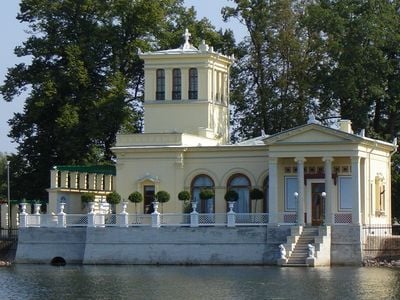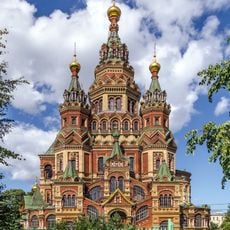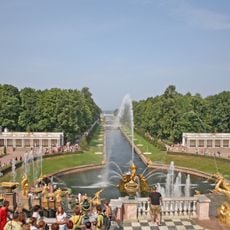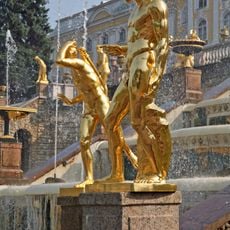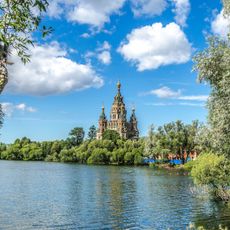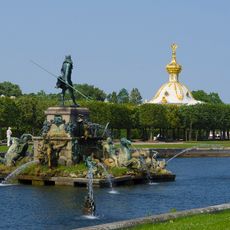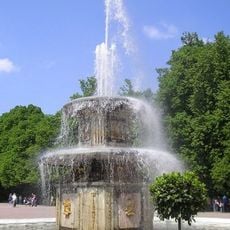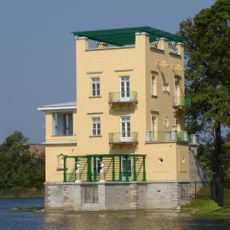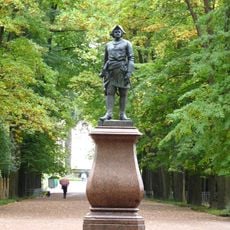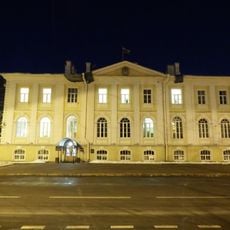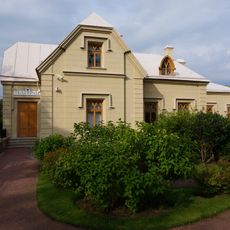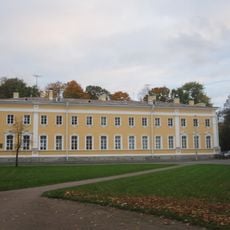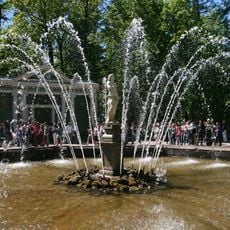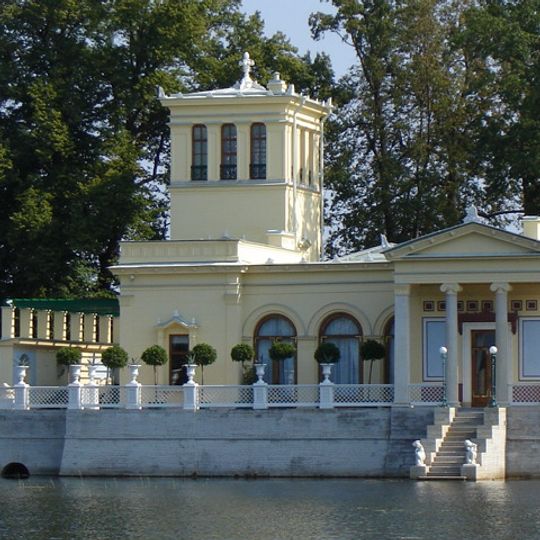
Tsaritsyn Pavilion, Neoclassical pavilion in Petergof, Russia.
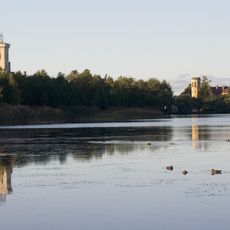
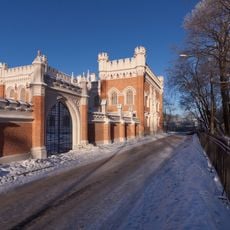
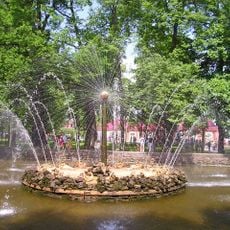
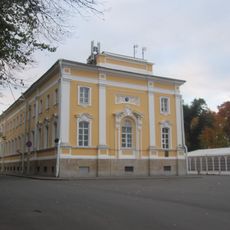
The Tsaritsyn Pavilion stands on Tsaritsyn Island in the middle of Olgin Pond in Petergof's Kolonistsky Park. Built in 1842–1844 by architect Andrei Stackenschneider for Empress Alexandra Feodorovna, it reproduces the look of ancient Roman houses excavated at Pompeii, with an atrium, a blue-and-pink marble pool, and a garden of fountains and marble benches.
The Tsaritsyn Pavilion was built between 1842 and 1844 for Empress Alexandra Feodorovna, wife of Nicholas I, in the Pompeian style then in fashion. Architect A. I. Stackenschneider and garden master P. I. Erler recreated the look of Roman houses excavated near Naples at Pompeii, giving the empress, who longed to visit Italy, a model of an ideal romantic world on her island in the Olgin Pond.
The pavilion's interiors reproduce the decoration of houses excavated at Pompeii, with a painted frieze of Tritons and Nereids by Johann Drollinger after Alexander Stakenschneider's drawings. Two porcelain services were made for it at the Imperial Porcelain Factory: the Etruscan service of 1844, painted with black figures on a brown ground for 48 place settings, and the Coral service of 1846.
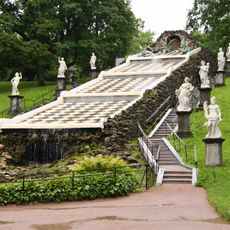
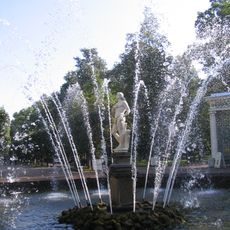
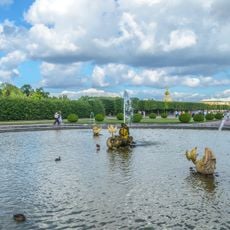
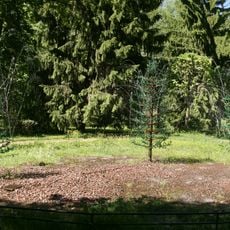
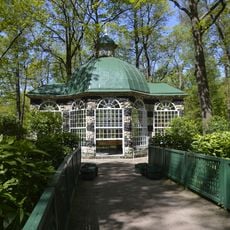
The pavilion stands on Tsaritsyn Island in the middle of Olgin Pond in the Kolonistsky Park, south of the Upper Garden. Visitors reach the island by footbridges from the park paths; the garden around the pavilion has fountains, statues and marble benches. The neighbouring Olgin Pavilion occupies another island in the same pond.
The pavilion's atrium has a glass cupola that could be closed in cold weather and opened in heat, replacing the open roof opening of Roman atriums. Bronze figures of fantastic monsters fixed in the corners of the opening served as water spouts.
The community of curious travelers
AroundUs brings together thousands of curated places, local tips, and hidden gems, enriched daily by 93,561 contributors worldwide.