Museum of Ethnography, Ethnographic museum in Gärdet, Sweden
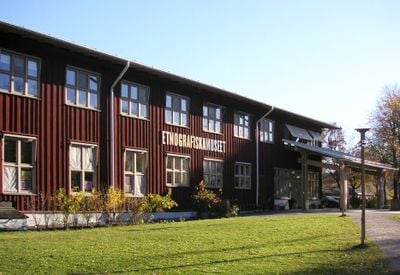
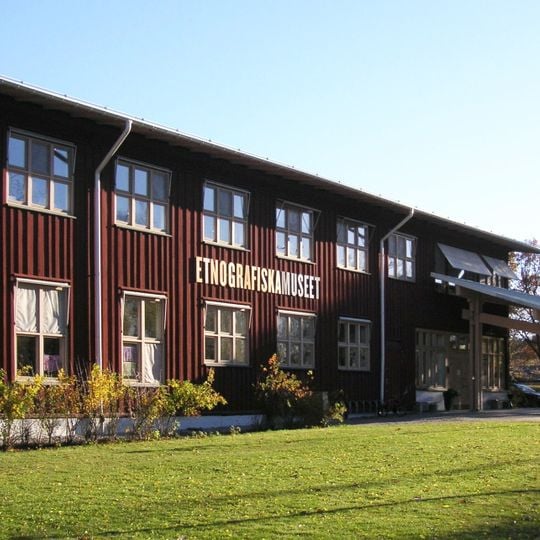
The Museum of Ethnography is a museum building in Stockholm that holds objects from cultures across China, Korea, Asia, the Pacific, the Americas, and Africa. The displays feature everyday items, tools, textiles, and ritual objects that show how people lived in different parts of the world.
The museum was founded in 1900 by Hjalmar Stolpe and grew from collections gathered through various expeditions. In 1935 it separated from the Swedish Museum of Natural History to become an independent institution.
The museum's name refers to ethnography, the study of peoples and cultures. Its roughly 220,000 objects come mainly from 1850–1950, gathered during colonial-era expeditions, missionary work and trade, with older pieces from the Swedish colony New Sweden and Cook's 18th-century voyages. A Japanese teahouse, Zui-Ki-Tei, built in 1990 and designed by Masao Nakamura, hosts tea ceremonies on the slope toward Djurgårdsbrunnskanalen.
The museum is easy to reach by public transport and has level ground access throughout. The exhibits are organized by regional themes, so you can focus on one area or spend a full visit exploring the whole collection.
A Haisla totem pole stands at the entrance, a replica given to the museum in 2007 after the original was returned to the Haisla Nation. The return of the original pole was one of the early cases where a Swedish institution gave back an object to the community it came from.
The community of curious travelers
AroundUs brings together thousands of curated places, local tips, and hidden gems, enriched daily by 94,391 contributors worldwide.