Njullá, Mountain summit in northern Sweden
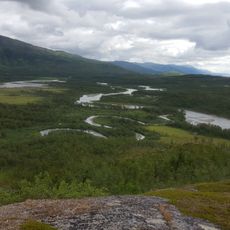
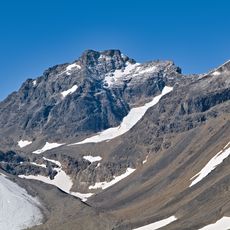
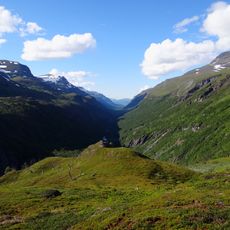
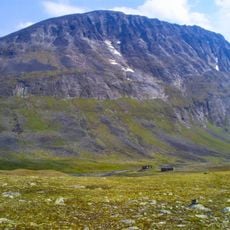
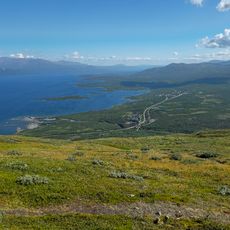
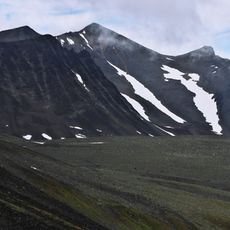
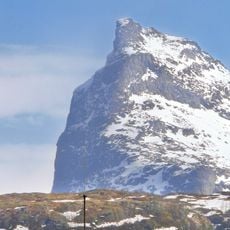
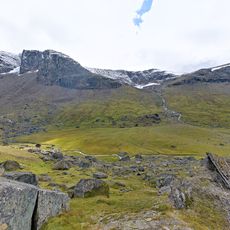
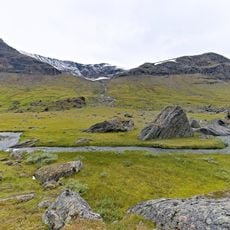
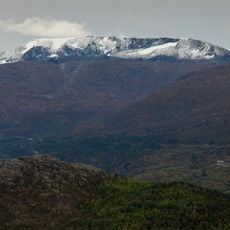
Njullá (Nuolja) is a mountain in Kiruna Municipality whose highest point reaches 1,169 m above sea level, partly inside Abisko National Park west of Abisko and south of Lake Torneträsk. Its slopes carry mountain birch forest, and a chairlift runs up to the Aurora Sky Station at 900 m, below the summit.
Botanist Thore E. Fries founded the Nuolja field research site in 1917 and hiked the mountain roughly 150 times to record how snowmelt dates shaped plant phenology, publishing his findings in 1925. In 2017, a century later, researchers began repeating his observations to measure climate change, and a citizen-science project asked visitors to submit sightings of about 20 key plant species.
The name Njullá is the Northern Sámi form used for the mountain, which also appears in Swedish as Nuolja. Since 2007 the summit has held the Aurora Sky Station, opened and run by the Swedish Tourist Association (STF), which also operates the Abisko tourist station below. The station has a café and a viewing spot used above all for watching the northern lights over Abisko National Park.
Marked trails from Abisko National Park lead to the summit. Winter conditions are demanding with steep terrain, so visiting during colder months requires caution and good preparation.
Aurora Sky Station, opened in 2007 at 900 m on the summit and run by the Swedish Tourist Association, has a café and viewing platform for northern lights and over Abisko National Park; it is reached by chairlift.
The community of curious travelers
AroundUs brings together thousands of curated places, local tips, and hidden gems, enriched daily by 94,426 contributors worldwide.