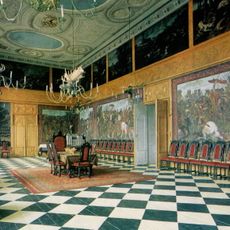
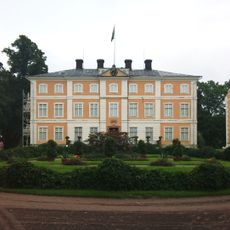
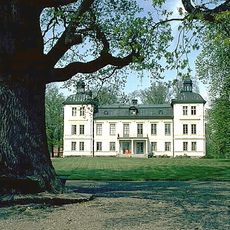
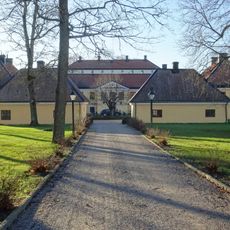
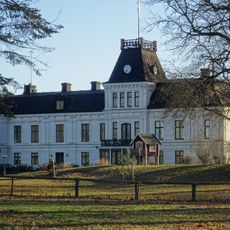
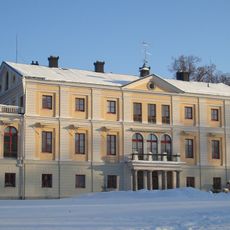
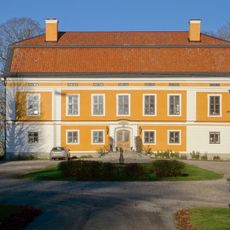
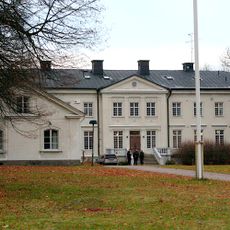
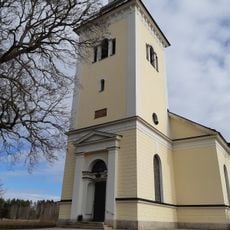
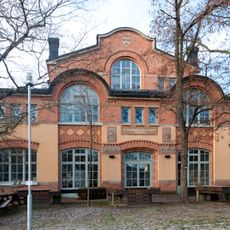
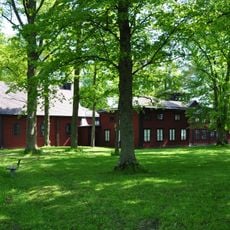
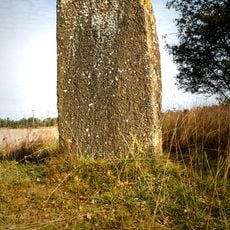
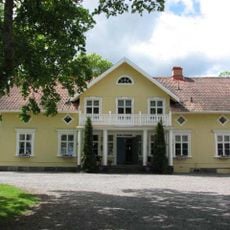
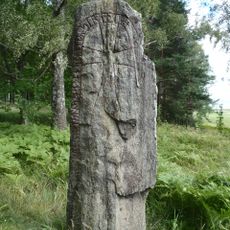
Forsby gård, Manor house in Vingåker Municipality, Sweden.
Forsby gård is a manor house in Vingåker, Sweden, featuring a two-story stone building in neoclassical style. The estate sits on the western shore of Lake Öljaren and contains sixteen rooms throughout the structure.
Forsby is first documented in 1310, when it belonged to the royal councillor Lars Ulfsson (Stengavel); in 1340 it was held by the knight Anund Sture, and in 1391 a Laurens aaf Forsby is named. Gustav Vasa's reduction brought it to the Crown in 1553. In 1647 the councillor and baron Paul Khevenhüller bought it, and in 1655 Edvard Ehrenstéen acquired it and made it his seat; his widow Catharina Wallenstedt enlarged the estate by buying land.
The name Forsby ends in -by, a Viking Age place-name element. The estate belonged to Julita Monastery in the Middle Ages, and in 1553 Gustav Vasa's reduction withdrew it to the Crown. Today the buildings are rented out as private housing alongside farming and animal breeding.
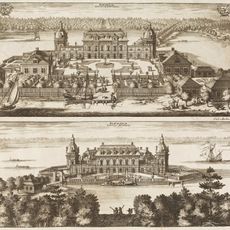
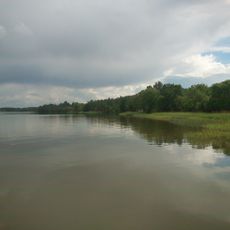
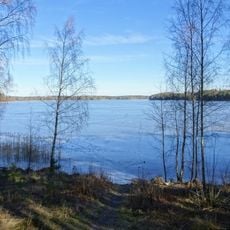
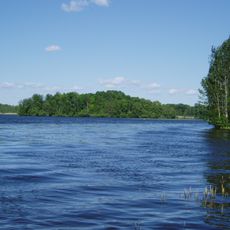
The estate lies on the western shore of Lake Öljaren in Vingåker Municipality, with the buildings on a height above the water. The 1791 survey map by Jacob Magnét shows the corps de logi flanked by four detached wings, with the fruit orchard west of the main building and the chicken and kitchen gardens north of it. Along the shore stood the washhouse, brewhouse, bathhouse, ice cellar, stables with coach shed, boathouse and smithy.
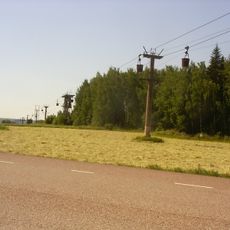
The lime kiln at Forsby opened in 1939, and from it a 41.2-kilometre cableway carried limestone to Köping until 1997. The line was among the longest of its kind, and the quarry was cut on land parcelled off from the estate by Gunnar Santesson.
The community of curious travelers
AroundUs brings together thousands of curated places, local tips, and hidden gems, enriched daily by 93,684 contributors worldwide.