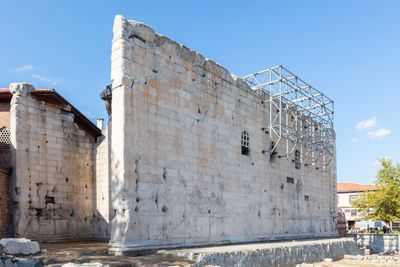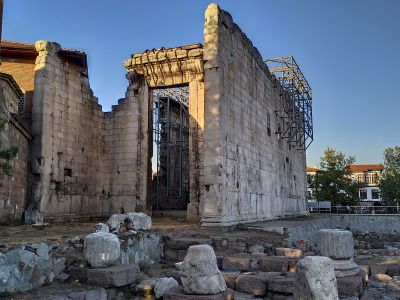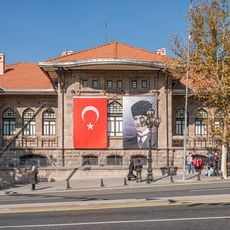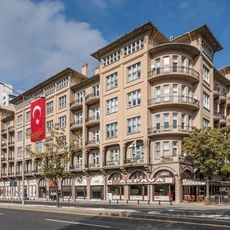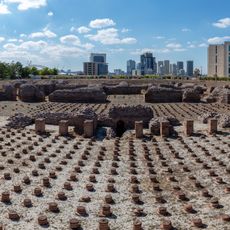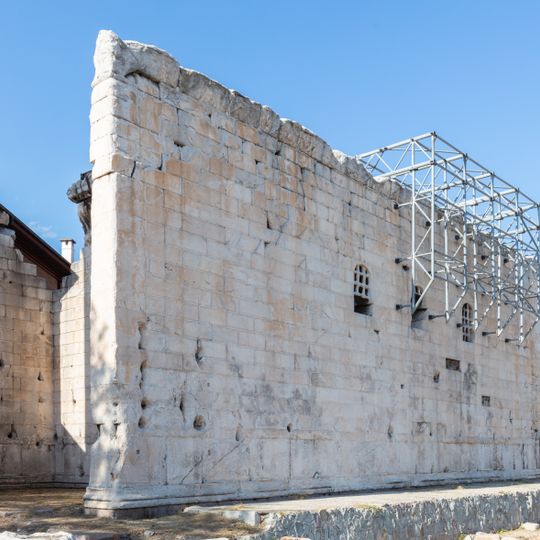
Temple of Augustus, Roman temple in Altındağ, Turkey.
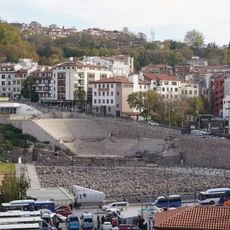
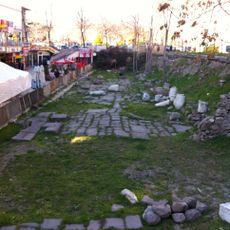
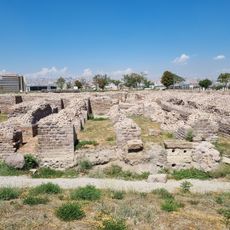
The Temple of Augustus stands on a two-meter-high platform and features Corinthian columns arranged across its 36 by 54-meter footprint. The structure includes foundation walls and tiered sections that surround the main platform.
Construction took place between 25 and 20 BCE, following Emperor Augustus's conquest of central Anatolia and the establishment of the Galatia province. The building was integrated into an existing urban layout to demonstrate Rome's control over the region.
The walls display inscriptions of the Res Gestae Divi Augusti in both Latin and Greek, recording the accomplishments of Rome's first emperor. These bilingual texts reveal how Rome presented its power and authority to people across the conquered territories.
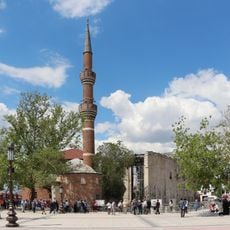
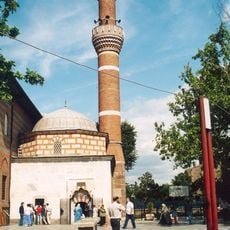
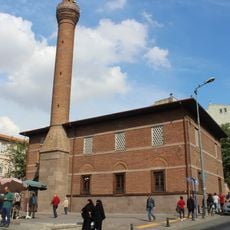
The temple sits beside the Hacı Bayram Mosque and is easily visible from the street. Visitors can view the ruins at any time since the site remains open and straightforward to access.
This structure preserves the most complete surviving copy of Augustus's autobiography, known as the Monumentum Ancyranum. The wall inscriptions represent the best-preserved version of this important Roman document, which Augustus deliberately placed in temples throughout the empire.
The community of curious travelers
AroundUs brings together thousands of curated places, local tips, and hidden gems, enriched daily by 60,000 contributors worldwide.