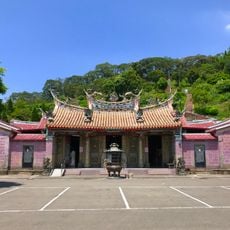
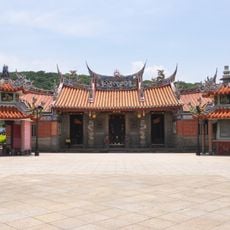
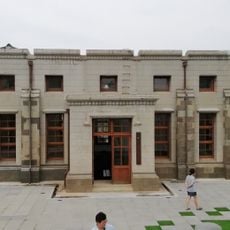
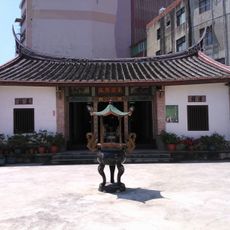
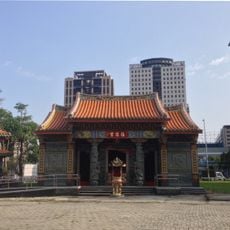
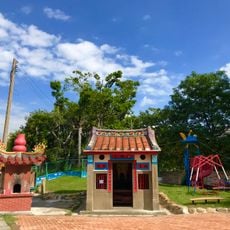
Hsin-Pu Upper Fang-Liao Liu Family House, Historical residence in Shangliao Village, Taiwan.
The Hsin-Pu Upper Fang-Liao Liu Family House is a traditional residence in Shangliao Village featuring substantial wooden beams, intricate stone carvings, and construction methods typical of 19th-century Taiwan. The structure comprises interconnected rooms arranged around courtyards, reflecting how prosperous households organized their living spaces during that era.
Liu Yanzhuan moved to Fangliao in 1781 and built a mud-brick, thatched house after a geomancer chose the site. The house was destroyed in the 1862 Dai Chaochun incident and rebuilt the next year with a tile roof, giving the two-hall layout called Shuangtang Wu. In 1918 Liu Fuqing began adding three side wings, completed in 1928.
The residence reflects how prosperous families of the Qing era valued skilled craftsmanship, evident in the detailed carvings throughout the rooms. Walking through the spaces gives a sense of the family routines and social practices that shaped daily life in the village.
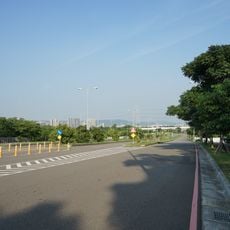
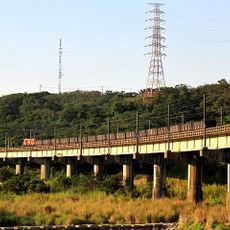
The house stands beside the road between the Baozhong Yimin Temple and Hsinpu town centre, with the HSR tracks and the Fangliao bicycle path nearby. The caretaker Liu Rongji, who grew up in the house, gives explanations on site. The spring and autumn ancestor rites fall on the fourth day of the first lunar month and the second day of the eighth lunar month.
The flagpole in front of the house dates from 1938, when the Liu family was chosen as a model community of Hsinchu Prefecture and flew the Japanese flag there. The family flag raised today was designed in 1994 by Liu Lijuan, daughter of Liu Rongji, from a pattern on the main hall's round window.
The community of curious travelers
AroundUs brings together thousands of curated places, local tips, and hidden gems, enriched daily by 94,713 contributors worldwide.