Coney Island, Seaside entertainment district in Brooklyn, United States
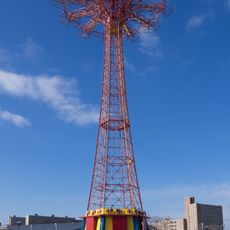
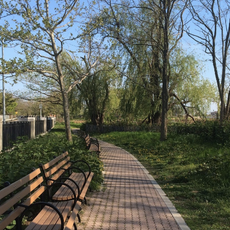
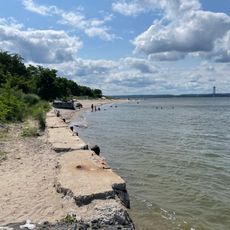
Coney Island is a peninsula in southwestern Brooklyn, about 6.4 km long and 0.8 km wide, reaching 2.1 m above sea level. Its beach is artificial: sand is redeposited by beach nourishment and held by about two dozen groynes. The Riegelmann Boardwalk, built in 1922–1923, runs behind the shore, and the red steel Parachute Jump tower rises near Stillwell Avenue.
Coney Island became a seaside resort for wealthy New Yorkers in the 19th century; the first road bridge over Coney Island Creek and the Coney Island House hotel opened in 1829. A paddle steamer from Manhattan began calling in 1846, and Peter Tilyou opened the Surf House beach bath in 1865. Amusement parks appeared by the late 19th century, and the attractions peaked in the first half of the 20th century.
The name comes from the Dutch konijn, rabbit, for the animals that populated Long Island; the Lenape called the area Narrioch, "land without shadows." The 1885 Elephant Hotel, a 30-metre building shaped like an elephant at Surf Avenue and West 5th Street, gave rise to the slang "Seeing the Elephant."
The beach is most active during summer months, with most rides and attractions operating from May through September. The area remains accessible off-season for beach walks and dining, though many facilities stay closed.
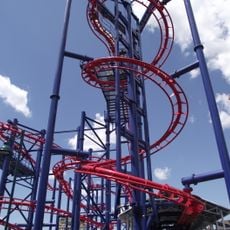
The Parachute Jump, a 76-meter tall drop tower from 1939, has stood inactive for decades and now serves as an illuminated landmark. The Wonder Wheel Ferris wheel has been spinning since 1920 and offers both stationary and swinging cars for different riding experiences.
The community of curious travelers
AroundUs brings together thousands of curated places, local tips, and hidden gems, enriched daily by 92,220 contributors worldwide.