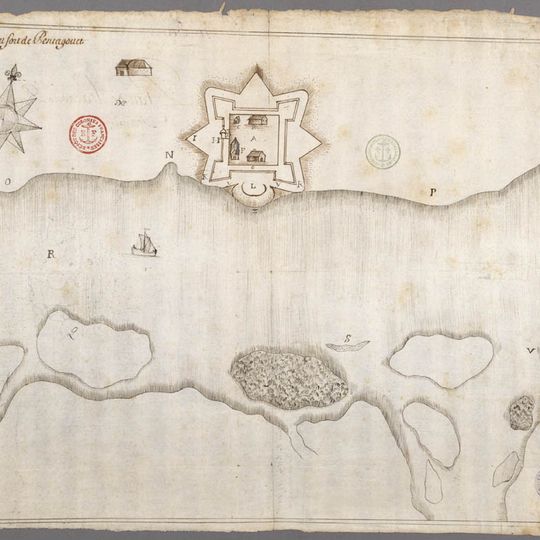
Fort Pentagouet, 17th century French colonial fort in Castine, United States.
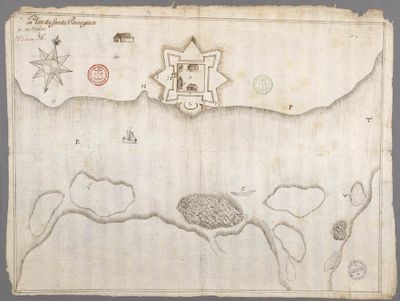
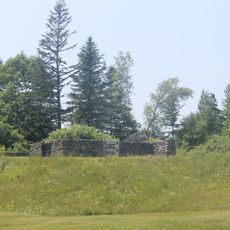
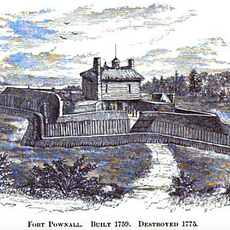
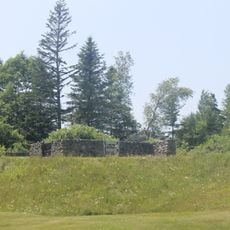
Fort Pentagouet is a colonial ruin at the mouth of the Penobscot River, featuring preserved stone foundations and remains of 17th-century military structures. The site reveals the layout of fortifications and provides insight into the daily operations of an early European settlement.
The fort was established in 1635 and changed hands between French, English, and Dutch powers, reflecting its strategic importance in North American colonial competition. By 1674, these shifts had reshaped regional trade networks and local alliances.
The settlement served as a meeting point where European traders and Native peoples of the Penobscot and Abenaki nations exchanged goods and knowledge. The ruins today remind visitors of these cross-cultural connections that shaped the region.
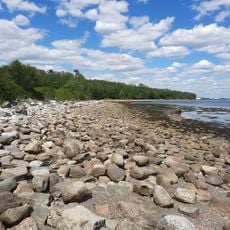
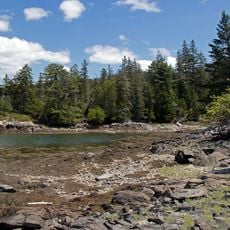
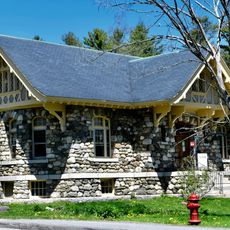
The ruins are located near a Catholic chapel in Castine and are accessible by walking paths, with information panels explaining archaeological findings throughout the site. The location offers easy access with good views of the river and surrounding landscape.
Archaeological digs in the 1980s uncovered a wide range of objects, from military equipment to everyday personal items from colonial inhabitants. These discoveries reveal how people from different backgrounds shared life in this frontier settlement.
The community of curious travelers
AroundUs brings together thousands of curated places, local tips, and hidden gems, enriched daily by 60,000 contributors worldwide.