Notre Dame Stadium, American football stadium in Notre Dame, Indiana, United States
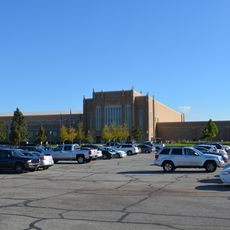
Notre Dame Stadium is an outdoor football stadium on the University of Notre Dame campus north of South Bend, Indiana. Its walls were laid with more than two million bricks, and the field runs north–south at about 732 feet above sea level. The 2014 Campus Crossroads project added three buildings to the structure and set capacity at 77,622.
The stadium opened in 1930 after coach Knute Rockne helped shape the building plans. He died in a plane crash in 1931, just months after the first season in the new facility.
The team is called the Fighting Irish, and its mascot is a leprechaun. The stadium's nickname, "The House that Rockne Built", honours coach Knute Rockne, who pushed the 1930 project through. The 1928 season's profits of nearly $500,000 helped fund construction, and 240 six-person box seats raised over $150,000.
The field runs north–south at about 732 feet (223 m) above sea level, and the stadium has been sold out for home games since 1964, so tickets are hard to find on short notice. The Campus Crossroads buildings added in 2014 hold the Duncan Student Center, O'Neill Hall and Corbett Family Hall, which bring dining, music and academic space right up to the stands.
The stadium's nickname, "The House that Rockne Built", refers to coach Knute Rockne, who pushed the 1930 project through and kept the gap between field and stands to a minimum. The first Notre Dame touchdown there came on October 4, 1930, when "Jumping Joe" Savoldi returned a kickoff 98 yards against SMU.
The community of curious travelers
AroundUs brings together thousands of curated places, local tips, and hidden gems, enriched daily by 94,659 contributors worldwide.