Hell Gate Bridge, Railway arch bridge in Queens and The Bronx, United States
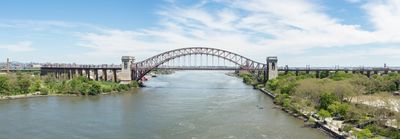
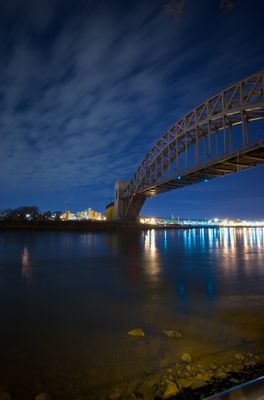
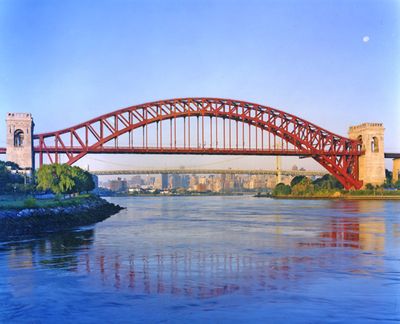
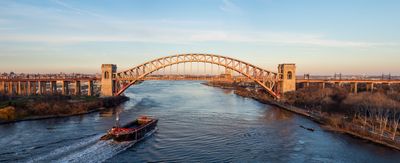
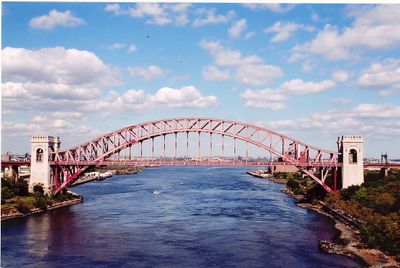
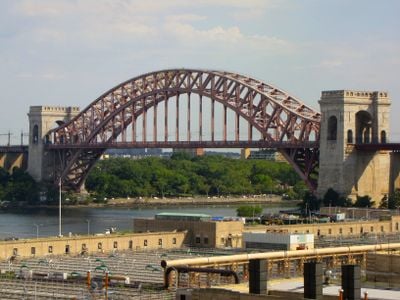
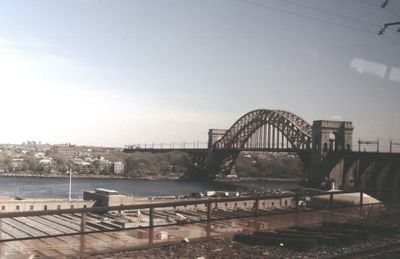
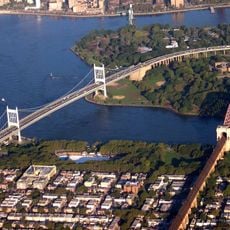
Hell Gate Bridge is a steel through-arch railway bridge over the Hell Gate strait of the East River, linking Astoria in Queens with the Bronx via Randalls and Wards Islands. Its main span is a 1,017-foot (310 m) two-hinged arch braced by crisscrossing lattice girders, flanked by pale stone towers on each bank. The deck carries two electrified Amtrak Northeast Corridor tracks and one freight track.
The crossing opened on March 9, 1917, as the longest steel arch span in the world at that time. Construction created the first continuous rail link between New York and New England, eliminating the need for trains to transfer onto ferries.
The bridge takes its name from Hell Gate, the strait of the East River it crosses, whose Dutch name Hellegat means "hell gate" because of its unpredictable whirlpools. The German Wikipedia calls it the most dangerous spot on the East River. The span was designed by Gustav Lindenthal with architect Henry Hornbostel, and its design inspired the Sydney Harbour Bridge.
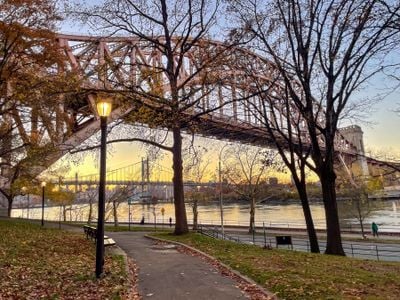
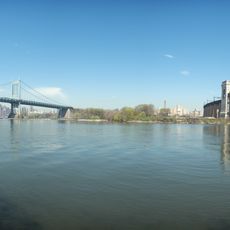
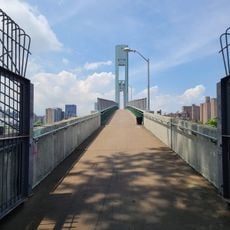
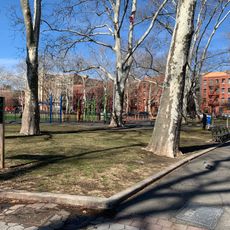
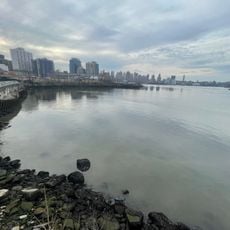
The structure is visible from many waterfront points in Astoria and Randalls Island, especially during sunrise or sunset over the water. Only rail traffic crosses it, but walkers find nearby parks with clear views of the arch above the river.
German saboteurs planned to destroy the crossing during World War II to cripple rail traffic along the East Coast. Today around 40 Amtrak trains pass through daily, carrying thousands of travelers between Boston and Washington.
The community of curious travelers
AroundUs brings together thousands of curated places, local tips, and hidden gems, enriched daily by 93,349 contributors worldwide.