Hot Springs National Park, National Park in Arkansas, United States
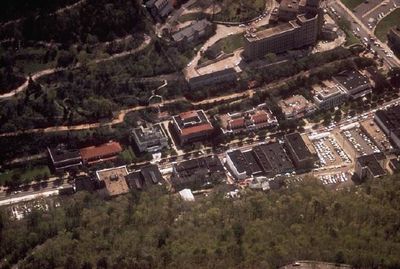
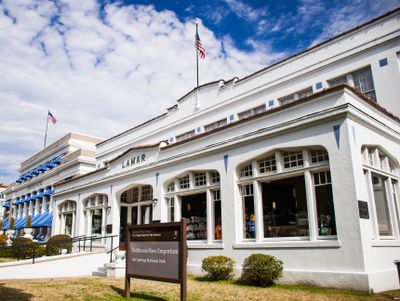
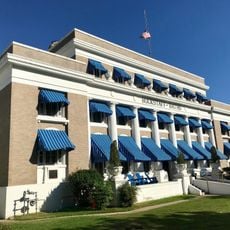
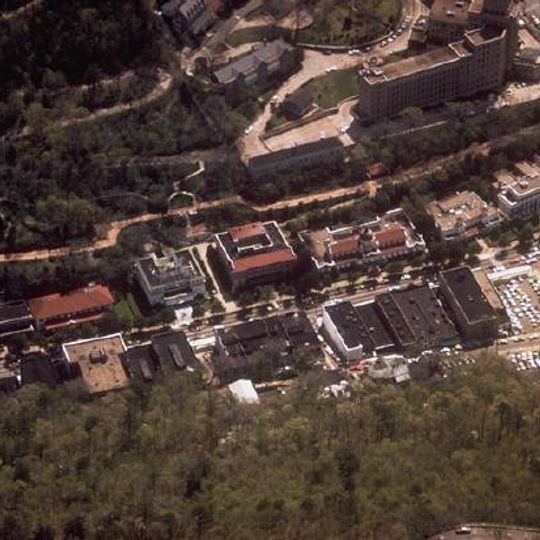
This protected area includes several spring sites at the base of a forested mountain and a historic early 20th-century row of eight ornately decorated bathhouses. Narrow trails wind up the slopes above the bathing facilities and pass through dense forest to overlooks above the town.
Congress created the Hot Springs Reservation on April 20, 1832, to keep the thermal waters open for public recreation rather than to preserve the springs in their natural state; it was the first time the federal government set land aside for such use. The reservation became Hot Springs National Park on March 4, 1921, and was later expanded to 5,839 acres.
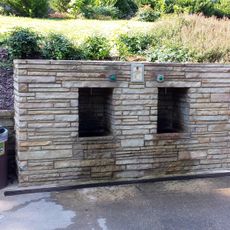
Several Native American tribes gathered at the springs for over 8,000 years, setting aside weapons to bathe in peace; they called the valley "Valley of the Vapors" when Hernando de Soto arrived in 1541. The Quapaw ceded the land to the United States in an 1818 treaty. Today the springs are managed to supply uncontaminated hot water to public fountains and bathhouses.
Several hiking trails access the slopes above the bathhouse row and offer easy to moderate climbs through shaded forest. Those who want to see the historic bathhouses from inside should note that only a few of the buildings are open for viewing.
The park's oldest structure is a small log cabin built in 1807 by Jean Emmanuel Prudhomme, the first European-American settler of Hot Springs, who regained his health by bathing in the springs. The park also holds old-growth forest recognized by the Old-Growth Forest Network.
The community of curious travelers
AroundUs brings together thousands of curated places, local tips, and hidden gems, enriched daily by 94,408 contributors worldwide.