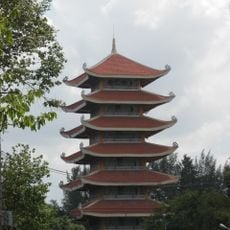
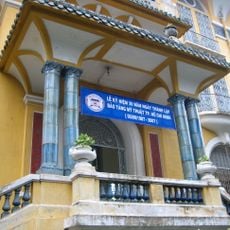
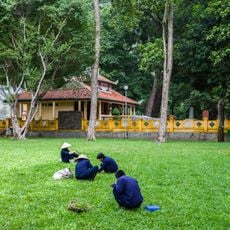
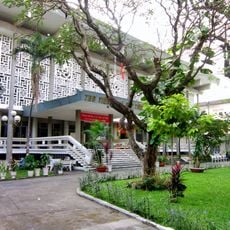
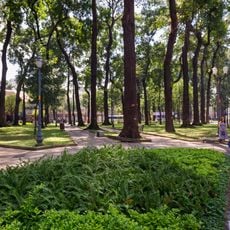
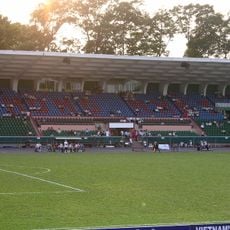
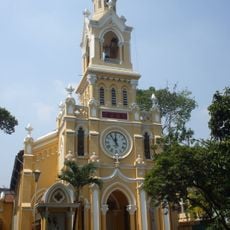
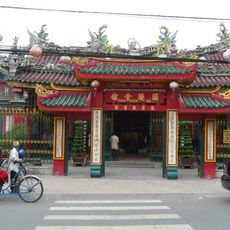
Công viên Hòa Bình, Korean-style public park in District 5, Ho Chi Minh City, Vietnam.
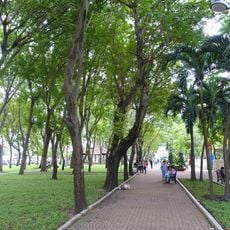
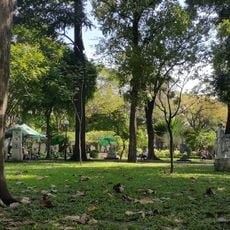
Công viên Hòa Bình is a Korean-style public park in District 5 of Ho Chi Minh City featuring an octagonal pavilion built in traditional Korean architecture. This central structure sits at the intersection of Hung Vuong, Su Van Hanh, and Nguyen Chi Thanh streets and provides a focal point for the green space where local residents gather and relax.
The pavilion was designed in 1972 by monk and artist Lee Man-bong during a period when Vietnam and South Korea were strengthening diplomatic ties. This structure stands as a monument to an important era of cultural and political connection between the two nations.
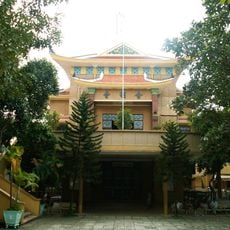
The pavilion bears the name Dinh Hoa Binh and originally featured Dancheong patterns, a traditional Korean decorative technique with multicolored designs on wooden structures. Visitors can still observe these artistic details today, which show how Korean craftsmanship traditions are expressed within this public space.
The park is easily accessible from the three streets that intersect at this location and provides a level area for walking and rest. It is best to visit during daytime hours when the space is active with local people and the surroundings are clearly visible.
The pavilion follows the Palgagjeong architectural style, a design pattern popular throughout South Korea but rarely seen in southern Vietnam. This unusual structure makes the park a rare example of Korean commemorative architecture in the region.
The community of curious travelers
AroundUs brings together thousands of curated places, local tips, and hidden gems, enriched daily by 92,612 contributors worldwide.