Cornet Monastery, Monastery in Călinești, Brezoi, Romania
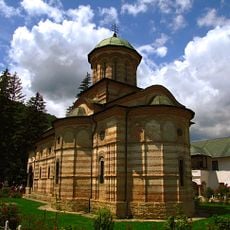
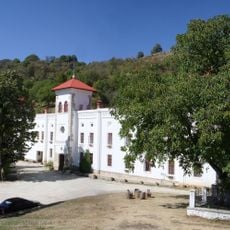
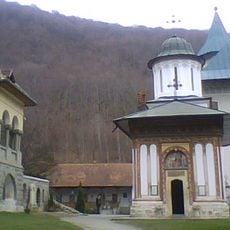
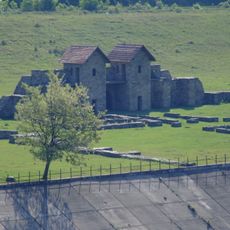
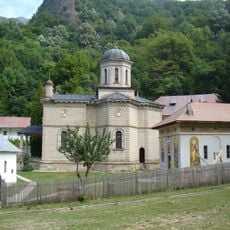
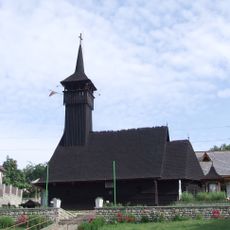
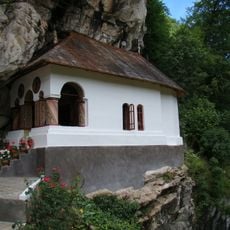
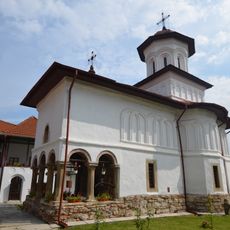
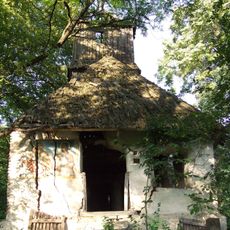
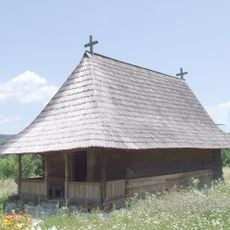
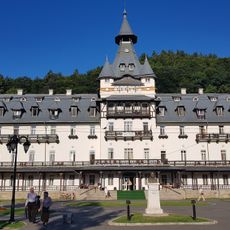
Cornet Monastery is a religious complex with multiple buildings arranged around a central space and protected by an enclosing wall. The structures display traditional Romanian Orthodox architectural style with carved details and religious artwork found throughout the interior.
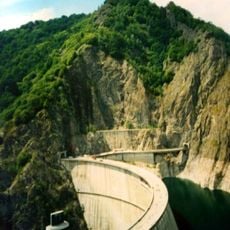
Mareș Băjescu, a high vornic close to the Cantacuzini, founded the monastery; the original stone inscription records completion on 29 August 1666, under Radu Leon. A fire in 1808 destroyed the church and cells and interrupted monastic life until the abbot Irinarh rebuilt them in 1835. In 1898 the railway tunnel cut through the enclosure wall, and in 1979 a planned Olt dam would have meant demolition, but the dam was built a few hundred metres upstream.
The monastery serves as an active place where Orthodox believers gather for prayer and religious observances today. Its continued use by the local community shows how this site remains woven into the spiritual life of the region.
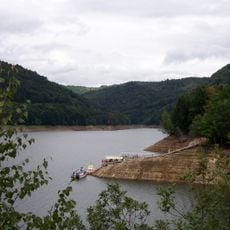
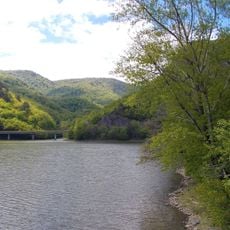
The monastery lies on the right bank of the Olt, on the Râmnicu Vâlcea–Sibiu road, about 50 km from Râmnicu Vâlcea, in Călinești, part of Brezoi. The church stands in the middle of a square stone enclosure; the entrance to the narthex is by a small stair on the north side. The 1898 railway tunnel cut through part of the old enclosure wall, so the north and east walls, the tower and the southeast foișor are the oldest surviving parts.
In the narthex are kept relics of John the Baptist, John the Russian, Ephrem the New, Nectarios of Aegina and Macarius the Egyptian, among others. The original carved inscription in Albești stone records completion on 29 August 1666, during the reign of Radu Leon, and was cut by a priest Stan of Băjești, who also signed the Aninoasa inscription eleven years later.
The community of curious travelers
AroundUs brings together thousands of curated places, local tips, and hidden gems, enriched daily by 94,460 contributors worldwide.