Constantine Tower, Feodosia, Medieval defensive tower in Feodosia, Russia
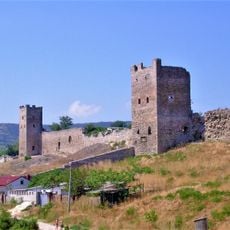
Constantine Tower is a two-tiered, four-sided tower built of local limestone, with walls up to two metres thick. Three walls survive — the eastern, northern and part of the western; the southern side and the oak-and-beech floor beams are lost. A triple arcaded band and brick merlons crown it, and carved corbels for the machicolations remain on the north and west walls.
The Genoese built the tower in 1382, and it was rebuilt in 1443 and later by the Ottomans. It closed the outer ring of Kaffa's defenses, which ran to Mount Mithridat and down to the sea. Its commander, like the consul, was sent from Genoa and replaced yearly. The tower also served as an arsenal holding halberds, crossbows, spears and stone cannonballs.
The structure takes its name from Roman Emperor Constantine, who made Christianity the official faith of the Roman Empire. Today, this name links the site to the region's deep religious history and its ties to early Christian traditions.
The three remaining original walls are accessible from Yubileyny Park, where visitors can view the structure with clear sightlines. Best to visit during daylight hours to fully appreciate the stonework details and surrounding views.
In 1914, Feodosia's city treasury and local merchants funded Italian engineers specialised in medieval towers to reconstruct the structure after its move; they spent a year on reinforcement works and corrected the faults of the transport. The tower's image appeared on the Feodosia coat of arms in 1844 and later on stamps, envelopes and badges.
The community of curious travelers
AroundUs brings together thousands of curated places, local tips, and hidden gems, enriched daily by 93,887 contributors worldwide.