Pushkin Grotto, Stone grotto pavilion in Feodosia, Crimea
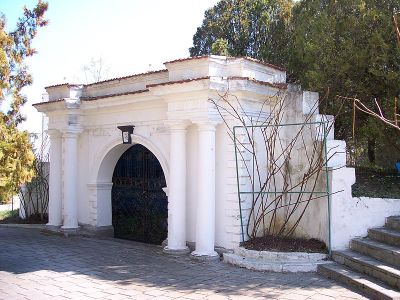
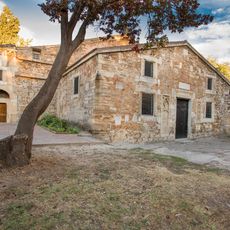
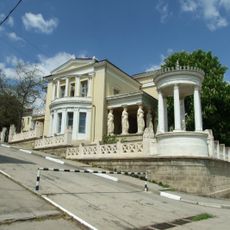
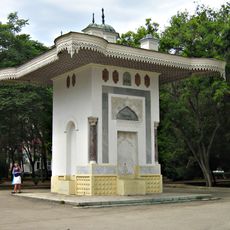
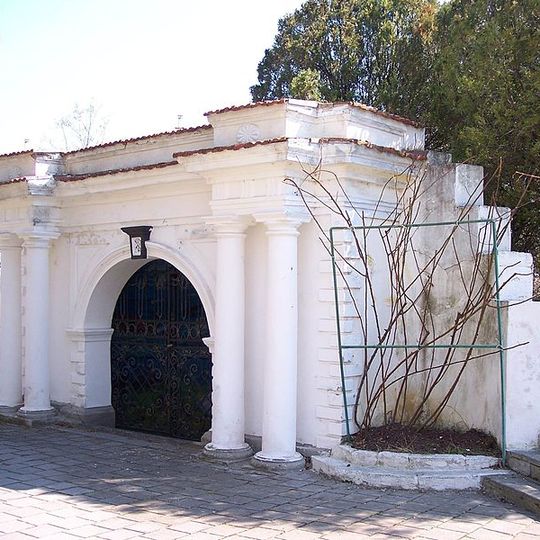
Pushkin Grotto is a small stone structure with columns built in the early 19th century as a grotto-like shelter for rest and protection from bad weather. It stands on the grounds of the former dacha of Feodosia governor S. M. Bronevsky, now the medical rehabilitation and sanatorium centre of the Russian Ministry of Defence.
The stone grotto with columns was built in the early 19th century on the estate of Feodosia governor S. M. Bronevsky as a shelter from bad weather. In August 1820 Alexander Pushkin stayed several days at Bronevsky's house while travelling from the Caucasus to Gurzuf with General Raevsky's family. A marble plaque at the military sanatorium entrance records his stay of 16–18 August 1820.
Locals call it Pushkin Grotto because the poet stayed here in August 1820 as a guest of S. M. Bronevsky, the former governor of Feodosia, whose dacha stood on this ground. A marble plaque at the entrance to the military sanatorium records his stay of 16–18 August 1820 en route to Gurzuf.
The grotto stands on the grounds of the military sanatorium on General Gorbachev Street, on the site of Governor Bronevsky's former dacha; the marble memorial plaque is set at the sanatorium entrance. It is a working medical facility, so access to the grounds is not guaranteed for outside visitors. Ask about permission before planning a walk there.
The marble plaque at the entrance to the military sanatorium reads that Pushkin stayed here from 16 to 18 August 1820 on his way to Gurzuf. The grotto itself is a small stone structure with columns, not a natural cave, on the grounds of the former Bronevsky governor's dacha.
The community of curious travelers
AroundUs brings together thousands of curated places, local tips, and hidden gems, enriched daily by 93,458 contributors worldwide.