See the monuments around you in AROpen chests in the app
Around Us is built for your phone — point your camera at the streets and discover the monuments and places around you in augmented reality.Around Us is built for your phone — chests unlock when you walk, explore and capture nearby places.
Thousands of grounded planes, anchored ships, and scrapped vehicles tell the story of transportation at the end of its life.
Around the world, thousands of airplanes, ships, and vehicles reach the end of their service life and are sent to storage or dismantling sites. These locations mark the final destinations of transportation machines: some wait in the Arizona desert where over 4,000 military aircraft are preserved thanks to the dry climate, others are anchored in Suisun Bay in California as strategic reserves, while still others are dismantled at industrial sites in Chittagong, Bangladesh, where workers recover metal from large commercial ships.
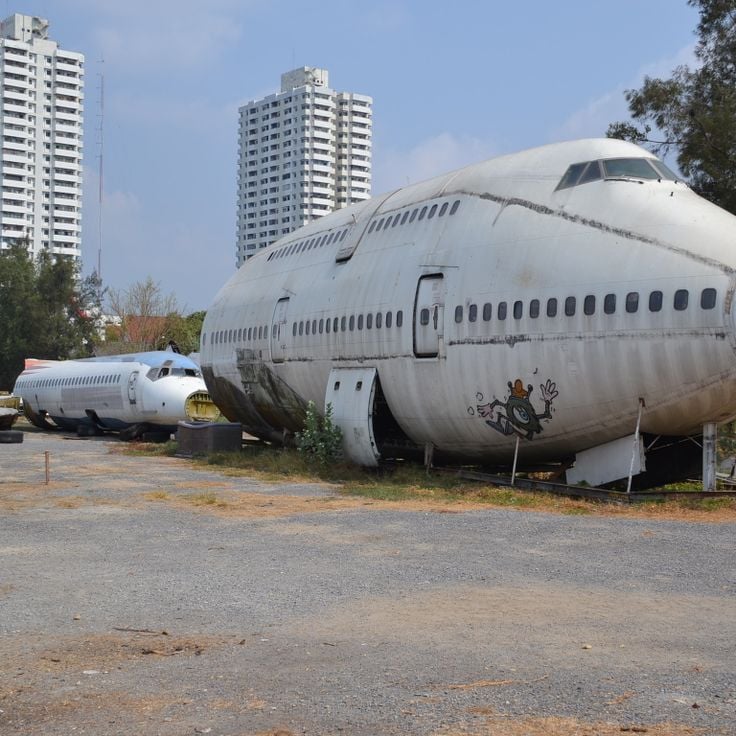
Some of these sites have taken unusual forms: in Bangkok, former passenger planes have been converted into homes where residents live; in Alliance, Nebraska, 39 gray cars replicate the exact arrangement of Stonehenge. From Roswell to rusted wrecks in Staten Island and abandoned radioactive vehicles near Chernobyl, these locations tell the comprehensive story of machines that have transported generations of travelers and goods.
Thousands of grounded planes, anchored ships, and scrapped vehicles tell the story of transportation at the end of its life.
Around the world, thousands of airplanes, ships, and vehicles reach the end of their service life and are sent to storage or dismantling sites. These locations mark the final destinations of transportation machines: some wait in the Arizona desert where over 4,000 military aircraft are preserved thanks to the dry climate, others are anchored in Suisun Bay in California as strategic reserves, while still others are dismantled at industrial sites in Chittagong, Bangladesh, where workers recover metal from large commercial ships.
Some of these sites have taken unusual forms: in Bangkok, former passenger planes have been converted into homes where residents live; in Alliance, Nebraska, 39 gray cars replicate the exact arrangement of Stonehenge. From Roswell to rusted wrecks in Staten Island and abandoned radioactive vehicles near Chernobyl, these locations tell the comprehensive story of machines that have transported generations of travelers and goods.
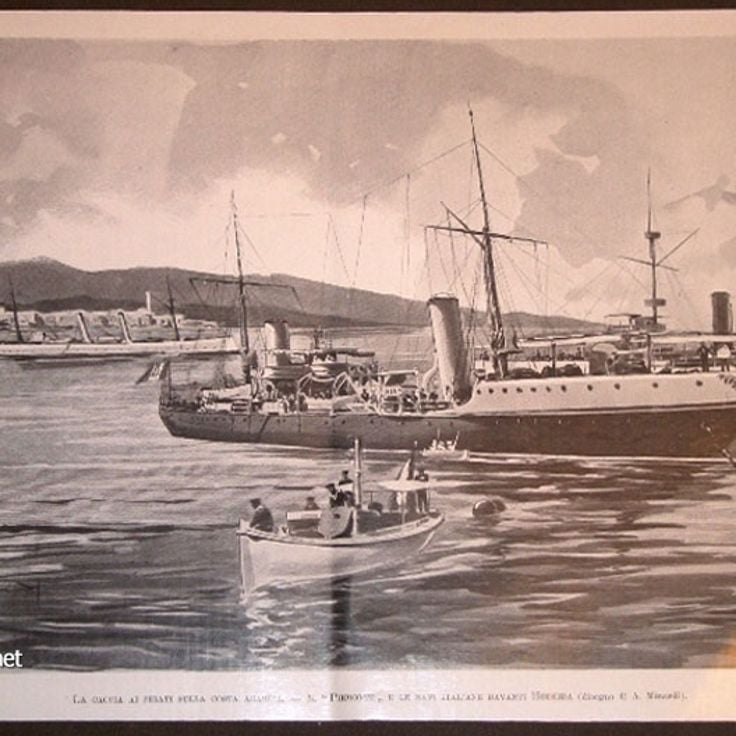
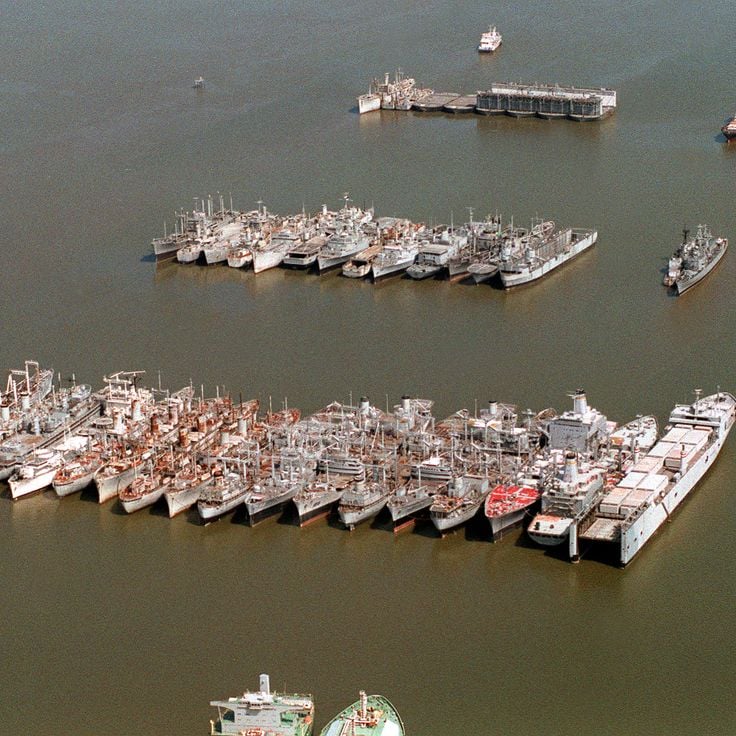
The Reserve Fleet of Suisun Bay sits in a sheltered stretch of water east of San Francisco. Dozens of retired military and commercial ships are anchored here, managed by the US Maritime Administration as a national reserve. The ships are kept ready in case of emergency, though many have rested in these waters for decades. Some are eventually sold or sent for scrapping.
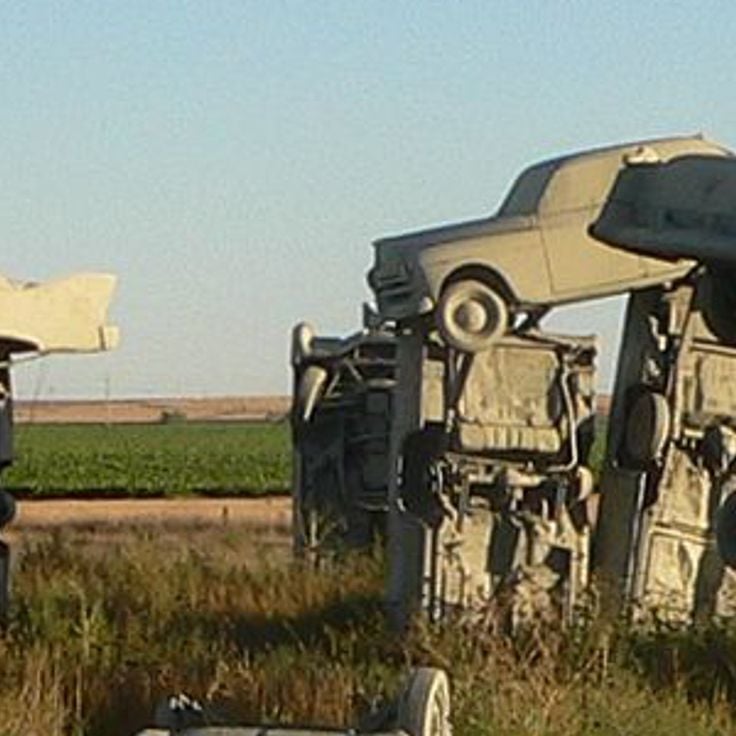
Carhenge stands in the open prairie of Nebraska and is a replica of Stonehenge made from 39 gray-painted cars. Jim Reinders built it in 1987 as a memorial to his father. The vehicles are arranged to copy the shape of the prehistoric monument in England, with upright cars forming the circle and others placed horizontally on top as capstones. Carhenge shows how retired vehicles can take on a second life as an outdoor art installation.
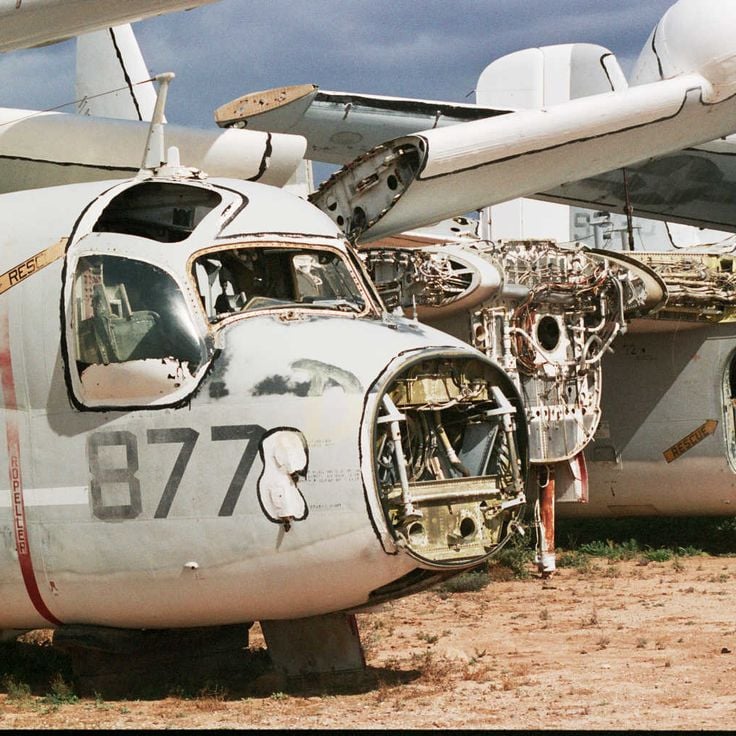
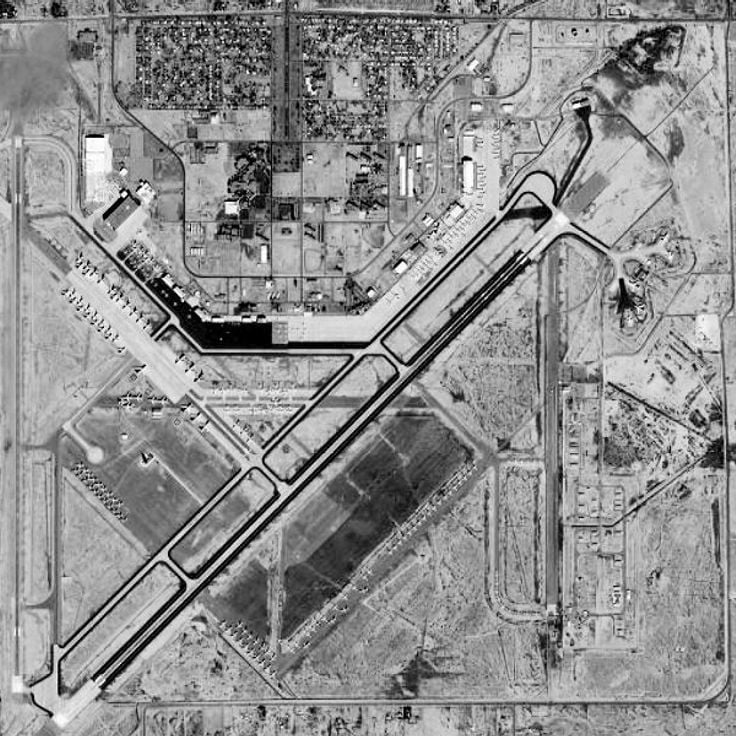
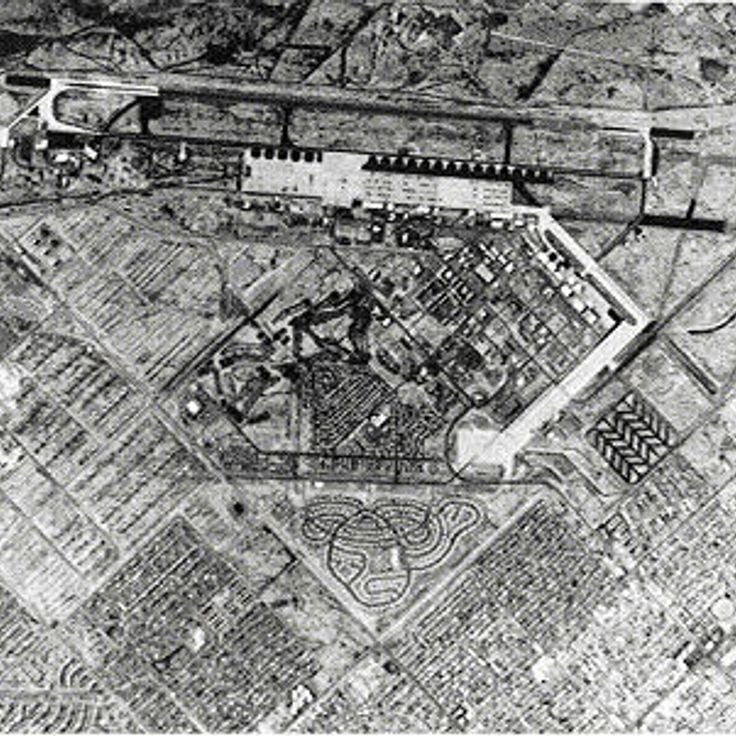
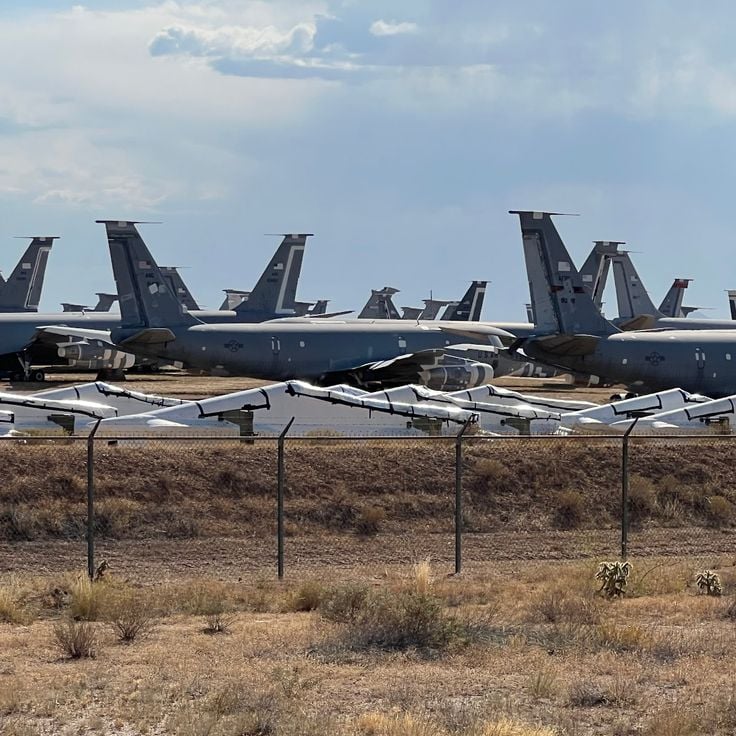
Pacific Aircraft Storage in the Arizona desert is one of the largest airplane storage sites in the world. Thousands of military and civilian aircraft stand in long rows under the open sky. The dry desert air keeps metal from rusting, allowing planes to sit for years without serious damage. Some aircraft are kept here for spare parts, others wait for possible return to service or eventual dismantling.
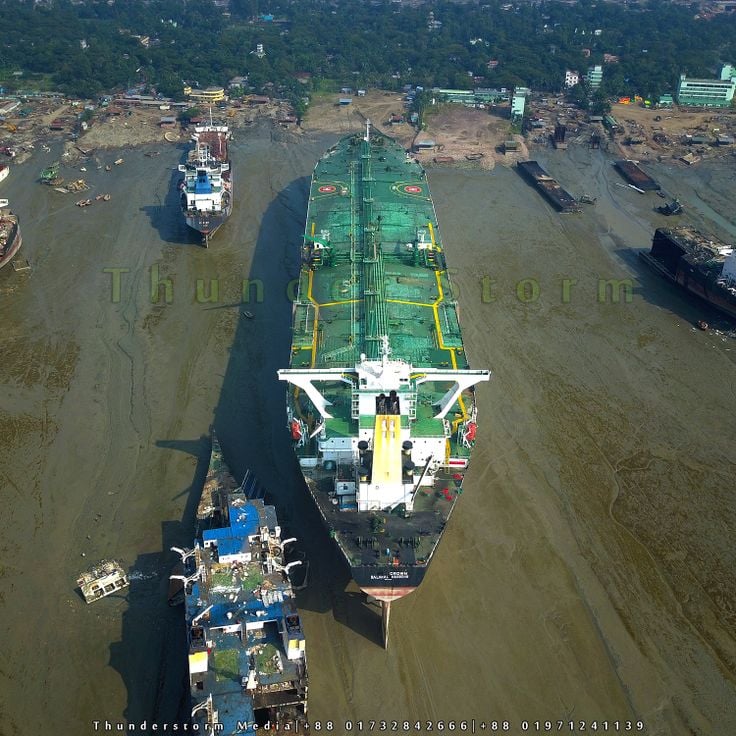
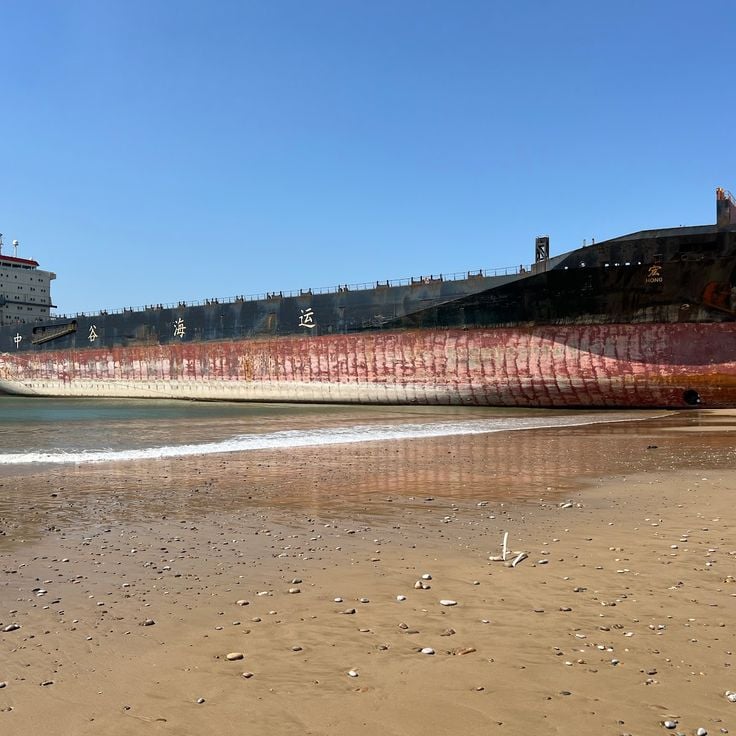
The ship dismantling yards of Chittagong are among the largest of their kind. Decommissioned commercial vessels are taken apart by hand, directly on the beach. At high tide, ships are pulled onto the sand and then broken down in stages. Steel plates, engines, cables and other parts are recovered and resold. The materials feed the local steel industry and many recycling businesses in the area.
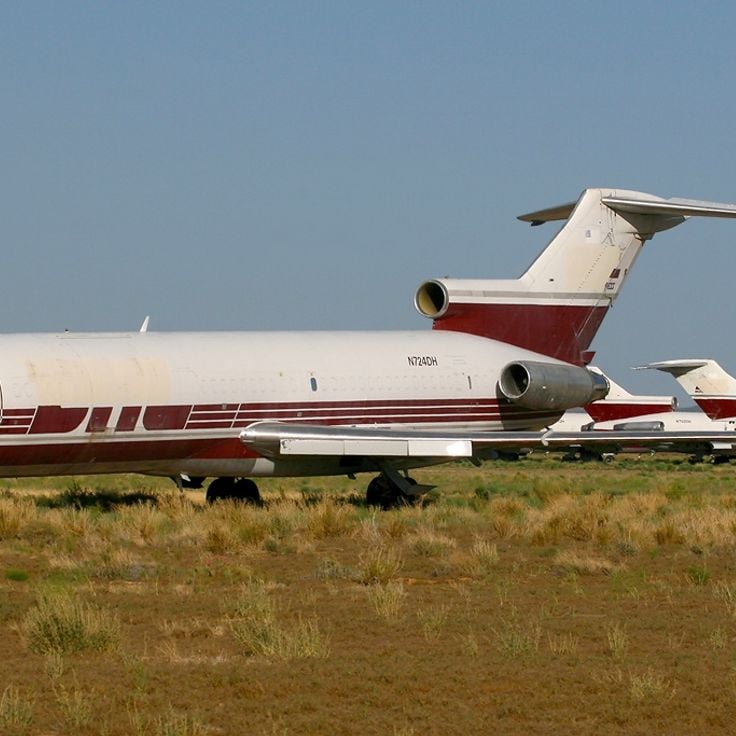
Roswell Aircraft Storage sits in the desert of southeastern New Mexico. The dry climate slows down corrosion, making this one of the places in the world where retired planes can be stored for long periods without deteriorating too quickly. Rows of commercial and military aircraft stand on the ground, some waiting to fly again, others ready to be taken apart for parts or recycled. This facility is part of a global story about what happens to planes when they stop flying.
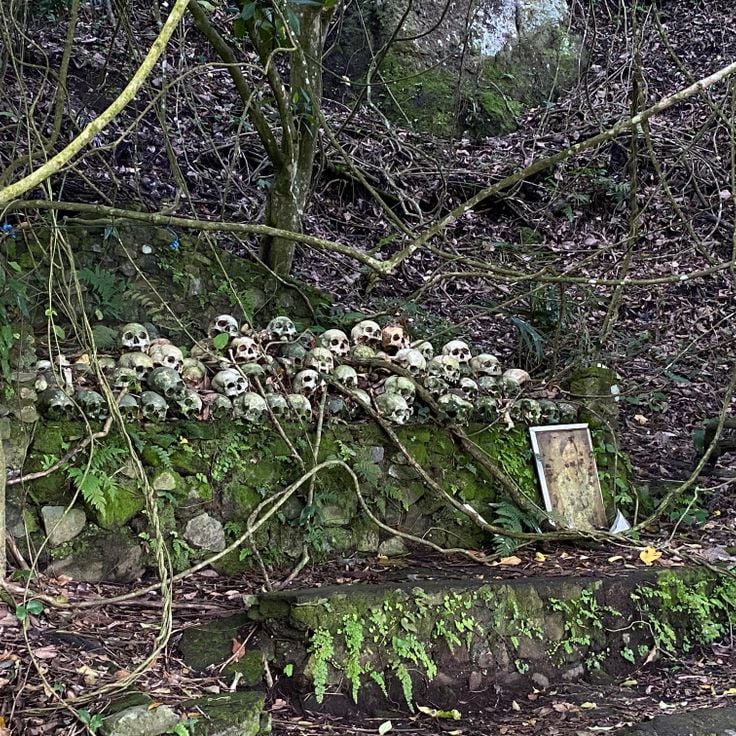
Terunyan Cemetery sits on the shore of Lake Batur in Bali and can only be reached by boat. It belongs to the Bali Aga community, who are considered the original inhabitants of the island. Here, the dead are neither cremated nor buried. Bodies are placed on the ground and covered with bamboo frames beneath an old banyan tree. The tree is said to absorb the smell of decomposition. This practice stands apart from the Hindu cremation tradition followed across the rest of Bali.
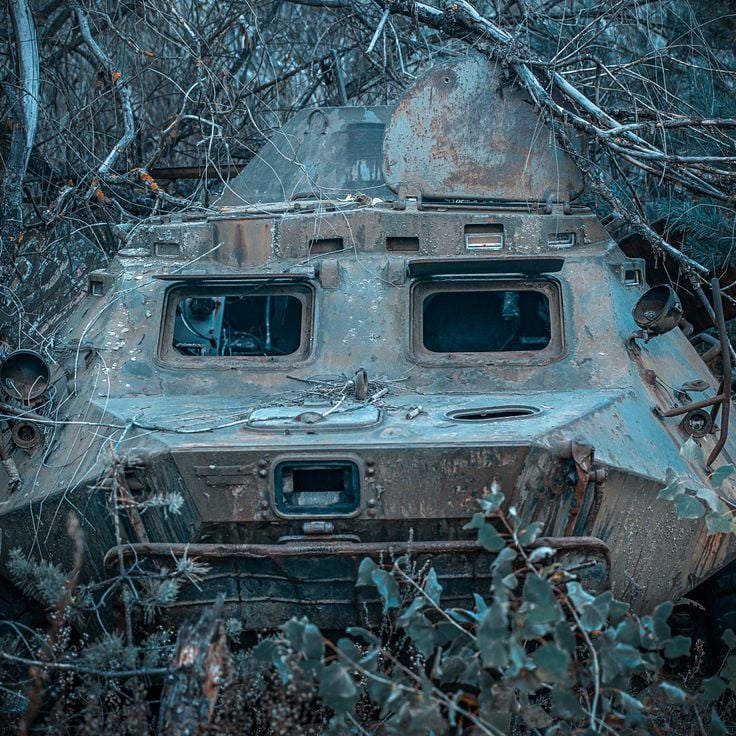
The Chernobyl Vehicle Graveyard holds hundreds of machines sent to clean up the site after the 1986 reactor disaster. Helicopters, fire trucks, and heavy machinery were left here when the radiation they absorbed made it impossible to move them elsewhere. They have been rusting in the open air ever since, sitting inside the exclusion zone that still surrounds the power plant today.
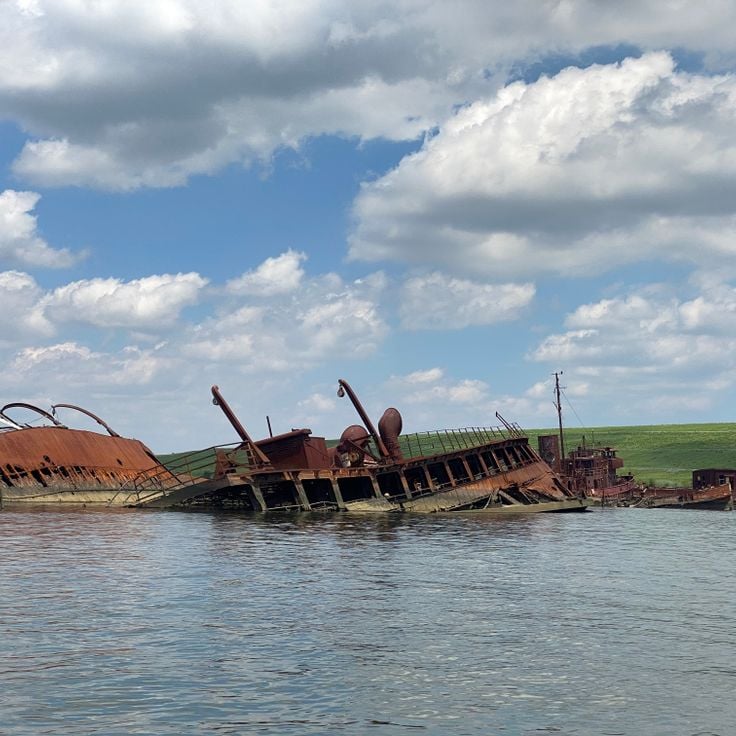
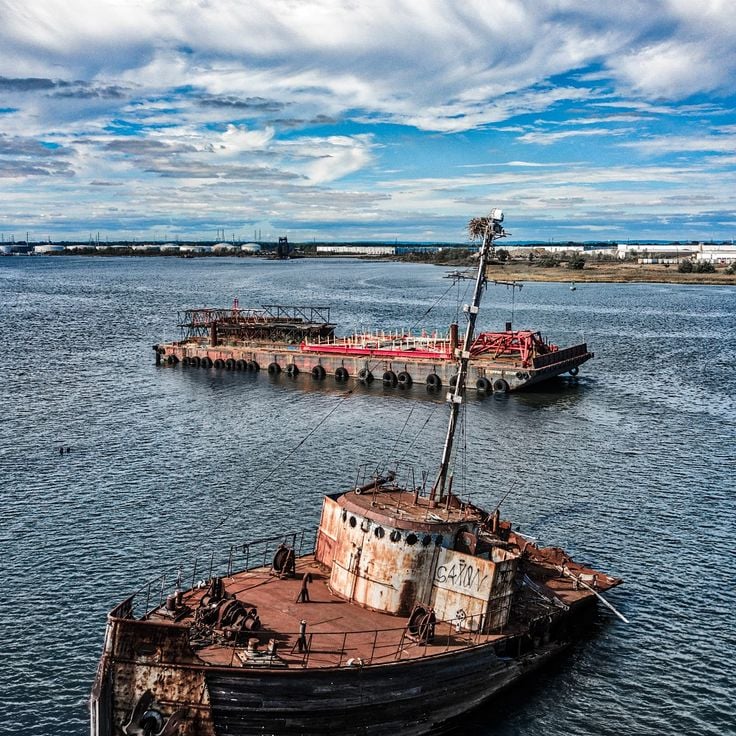
The Staten Island Ship Graveyard sits along Arthur Kill, a tidal strait between Staten Island and New Jersey. More than a hundred rusted hulls have rested there for decades. Most of the vessels date from the early 20th century and were towed here after being taken out of service. Steamships, tugboats, barges, and cargo ships lie side by side in the muddy water. The site is on private property and closed to the public. The wrecks slowly sink into the mud and are gradually taken over by plants.
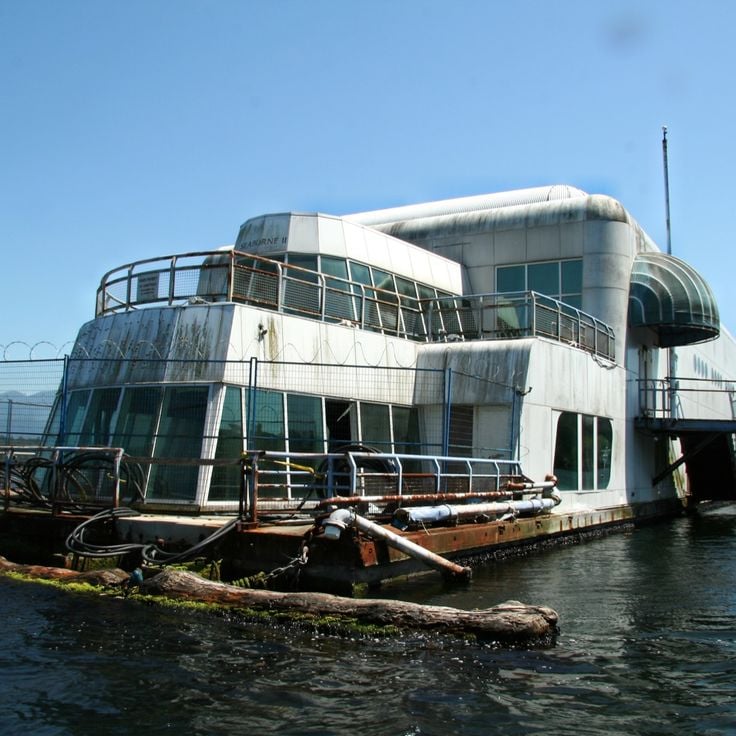
The McBarge was built in 1986 as a floating McDonald's pavilion for the World Exposition Expo 86 in Vancouver. This six-sided structure of concrete and steel housed a fast-food restaurant during the six-month event. After the exposition ended, the McBarge lost its purpose and was moored in Burrard Inlet for years before being towed through various waterways in the region. Despite several renovation plans and reuse proposals over the decades, it remains abandoned and at anchor today.
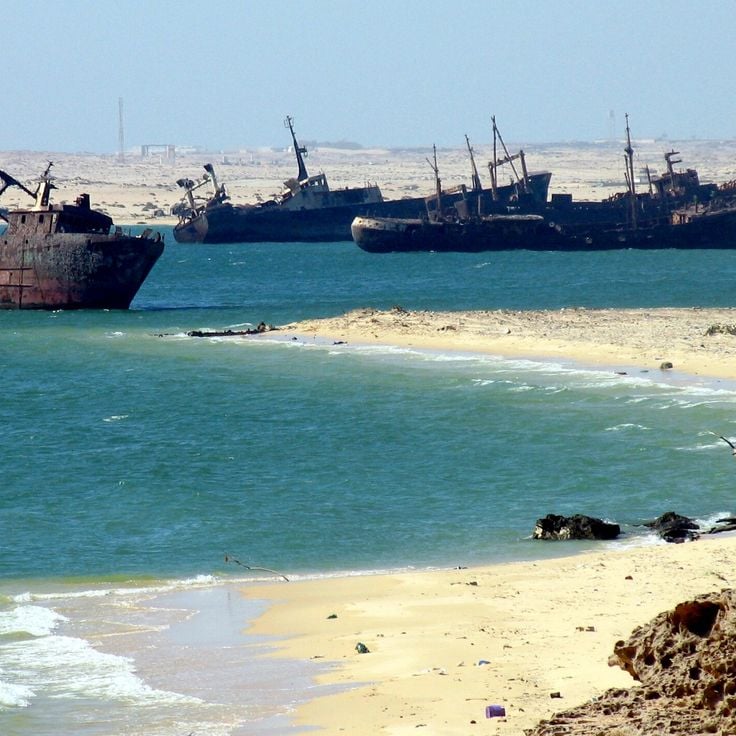
The ship graveyard of Nouadhibou stretches along the coast of this Mauritanian peninsula and holds dozens of wrecks that have piled up since the 1980s. Fishing boats, cargo ships and other vessels were left here when their operators went bankrupt, fishing rules changed or the ships simply grew too old to run. The rusting hulls stick out of the shallow waters of the bay and can be seen clearly from the shore.
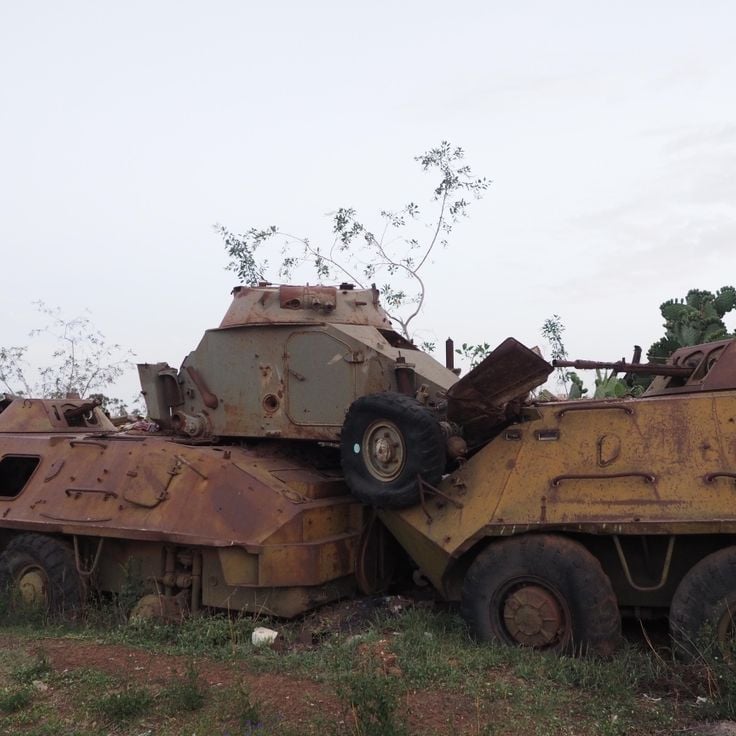
The Tank Graveyard of Asmara sits on the outskirts of the Eritrean capital, where hundreds of military vehicles from the Eritrean War of Independence against Ethiopia (1961 to 1991) have been left to rust. Soviet-made tanks, armored vehicles, artillery pieces, and trucks lie scattered across an open field. Most vehicles came from former Ethiopian army stocks and were abandoned here after Eritrean independence in 1993. Walking through this site, you feel the weight of three decades of armed conflict on everyday objects.
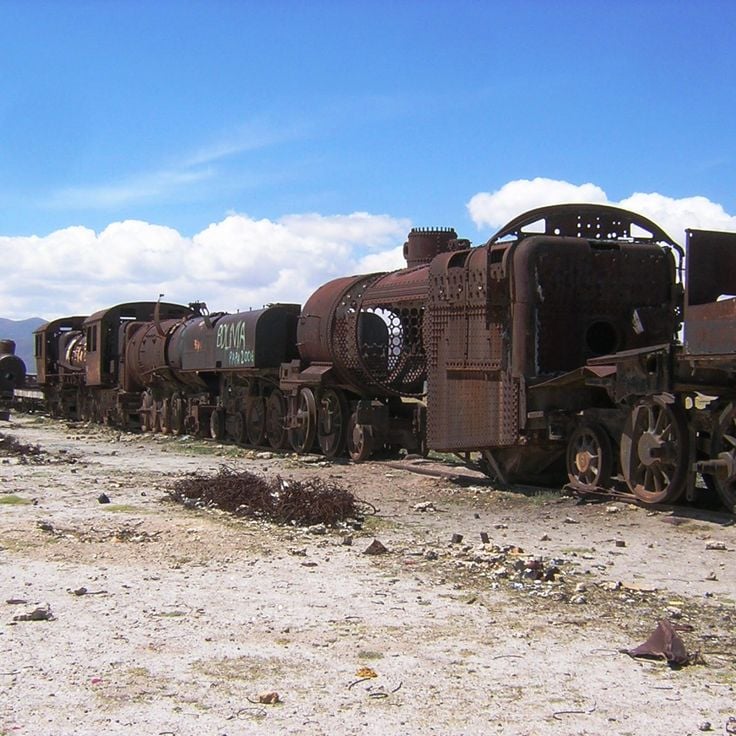
The Uyuni Train Cemetery sits about 2 miles (3 km) outside the town of Uyuni, in Bolivia's salt desert, at around 12,100 feet (3,700 m) above sea level. More than 100 locomotives and wagons have been rusting here since the 1940s, left behind after the mining industry declined. These trains once carried ore from the Andean mines. The salt in the air and soil has eaten into the metal over the decades, giving the machines a deeply worn look that makes them feel like remnants of another world.
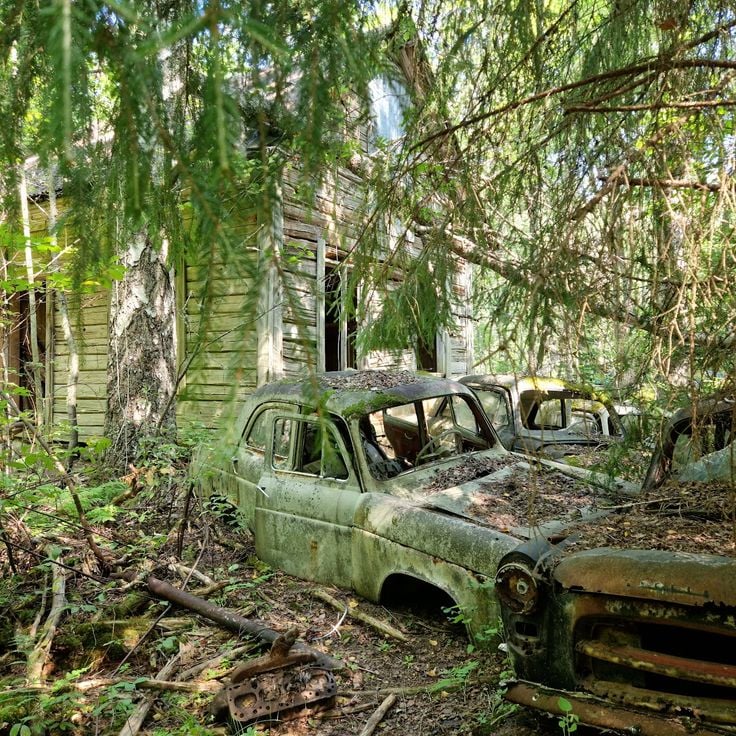
The Båstnäs Car Cemetery sits deep in a Swedish forest and holds around 1000 vehicles from the post-war decades. In the 1950s, a scrap dealer began leaving decommissioned cars on his land. Today, trees grow through hoods and moss covers the rusted bodies of Volvos, Saabs, Fords and other European models. This place shows how nature slowly takes back what people have left behind.
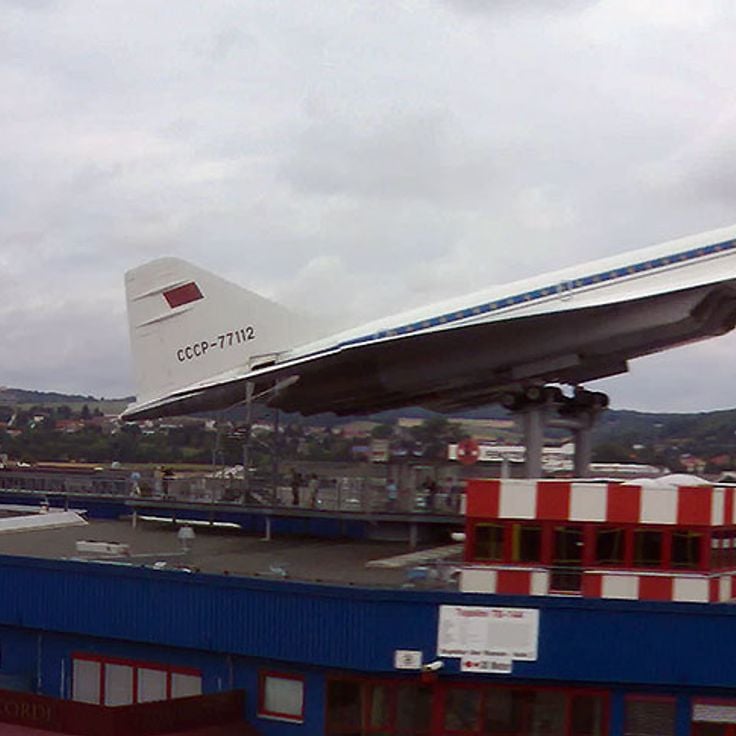
The Auto & Technik Museum Sinsheim holds one of the largest technical collections in Europe, with historic cars, aircraft, locomotives, motorcycles, and military vehicles. Two supersonic planes stand on the roof of the main building: an Air France Concorde and a Tupolev TU-144. Both can be visited from the inside. The museum opened in 1981 and gives a concrete sense of how transportation machines evolved over generations.
Phoenix-Goodyear Airport in Arizona served as a storage site for surplus military aircraft after World War II. Planes that were no longer needed by the US Armed Forces were brought here to wait for reuse, dismantling, or scrapping. The airport offers a clear picture of how the United States dealt with the enormous amount of military equipment left over after 1945.
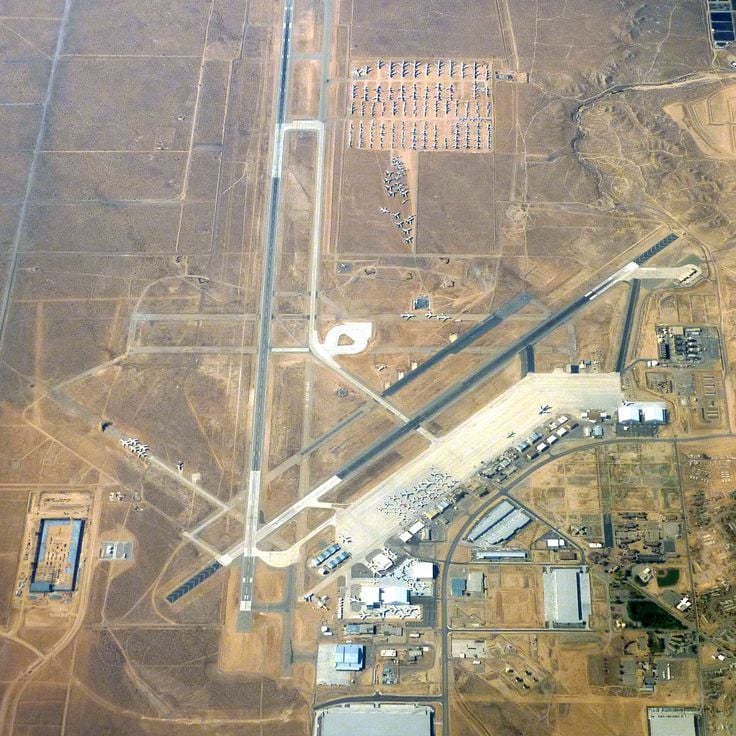
Mojave Spaceport sits in the California desert, where the dry air helps slow down rust and wear on retired passenger planes. This makes it a practical place to store aircraft for long periods, whether they are waiting to fly again, to give up their parts, or to be taken apart for good. Walking across the grounds, you see rows of planes from different eras parked side by side under the open sky.
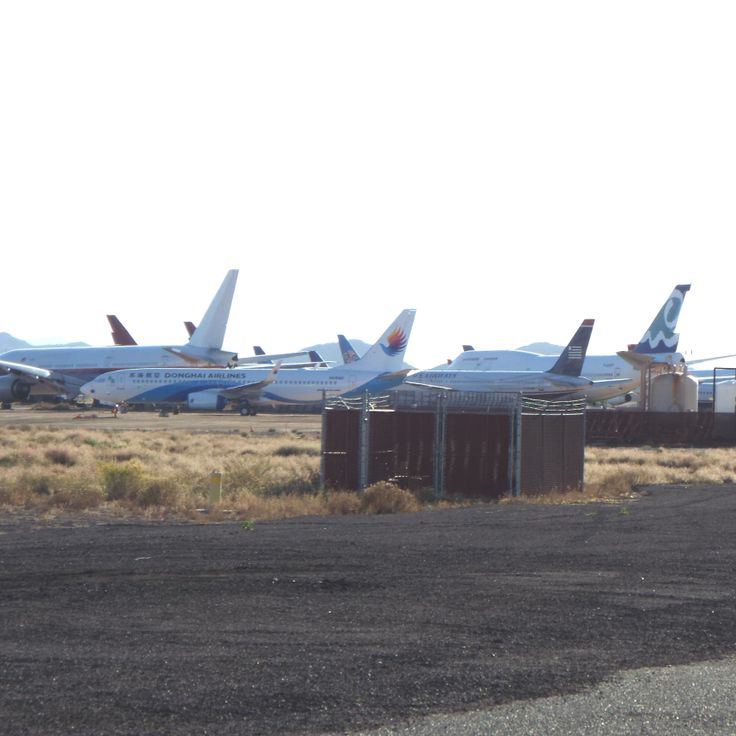
Kingman Airport in Arizona serves as one of the largest storage sites for retired commercial aircraft in the United States. The dry Mojave desert climate slows down corrosion and keeps the planes in usable condition. Airlines send their old aircraft here for temporary storage or full dismantling. Reusable parts are sold on, while materials like aluminum are sent to recycling.
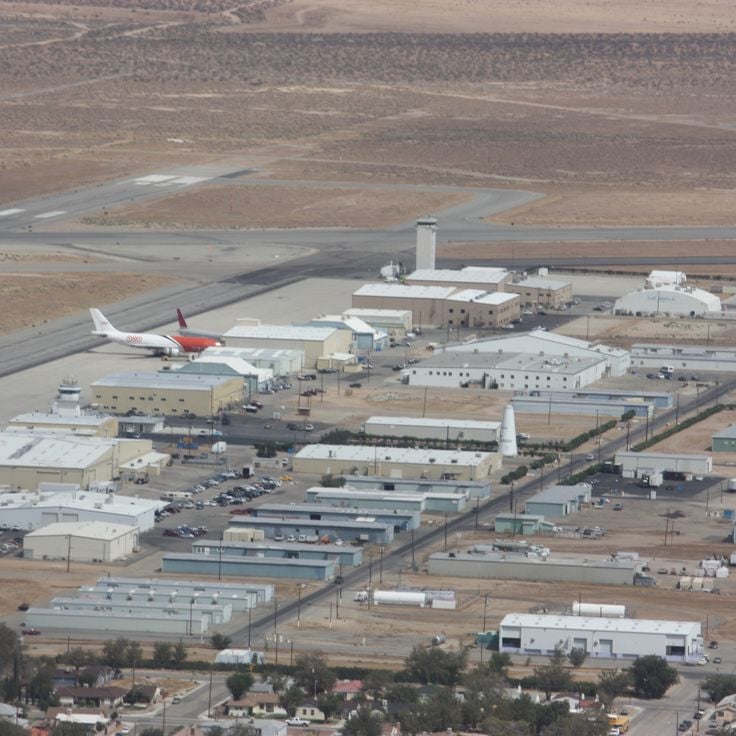
Southern California Logistics Airport sits in the Mojave Desert, northeast of Los Angeles. The dry air slows down wear on parked aircraft, which is why airlines bring their retired planes here. Long rows of Boeing and Airbus jets wait on the tarmac, either to be returned to service, sold to another operator, or taken apart.
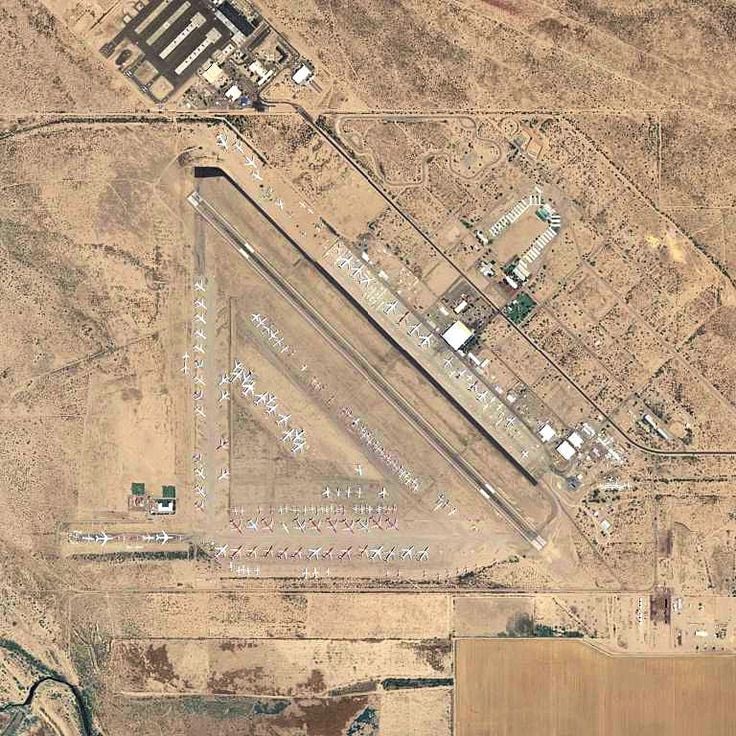
Pinal Airpark sits in the Sonoran Desert of Arizona, where the dry air slows down rust and corrosion. Airlines send their retired planes here to be stored, serviced, or taken apart. Some aircraft are stripped for usable parts, while others wait on the ground in case they are needed again. Walking through, you see rows of commercial jets standing in the desert sun, quiet and still.
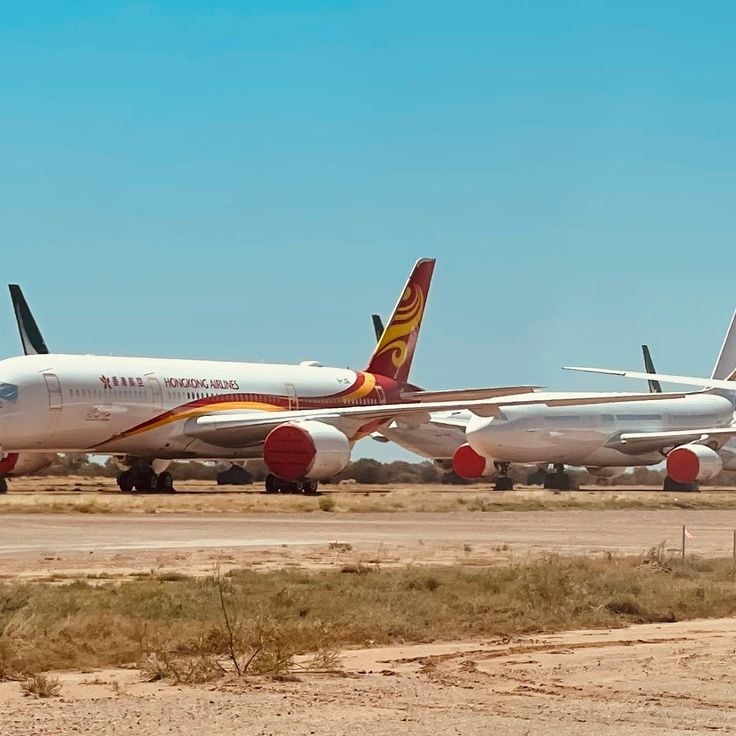
Asia Pacific Aircraft Storage is a long-term parking site for commercial aircraft in Australia's Northern Territory. The dry climate of the region keeps aircraft structures free from corrosion when they are not in service. Airlines bring their planes here when they need to store them temporarily or retire them permanently. The aircraft sit on paved surfaces, treated and prepared to hold up over time.
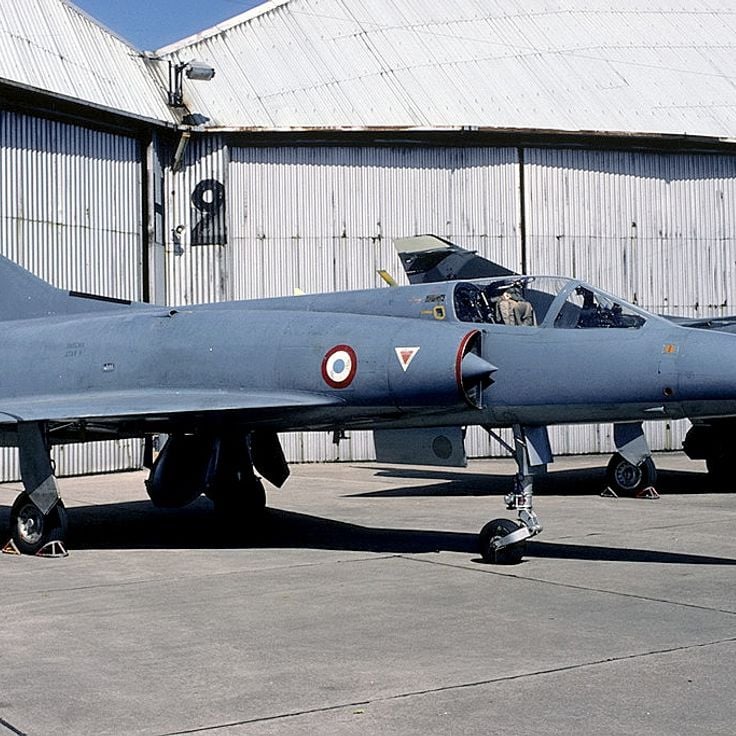
Base Aérienne 279 Châteaudun is a storage site for retired French military aircraft. Planes that have been pulled from active service are brought here to wait for their next step: either taken apart or used as a source of spare parts. Located near the town of Châteaudun, this base plays a steady role in managing what happens to military aircraft at the end of their service life in France.
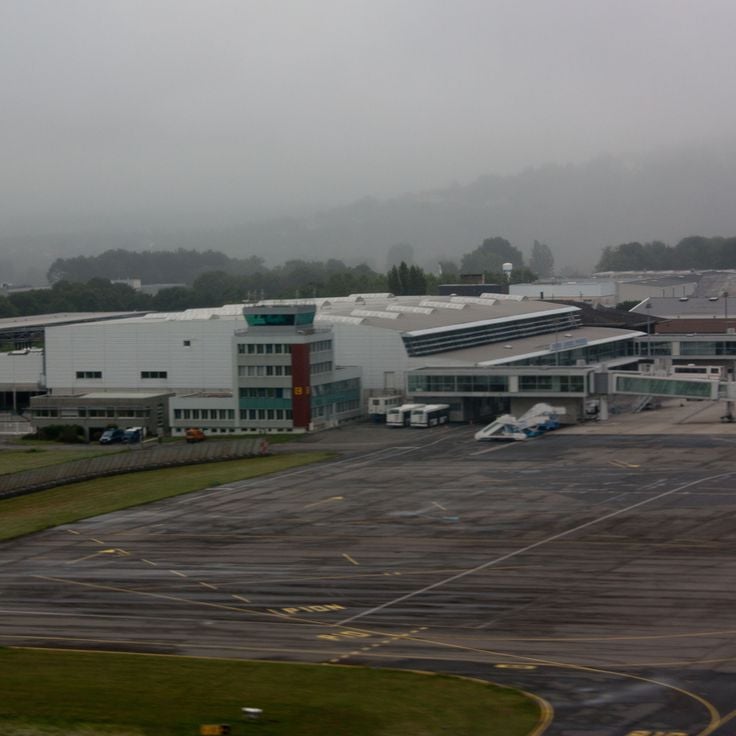
Tarbes-Lourdes-Pyrénées Airport hosts a facility where retired passenger aircraft from Europe and other parts of the world are stored and taken apart. Rows of planes sit on the tarmac waiting to be dismantled. Parts are recovered for reuse and metal is melted down, as the aircraft gradually disappear from the site.
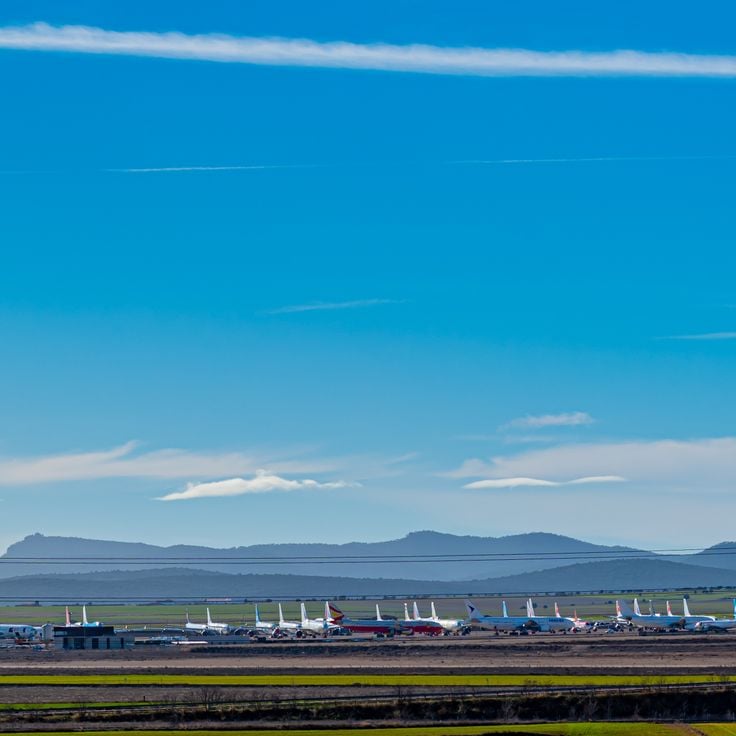
Teruel Airport does not serve regular passengers. Instead, it acts as a parking and maintenance site for commercial aircraft that have left active service. Rows of large planes sit on the tarmac, waiting for maintenance, long-term storage, or dismantling. The dry climate of the Aragon region slows corrosion, which makes Teruel one of the main sites of this kind in Europe.
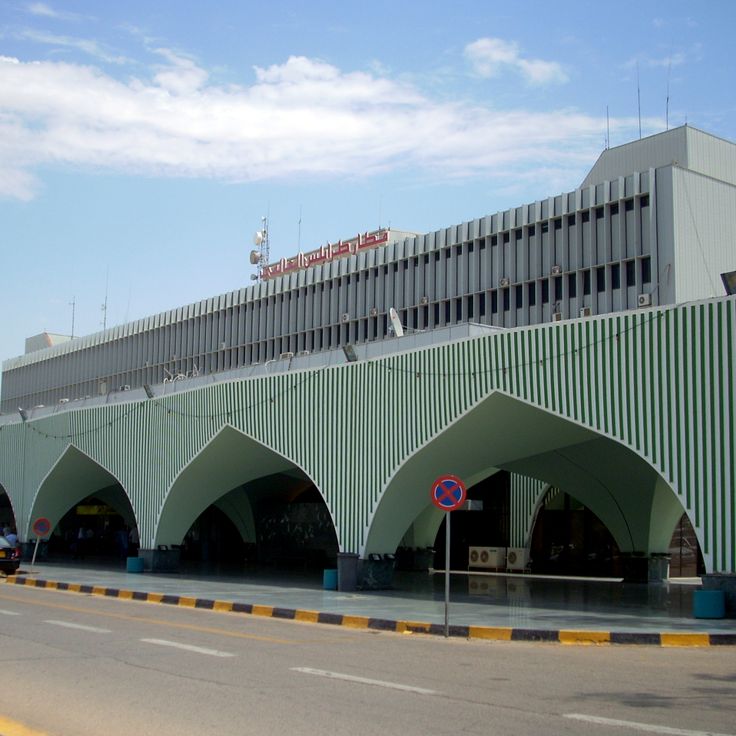
Tripoli International Airport was heavily damaged during the Libyan civil wars and now serves as an involuntary aircraft graveyard. Across its grounds, destroyed and decommissioned planes from different airlines were left where they stood. Runways, terminals, and hangars all bear the marks of the fighting. The site stands as a direct record of what conflict can do to civilian infrastructure.
Abilene Regional Airport, in West Texas, hosts a storage and dismantling area for retired commercial aircraft. The dry climate of the region helps keep the planes in good condition while they wait to be taken apart. Parts and materials are recovered and reused, giving these old machines a second life of sorts.
Davis-Monthan Air Force Base in Tucson is home to the largest aircraft storage site in the world. The dry desert air of Arizona keeps rust and decay at bay, allowing thousands of retired military planes to sit outside for years without serious damage. Row after row of aircraft stretch across the desert floor, some waiting to be stripped for parts, others held in reserve in case they are needed again.
The Sonoran Desert Museum in Tucson holds a large collection of military aircraft from different periods of aviation history. The dry desert air protects the metal structures from rust and decay. Visitors can walk past fighter planes, bombers, and transport aircraft that served during World War II, the Korean War, and the Vietnam War.
The aircraft boneyards in the Sonoran Desert take advantage of the dry climate to store retired military and civilian planes over long periods. Low humidity slows down rust and keeps the machines in a condition that allows for later reuse. Some planes are broken down for spare parts, while others remain ready to be reactivated. Looking across these grounds, you see row after row of still machines waiting in the desert heat.
The Gadani Ship Breaking Yard sits on the Balochistan coast and is one of the largest of its kind in the world. Old cargo ships and tankers are driven onto the beach and taken apart by hand. Workers recover steel, copper, and aluminum, which are then sold to local recycling businesses. The work is physically demanding, and materials like asbestos and oil residue left behind by the ships affect the surrounding area.
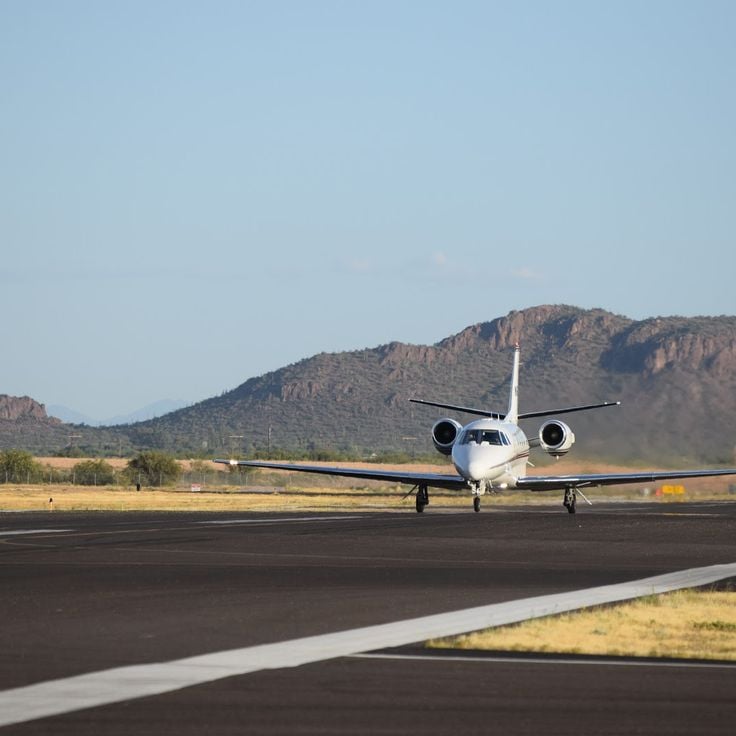
The aircraft boneyard at Marana Regional Airport stores retired commercial and private planes, taking advantage of the dry Arizona desert climate to slow down their deterioration. Many of the aircraft parked here are gradually taken apart so that spare parts can be recovered and reused in still-active planes. Long rows of aircraft from different manufacturers stretch across the site, giving visitors the impression of a silent parking lot where machines wait out their final days.
The ship wrecks along Arthur Kill Road sit half in the water, half on the shore, their rusted hulls rising out of the mud. These hulks come from different eras of maritime history and were simply left here over the decades. The saltwater slowly eats away at the metal, and the scene shifts with every tide. It is an unexpected spot that shows what happens when machines are left to nature at the end of their working life.
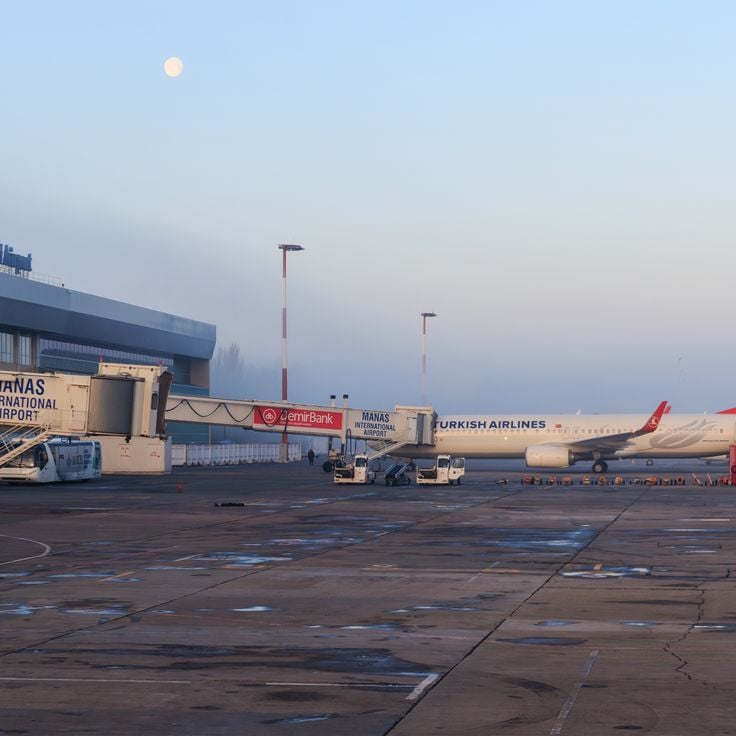
Manas International Airport in Bishkek has a storage area where old passenger and cargo planes from the Soviet era sit and wait. Some will be taken apart for usable parts, others may find a second use. Walking past these aircraft, you get a clear sense of how aviation in Central Asia looked decades ago, before the region opened up to the rest of the world.
The port area of Al Hudaydah is one of the places around the world where old tankers come to be taken apart. Ships are run aground along the shore and broken down piece by piece. Workers recover metal and other materials from the hulls. Several vessels can be dismantled at the same time along this stretch of coastline in Yemen.
Lake Michigan Naval Storage is an underwater graveyard from World War II. Between 1942 and 1945, the US Navy used two aircraft carriers, the USS Sable and the USS Wolverine, as floating training platforms on Lake Michigan. Around one hundred planes crashed during landing exercises and sank to the bottom, at depths between roughly 100 and 300 feet (30 to 90 meters). The wrecks remain on the lake floor today, largely untouched, offering a rare window into a forgotten chapter of military aviation training.
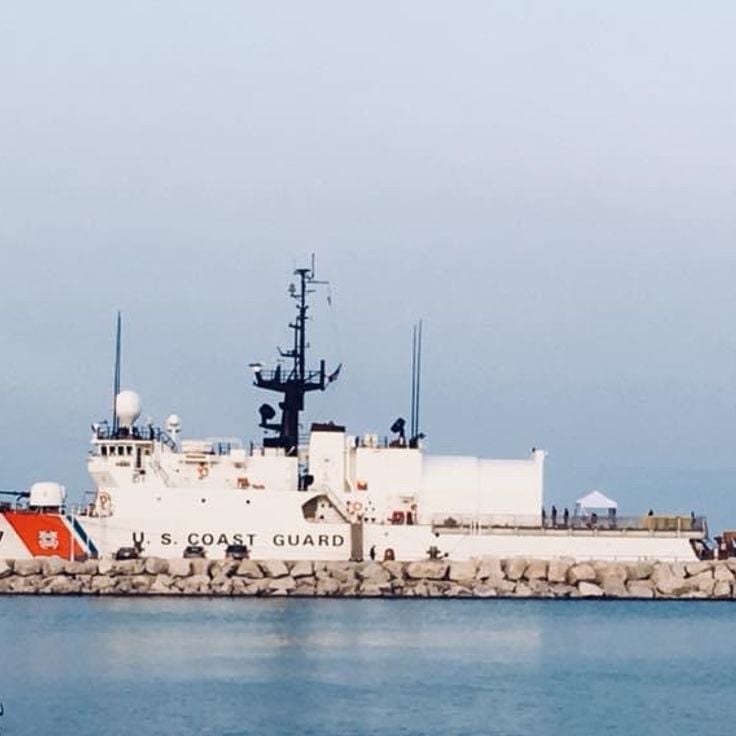
The James River Reserve Fleet is a group of retired US Navy ships anchored along the James River in Virginia, near Fort Eustis. Some date back several decades and could be returned to service if needed. The ships sit in long rows on the water, gray and quiet, watched over by the Maritime Administration. This fleet is one of the country's storage sites for vessels waiting between service and dismantling.
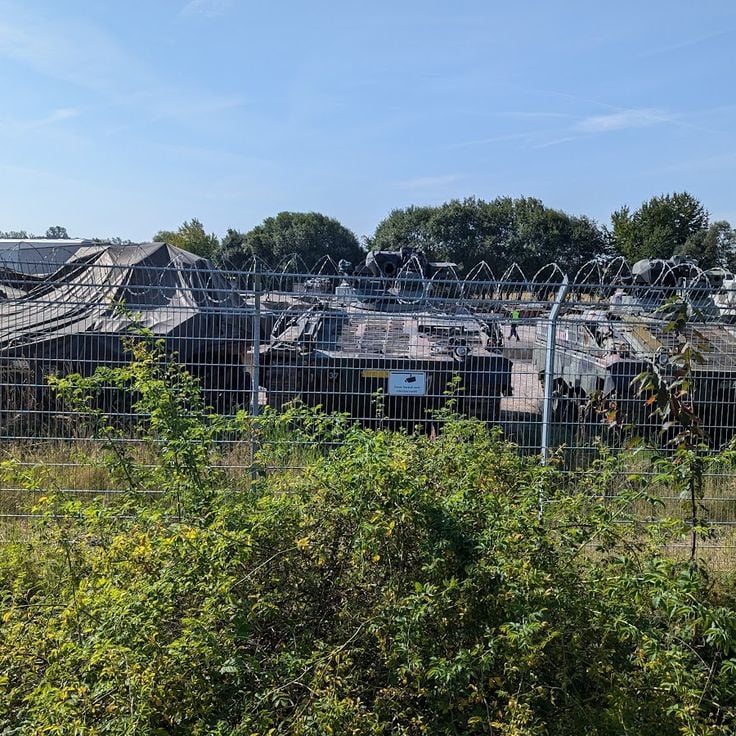
Koch Battle Tank Dismantling is a company in Germany that takes apart retired military vehicles. Old tanks and other combat vehicles are broken down here to recover metal and reusable parts. This site is part of a broader story of machines that have reached the end of their service life and are sent to facilities like this one around the world.
The Aircraft Cemetery in Bangkok is a spot where old passenger planes have been turned into homes. The fuselages sit in a Bangkok neighborhood, and families actually live inside them. What once carried travelers through the air now serves as housing in one of Asia's most crowded cities.
The Reserve Fleet of Suisun Bay sits in a sheltered stretch of water east of San Francisco. Dozens of retired military and commercial ships are anchored here, managed by the US Maritime Administration as a national reserve. The ships are kept ready in case of emergency, though many have rested in these waters for decades. Some are eventually sold or sent for scrapping.
Carhenge stands in the open prairie of Nebraska and is a replica of Stonehenge made from 39 gray-painted cars. Jim Reinders built it in 1987 as a memorial to his father. The vehicles are arranged to copy the shape of the prehistoric monument in England, with upright cars forming the circle and others placed horizontally on top as capstones. Carhenge shows how retired vehicles can take on a second life as an outdoor art installation.
Pacific Aircraft Storage in the Arizona desert is one of the largest airplane storage sites in the world. Thousands of military and civilian aircraft stand in long rows under the open sky. The dry desert air keeps metal from rusting, allowing planes to sit for years without serious damage. Some aircraft are kept here for spare parts, others wait for possible return to service or eventual dismantling.
The ship dismantling yards of Chittagong are among the largest of their kind. Decommissioned commercial vessels are taken apart by hand, directly on the beach. At high tide, ships are pulled onto the sand and then broken down in stages. Steel plates, engines, cables and other parts are recovered and resold. The materials feed the local steel industry and many recycling businesses in the area.
Roswell Aircraft Storage sits in the desert of southeastern New Mexico. The dry climate slows down corrosion, making this one of the places in the world where retired planes can be stored for long periods without deteriorating too quickly. Rows of commercial and military aircraft stand on the ground, some waiting to fly again, others ready to be taken apart for parts or recycled. This facility is part of a global story about what happens to planes when they stop flying.
Terunyan Cemetery sits on the shore of Lake Batur in Bali and can only be reached by boat. It belongs to the Bali Aga community, who are considered the original inhabitants of the island. Here, the dead are neither cremated nor buried. Bodies are placed on the ground and covered with bamboo frames beneath an old banyan tree. The tree is said to absorb the smell of decomposition. This practice stands apart from the Hindu cremation tradition followed across the rest of Bali.
The Chernobyl Vehicle Graveyard holds hundreds of machines sent to clean up the site after the 1986 reactor disaster. Helicopters, fire trucks, and heavy machinery were left here when the radiation they absorbed made it impossible to move them elsewhere. They have been rusting in the open air ever since, sitting inside the exclusion zone that still surrounds the power plant today.
The Staten Island Ship Graveyard sits along Arthur Kill, a tidal strait between Staten Island and New Jersey. More than a hundred rusted hulls have rested there for decades. Most of the vessels date from the early 20th century and were towed here after being taken out of service. Steamships, tugboats, barges, and cargo ships lie side by side in the muddy water. The site is on private property and closed to the public. The wrecks slowly sink into the mud and are gradually taken over by plants.
The McBarge was built in 1986 as a floating McDonald's pavilion for the World Exposition Expo 86 in Vancouver. This six-sided structure of concrete and steel housed a fast-food restaurant during the six-month event. After the exposition ended, the McBarge lost its purpose and was moored in Burrard Inlet for years before being towed through various waterways in the region. Despite several renovation plans and reuse proposals over the decades, it remains abandoned and at anchor today.
The ship graveyard of Nouadhibou stretches along the coast of this Mauritanian peninsula and holds dozens of wrecks that have piled up since the 1980s. Fishing boats, cargo ships and other vessels were left here when their operators went bankrupt, fishing rules changed or the ships simply grew too old to run. The rusting hulls stick out of the shallow waters of the bay and can be seen clearly from the shore.
The Tank Graveyard of Asmara sits on the outskirts of the Eritrean capital, where hundreds of military vehicles from the Eritrean War of Independence against Ethiopia (1961 to 1991) have been left to rust. Soviet-made tanks, armored vehicles, artillery pieces, and trucks lie scattered across an open field. Most vehicles came from former Ethiopian army stocks and were abandoned here after Eritrean independence in 1993. Walking through this site, you feel the weight of three decades of armed conflict on everyday objects.
The Uyuni Train Cemetery sits about 2 miles (3 km) outside the town of Uyuni, in Bolivia's salt desert, at around 12,100 feet (3,700 m) above sea level. More than 100 locomotives and wagons have been rusting here since the 1940s, left behind after the mining industry declined. These trains once carried ore from the Andean mines. The salt in the air and soil has eaten into the metal over the decades, giving the machines a deeply worn look that makes them feel like remnants of another world.
The Båstnäs Car Cemetery sits deep in a Swedish forest and holds around 1000 vehicles from the post-war decades. In the 1950s, a scrap dealer began leaving decommissioned cars on his land. Today, trees grow through hoods and moss covers the rusted bodies of Volvos, Saabs, Fords and other European models. This place shows how nature slowly takes back what people have left behind.
The Auto & Technik Museum Sinsheim holds one of the largest technical collections in Europe, with historic cars, aircraft, locomotives, motorcycles, and military vehicles. Two supersonic planes stand on the roof of the main building: an Air France Concorde and a Tupolev TU-144. Both can be visited from the inside. The museum opened in 1981 and gives a concrete sense of how transportation machines evolved over generations.
Phoenix-Goodyear Airport in Arizona served as a storage site for surplus military aircraft after World War II. Planes that were no longer needed by the US Armed Forces were brought here to wait for reuse, dismantling, or scrapping. The airport offers a clear picture of how the United States dealt with the enormous amount of military equipment left over after 1945.
Mojave Spaceport sits in the California desert, where the dry air helps slow down rust and wear on retired passenger planes. This makes it a practical place to store aircraft for long periods, whether they are waiting to fly again, to give up their parts, or to be taken apart for good. Walking across the grounds, you see rows of planes from different eras parked side by side under the open sky.
Kingman Airport in Arizona serves as one of the largest storage sites for retired commercial aircraft in the United States. The dry Mojave desert climate slows down corrosion and keeps the planes in usable condition. Airlines send their old aircraft here for temporary storage or full dismantling. Reusable parts are sold on, while materials like aluminum are sent to recycling.
Southern California Logistics Airport sits in the Mojave Desert, northeast of Los Angeles. The dry air slows down wear on parked aircraft, which is why airlines bring their retired planes here. Long rows of Boeing and Airbus jets wait on the tarmac, either to be returned to service, sold to another operator, or taken apart.
Pinal Airpark sits in the Sonoran Desert of Arizona, where the dry air slows down rust and corrosion. Airlines send their retired planes here to be stored, serviced, or taken apart. Some aircraft are stripped for usable parts, while others wait on the ground in case they are needed again. Walking through, you see rows of commercial jets standing in the desert sun, quiet and still.
Asia Pacific Aircraft Storage is a long-term parking site for commercial aircraft in Australia's Northern Territory. The dry climate of the region keeps aircraft structures free from corrosion when they are not in service. Airlines bring their planes here when they need to store them temporarily or retire them permanently. The aircraft sit on paved surfaces, treated and prepared to hold up over time.
Base Aérienne 279 Châteaudun is a storage site for retired French military aircraft. Planes that have been pulled from active service are brought here to wait for their next step: either taken apart or used as a source of spare parts. Located near the town of Châteaudun, this base plays a steady role in managing what happens to military aircraft at the end of their service life in France.
Tarbes-Lourdes-Pyrénées Airport hosts a facility where retired passenger aircraft from Europe and other parts of the world are stored and taken apart. Rows of planes sit on the tarmac waiting to be dismantled. Parts are recovered for reuse and metal is melted down, as the aircraft gradually disappear from the site.
Teruel Airport does not serve regular passengers. Instead, it acts as a parking and maintenance site for commercial aircraft that have left active service. Rows of large planes sit on the tarmac, waiting for maintenance, long-term storage, or dismantling. The dry climate of the Aragon region slows corrosion, which makes Teruel one of the main sites of this kind in Europe.
Tripoli International Airport was heavily damaged during the Libyan civil wars and now serves as an involuntary aircraft graveyard. Across its grounds, destroyed and decommissioned planes from different airlines were left where they stood. Runways, terminals, and hangars all bear the marks of the fighting. The site stands as a direct record of what conflict can do to civilian infrastructure.
Abilene Regional Airport, in West Texas, hosts a storage and dismantling area for retired commercial aircraft. The dry climate of the region helps keep the planes in good condition while they wait to be taken apart. Parts and materials are recovered and reused, giving these old machines a second life of sorts.
Davis-Monthan Air Force Base in Tucson is home to the largest aircraft storage site in the world. The dry desert air of Arizona keeps rust and decay at bay, allowing thousands of retired military planes to sit outside for years without serious damage. Row after row of aircraft stretch across the desert floor, some waiting to be stripped for parts, others held in reserve in case they are needed again.
The Sonoran Desert Museum in Tucson holds a large collection of military aircraft from different periods of aviation history. The dry desert air protects the metal structures from rust and decay. Visitors can walk past fighter planes, bombers, and transport aircraft that served during World War II, the Korean War, and the Vietnam War.
The aircraft boneyards in the Sonoran Desert take advantage of the dry climate to store retired military and civilian planes over long periods. Low humidity slows down rust and keeps the machines in a condition that allows for later reuse. Some planes are broken down for spare parts, while others remain ready to be reactivated. Looking across these grounds, you see row after row of still machines waiting in the desert heat.
The Gadani Ship Breaking Yard sits on the Balochistan coast and is one of the largest of its kind in the world. Old cargo ships and tankers are driven onto the beach and taken apart by hand. Workers recover steel, copper, and aluminum, which are then sold to local recycling businesses. The work is physically demanding, and materials like asbestos and oil residue left behind by the ships affect the surrounding area.
The aircraft boneyard at Marana Regional Airport stores retired commercial and private planes, taking advantage of the dry Arizona desert climate to slow down their deterioration. Many of the aircraft parked here are gradually taken apart so that spare parts can be recovered and reused in still-active planes. Long rows of aircraft from different manufacturers stretch across the site, giving visitors the impression of a silent parking lot where machines wait out their final days.
The ship wrecks along Arthur Kill Road sit half in the water, half on the shore, their rusted hulls rising out of the mud. These hulks come from different eras of maritime history and were simply left here over the decades. The saltwater slowly eats away at the metal, and the scene shifts with every tide. It is an unexpected spot that shows what happens when machines are left to nature at the end of their working life.
Manas International Airport in Bishkek has a storage area where old passenger and cargo planes from the Soviet era sit and wait. Some will be taken apart for usable parts, others may find a second use. Walking past these aircraft, you get a clear sense of how aviation in Central Asia looked decades ago, before the region opened up to the rest of the world.
The port area of Al Hudaydah is one of the places around the world where old tankers come to be taken apart. Ships are run aground along the shore and broken down piece by piece. Workers recover metal and other materials from the hulls. Several vessels can be dismantled at the same time along this stretch of coastline in Yemen.
Lake Michigan Naval Storage is an underwater graveyard from World War II. Between 1942 and 1945, the US Navy used two aircraft carriers, the USS Sable and the USS Wolverine, as floating training platforms on Lake Michigan. Around one hundred planes crashed during landing exercises and sank to the bottom, at depths between roughly 100 and 300 feet (30 to 90 meters). The wrecks remain on the lake floor today, largely untouched, offering a rare window into a forgotten chapter of military aviation training.
The James River Reserve Fleet is a group of retired US Navy ships anchored along the James River in Virginia, near Fort Eustis. Some date back several decades and could be returned to service if needed. The ships sit in long rows on the water, gray and quiet, watched over by the Maritime Administration. This fleet is one of the country's storage sites for vessels waiting between service and dismantling.
Koch Battle Tank Dismantling is a company in Germany that takes apart retired military vehicles. Old tanks and other combat vehicles are broken down here to recover metal and reusable parts. This site is part of a broader story of machines that have reached the end of their service life and are sent to facilities like this one around the world.
The Aircraft Cemetery in Bangkok is a spot where old passenger planes have been turned into homes. The fuselages sit in a Bangkok neighborhood, and families actually live inside them. What once carried travelers through the air now serves as housing in one of Asia's most crowded cities.
The Reserve Fleet of Suisun Bay sits in a sheltered stretch of water east of San Francisco. Dozens of retired military and commercial ships are anchored here, managed by the US Maritime Administration as a national reserve. The ships are kept ready in case of emergency, though many have rested in these waters for decades. Some are eventually sold or sent for scrapping.
Carhenge stands in the open prairie of Nebraska and is a replica of Stonehenge made from 39 gray-painted cars. Jim Reinders built it in 1987 as a memorial to his father. The vehicles are arranged to copy the shape of the prehistoric monument in England, with upright cars forming the circle and others placed horizontally on top as capstones. Carhenge shows how retired vehicles can take on a second life as an outdoor art installation.
Pacific Aircraft Storage in the Arizona desert is one of the largest airplane storage sites in the world. Thousands of military and civilian aircraft stand in long rows under the open sky. The dry desert air keeps metal from rusting, allowing planes to sit for years without serious damage. Some aircraft are kept here for spare parts, others wait for possible return to service or eventual dismantling.
The ship dismantling yards of Chittagong are among the largest of their kind. Decommissioned commercial vessels are taken apart by hand, directly on the beach. At high tide, ships are pulled onto the sand and then broken down in stages. Steel plates, engines, cables and other parts are recovered and resold. The materials feed the local steel industry and many recycling businesses in the area.
Roswell Aircraft Storage sits in the desert of southeastern New Mexico. The dry climate slows down corrosion, making this one of the places in the world where retired planes can be stored for long periods without deteriorating too quickly. Rows of commercial and military aircraft stand on the ground, some waiting to fly again, others ready to be taken apart for parts or recycled. This facility is part of a global story about what happens to planes when they stop flying.
Terunyan Cemetery sits on the shore of Lake Batur in Bali and can only be reached by boat. It belongs to the Bali Aga community, who are considered the original inhabitants of the island. Here, the dead are neither cremated nor buried. Bodies are placed on the ground and covered with bamboo frames beneath an old banyan tree. The tree is said to absorb the smell of decomposition. This practice stands apart from the Hindu cremation tradition followed across the rest of Bali.
The Chernobyl Vehicle Graveyard holds hundreds of machines sent to clean up the site after the 1986 reactor disaster. Helicopters, fire trucks, and heavy machinery were left here when the radiation they absorbed made it impossible to move them elsewhere. They have been rusting in the open air ever since, sitting inside the exclusion zone that still surrounds the power plant today.
The Staten Island Ship Graveyard sits along Arthur Kill, a tidal strait between Staten Island and New Jersey. More than a hundred rusted hulls have rested there for decades. Most of the vessels date from the early 20th century and were towed here after being taken out of service. Steamships, tugboats, barges, and cargo ships lie side by side in the muddy water. The site is on private property and closed to the public. The wrecks slowly sink into the mud and are gradually taken over by plants.
The McBarge was built in 1986 as a floating McDonald's pavilion for the World Exposition Expo 86 in Vancouver. This six-sided structure of concrete and steel housed a fast-food restaurant during the six-month event. After the exposition ended, the McBarge lost its purpose and was moored in Burrard Inlet for years before being towed through various waterways in the region. Despite several renovation plans and reuse proposals over the decades, it remains abandoned and at anchor today.
The ship graveyard of Nouadhibou stretches along the coast of this Mauritanian peninsula and holds dozens of wrecks that have piled up since the 1980s. Fishing boats, cargo ships and other vessels were left here when their operators went bankrupt, fishing rules changed or the ships simply grew too old to run. The rusting hulls stick out of the shallow waters of the bay and can be seen clearly from the shore.
The Tank Graveyard of Asmara sits on the outskirts of the Eritrean capital, where hundreds of military vehicles from the Eritrean War of Independence against Ethiopia (1961 to 1991) have been left to rust. Soviet-made tanks, armored vehicles, artillery pieces, and trucks lie scattered across an open field. Most vehicles came from former Ethiopian army stocks and were abandoned here after Eritrean independence in 1993. Walking through this site, you feel the weight of three decades of armed conflict on everyday objects.
The Uyuni Train Cemetery sits about 2 miles (3 km) outside the town of Uyuni, in Bolivia's salt desert, at around 12,100 feet (3,700 m) above sea level. More than 100 locomotives and wagons have been rusting here since the 1940s, left behind after the mining industry declined. These trains once carried ore from the Andean mines. The salt in the air and soil has eaten into the metal over the decades, giving the machines a deeply worn look that makes them feel like remnants of another world.
The Båstnäs Car Cemetery sits deep in a Swedish forest and holds around 1000 vehicles from the post-war decades. In the 1950s, a scrap dealer began leaving decommissioned cars on his land. Today, trees grow through hoods and moss covers the rusted bodies of Volvos, Saabs, Fords and other European models. This place shows how nature slowly takes back what people have left behind.
The Auto & Technik Museum Sinsheim holds one of the largest technical collections in Europe, with historic cars, aircraft, locomotives, motorcycles, and military vehicles. Two supersonic planes stand on the roof of the main building: an Air France Concorde and a Tupolev TU-144. Both can be visited from the inside. The museum opened in 1981 and gives a concrete sense of how transportation machines evolved over generations.
Phoenix-Goodyear Airport in Arizona served as a storage site for surplus military aircraft after World War II. Planes that were no longer needed by the US Armed Forces were brought here to wait for reuse, dismantling, or scrapping. The airport offers a clear picture of how the United States dealt with the enormous amount of military equipment left over after 1945.
Mojave Spaceport sits in the California desert, where the dry air helps slow down rust and wear on retired passenger planes. This makes it a practical place to store aircraft for long periods, whether they are waiting to fly again, to give up their parts, or to be taken apart for good. Walking across the grounds, you see rows of planes from different eras parked side by side under the open sky.
Kingman Airport in Arizona serves as one of the largest storage sites for retired commercial aircraft in the United States. The dry Mojave desert climate slows down corrosion and keeps the planes in usable condition. Airlines send their old aircraft here for temporary storage or full dismantling. Reusable parts are sold on, while materials like aluminum are sent to recycling.
Southern California Logistics Airport sits in the Mojave Desert, northeast of Los Angeles. The dry air slows down wear on parked aircraft, which is why airlines bring their retired planes here. Long rows of Boeing and Airbus jets wait on the tarmac, either to be returned to service, sold to another operator, or taken apart.
Pinal Airpark sits in the Sonoran Desert of Arizona, where the dry air slows down rust and corrosion. Airlines send their retired planes here to be stored, serviced, or taken apart. Some aircraft are stripped for usable parts, while others wait on the ground in case they are needed again. Walking through, you see rows of commercial jets standing in the desert sun, quiet and still.
Asia Pacific Aircraft Storage is a long-term parking site for commercial aircraft in Australia's Northern Territory. The dry climate of the region keeps aircraft structures free from corrosion when they are not in service. Airlines bring their planes here when they need to store them temporarily or retire them permanently. The aircraft sit on paved surfaces, treated and prepared to hold up over time.
Base Aérienne 279 Châteaudun is a storage site for retired French military aircraft. Planes that have been pulled from active service are brought here to wait for their next step: either taken apart or used as a source of spare parts. Located near the town of Châteaudun, this base plays a steady role in managing what happens to military aircraft at the end of their service life in France.
Tarbes-Lourdes-Pyrénées Airport hosts a facility where retired passenger aircraft from Europe and other parts of the world are stored and taken apart. Rows of planes sit on the tarmac waiting to be dismantled. Parts are recovered for reuse and metal is melted down, as the aircraft gradually disappear from the site.
Teruel Airport does not serve regular passengers. Instead, it acts as a parking and maintenance site for commercial aircraft that have left active service. Rows of large planes sit on the tarmac, waiting for maintenance, long-term storage, or dismantling. The dry climate of the Aragon region slows corrosion, which makes Teruel one of the main sites of this kind in Europe.
Tripoli International Airport was heavily damaged during the Libyan civil wars and now serves as an involuntary aircraft graveyard. Across its grounds, destroyed and decommissioned planes from different airlines were left where they stood. Runways, terminals, and hangars all bear the marks of the fighting. The site stands as a direct record of what conflict can do to civilian infrastructure.
Abilene Regional Airport, in West Texas, hosts a storage and dismantling area for retired commercial aircraft. The dry climate of the region helps keep the planes in good condition while they wait to be taken apart. Parts and materials are recovered and reused, giving these old machines a second life of sorts.
Davis-Monthan Air Force Base in Tucson is home to the largest aircraft storage site in the world. The dry desert air of Arizona keeps rust and decay at bay, allowing thousands of retired military planes to sit outside for years without serious damage. Row after row of aircraft stretch across the desert floor, some waiting to be stripped for parts, others held in reserve in case they are needed again.
The Sonoran Desert Museum in Tucson holds a large collection of military aircraft from different periods of aviation history. The dry desert air protects the metal structures from rust and decay. Visitors can walk past fighter planes, bombers, and transport aircraft that served during World War II, the Korean War, and the Vietnam War.
The aircraft boneyards in the Sonoran Desert take advantage of the dry climate to store retired military and civilian planes over long periods. Low humidity slows down rust and keeps the machines in a condition that allows for later reuse. Some planes are broken down for spare parts, while others remain ready to be reactivated. Looking across these grounds, you see row after row of still machines waiting in the desert heat.
The Gadani Ship Breaking Yard sits on the Balochistan coast and is one of the largest of its kind in the world. Old cargo ships and tankers are driven onto the beach and taken apart by hand. Workers recover steel, copper, and aluminum, which are then sold to local recycling businesses. The work is physically demanding, and materials like asbestos and oil residue left behind by the ships affect the surrounding area.
The aircraft boneyard at Marana Regional Airport stores retired commercial and private planes, taking advantage of the dry Arizona desert climate to slow down their deterioration. Many of the aircraft parked here are gradually taken apart so that spare parts can be recovered and reused in still-active planes. Long rows of aircraft from different manufacturers stretch across the site, giving visitors the impression of a silent parking lot where machines wait out their final days.
The ship wrecks along Arthur Kill Road sit half in the water, half on the shore, their rusted hulls rising out of the mud. These hulks come from different eras of maritime history and were simply left here over the decades. The saltwater slowly eats away at the metal, and the scene shifts with every tide. It is an unexpected spot that shows what happens when machines are left to nature at the end of their working life.
Manas International Airport in Bishkek has a storage area where old passenger and cargo planes from the Soviet era sit and wait. Some will be taken apart for usable parts, others may find a second use. Walking past these aircraft, you get a clear sense of how aviation in Central Asia looked decades ago, before the region opened up to the rest of the world.
The port area of Al Hudaydah is one of the places around the world where old tankers come to be taken apart. Ships are run aground along the shore and broken down piece by piece. Workers recover metal and other materials from the hulls. Several vessels can be dismantled at the same time along this stretch of coastline in Yemen.
Lake Michigan Naval Storage is an underwater graveyard from World War II. Between 1942 and 1945, the US Navy used two aircraft carriers, the USS Sable and the USS Wolverine, as floating training platforms on Lake Michigan. Around one hundred planes crashed during landing exercises and sank to the bottom, at depths between roughly 100 and 300 feet (30 to 90 meters). The wrecks remain on the lake floor today, largely untouched, offering a rare window into a forgotten chapter of military aviation training.
The James River Reserve Fleet is a group of retired US Navy ships anchored along the James River in Virginia, near Fort Eustis. Some date back several decades and could be returned to service if needed. The ships sit in long rows on the water, gray and quiet, watched over by the Maritime Administration. This fleet is one of the country's storage sites for vessels waiting between service and dismantling.
Koch Battle Tank Dismantling is a company in Germany that takes apart retired military vehicles. Old tanks and other combat vehicles are broken down here to recover metal and reusable parts. This site is part of a broader story of machines that have reached the end of their service life and are sent to facilities like this one around the world.
The Aircraft Cemetery in Bangkok is a spot where old passenger planes have been turned into homes. The fuselages sit in a Bangkok neighborhood, and families actually live inside them. What once carried travelers through the air now serves as housing in one of Asia's most crowded cities.
These graveyards reveal how we deal with the machines that shape our lives. Walking through rows of silent aircraft or half-submerged ships makes you think about waste, recycling, and what happens when things we rely on stop being useful. It is a chance to see the bigger picture of how the world works.