See the monuments around you in AROpen chests in the app
Around Us is built for your phone — point your camera at the streets and discover the monuments and places around you in augmented reality.Around Us is built for your phone — chests unlock when you walk, explore and capture nearby places.
What to do in Los Angeles: attractions, museums and entertainment
Los Angeles has many large museums, parks in nature, and places to see the film industry. The Getty Villa displays collections of European art from the Middle Ages to today. The Griffith Observatory lets visitors look at the sky and see the whole city. Universal Studios shows how movies are made. The Dodger Stadium has hosted baseball games since 1962.
The Santa Monica Pier extends into the Pacific Ocean with its big wheel and carousel. Rodeo Drive is full of fashion stores and jewelry shops in Beverly Hills. The shopping center The Grove has restaurants and a movie theater around a man-made lake. Venice Beach is popular for its long walk along the water. The LACMA has over 150,000 artworks. The La Brea Tar Pits keep fossils of animals trapped in tar for thousands of years.
What to do in Los Angeles: attractions, museums and entertainment
Los Angeles has many large museums, parks in nature, and places to see the film industry. The Getty Villa displays collections of European art from the Middle Ages to today. The Griffith Observatory lets visitors look at the sky and see the whole city. Universal Studios shows how movies are made. The Dodger Stadium has hosted baseball games since 1962.
The Santa Monica Pier extends into the Pacific Ocean with its big wheel and carousel. Rodeo Drive is full of fashion stores and jewelry shops in Beverly Hills. The shopping center The Grove has restaurants and a movie theater around a man-made lake. Venice Beach is popular for its long walk along the water. The LACMA has over 150,000 artworks. The La Brea Tar Pits keep fossils of animals trapped in tar for thousands of years.
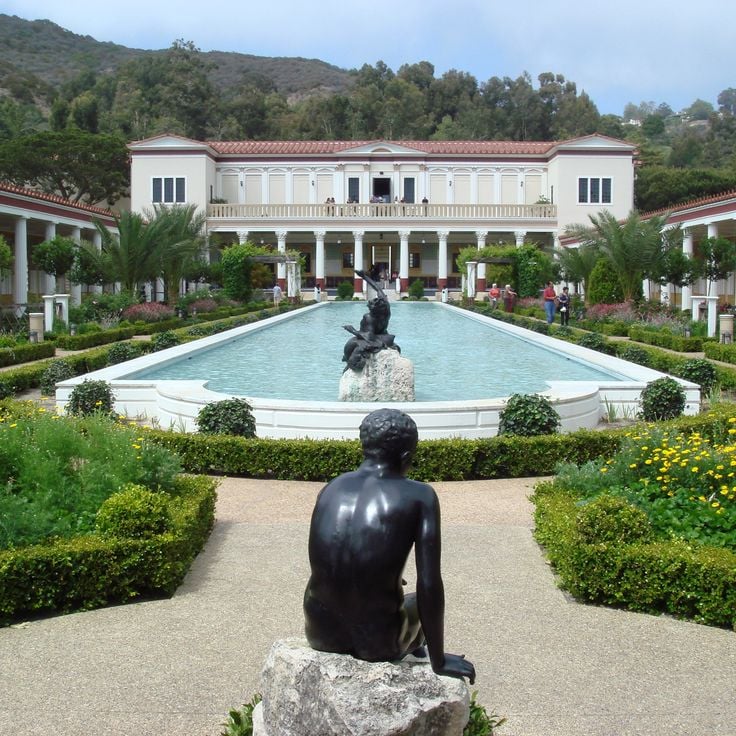
The Getty Villa gathers European artworks from the Middle Ages to the present day in a building modeled after Roman architecture. The collections contain paintings, manuscripts, decorative objects, and ancient sculptures spanning different eras. Outside, gardens with fountains, sculptures, and terraces follow ancient models. The museum sits on a hill with views of the Pacific and ranks among the institutions presenting European cultural heritage in Los Angeles.
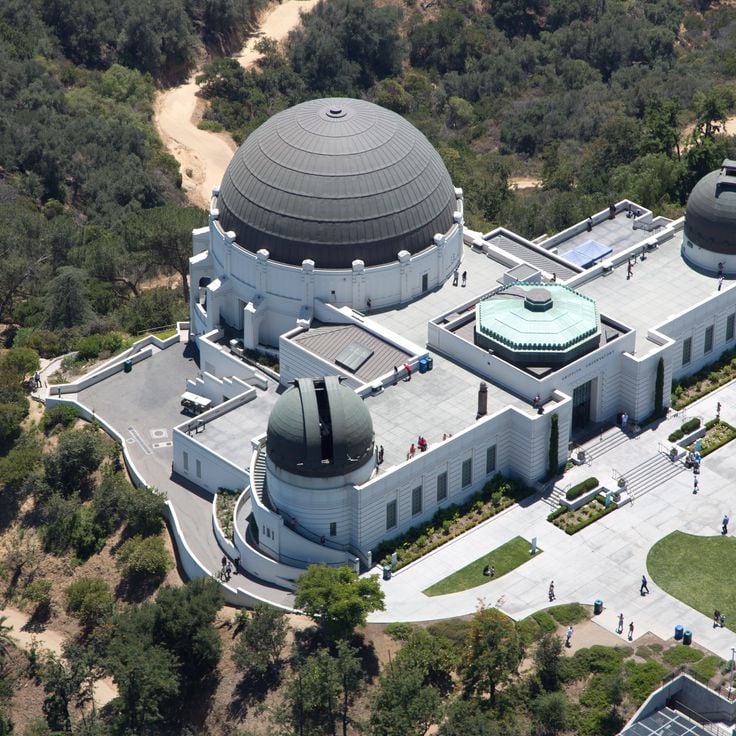
Griffith Observatory sits on a hill in Griffith Park and brings together stargazing with a sweeping view over Los Angeles. The building from the 1930s houses a planetarium, several telescopes and exhibit halls where visitors learn about planets, stars and the history of space exploration. In the evening, people gather on the terraces to peer through the telescopes or simply watch the lit city below. During the day, the halls display instruments and models that explain the universe, while the planetarium runs shows about the cosmos.
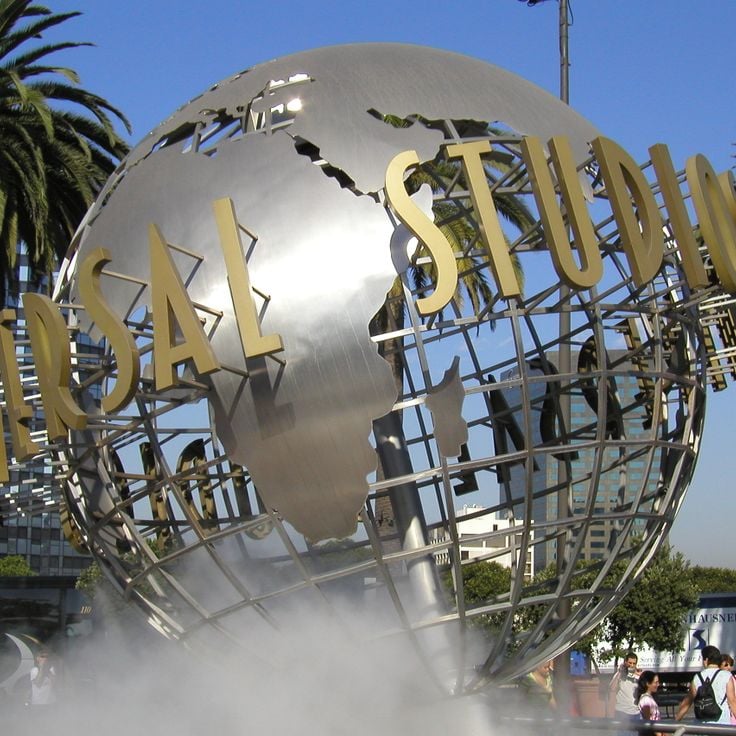
Universal Studios Hollywood brings moviemaking to life by taking visitors behind the scenes of major film productions. The park sits in the hills north of Los Angeles and combines a working film studio with attractions based on famous movies and television series. The studio tour drives through real filming sets, past backdrops used for action scenes, disaster movies, and television dramas. You see city streets that represent New York or a European town, and experience special effects like simulated earthquakes or encounters with a mechanical shark. Themed rides take guests into the worlds of Jurassic Park, The Simpsons, or Harry Potter. The attractions combine film technology with roller coasters and three-dimensional projections. Shows demonstrate how stunts are choreographed for the screen, with explosions, fights, and car chases. Between the attractions stand restaurants, shops with film souvenirs, and reconstructed streets that recall different eras and places. The park sits next to active production halls, so movies and television shows are filmed while visitors walk through the grounds.
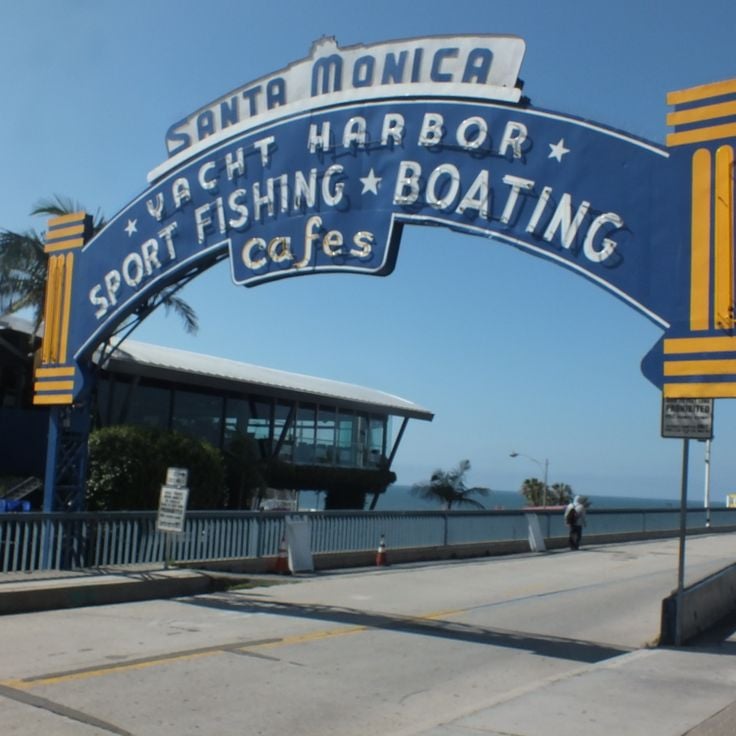
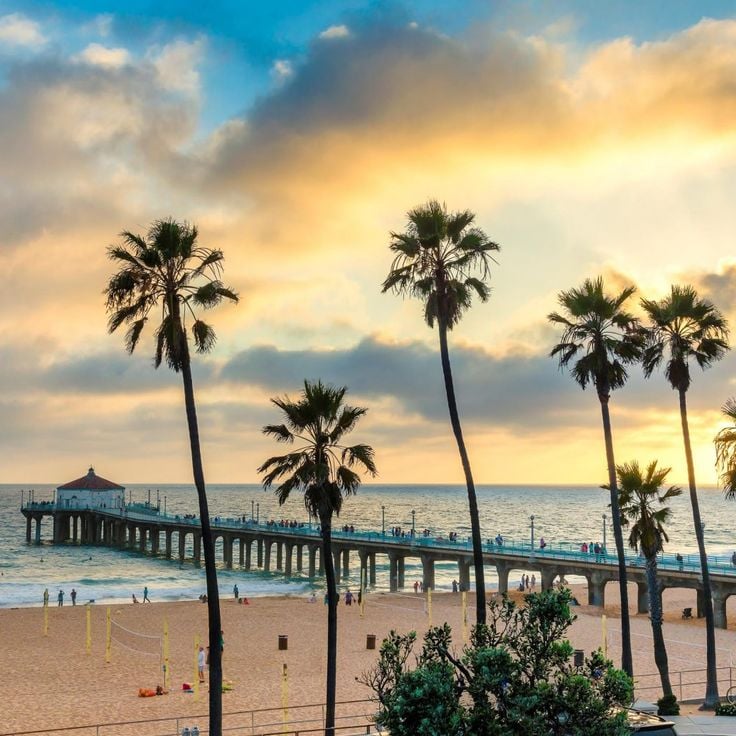
The Santa Monica Pier reaches into the Pacific Ocean and has carried an amusement area, rides and restaurants since 1909. A Ferris wheel turns above the water, the carousel dates from the 1920s and has been restored several times. A small aquarium displays sea creatures from the bay while anglers cast lines along the railings. Visitors walk across timber planks, surf breaks below, and views stretch inland toward distant mountains. At dusk bulbs light up the attractions, gulls circle above snack stands, and street musicians perform near the pier entrance.
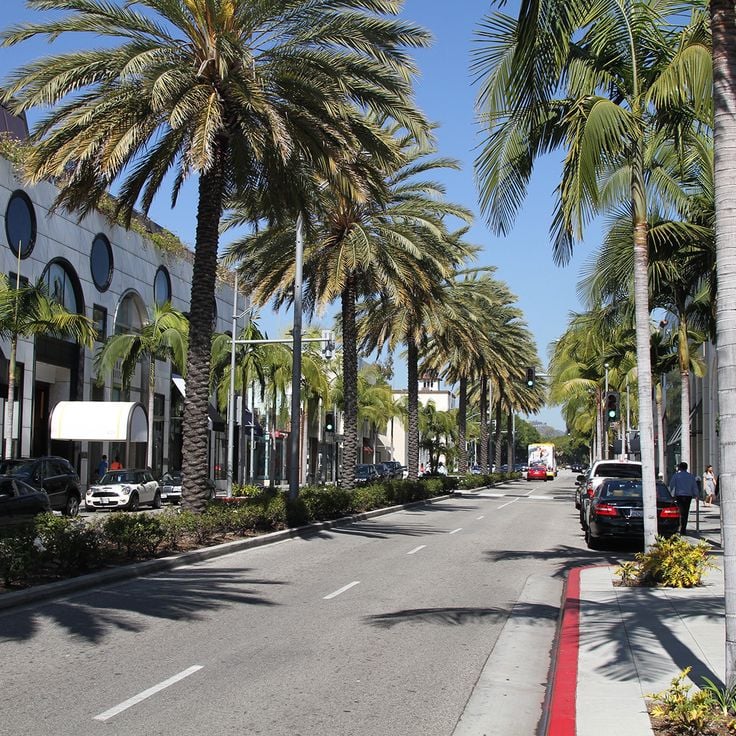
Rodeo Drive runs for three blocks and brings together fashion houses and jewelry stores including Gucci, Prada and Cartier, where shoppers stroll past displays or step inside to browse for clothing and accessories under rows of glass cases and bright storefronts.
The Grove brings together stores, restaurants and a movie theater around an artificial lake animated by water fountains. A historic streetcar connects the different areas of this shopping center in the Fairfax district. The open layout invites visitors to stroll, while palm trees and landscaped walkways create a Southern California setting. In the evenings, the restaurants and cafés draw people who want to linger after shopping or before catching a film.
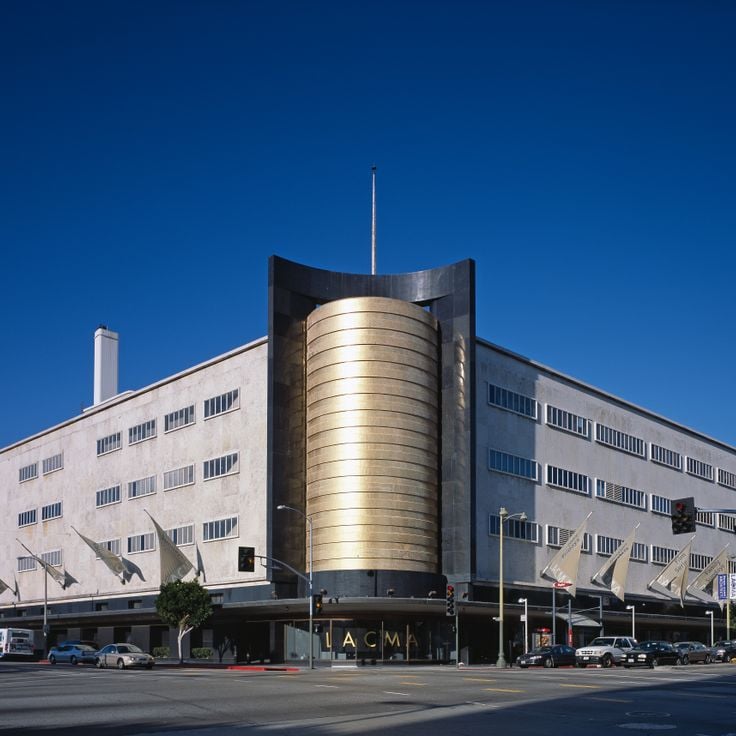
The museum presents art spanning six millennia, from ancient times to today. The collection includes paintings, sculptures, photographs, textiles, and ceramics from Europe, Asia, Africa, the Americas, and Oceania. Visitors can explore Roman mosaics alongside contemporary installations. In front of the main entrance stands an installation made of more than 200 restored street lamps that light up at night. Exhibition spaces spread across several buildings connected by outdoor galleries. A café in the courtyard offers a place to rest. The museum organizes concerts, film screenings, and workshops for families.
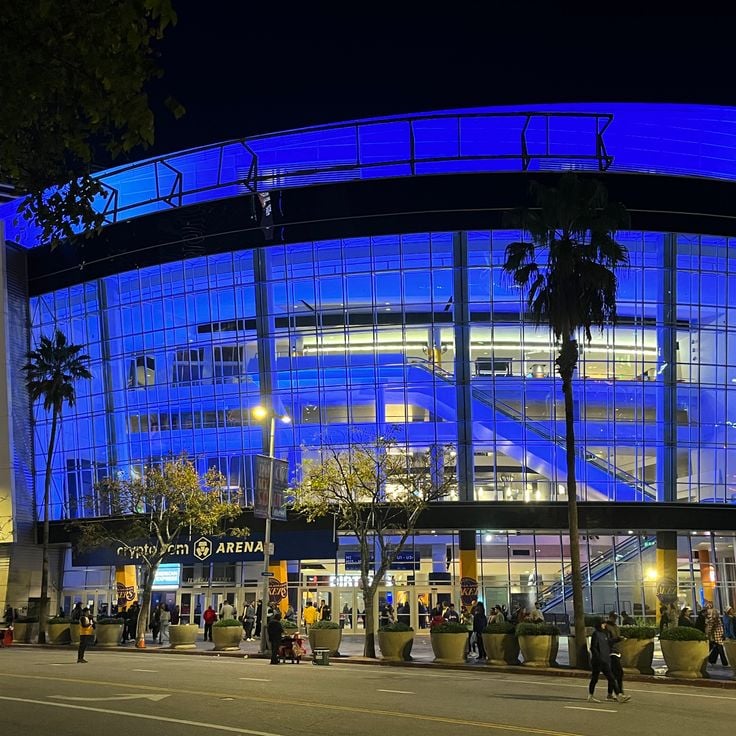
The Staples Center welcomes visitors for basketball games of the Lakers and Clippers, hockey matches of the Kings, and other sports events and concerts. The arena stands in the heart of downtown and seats around 20,000 people. Since opening in the late 1990s, it has served as home to several teams and draws crowds from across the region. Live music evenings alternate with games, and the mood shifts depending on the event. Lines form outside before entry, and inside the tiers fill quickly. The Center connects well to public transit and sits near restaurants and bars that see steady traffic before and after events.
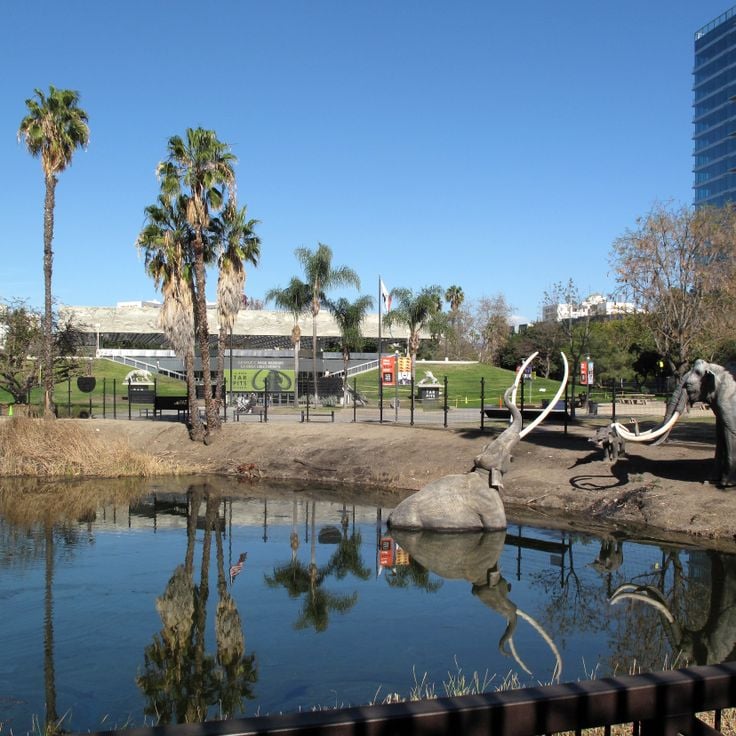
La Brea Tar Pits preserves Ice Age fossils that have been trapped in asphalt for thousands of years. The site holds bones of saber-toothed cats, mammoths and wolves that sank into the natural tar pools about 40,000 years ago. Visitors can still see active asphalt seeps where gas bubbles rise to the surface, showing how animals became stuck in the sticky mass. The museum displays skeletons and skulls that scientists have excavated on site. Outside, life-size models of animals stand at the edge of the dark pools.
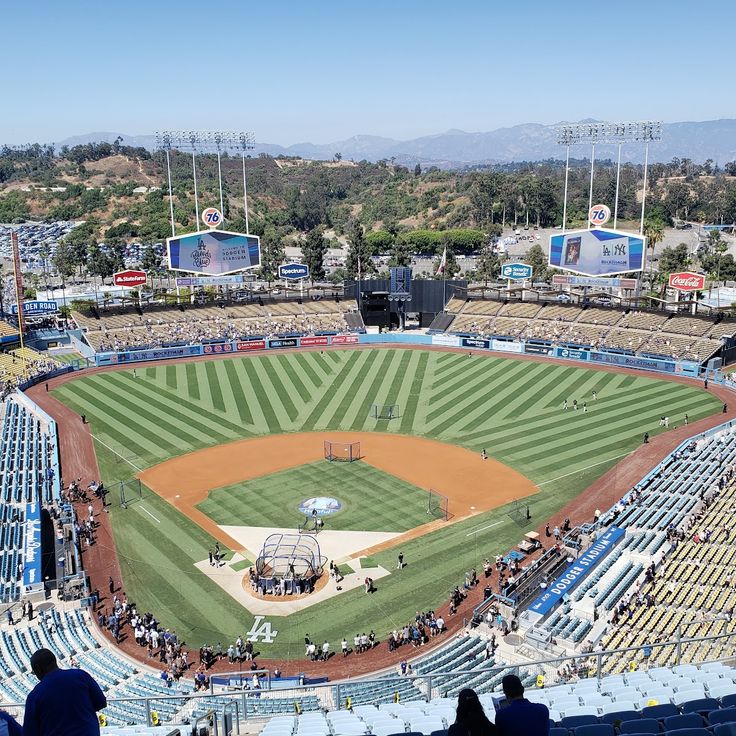
The Dodger Stadium has been home to the Los Angeles Dodgers since 1962, making it one of the oldest baseball stadiums still in regular use across the country. With a seating capacity of 56,000, it fills up during the season that runs from April through October. The stands rise in tiers, and from most seats you get a clear view of the infield and outfield. On game nights, especially under the lights, the place comes alive with fans, the crack of the bat, and vendors calling out for hot dogs and peanuts. This is the kind of setting where baseball feels most at home. The stadium sits on a hillside, so parking lots wrap around it, and many people drive in. From the upper levels, you can see across the city and out to the surrounding mountains. Inside, the concourses are wide, and you can move around between innings without missing too much of the action. Over the decades, the stadium has been updated, but it still keeps the feel of the 1960s when it first opened.
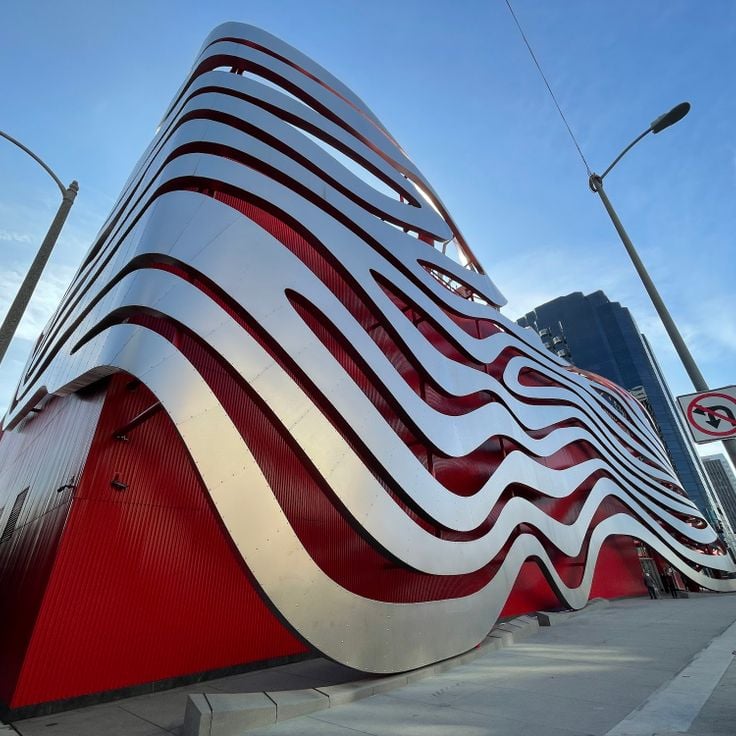
The Petersen Automotive Museum displays vehicles from more than a century of automobile history. Four floors hold motorcycles, race cars, trucks and passenger cars that document architectural styles and technical developments from different decades. The collection ranges from early 20th-century models to current prototypes. The exhibition rooms explain how engines, chassis and body shapes have changed and what role the car plays in everyday life. The museum stands on Wilshire Boulevard in Los Angeles. Students, families and car fans visit the building, whose outer skin consists of red and silver metal panels. Guided tours show workshops where mechanics restore historic vehicles. A vintage car sometimes stands on the roof, visible from the street. The Petersen Automotive Museum shows how technology, design and daily life have been connected since the beginning of the automobile.
Griffith Park covers more than 4200 acres (1700 hectares) of hills and valleys east of Hollywood. This park, established in 1896, combines nature with cultural facilities: trails wind through dry vegetation while the observatory sits on a hilltop overlooking the city. The grounds hold a planetarium, a zoo, and a transportation museum. Visitors come to hike, ride horses, or picnic among oak trees and chaparral. From the viewpoints, the view stretches to the Pacific and the mountains to the north.
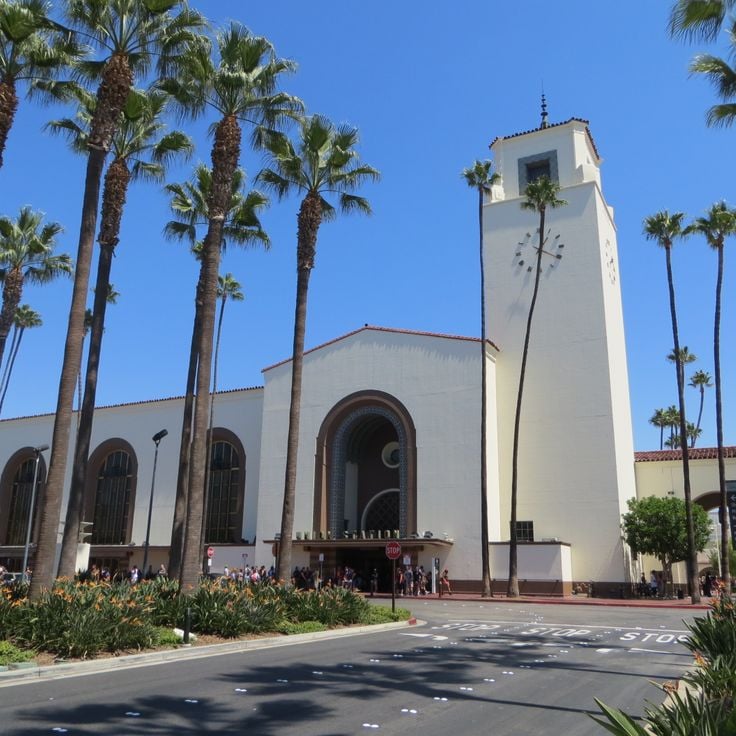
Union Station has stood since 1939 in the Art Deco style, preserving its original design with marble floors, high ceilings, and Spanish Colonial details. The large waiting hall features exposed wooden beams overhead, wide windows that let in daylight, and views of the surrounding tracks. Travelers pass through the hall daily on their way to trains heading to different parts of California. The architecture combines the elegance of the 1930s with the function of an active railway station. Cafés and shops line the area around the platforms, and connections to public transit remain in place. The station serves as a hub for commuters and as a backdrop for film shoots seeking to capture midcentury Los Angeles.
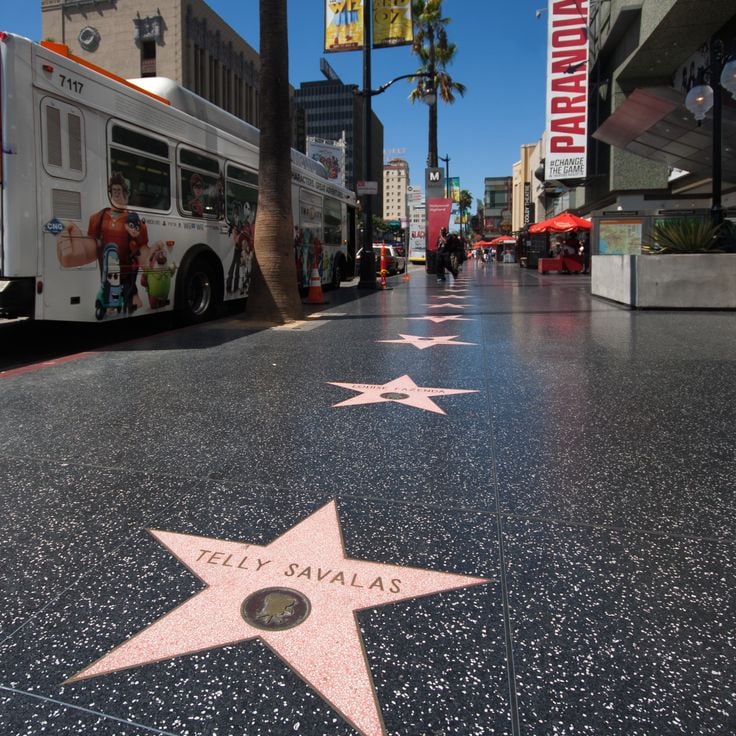
The Walk of Fame in Hollywood runs for several blocks along Hollywood Boulevard, displaying more than 2700 brass and terrazzo stars embedded in the sidewalk. Each star bears a name and a symbol indicating whether the honoree worked in film, television, radio, theater or music. You walk among shops and theaters, reading names on the ground while tourists take photographs and search for familiar actors or musicians. The stars blend into the urban fabric, where cars pass by and people from around the world stroll the avenue. The area connects the history of the entertainment industry with the everyday activity of a busy Los Angeles street.
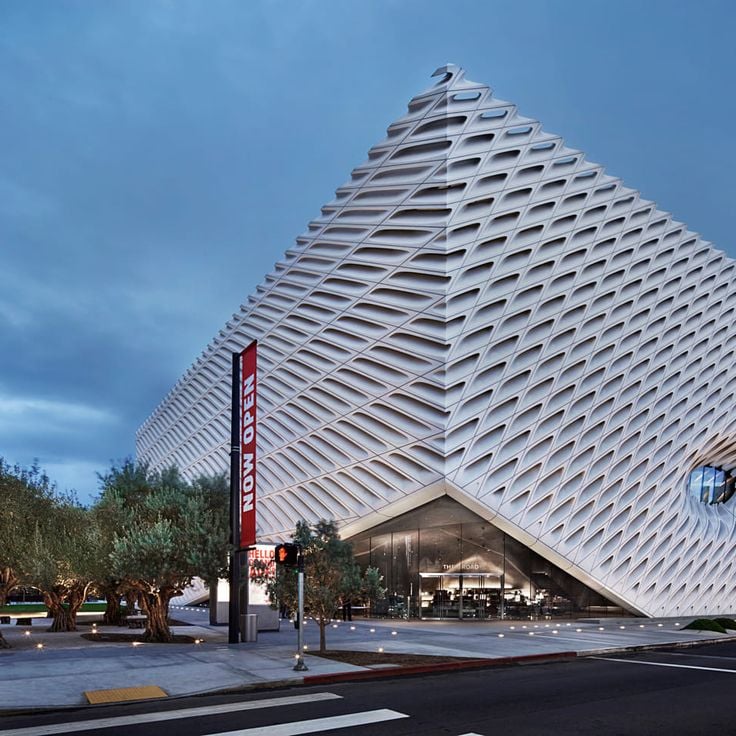
The Broad presents contemporary and postwar art in a building downtown that offers 120,000 square feet (11,000 square meters) of exhibition space. The collection brings together around 2,000 works by international artists, showing installations, paintings, sculptures, and photographs from recent decades. The architecture stands out with its folded facade that filters natural light into the galleries. Visitors move through large rooms where works by Warhol, Basquiat, Lichtenstein, and other artists appear. The museum sits near other cultural institutions and adds energy to the neighborhood. Free general admission allows people to walk in and spend time with pieces that reflect changes in art over the last sixty years.
The Venice Beach Boardwalk stretches along the coast and serves as a gathering place for vendors, athletes and street performers. Along this section, food stands and shops line up side by side, while beach volleyball courts and outdoor basketball courts see constant use. Bodybuilders work out at the public fitness equipment directly on the sand, and skaters roll along the paved pathways. The Pacific Ocean provides the backdrop for a walkway where crowds stroll, musicians perform and sellers display their artwork or souvenirs. The mood shifts between athletic activity and informal commerce, while the salty air and the sound of the waves accompany the rhythm of daily life. Venice Beach Boardwalk belongs to those places in Los Angeles where Californian beach culture shows itself in full range: impromptu performances, basketball under the sun, graffiti on the walls and a mix of locals and visitors who take part in the open spectrum of leisure activities. The section ends where the development grows denser and the boardwalk transitions into quieter stretches of beach.
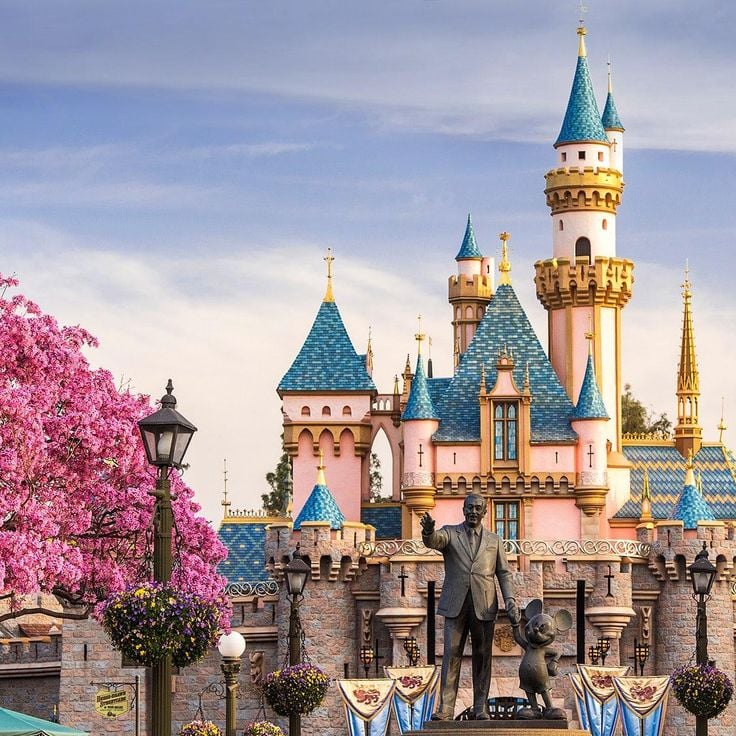
Disneyland Resort is located in Anaheim and covers 200 hectares (494 acres) with two theme parks, three hotels, and a shopping district. The park opened in 1955 and features attractions based on Disney characters and films. Visitors walk through different areas, from Fantasyland to Tomorrowland, experiencing rides, shows, and parades. Streets in the park recall American small towns or foreign lands, with restaurants and shops lining the pathways. In the evening, fireworks light up the sky above the castle at the center of the park.
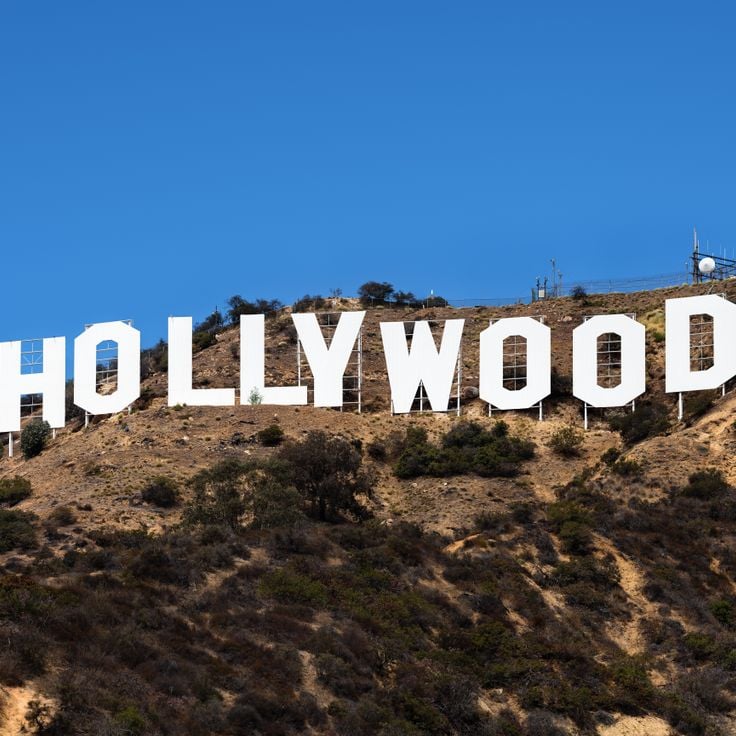
The Hollywood Sign stands on the slope of Mount Lee above Griffith Park, spelling out nine white letters that have marked the hillside since 1923. Originally installed as an advertisement for a real estate development, it was meant to be temporary. Each letter rises about 45 feet (14 meters) high, and the entire sign stretches roughly 350 feet (110 meters) across. Visible from many parts of Los Angeles, this landmark has become a symbol of the film industry and draws visitors who want to view or photograph it up close.
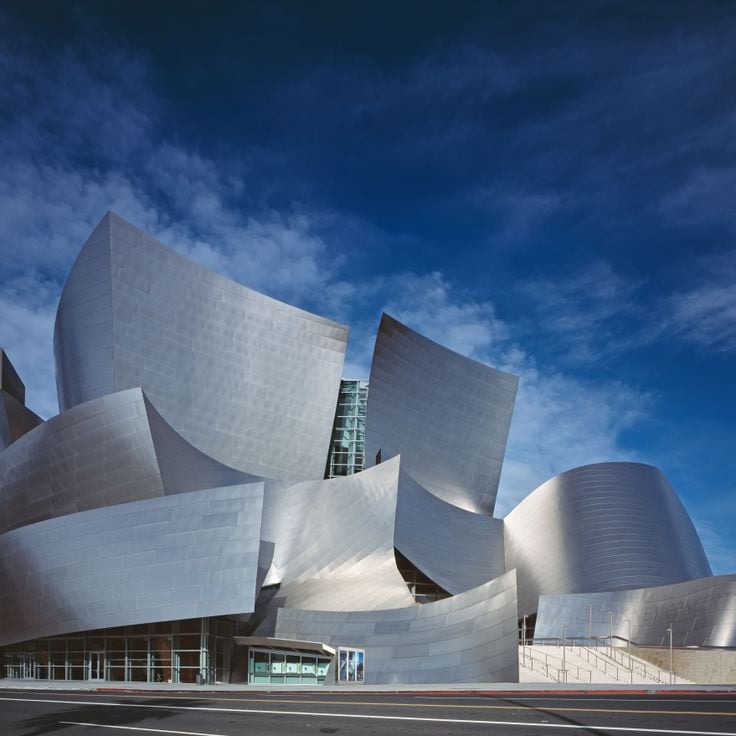
This concert hall was completed in 2003 following designs by Frank Gehry and displays a facade of curved steel panels that reflect light differently depending on the time of day. Inside, the wood paneling of Alaska yellow cedar creates a clear, warm sound that surrounds listeners without blurring the music with too much echo. The Los Angeles Philharmonic Orchestra performs here regularly, alongside guest appearances by other ensembles and solo artists. Seats are arranged in a semicircle around the stage, giving everyone a direct view of the musicians. The forecourt is open to the public and offers views of the surrounding downtown buildings. In the evening, visitors gather at the entrances, often well before the performance begins, to grab a coffee or take a closer look at the architecture.
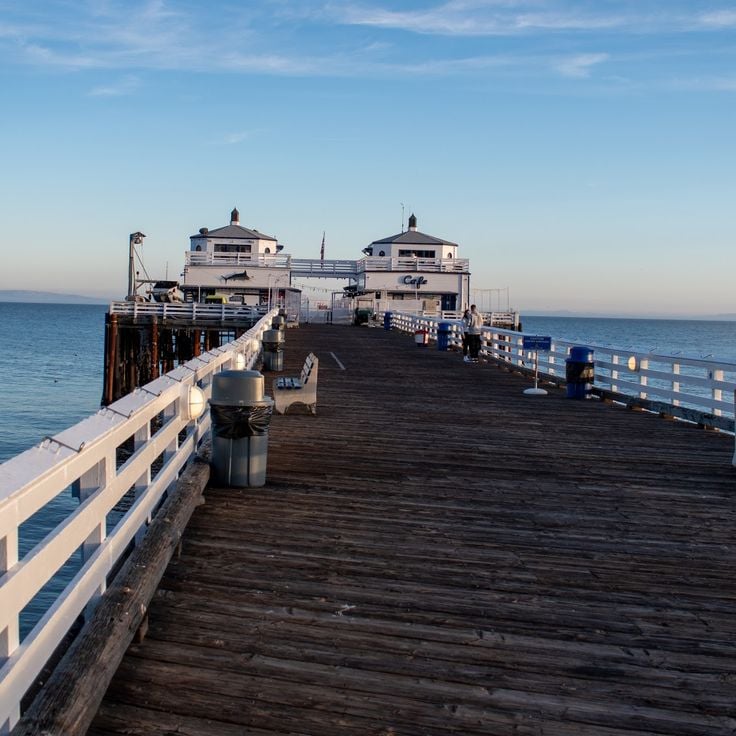
The Malibu Pier reaches into the Pacific Ocean since 1905, giving anglers a place to cast their lines. Restaurants sit right on the wooden deck, dolphins sometimes surface nearby. From here you see the coastline while waves hit the pilings.
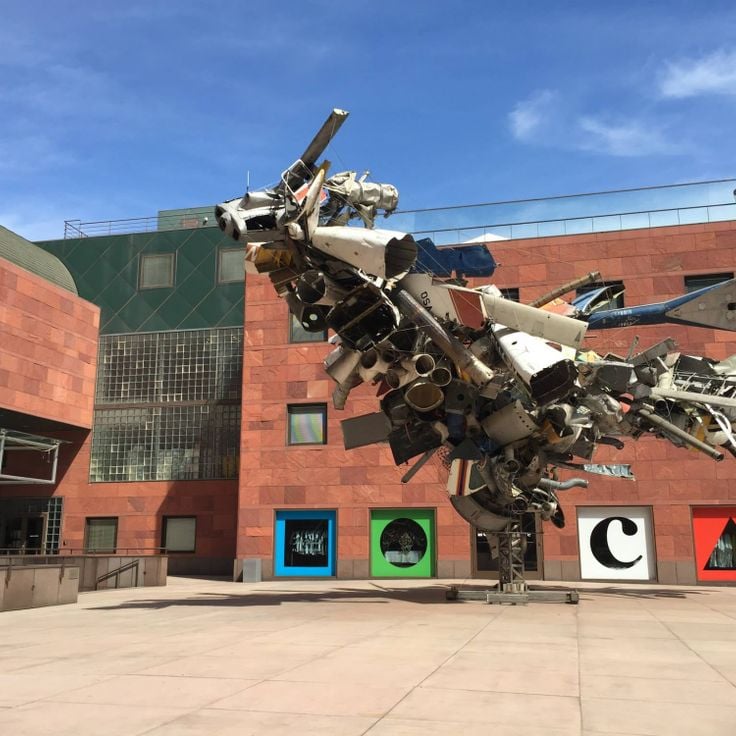
The Museum of Contemporary Art has displayed works created after 1940 since 1979, showing paintings, sculptures, photographs and video installations from different movements and approaches. The permanent collection rotates regularly, so visitors can see different pieces from the holdings during each visit. On the ground floor and upper levels, large rooms with natural light accommodate works of various sizes. Alongside galleries with paintings and objects, there is a space for temporary exhibitions that introduce new themes and artists. The museum also offers guided tours, lectures and workshops for different age groups.
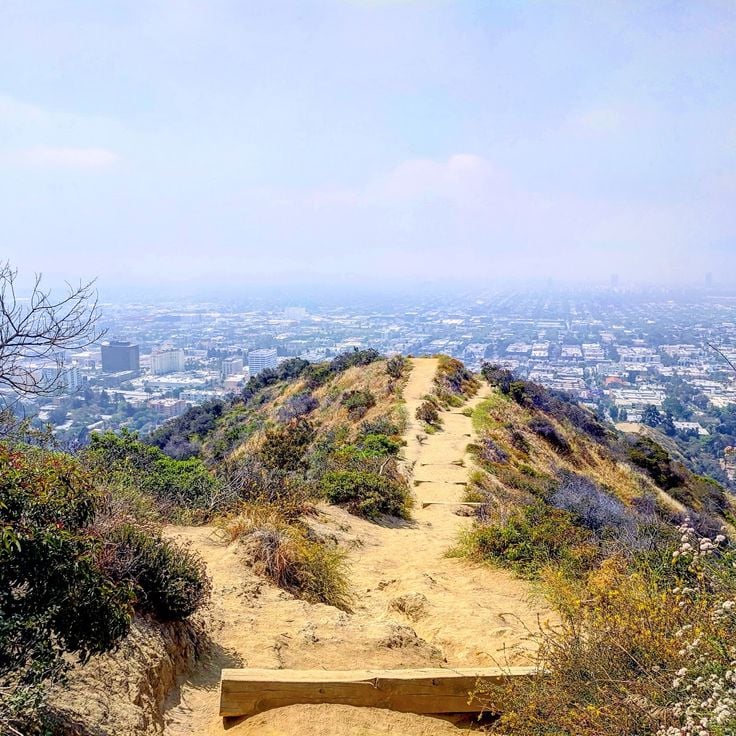
Runyon Canyon Park climbs the slopes above Hollywood and offers trails that wind through scrub and open hillsides. Dogs run free, and many locals come in the morning or late afternoon to walk or jog. From the upper paths you see the city below, the ocean beyond, and on clear days the mountains in the distance. The park sits just a few blocks from the studios and residential streets and remains a place where people meet to exercise, walk their dogs, or simply take a break among the plants and views.
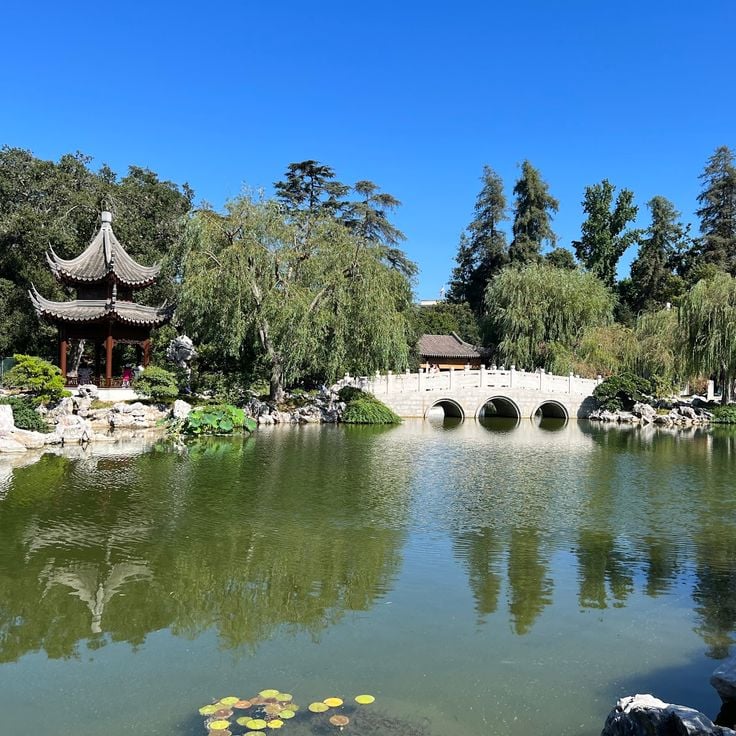
The Huntington Library gathers rare manuscripts, a 15th-century Gutenberg Bible and old books across three floors, while the galleries show European paintings from the 15th to the 18th century and American works from the 19th century. The gardens extend over 120 acres (49 ha) and include a Japanese garden with a teahouse, a desert garden with cacti from five continents, a Chinese garden with a red pavilion and a rose garden with hundreds of varieties, palm trees and bamboo groves, a jungle garden and a Renaissance garden with marble fountains.
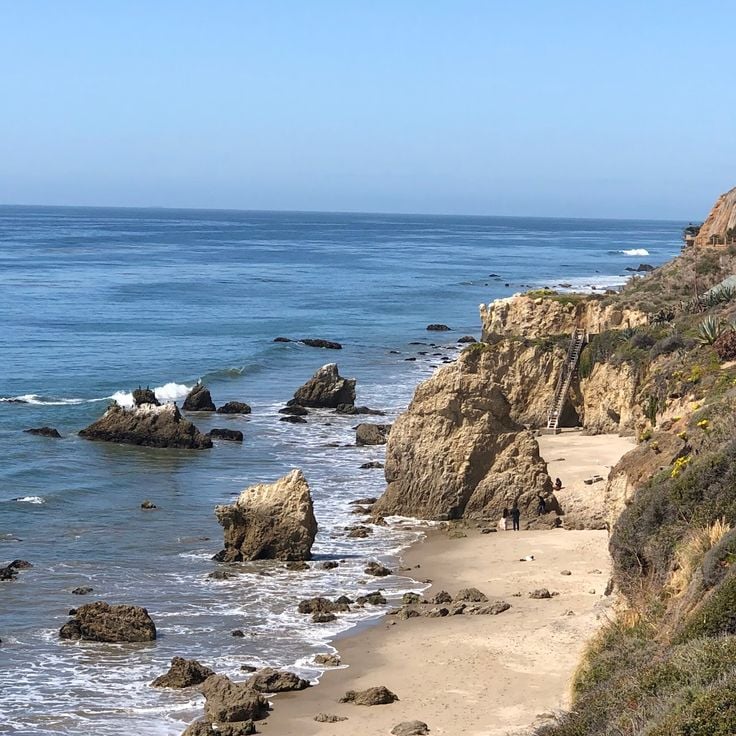
El Matador State Beach stretches along the California coast between cliffs and large rock formations that rise directly from the Pacific. The beach lies about twenty miles (30 km) north of Santa Monica and forms one of several small coves that belong to the Robert H. Meyer Memorial State Beaches in Malibu. A steep path descends from a small parking lot near the coastal highway down to the sand. At high tide, much of the shoreline disappears under water, leaving only narrow strips along the base of the cliffs. At low tide, the rocks open up into passages and caves that can be explored on foot. The water remains cold throughout the year, and the surf can be strong. Most visitors come to walk among the stone arches, take photographs, or sit on the sand framed by towering boulders. The beach offers no facilities beyond restrooms at the top of the trail. Seaweed clings to the rocks, and tide pools form in the hollows when the ocean pulls back. The setting feels removed from the wide, developed beaches further south, attracting those who prefer a coastline shaped by erosion and time rather than boardwalks and lifeguard towers.
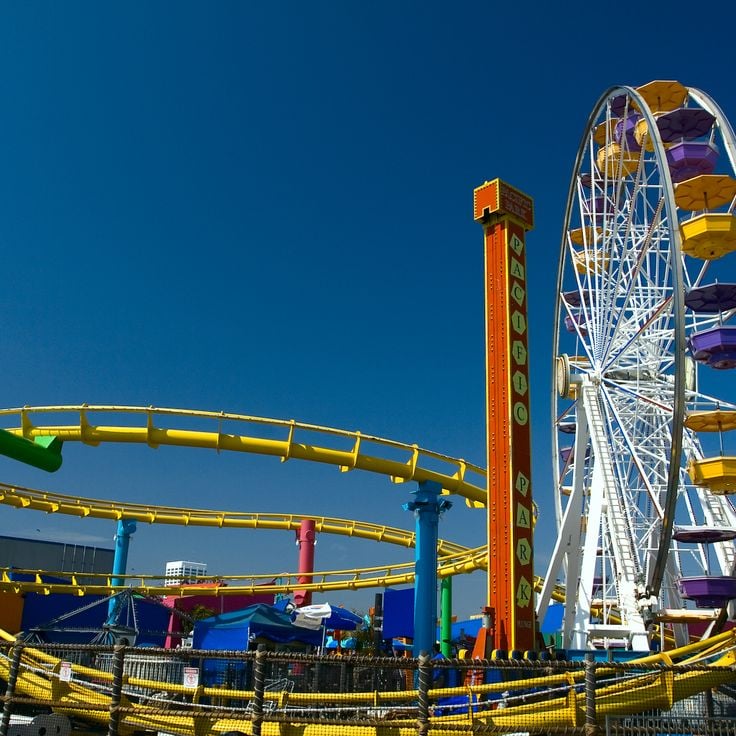
This amusement park sits on the Santa Monica Pier and offers twelve rides above the sea. The Ferris wheel runs on solar energy and rises to a height of around 85 feet (26 meters), while a small roller coaster winds around the support pillars. Arcade games line the wooden boardwalk, and the Pacific waves crash directly beneath the tracks. Riding the Ferris wheel cabins gives views of the coastline, the mountains inland, and the wide ocean. Families with children come here to walk among carousels, candy stands, and the sight of the beach. At night, colored lights glow and reflect in the water.
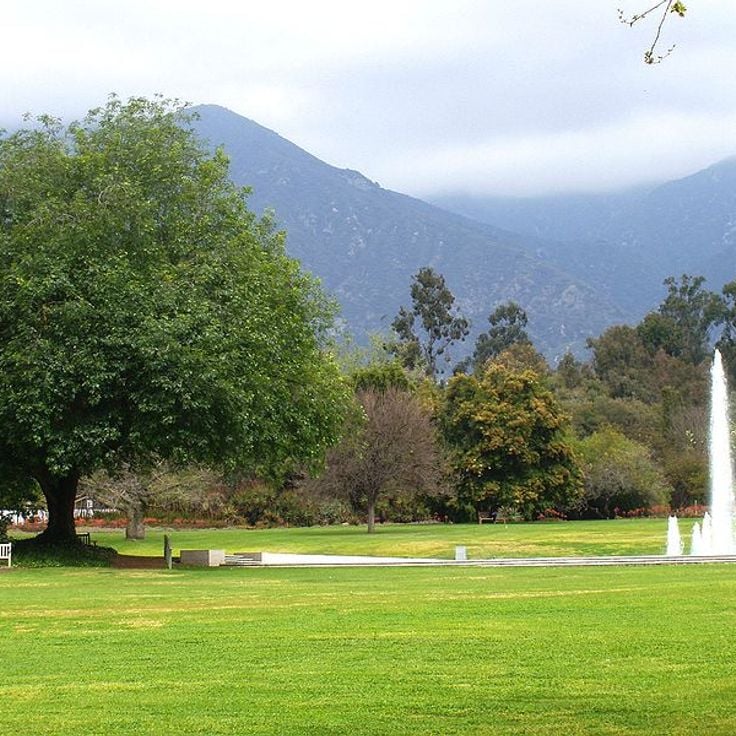
The Los Angeles County Arboretum and Botanic Garden displays plants from around the world across approximately 127 acres (51 hectares). The garden lies east of downtown, surrounded by residential streets and smaller parks, in a zone where the climate stays subtropical. Visitors walk among palms from Southeast Asia, eucalyptus trees from Australia, cacti from the deserts of the Americas, and other species organized by geographic region. The grounds also preserve a historic house that belonged to the family who ran a rancho here in the nineteenth century. The rooms show furniture and everyday objects from that period. Peacocks roam freely across the paths and lawns; they have grown used to the surroundings over generations and remain visible throughout the day. In summer, the trees provide shade; in spring, flower beds bloom, and the overall feeling stays calm even when temperatures rise.
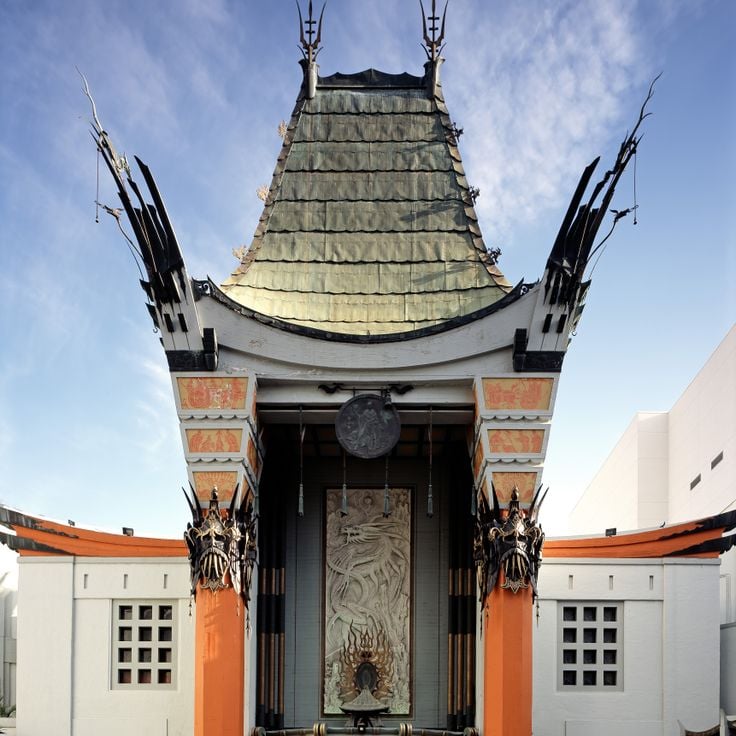
The TCL Chinese Theatre shows films in a hall built in 1927 with a pagoda-style roof, dragon columns, and a red facade. In the concrete forecourt, actors and directors have left their handprints and footprints, so visitors can see the marks left by legends of the film industry. The theater sits on Hollywood Boulevard and remains one of the city's most recognized cinemas, still hosting premieres and special screenings.
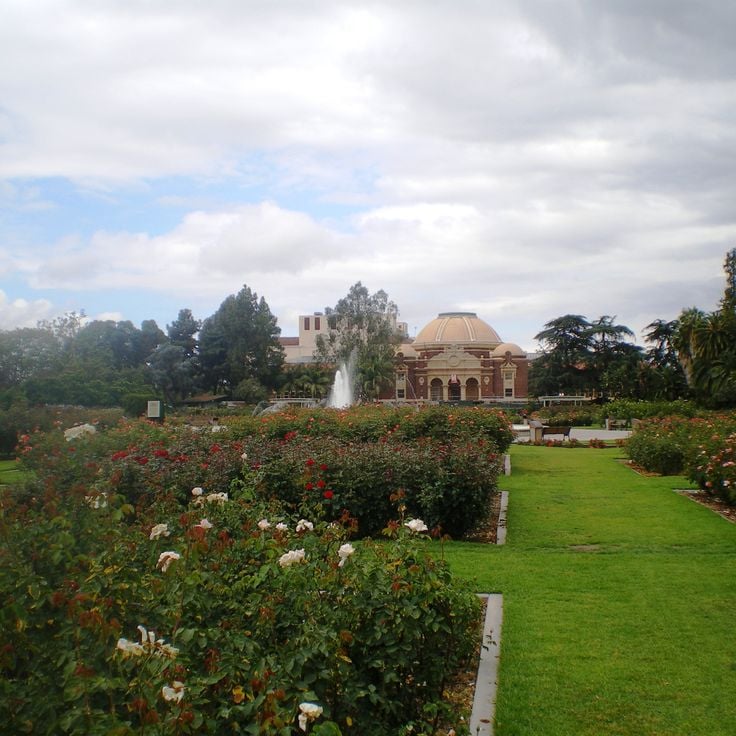
This rose garden in Exposition Park gathers thousands of rose plants across roughly seven acres, arranged in broad beds crisscrossed by paved paths. The layout centers on a fountain where water flows gently and visitors often pause on nearby benches. The garden opened in the late 1920s and now holds hundreds of different cultivars that bloom at different times of year, filling the space with shifting colors and scents. People stroll among the rows, pausing to read labels or photograph blooms, while older trees provide patches of shade along the edges. Families come for morning walks, photographers arrive at dawn to catch soft light on petals, and neighbors stop by after work. The garden sits within a larger park complex that includes museums and sports venues, offering a quiet green retreat in the middle of the city.
The Getty Villa gathers European artworks from the Middle Ages to the present day in a building modeled after Roman architecture. The collections contain paintings, manuscripts, decorative objects, and ancient sculptures spanning different eras. Outside, gardens with fountains, sculptures, and terraces follow ancient models. The museum sits on a hill with views of the Pacific and ranks among the institutions presenting European cultural heritage in Los Angeles.
Griffith Observatory sits on a hill in Griffith Park and brings together stargazing with a sweeping view over Los Angeles. The building from the 1930s houses a planetarium, several telescopes and exhibit halls where visitors learn about planets, stars and the history of space exploration. In the evening, people gather on the terraces to peer through the telescopes or simply watch the lit city below. During the day, the halls display instruments and models that explain the universe, while the planetarium runs shows about the cosmos.
Universal Studios Hollywood brings moviemaking to life by taking visitors behind the scenes of major film productions. The park sits in the hills north of Los Angeles and combines a working film studio with attractions based on famous movies and television series. The studio tour drives through real filming sets, past backdrops used for action scenes, disaster movies, and television dramas. You see city streets that represent New York or a European town, and experience special effects like simulated earthquakes or encounters with a mechanical shark. Themed rides take guests into the worlds of Jurassic Park, The Simpsons, or Harry Potter. The attractions combine film technology with roller coasters and three-dimensional projections. Shows demonstrate how stunts are choreographed for the screen, with explosions, fights, and car chases. Between the attractions stand restaurants, shops with film souvenirs, and reconstructed streets that recall different eras and places. The park sits next to active production halls, so movies and television shows are filmed while visitors walk through the grounds.
The Santa Monica Pier reaches into the Pacific Ocean and has carried an amusement area, rides and restaurants since 1909. A Ferris wheel turns above the water, the carousel dates from the 1920s and has been restored several times. A small aquarium displays sea creatures from the bay while anglers cast lines along the railings. Visitors walk across timber planks, surf breaks below, and views stretch inland toward distant mountains. At dusk bulbs light up the attractions, gulls circle above snack stands, and street musicians perform near the pier entrance.
Rodeo Drive runs for three blocks and brings together fashion houses and jewelry stores including Gucci, Prada and Cartier, where shoppers stroll past displays or step inside to browse for clothing and accessories under rows of glass cases and bright storefronts.
The Grove brings together stores, restaurants and a movie theater around an artificial lake animated by water fountains. A historic streetcar connects the different areas of this shopping center in the Fairfax district. The open layout invites visitors to stroll, while palm trees and landscaped walkways create a Southern California setting. In the evenings, the restaurants and cafés draw people who want to linger after shopping or before catching a film.
The museum presents art spanning six millennia, from ancient times to today. The collection includes paintings, sculptures, photographs, textiles, and ceramics from Europe, Asia, Africa, the Americas, and Oceania. Visitors can explore Roman mosaics alongside contemporary installations. In front of the main entrance stands an installation made of more than 200 restored street lamps that light up at night. Exhibition spaces spread across several buildings connected by outdoor galleries. A café in the courtyard offers a place to rest. The museum organizes concerts, film screenings, and workshops for families.
The Staples Center welcomes visitors for basketball games of the Lakers and Clippers, hockey matches of the Kings, and other sports events and concerts. The arena stands in the heart of downtown and seats around 20,000 people. Since opening in the late 1990s, it has served as home to several teams and draws crowds from across the region. Live music evenings alternate with games, and the mood shifts depending on the event. Lines form outside before entry, and inside the tiers fill quickly. The Center connects well to public transit and sits near restaurants and bars that see steady traffic before and after events.
La Brea Tar Pits preserves Ice Age fossils that have been trapped in asphalt for thousands of years. The site holds bones of saber-toothed cats, mammoths and wolves that sank into the natural tar pools about 40,000 years ago. Visitors can still see active asphalt seeps where gas bubbles rise to the surface, showing how animals became stuck in the sticky mass. The museum displays skeletons and skulls that scientists have excavated on site. Outside, life-size models of animals stand at the edge of the dark pools.
The Dodger Stadium has been home to the Los Angeles Dodgers since 1962, making it one of the oldest baseball stadiums still in regular use across the country. With a seating capacity of 56,000, it fills up during the season that runs from April through October. The stands rise in tiers, and from most seats you get a clear view of the infield and outfield. On game nights, especially under the lights, the place comes alive with fans, the crack of the bat, and vendors calling out for hot dogs and peanuts. This is the kind of setting where baseball feels most at home. The stadium sits on a hillside, so parking lots wrap around it, and many people drive in. From the upper levels, you can see across the city and out to the surrounding mountains. Inside, the concourses are wide, and you can move around between innings without missing too much of the action. Over the decades, the stadium has been updated, but it still keeps the feel of the 1960s when it first opened.
The Petersen Automotive Museum displays vehicles from more than a century of automobile history. Four floors hold motorcycles, race cars, trucks and passenger cars that document architectural styles and technical developments from different decades. The collection ranges from early 20th-century models to current prototypes. The exhibition rooms explain how engines, chassis and body shapes have changed and what role the car plays in everyday life. The museum stands on Wilshire Boulevard in Los Angeles. Students, families and car fans visit the building, whose outer skin consists of red and silver metal panels. Guided tours show workshops where mechanics restore historic vehicles. A vintage car sometimes stands on the roof, visible from the street. The Petersen Automotive Museum shows how technology, design and daily life have been connected since the beginning of the automobile.
Griffith Park covers more than 4200 acres (1700 hectares) of hills and valleys east of Hollywood. This park, established in 1896, combines nature with cultural facilities: trails wind through dry vegetation while the observatory sits on a hilltop overlooking the city. The grounds hold a planetarium, a zoo, and a transportation museum. Visitors come to hike, ride horses, or picnic among oak trees and chaparral. From the viewpoints, the view stretches to the Pacific and the mountains to the north.
Union Station has stood since 1939 in the Art Deco style, preserving its original design with marble floors, high ceilings, and Spanish Colonial details. The large waiting hall features exposed wooden beams overhead, wide windows that let in daylight, and views of the surrounding tracks. Travelers pass through the hall daily on their way to trains heading to different parts of California. The architecture combines the elegance of the 1930s with the function of an active railway station. Cafés and shops line the area around the platforms, and connections to public transit remain in place. The station serves as a hub for commuters and as a backdrop for film shoots seeking to capture midcentury Los Angeles.
The Walk of Fame in Hollywood runs for several blocks along Hollywood Boulevard, displaying more than 2700 brass and terrazzo stars embedded in the sidewalk. Each star bears a name and a symbol indicating whether the honoree worked in film, television, radio, theater or music. You walk among shops and theaters, reading names on the ground while tourists take photographs and search for familiar actors or musicians. The stars blend into the urban fabric, where cars pass by and people from around the world stroll the avenue. The area connects the history of the entertainment industry with the everyday activity of a busy Los Angeles street.
The Broad presents contemporary and postwar art in a building downtown that offers 120,000 square feet (11,000 square meters) of exhibition space. The collection brings together around 2,000 works by international artists, showing installations, paintings, sculptures, and photographs from recent decades. The architecture stands out with its folded facade that filters natural light into the galleries. Visitors move through large rooms where works by Warhol, Basquiat, Lichtenstein, and other artists appear. The museum sits near other cultural institutions and adds energy to the neighborhood. Free general admission allows people to walk in and spend time with pieces that reflect changes in art over the last sixty years.
The Venice Beach Boardwalk stretches along the coast and serves as a gathering place for vendors, athletes and street performers. Along this section, food stands and shops line up side by side, while beach volleyball courts and outdoor basketball courts see constant use. Bodybuilders work out at the public fitness equipment directly on the sand, and skaters roll along the paved pathways. The Pacific Ocean provides the backdrop for a walkway where crowds stroll, musicians perform and sellers display their artwork or souvenirs. The mood shifts between athletic activity and informal commerce, while the salty air and the sound of the waves accompany the rhythm of daily life. Venice Beach Boardwalk belongs to those places in Los Angeles where Californian beach culture shows itself in full range: impromptu performances, basketball under the sun, graffiti on the walls and a mix of locals and visitors who take part in the open spectrum of leisure activities. The section ends where the development grows denser and the boardwalk transitions into quieter stretches of beach.
Disneyland Resort is located in Anaheim and covers 200 hectares (494 acres) with two theme parks, three hotels, and a shopping district. The park opened in 1955 and features attractions based on Disney characters and films. Visitors walk through different areas, from Fantasyland to Tomorrowland, experiencing rides, shows, and parades. Streets in the park recall American small towns or foreign lands, with restaurants and shops lining the pathways. In the evening, fireworks light up the sky above the castle at the center of the park.
The Hollywood Sign stands on the slope of Mount Lee above Griffith Park, spelling out nine white letters that have marked the hillside since 1923. Originally installed as an advertisement for a real estate development, it was meant to be temporary. Each letter rises about 45 feet (14 meters) high, and the entire sign stretches roughly 350 feet (110 meters) across. Visible from many parts of Los Angeles, this landmark has become a symbol of the film industry and draws visitors who want to view or photograph it up close.
This concert hall was completed in 2003 following designs by Frank Gehry and displays a facade of curved steel panels that reflect light differently depending on the time of day. Inside, the wood paneling of Alaska yellow cedar creates a clear, warm sound that surrounds listeners without blurring the music with too much echo. The Los Angeles Philharmonic Orchestra performs here regularly, alongside guest appearances by other ensembles and solo artists. Seats are arranged in a semicircle around the stage, giving everyone a direct view of the musicians. The forecourt is open to the public and offers views of the surrounding downtown buildings. In the evening, visitors gather at the entrances, often well before the performance begins, to grab a coffee or take a closer look at the architecture.
The Malibu Pier reaches into the Pacific Ocean since 1905, giving anglers a place to cast their lines. Restaurants sit right on the wooden deck, dolphins sometimes surface nearby. From here you see the coastline while waves hit the pilings.
The Museum of Contemporary Art has displayed works created after 1940 since 1979, showing paintings, sculptures, photographs and video installations from different movements and approaches. The permanent collection rotates regularly, so visitors can see different pieces from the holdings during each visit. On the ground floor and upper levels, large rooms with natural light accommodate works of various sizes. Alongside galleries with paintings and objects, there is a space for temporary exhibitions that introduce new themes and artists. The museum also offers guided tours, lectures and workshops for different age groups.
Runyon Canyon Park climbs the slopes above Hollywood and offers trails that wind through scrub and open hillsides. Dogs run free, and many locals come in the morning or late afternoon to walk or jog. From the upper paths you see the city below, the ocean beyond, and on clear days the mountains in the distance. The park sits just a few blocks from the studios and residential streets and remains a place where people meet to exercise, walk their dogs, or simply take a break among the plants and views.
The Huntington Library gathers rare manuscripts, a 15th-century Gutenberg Bible and old books across three floors, while the galleries show European paintings from the 15th to the 18th century and American works from the 19th century. The gardens extend over 120 acres (49 ha) and include a Japanese garden with a teahouse, a desert garden with cacti from five continents, a Chinese garden with a red pavilion and a rose garden with hundreds of varieties, palm trees and bamboo groves, a jungle garden and a Renaissance garden with marble fountains.
El Matador State Beach stretches along the California coast between cliffs and large rock formations that rise directly from the Pacific. The beach lies about twenty miles (30 km) north of Santa Monica and forms one of several small coves that belong to the Robert H. Meyer Memorial State Beaches in Malibu. A steep path descends from a small parking lot near the coastal highway down to the sand. At high tide, much of the shoreline disappears under water, leaving only narrow strips along the base of the cliffs. At low tide, the rocks open up into passages and caves that can be explored on foot. The water remains cold throughout the year, and the surf can be strong. Most visitors come to walk among the stone arches, take photographs, or sit on the sand framed by towering boulders. The beach offers no facilities beyond restrooms at the top of the trail. Seaweed clings to the rocks, and tide pools form in the hollows when the ocean pulls back. The setting feels removed from the wide, developed beaches further south, attracting those who prefer a coastline shaped by erosion and time rather than boardwalks and lifeguard towers.
This amusement park sits on the Santa Monica Pier and offers twelve rides above the sea. The Ferris wheel runs on solar energy and rises to a height of around 85 feet (26 meters), while a small roller coaster winds around the support pillars. Arcade games line the wooden boardwalk, and the Pacific waves crash directly beneath the tracks. Riding the Ferris wheel cabins gives views of the coastline, the mountains inland, and the wide ocean. Families with children come here to walk among carousels, candy stands, and the sight of the beach. At night, colored lights glow and reflect in the water.
The Los Angeles County Arboretum and Botanic Garden displays plants from around the world across approximately 127 acres (51 hectares). The garden lies east of downtown, surrounded by residential streets and smaller parks, in a zone where the climate stays subtropical. Visitors walk among palms from Southeast Asia, eucalyptus trees from Australia, cacti from the deserts of the Americas, and other species organized by geographic region. The grounds also preserve a historic house that belonged to the family who ran a rancho here in the nineteenth century. The rooms show furniture and everyday objects from that period. Peacocks roam freely across the paths and lawns; they have grown used to the surroundings over generations and remain visible throughout the day. In summer, the trees provide shade; in spring, flower beds bloom, and the overall feeling stays calm even when temperatures rise.
The TCL Chinese Theatre shows films in a hall built in 1927 with a pagoda-style roof, dragon columns, and a red facade. In the concrete forecourt, actors and directors have left their handprints and footprints, so visitors can see the marks left by legends of the film industry. The theater sits on Hollywood Boulevard and remains one of the city's most recognized cinemas, still hosting premieres and special screenings.
This rose garden in Exposition Park gathers thousands of rose plants across roughly seven acres, arranged in broad beds crisscrossed by paved paths. The layout centers on a fountain where water flows gently and visitors often pause on nearby benches. The garden opened in the late 1920s and now holds hundreds of different cultivars that bloom at different times of year, filling the space with shifting colors and scents. People stroll among the rows, pausing to read labels or photograph blooms, while older trees provide patches of shade along the edges. Families come for morning walks, photographers arrive at dawn to catch soft light on petals, and neighbors stop by after work. The garden sits within a larger park complex that includes museums and sports venues, offering a quiet green retreat in the middle of the city.
The Getty Villa gathers European artworks from the Middle Ages to the present day in a building modeled after Roman architecture. The collections contain paintings, manuscripts, decorative objects, and ancient sculptures spanning different eras. Outside, gardens with fountains, sculptures, and terraces follow ancient models. The museum sits on a hill with views of the Pacific and ranks among the institutions presenting European cultural heritage in Los Angeles.
Griffith Observatory sits on a hill in Griffith Park and brings together stargazing with a sweeping view over Los Angeles. The building from the 1930s houses a planetarium, several telescopes and exhibit halls where visitors learn about planets, stars and the history of space exploration. In the evening, people gather on the terraces to peer through the telescopes or simply watch the lit city below. During the day, the halls display instruments and models that explain the universe, while the planetarium runs shows about the cosmos.
Universal Studios Hollywood brings moviemaking to life by taking visitors behind the scenes of major film productions. The park sits in the hills north of Los Angeles and combines a working film studio with attractions based on famous movies and television series. The studio tour drives through real filming sets, past backdrops used for action scenes, disaster movies, and television dramas. You see city streets that represent New York or a European town, and experience special effects like simulated earthquakes or encounters with a mechanical shark. Themed rides take guests into the worlds of Jurassic Park, The Simpsons, or Harry Potter. The attractions combine film technology with roller coasters and three-dimensional projections. Shows demonstrate how stunts are choreographed for the screen, with explosions, fights, and car chases. Between the attractions stand restaurants, shops with film souvenirs, and reconstructed streets that recall different eras and places. The park sits next to active production halls, so movies and television shows are filmed while visitors walk through the grounds.
The Santa Monica Pier reaches into the Pacific Ocean and has carried an amusement area, rides and restaurants since 1909. A Ferris wheel turns above the water, the carousel dates from the 1920s and has been restored several times. A small aquarium displays sea creatures from the bay while anglers cast lines along the railings. Visitors walk across timber planks, surf breaks below, and views stretch inland toward distant mountains. At dusk bulbs light up the attractions, gulls circle above snack stands, and street musicians perform near the pier entrance.
Rodeo Drive runs for three blocks and brings together fashion houses and jewelry stores including Gucci, Prada and Cartier, where shoppers stroll past displays or step inside to browse for clothing and accessories under rows of glass cases and bright storefronts.
The Grove brings together stores, restaurants and a movie theater around an artificial lake animated by water fountains. A historic streetcar connects the different areas of this shopping center in the Fairfax district. The open layout invites visitors to stroll, while palm trees and landscaped walkways create a Southern California setting. In the evenings, the restaurants and cafés draw people who want to linger after shopping or before catching a film.
The museum presents art spanning six millennia, from ancient times to today. The collection includes paintings, sculptures, photographs, textiles, and ceramics from Europe, Asia, Africa, the Americas, and Oceania. Visitors can explore Roman mosaics alongside contemporary installations. In front of the main entrance stands an installation made of more than 200 restored street lamps that light up at night. Exhibition spaces spread across several buildings connected by outdoor galleries. A café in the courtyard offers a place to rest. The museum organizes concerts, film screenings, and workshops for families.
The Staples Center welcomes visitors for basketball games of the Lakers and Clippers, hockey matches of the Kings, and other sports events and concerts. The arena stands in the heart of downtown and seats around 20,000 people. Since opening in the late 1990s, it has served as home to several teams and draws crowds from across the region. Live music evenings alternate with games, and the mood shifts depending on the event. Lines form outside before entry, and inside the tiers fill quickly. The Center connects well to public transit and sits near restaurants and bars that see steady traffic before and after events.
La Brea Tar Pits preserves Ice Age fossils that have been trapped in asphalt for thousands of years. The site holds bones of saber-toothed cats, mammoths and wolves that sank into the natural tar pools about 40,000 years ago. Visitors can still see active asphalt seeps where gas bubbles rise to the surface, showing how animals became stuck in the sticky mass. The museum displays skeletons and skulls that scientists have excavated on site. Outside, life-size models of animals stand at the edge of the dark pools.
The Dodger Stadium has been home to the Los Angeles Dodgers since 1962, making it one of the oldest baseball stadiums still in regular use across the country. With a seating capacity of 56,000, it fills up during the season that runs from April through October. The stands rise in tiers, and from most seats you get a clear view of the infield and outfield. On game nights, especially under the lights, the place comes alive with fans, the crack of the bat, and vendors calling out for hot dogs and peanuts. This is the kind of setting where baseball feels most at home. The stadium sits on a hillside, so parking lots wrap around it, and many people drive in. From the upper levels, you can see across the city and out to the surrounding mountains. Inside, the concourses are wide, and you can move around between innings without missing too much of the action. Over the decades, the stadium has been updated, but it still keeps the feel of the 1960s when it first opened.
The Petersen Automotive Museum displays vehicles from more than a century of automobile history. Four floors hold motorcycles, race cars, trucks and passenger cars that document architectural styles and technical developments from different decades. The collection ranges from early 20th-century models to current prototypes. The exhibition rooms explain how engines, chassis and body shapes have changed and what role the car plays in everyday life. The museum stands on Wilshire Boulevard in Los Angeles. Students, families and car fans visit the building, whose outer skin consists of red and silver metal panels. Guided tours show workshops where mechanics restore historic vehicles. A vintage car sometimes stands on the roof, visible from the street. The Petersen Automotive Museum shows how technology, design and daily life have been connected since the beginning of the automobile.
Griffith Park covers more than 4200 acres (1700 hectares) of hills and valleys east of Hollywood. This park, established in 1896, combines nature with cultural facilities: trails wind through dry vegetation while the observatory sits on a hilltop overlooking the city. The grounds hold a planetarium, a zoo, and a transportation museum. Visitors come to hike, ride horses, or picnic among oak trees and chaparral. From the viewpoints, the view stretches to the Pacific and the mountains to the north.
Union Station has stood since 1939 in the Art Deco style, preserving its original design with marble floors, high ceilings, and Spanish Colonial details. The large waiting hall features exposed wooden beams overhead, wide windows that let in daylight, and views of the surrounding tracks. Travelers pass through the hall daily on their way to trains heading to different parts of California. The architecture combines the elegance of the 1930s with the function of an active railway station. Cafés and shops line the area around the platforms, and connections to public transit remain in place. The station serves as a hub for commuters and as a backdrop for film shoots seeking to capture midcentury Los Angeles.
The Walk of Fame in Hollywood runs for several blocks along Hollywood Boulevard, displaying more than 2700 brass and terrazzo stars embedded in the sidewalk. Each star bears a name and a symbol indicating whether the honoree worked in film, television, radio, theater or music. You walk among shops and theaters, reading names on the ground while tourists take photographs and search for familiar actors or musicians. The stars blend into the urban fabric, where cars pass by and people from around the world stroll the avenue. The area connects the history of the entertainment industry with the everyday activity of a busy Los Angeles street.
The Broad presents contemporary and postwar art in a building downtown that offers 120,000 square feet (11,000 square meters) of exhibition space. The collection brings together around 2,000 works by international artists, showing installations, paintings, sculptures, and photographs from recent decades. The architecture stands out with its folded facade that filters natural light into the galleries. Visitors move through large rooms where works by Warhol, Basquiat, Lichtenstein, and other artists appear. The museum sits near other cultural institutions and adds energy to the neighborhood. Free general admission allows people to walk in and spend time with pieces that reflect changes in art over the last sixty years.
The Venice Beach Boardwalk stretches along the coast and serves as a gathering place for vendors, athletes and street performers. Along this section, food stands and shops line up side by side, while beach volleyball courts and outdoor basketball courts see constant use. Bodybuilders work out at the public fitness equipment directly on the sand, and skaters roll along the paved pathways. The Pacific Ocean provides the backdrop for a walkway where crowds stroll, musicians perform and sellers display their artwork or souvenirs. The mood shifts between athletic activity and informal commerce, while the salty air and the sound of the waves accompany the rhythm of daily life. Venice Beach Boardwalk belongs to those places in Los Angeles where Californian beach culture shows itself in full range: impromptu performances, basketball under the sun, graffiti on the walls and a mix of locals and visitors who take part in the open spectrum of leisure activities. The section ends where the development grows denser and the boardwalk transitions into quieter stretches of beach.
Disneyland Resort is located in Anaheim and covers 200 hectares (494 acres) with two theme parks, three hotels, and a shopping district. The park opened in 1955 and features attractions based on Disney characters and films. Visitors walk through different areas, from Fantasyland to Tomorrowland, experiencing rides, shows, and parades. Streets in the park recall American small towns or foreign lands, with restaurants and shops lining the pathways. In the evening, fireworks light up the sky above the castle at the center of the park.
The Hollywood Sign stands on the slope of Mount Lee above Griffith Park, spelling out nine white letters that have marked the hillside since 1923. Originally installed as an advertisement for a real estate development, it was meant to be temporary. Each letter rises about 45 feet (14 meters) high, and the entire sign stretches roughly 350 feet (110 meters) across. Visible from many parts of Los Angeles, this landmark has become a symbol of the film industry and draws visitors who want to view or photograph it up close.
This concert hall was completed in 2003 following designs by Frank Gehry and displays a facade of curved steel panels that reflect light differently depending on the time of day. Inside, the wood paneling of Alaska yellow cedar creates a clear, warm sound that surrounds listeners without blurring the music with too much echo. The Los Angeles Philharmonic Orchestra performs here regularly, alongside guest appearances by other ensembles and solo artists. Seats are arranged in a semicircle around the stage, giving everyone a direct view of the musicians. The forecourt is open to the public and offers views of the surrounding downtown buildings. In the evening, visitors gather at the entrances, often well before the performance begins, to grab a coffee or take a closer look at the architecture.
The Malibu Pier reaches into the Pacific Ocean since 1905, giving anglers a place to cast their lines. Restaurants sit right on the wooden deck, dolphins sometimes surface nearby. From here you see the coastline while waves hit the pilings.
The Museum of Contemporary Art has displayed works created after 1940 since 1979, showing paintings, sculptures, photographs and video installations from different movements and approaches. The permanent collection rotates regularly, so visitors can see different pieces from the holdings during each visit. On the ground floor and upper levels, large rooms with natural light accommodate works of various sizes. Alongside galleries with paintings and objects, there is a space for temporary exhibitions that introduce new themes and artists. The museum also offers guided tours, lectures and workshops for different age groups.
Runyon Canyon Park climbs the slopes above Hollywood and offers trails that wind through scrub and open hillsides. Dogs run free, and many locals come in the morning or late afternoon to walk or jog. From the upper paths you see the city below, the ocean beyond, and on clear days the mountains in the distance. The park sits just a few blocks from the studios and residential streets and remains a place where people meet to exercise, walk their dogs, or simply take a break among the plants and views.
The Huntington Library gathers rare manuscripts, a 15th-century Gutenberg Bible and old books across three floors, while the galleries show European paintings from the 15th to the 18th century and American works from the 19th century. The gardens extend over 120 acres (49 ha) and include a Japanese garden with a teahouse, a desert garden with cacti from five continents, a Chinese garden with a red pavilion and a rose garden with hundreds of varieties, palm trees and bamboo groves, a jungle garden and a Renaissance garden with marble fountains.
El Matador State Beach stretches along the California coast between cliffs and large rock formations that rise directly from the Pacific. The beach lies about twenty miles (30 km) north of Santa Monica and forms one of several small coves that belong to the Robert H. Meyer Memorial State Beaches in Malibu. A steep path descends from a small parking lot near the coastal highway down to the sand. At high tide, much of the shoreline disappears under water, leaving only narrow strips along the base of the cliffs. At low tide, the rocks open up into passages and caves that can be explored on foot. The water remains cold throughout the year, and the surf can be strong. Most visitors come to walk among the stone arches, take photographs, or sit on the sand framed by towering boulders. The beach offers no facilities beyond restrooms at the top of the trail. Seaweed clings to the rocks, and tide pools form in the hollows when the ocean pulls back. The setting feels removed from the wide, developed beaches further south, attracting those who prefer a coastline shaped by erosion and time rather than boardwalks and lifeguard towers.
This amusement park sits on the Santa Monica Pier and offers twelve rides above the sea. The Ferris wheel runs on solar energy and rises to a height of around 85 feet (26 meters), while a small roller coaster winds around the support pillars. Arcade games line the wooden boardwalk, and the Pacific waves crash directly beneath the tracks. Riding the Ferris wheel cabins gives views of the coastline, the mountains inland, and the wide ocean. Families with children come here to walk among carousels, candy stands, and the sight of the beach. At night, colored lights glow and reflect in the water.
The Los Angeles County Arboretum and Botanic Garden displays plants from around the world across approximately 127 acres (51 hectares). The garden lies east of downtown, surrounded by residential streets and smaller parks, in a zone where the climate stays subtropical. Visitors walk among palms from Southeast Asia, eucalyptus trees from Australia, cacti from the deserts of the Americas, and other species organized by geographic region. The grounds also preserve a historic house that belonged to the family who ran a rancho here in the nineteenth century. The rooms show furniture and everyday objects from that period. Peacocks roam freely across the paths and lawns; they have grown used to the surroundings over generations and remain visible throughout the day. In summer, the trees provide shade; in spring, flower beds bloom, and the overall feeling stays calm even when temperatures rise.
The TCL Chinese Theatre shows films in a hall built in 1927 with a pagoda-style roof, dragon columns, and a red facade. In the concrete forecourt, actors and directors have left their handprints and footprints, so visitors can see the marks left by legends of the film industry. The theater sits on Hollywood Boulevard and remains one of the city's most recognized cinemas, still hosting premieres and special screenings.
This rose garden in Exposition Park gathers thousands of rose plants across roughly seven acres, arranged in broad beds crisscrossed by paved paths. The layout centers on a fountain where water flows gently and visitors often pause on nearby benches. The garden opened in the late 1920s and now holds hundreds of different cultivars that bloom at different times of year, filling the space with shifting colors and scents. People stroll among the rows, pausing to read labels or photograph blooms, while older trees provide patches of shade along the edges. Families come for morning walks, photographers arrive at dawn to catch soft light on petals, and neighbors stop by after work. The garden sits within a larger park complex that includes museums and sports venues, offering a quiet green retreat in the middle of the city.