See the monuments around you in AROpen chests in the app
Around Us is built for your phone — point your camera at the streets and discover the monuments and places around you in augmented reality.Around Us is built for your phone — chests unlock when you walk, explore and capture nearby places.
Visit Valencia: historic sites, modern buildings and cultural places
Valencia shows its history through the ages, from Roman ruins hidden beneath the Place de la Vierge to the modern buildings of the City of Arts and Sciences. The old town keeps gates from the 15th century like the Torres de Quart, gothic churches with baroque frescos, and the Silk Exchange with its twisted columns that recall the town’s trading past. The Central Market, open since 1928, still has hundreds of stalls where local products are sold.
The city is built around the old riverbed of the Turia, turned into a park that connects the older neighborhoods with the new areas. Beaches with soft sand are just a few minutes from the city center along the Mediterranean. The Fine Arts Museum has Spanish paintings from the 14th to the 20th century, while the Oceanographic displays thousands of sea creatures in its underwater towers. Between Gothic cathedrals and modern buildings, Valencia invites visitors to walk its streets and see how old and new parts of the city sit side by side.
Visit Valencia: historic sites, modern buildings and cultural places
Valencia shows its history through the ages, from Roman ruins hidden beneath the Place de la Vierge to the modern buildings of the City of Arts and Sciences. The old town keeps gates from the 15th century like the Torres de Quart, gothic churches with baroque frescos, and the Silk Exchange with its twisted columns that recall the town’s trading past. The Central Market, open since 1928, still has hundreds of stalls where local products are sold.
The city is built around the old riverbed of the Turia, turned into a park that connects the older neighborhoods with the new areas. Beaches with soft sand are just a few minutes from the city center along the Mediterranean. The Fine Arts Museum has Spanish paintings from the 14th to the 20th century, while the Oceanographic displays thousands of sea creatures in its underwater towers. Between Gothic cathedrals and modern buildings, Valencia invites visitors to walk its streets and see how old and new parts of the city sit side by side.
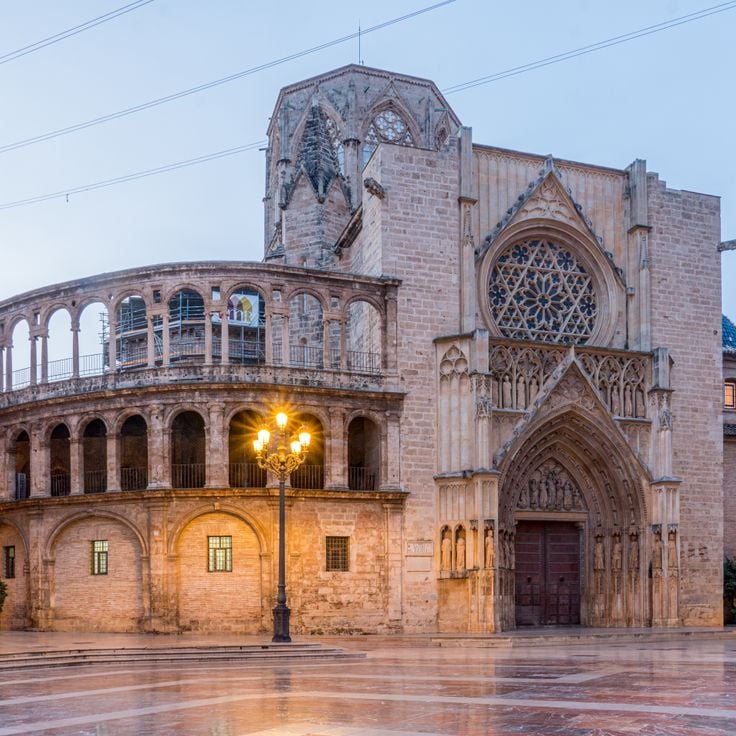
The Cathedral of Valencia shows how different periods come together in one place. Started in the 13th century, the building brings together Romanesque forms, Gothic arches and Baroque decorations added over the centuries. The bell tower rises about 50 meters (165 feet) above the old town and offers a wide view over the rooftops to the coast after climbing the spiral staircase. Inside, the cathedral holds religious artworks and relics, including a chalice that many believe to be the Holy Grail. The side chapels display paintings and sculptures from the Renaissance and Baroque periods. From outside, you can clearly see the different construction phases: the old stone walls next to the later renewed facades. The cathedral stands on Plaza de la Reina, where people meet and cafés fill the squares.
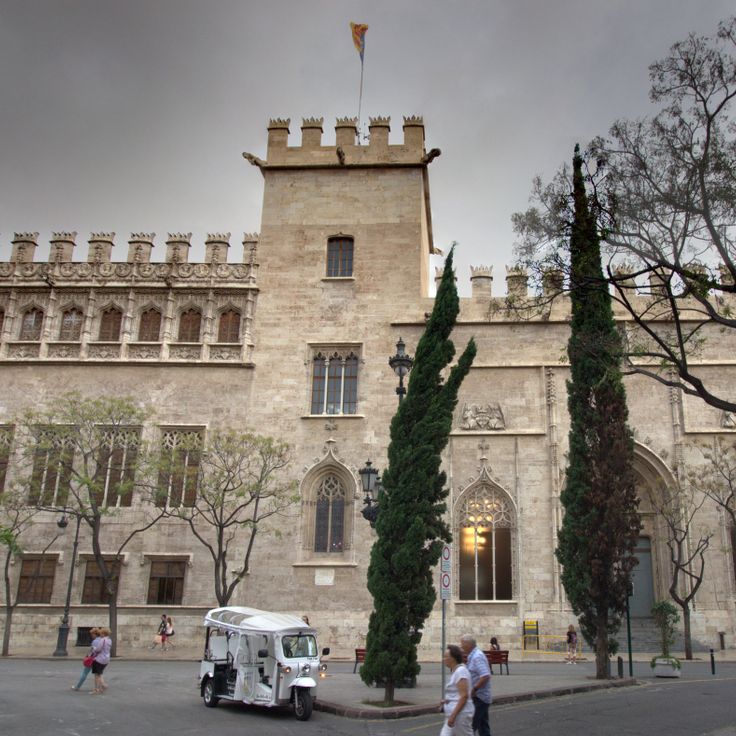
This late Gothic trading hall from the 15th century served Valencian merchants as a meeting place for the silk trade. The high-ceilinged hall displays slender twisted columns made of stone that branch upward to support ribbed vaulting. Light filters through narrow windows onto the stone floor where deals were negotiated for centuries. On the upper floor sits a wood-paneled room where the merchant consulate held meetings. The courtyard connects different sections of the building, including a tower with prison cells for traders who failed to pay their debts. The facade shows pointed arches and gargoyles typical of the era when Valencia ranked among Europe's leading silk centers.
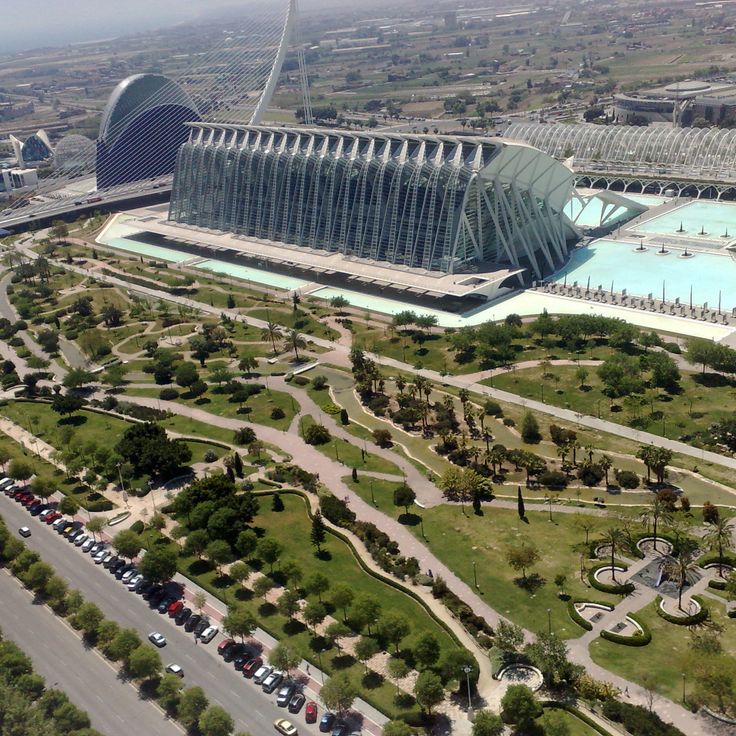
The City of Arts and Sciences gathers several white concrete buildings along a long axis in the former bed of the Turia River. The shapes suggest skeletons, eyes, or wings, with arches spanning shallow pools of water. The site houses a science museum with interactive exhibits, a cinema with a hemispherical screen, a theater for opera and concerts, and the Oceanogràfic, an aquarium holding thousands of marine animals in tanks that recreate oceans and coastlines. The architecture was completed in the late nineties and early two thousands and draws visitors who walk among the structures, cross bridges over the water, and watch the reflections.
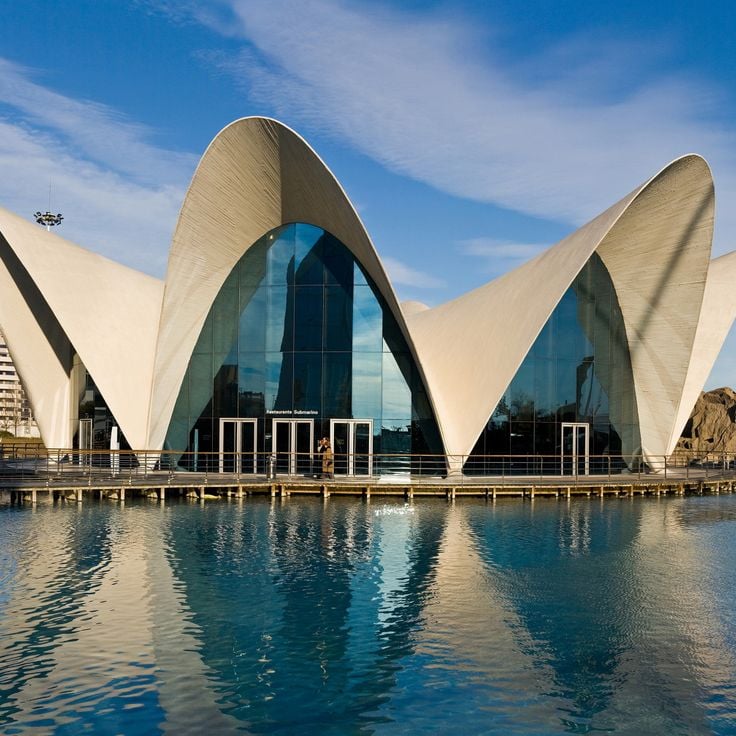
The Océanographique houses around 45,000 marine animals from 500 species, displayed in nine underwater towers. Visitors walk through large glass tunnels and observe sharks, belugas, sea lions, and tropical fish from different climate zones. The tanks are divided by habitat: the Mediterranean, polar regions, tropical seas, the open ocean, and wetlands. The building sits in the former riverbed of the Turia and belongs to the City of Arts and Sciences, built in the late nineties. The architecture resembles a giant white skeleton with curved walls and open passages. Outside, shallow pools host nesting seabirds.
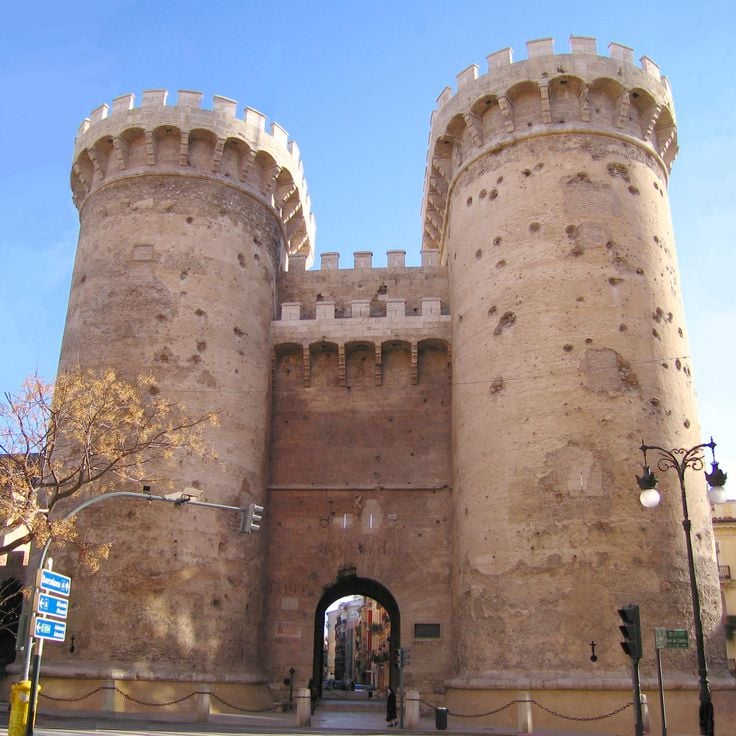
These two medieval towers formed the western entrance to the city in the 15th century. The thick stone walls still show the marks left by cannonballs during the Napoleonic Wars. You can see traces of past battles on the facades when you stand in front of the massive round towers. The construction resembles other fortifications of that era, with high walls and narrow openings. From the outside, you notice how these towers once connected to the city walls, which have mostly disappeared today. The Torres de Quart marked the boundary between the protected interior and the fields outside the city for a long time.
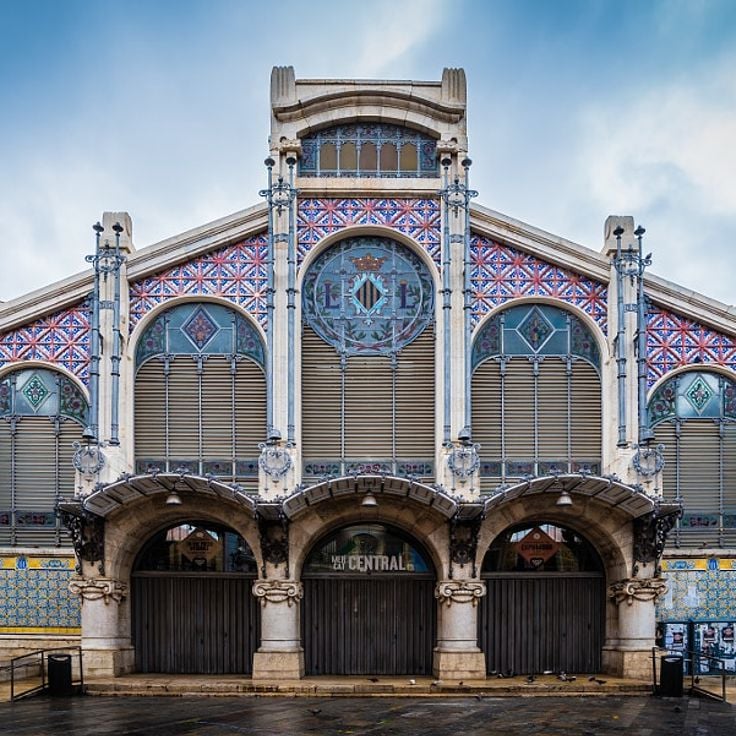
This market guides travelers through rows of stalls selling vegetables, fish, meat, and the typical ingredients of the region. The building from the 1920s combines steel, glass, and ceramic in an architectural style that was common across Europe at that time. Under the high domes, oranges, tomatoes, and peppers are stacked next to Iberian ham and fresh seafood. Vendors call out their offerings, shoppers compare prices and fill their baskets with seasonal products. The market remains a lively place where locals meet every morning to shop and visitors discover the variety of Valencian cuisine.
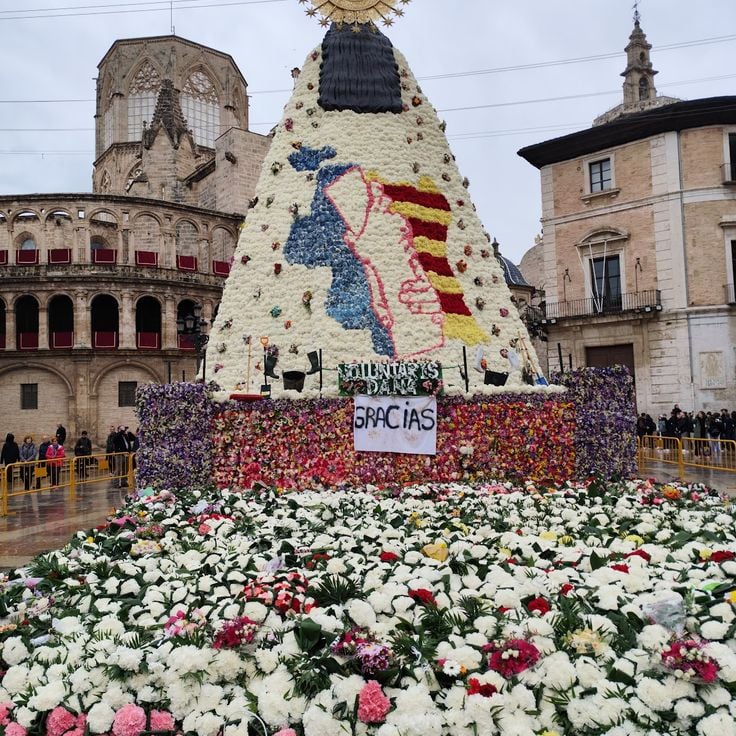
This square has been the heart of the city since the first century and now houses the basilica and the Water Tribunal, which meets every Thursday. Roman remains rest beneath the pavement, from the time when the forum stood here. The Neptune Fountain occupies the center of the square, surrounded by buildings from different periods. In the morning, locals fill the space, heading to the basilica or resting on benches in the shade. The facades show Gothic elements alongside Baroque decorations, evidence of renovations over the centuries.
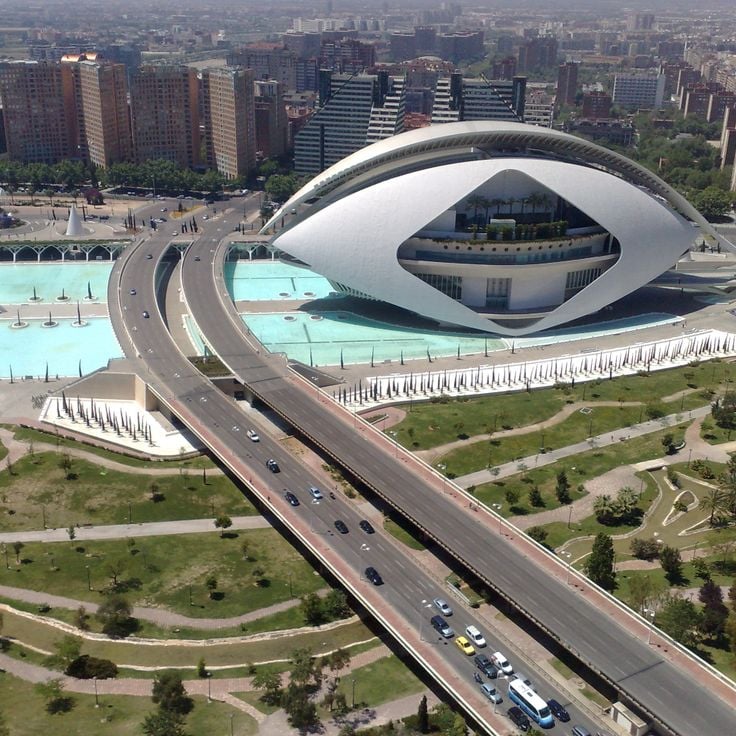
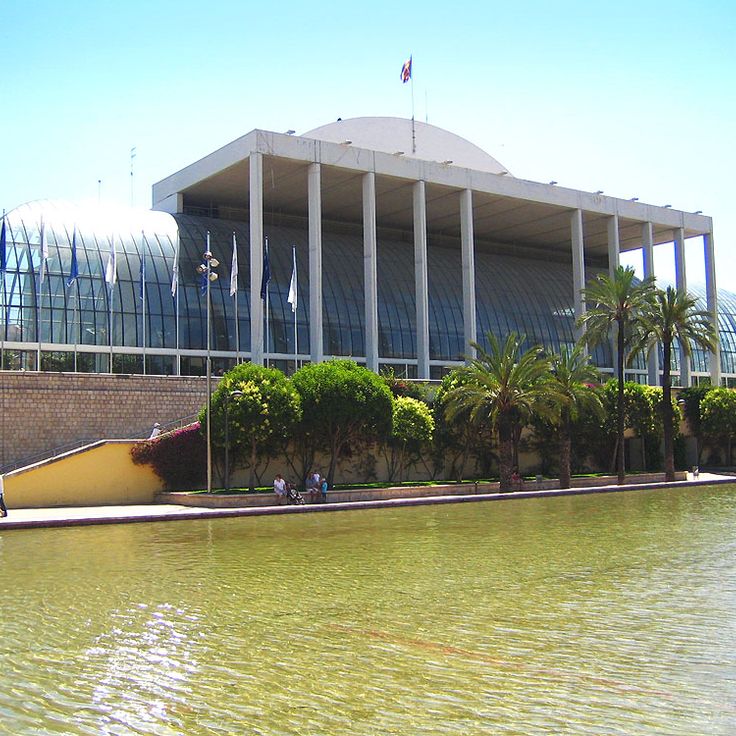
This concert hall from 1987 stands at the edge of the Turia Garden and houses four rooms for concerts, film screenings, and art exhibitions. The curved shapes of glass and concrete belong to the early examples of contemporary architecture in Valencia. Orchestras, chamber music groups, and soloists perform here regularly. The rooms are named by size and welcome between a few dozen and more than a thousand visitors depending on the event. Local artists display their work in the foyer. Stairs lead from the entrance to the different levels. The wide windows let in daylight and open views onto the park. In the evening the facades light up and mark the building as one of the places where the cultural life of the city unfolds.
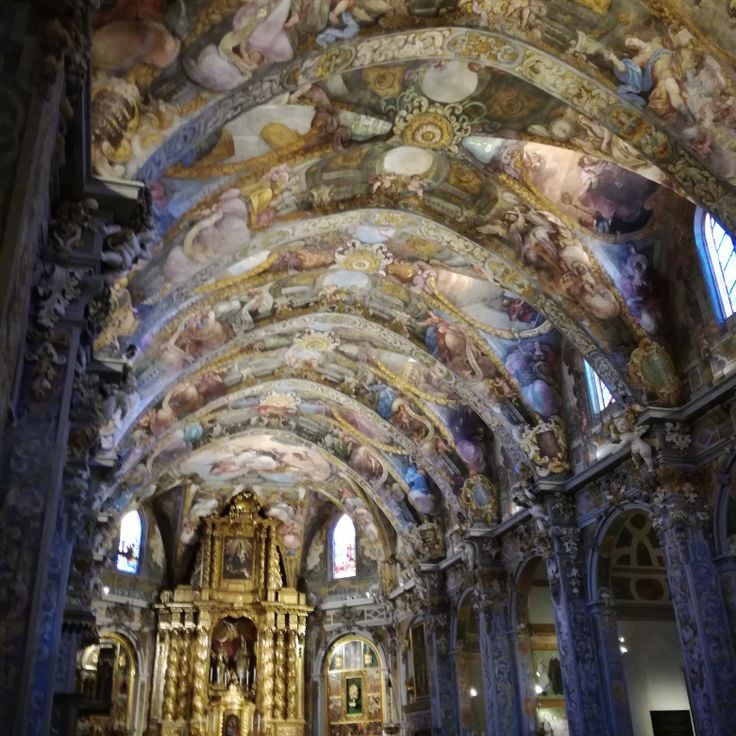
This 15th-century Gothic church hides an unexpected spectacle behind its plain stone walls. The vaulted ceilings and walls disappear entirely beneath baroque frescoes depicting biblical scenes that transform the entire interior into a painted canvas. Light filters through tall windows, illuminating the painted surfaces where saints, angels, and religious allegories line up side by side. The Church of San Nicolás stands in the old town of Valencia and shows how two stylistic periods can merge: the Gothic structure remains visible in the ribbed vaults, while the decoration follows the baroque taste of the 17th and 18th centuries.
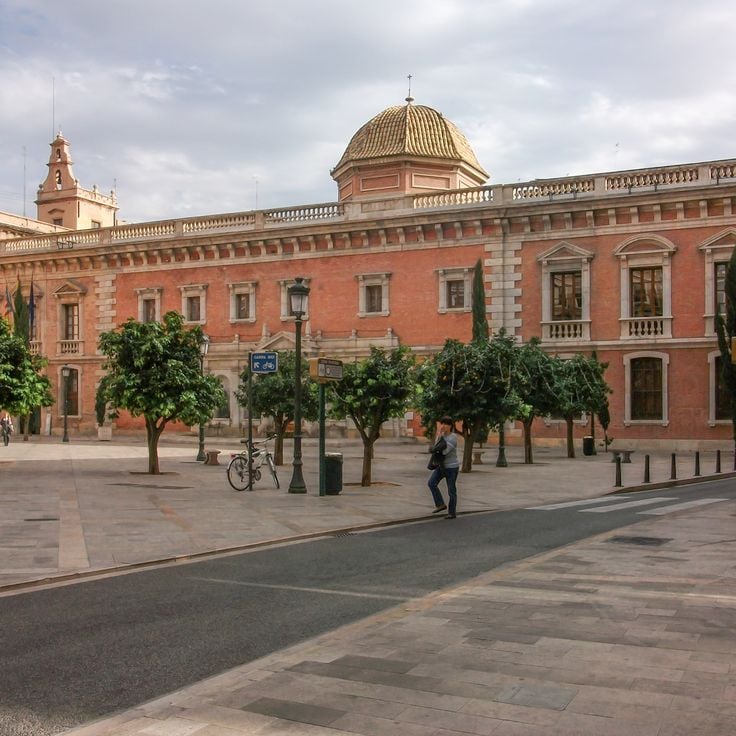
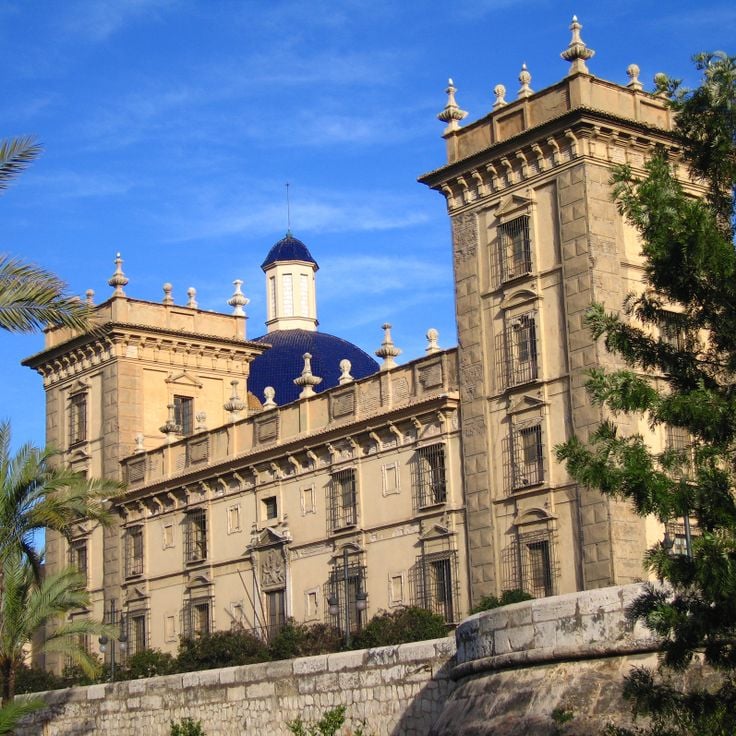
The Musée des Beaux-Arts displays Spanish paintings from the 14th to the 20th century in a classical building near the edge of the old riverbed. Works by Goya, Velázquez and other masters hang alongside regional artists from the Valencia area. The collection includes religious panels from medieval times, portraits from the Golden Age and paintings from later periods. Visitors walk through several rooms with high ceilings where light enters through wide windows. A visit typically takes one to two hours depending on how long you pause before each piece. The museum sits quietly in a park and ranks among the city's important art collections.
The Turia Garden follows the old riverbed and connects the historic old town with the modern districts. For nine kilometers (about six miles), paths run under bridges from different centuries, passing planted zones, soccer and basketball courts, and playgrounds for children. Locals jog in the early morning or cycle in the afternoon along the routes, while families picnic under palm trees and pines. The park cuts through Valencia as a green axis that people use to move from one neighborhood to the next without crossing major roads. At the western end, you reach residential areas and markets; at the eastern edge lie the buildings of the City of Arts and Sciences. The former riverbanks now form slopes where trees grow and benches sit in the shade. In some sections, water collects in shallow pools where birds drink and rest. You see groups training, walkers with dogs, or students reading books on the grass.
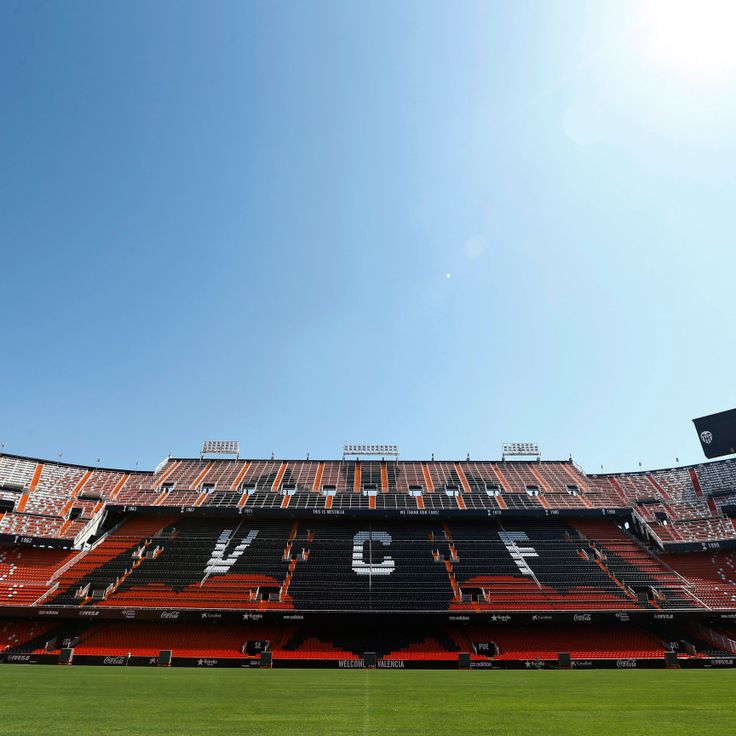
The Mestalla Stadium opened in 1923 and is the oldest active football venue in Spain's top division. The stands hold over forty-eight thousand spectators. On match days, the steep seating fills up, sitting close to the pitch and creating a direct connection between fans and players. The structure shows elements from different decades, from the original arches to later expansions. This stadium sits in the eastern part of Valencia, linking the city to its long football tradition.
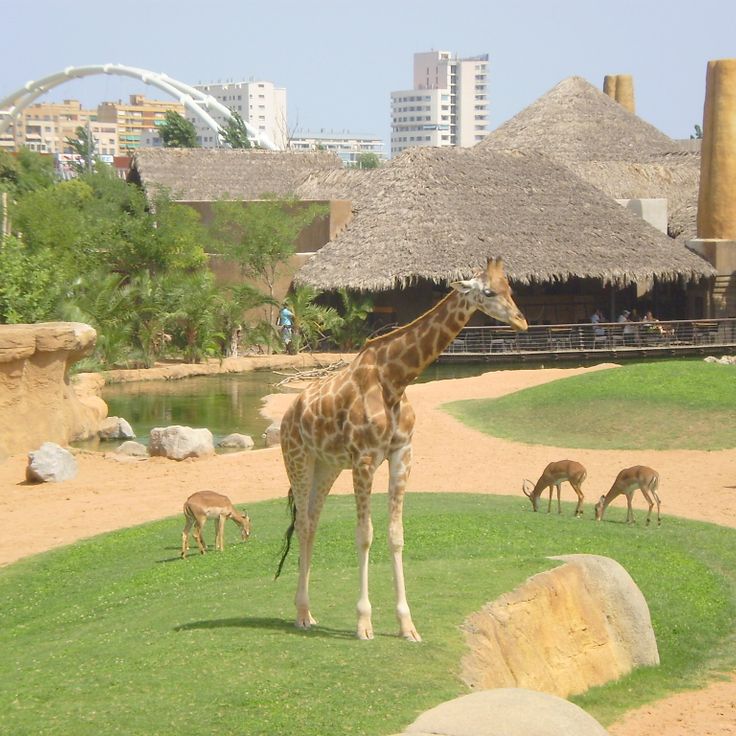
Bioparc Valencia creates spaces that mimic natural landscapes. Giraffes, elephants, and other species from Africa live in areas designed to look like savannas, forests, and wetlands. Visitors walk along paths separated from the animals by vegetation or gentle moats, so barriers are barely noticeable. The park was built to let different species exist side by side, as they would in the wild. You see zebras near antelopes or lemurs moving through trees. The grounds cover several hectares and are divided into zones representing different African regions. The zoo opened in 2008 and shows how modern animal care works when cages and bars are removed. Staff members explain how the animals behave and what they need to thrive in these reconstructed habitats.
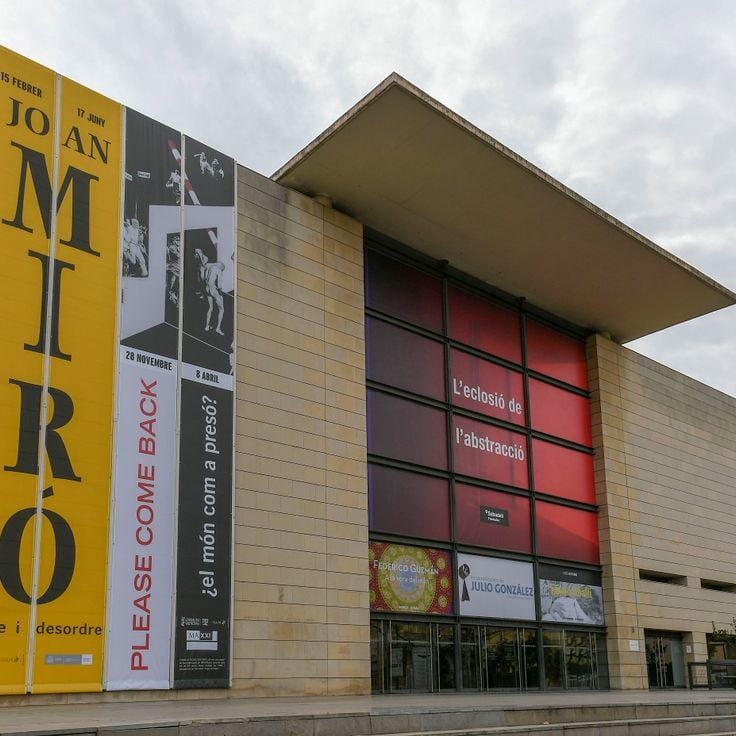
This institute presents contemporary art in two buildings connected by an underground passage. The collection shows paintings, sculptures and installations from Spanish and international artists from the 20th and 21st centuries. Rotating exhibitions focus on modern movements such as surrealism, pop art and conceptual currents. The spaces spread across several floors with natural light entering through large windows. A photography archive preserves images of the Valencian cultural scene since the 1950s. The museum sits near the former riverbed, surrounded by gardens and walking paths.
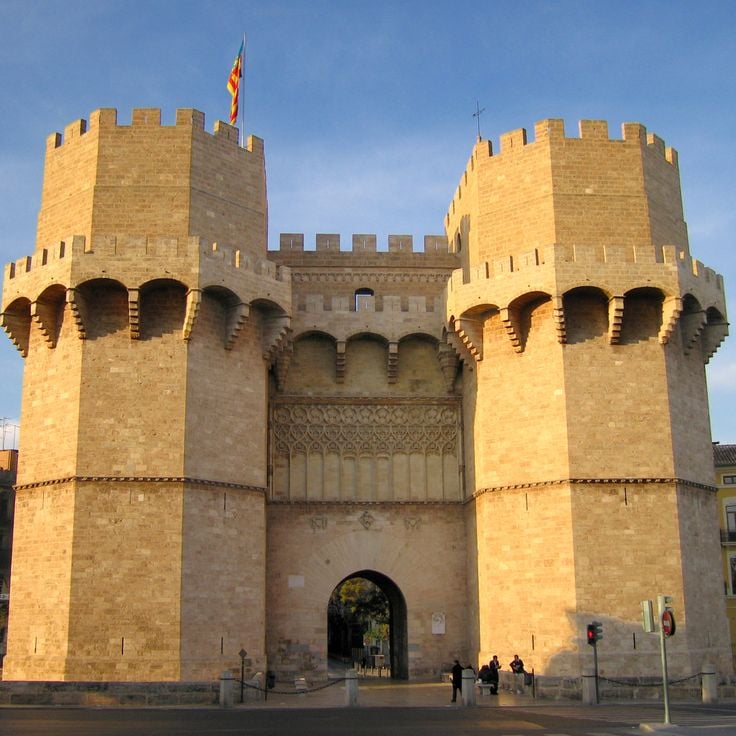
These Gothic twin towers served as a city gate and prison from the 14th century onward. The towers reach a height of 33 meters (108 feet) and once guarded the northern entrance to the city. Their massive stone walls display medieval defensive architecture, while the battlements and turrets reveal their military purpose. From the top, views extend over the old town and the former Turia riverbed. The towers survived wars and sieges and remain among the few preserved sections of the old city fortifications.
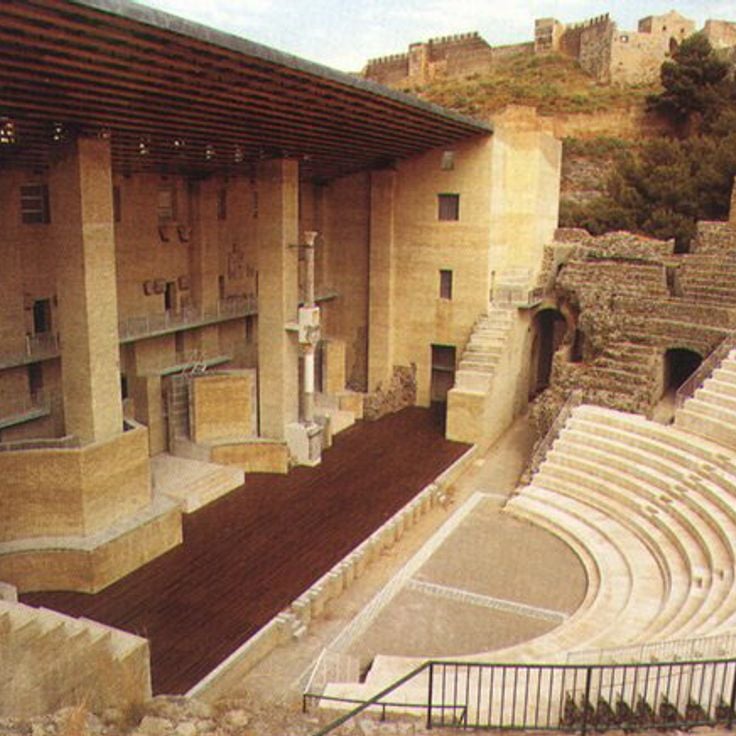
The Roman theater of Sagunto stands about 19 miles (30 kilometers) north of Valencia and dates back to the first century. The seating rows climb the hillside and once held thousands of spectators. The stone structure still shows the original layout of the tiers and the stage area. Restoration work in the twentieth century allowed performances to take place again in the open air. From the upper rows, you can see the surrounding landscape and the nearby coast. The theater forms part of an ancient settlement whose ruins spread across the hill.
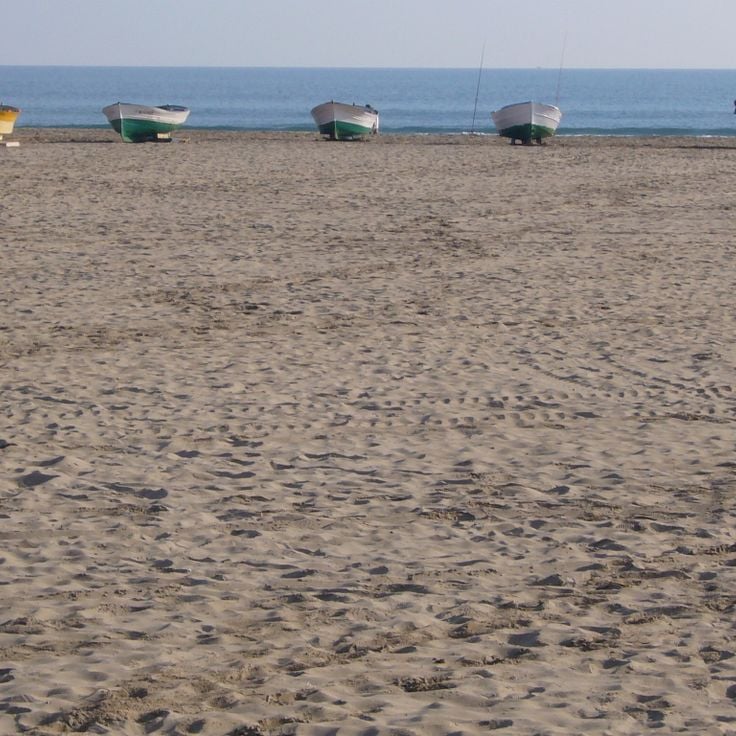
Plage de la Malvarrosa stretches for about 2 miles (3 kilometers) along the coast, just minutes from Valencia's historic center. The light-colored sand welcomes visitors throughout the year, while the palm-lined promenade invites leisurely walks. Sports facilities sit directly on the beach, where locals and travelers play volleyball or engage in other activities. Restaurants and bars line the waterfront street, serving paella and seafood pulled straight from the Mediterranean. On weekends, this beach fills with families enjoying the warm climate and calm waters.
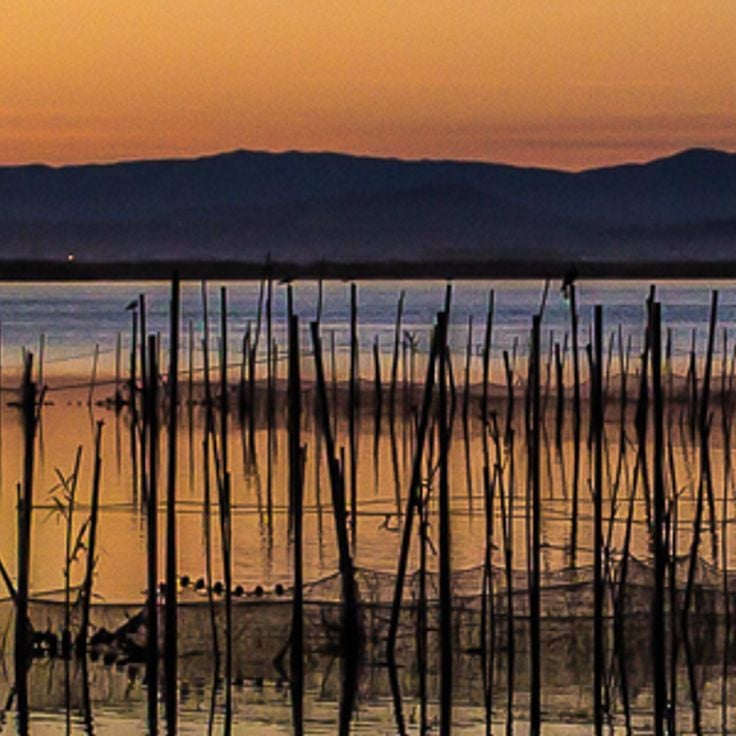
This nature reserve spreads across rice paddies, lagoons, and reed beds still worked by traditional methods. Fishermen push off in flat boats to catch eels and mullets, while farmers plan their harvests around the seasons. The area lies between the sea and the coast, cut through by narrow channels and paths winding through the reeds. Birds fly over the water, especially in spring and fall when migrating species stop here to rest. Along the edges stand small houses where fishermen mend their nets. The park preserves a landscape shaped by rice farming for centuries, with flat fields that flood in some seasons and turn a deep green in others.
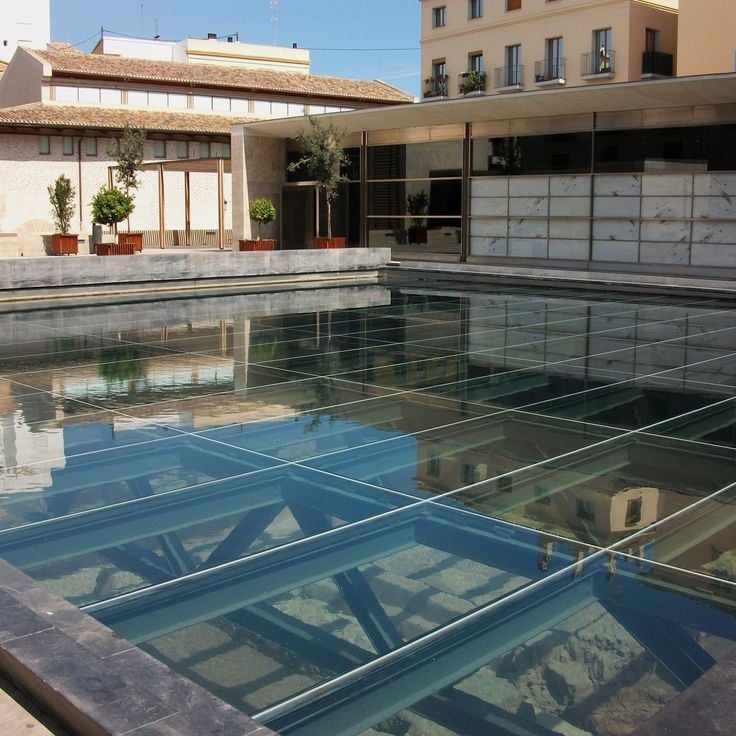
The Archaeological Centre of L'Almoina reveals Valencia's history beneath street level, directly under the Plaza de la Virgen. This underground museum displays ruins of Roman baths, parts of a Visigothic episcopal seat, and foundations of Moorish buildings lying side by side. The visit leads through several eras, from the first century to medieval times, showing how the city developed over the centuries. Remains are accessible through glass floors and walkways, allowing close observation of the layers of the past. Stone walls, mosaics, and water conduits show daily life of people who lived here more than two thousand years ago. The excavations were discovered in the nineties during construction work and then opened to the public.
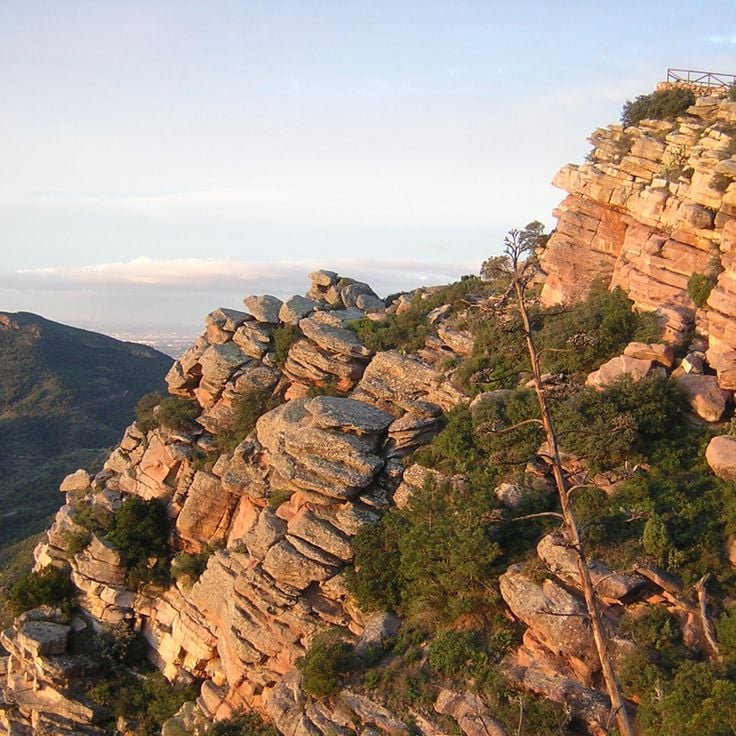
The Sierra Calderona rises north of the city and forms a wide mountain range covered in pine forests, dry valleys and peaks that reach heights of over 3000 feet (900 meters). Trails lead through woodland sections, past abandoned farmsteads and to the remains of medieval towers that once guarded trade routes. On clear days, the view extends from the highest points all the way to the coast. Cork oaks and holm oaks grow in the valley floors, while rosemary and thyme thrive on the drier slopes. The park attracts hikers looking for quiet and space away from the busy beaches.
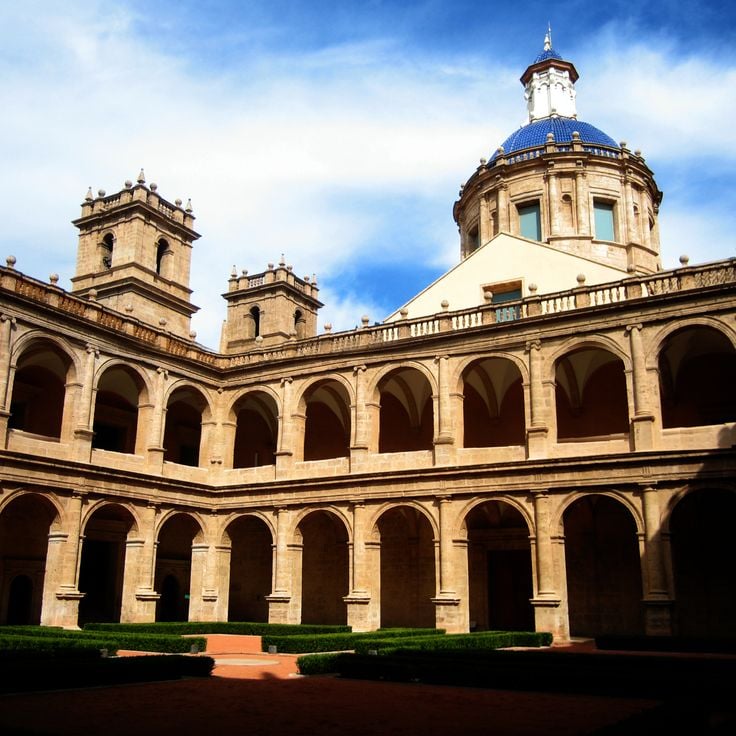
The monastery of San Miguel de los Reyes shows the architectural heritage of the Renaissance that endures in Valencia alongside the more recent constructions. The building from the 16th century was once inhabited by the Hieronymites and now serves as the seat of the Library of Valencia, which preserves manuscripts, incunabula, and printed works from different periods. The cloister opens onto a courtyard surrounded by arcades, while the church has a vaulted nave with side chapels. The rooms on the upper floor house the collections, which are accessible to researchers and visitors. The quiet place invites you to discover the connection between the religious life of past centuries and its cultural use today.
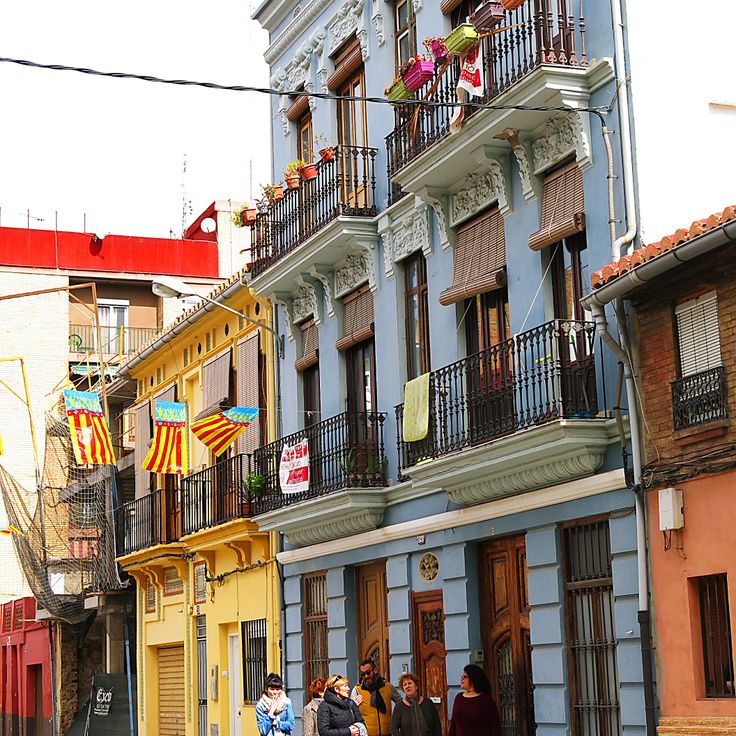
El Cabanyal shows the former life of a fishing village that is now part of Valence. The houses carry colorful ceramic tiles on the facades, often with floral patterns or geometric shapes typical of Mediterranean architecture. The streets run parallel to the coast, a layout that still comes from the time when fishermen pulled their boats along the beach. Many buildings from the 19th and early 20th centuries still stand, some renovated, others with visible marks of time. In the alleys you find small shops, bars and restaurants serving fish dishes. On weekends locals come here for lunch. The beach is a few minutes' walk away. The neighborhood keeps its character despite the urban development around it and offers a look into the tradition of Valence's coastal dwellers.
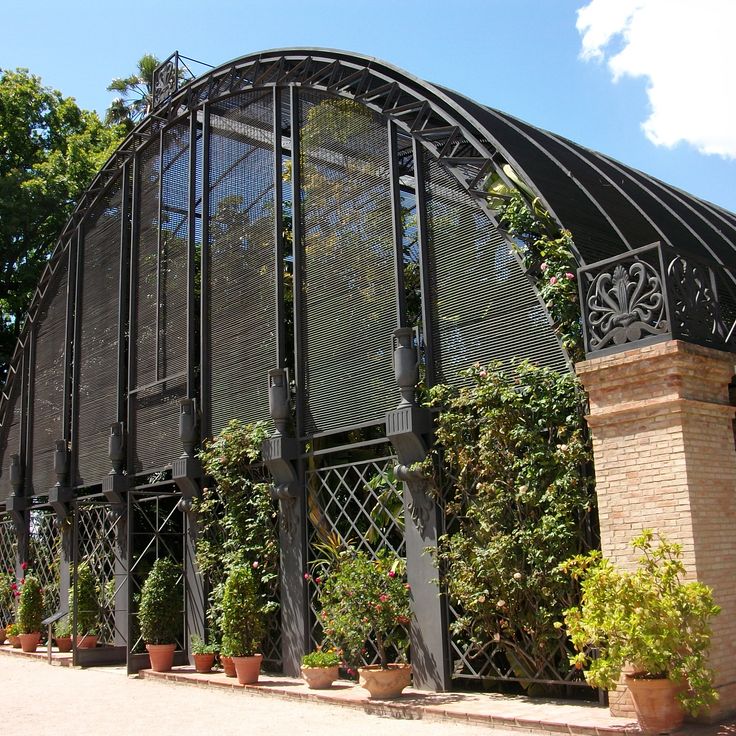
This garden from 1802 gathers more than three thousand plant species from different climates. The beds follow old classification systems, while greenhouses shelter exotic specimens. A herbarium holds two hundred thousand preserved plants that researchers have collected over centuries. The library contains botanical works that visitors can consult. Old trees shade the paths that wind between the plantings. The garden sits quietly and offers space to walk among the collections.
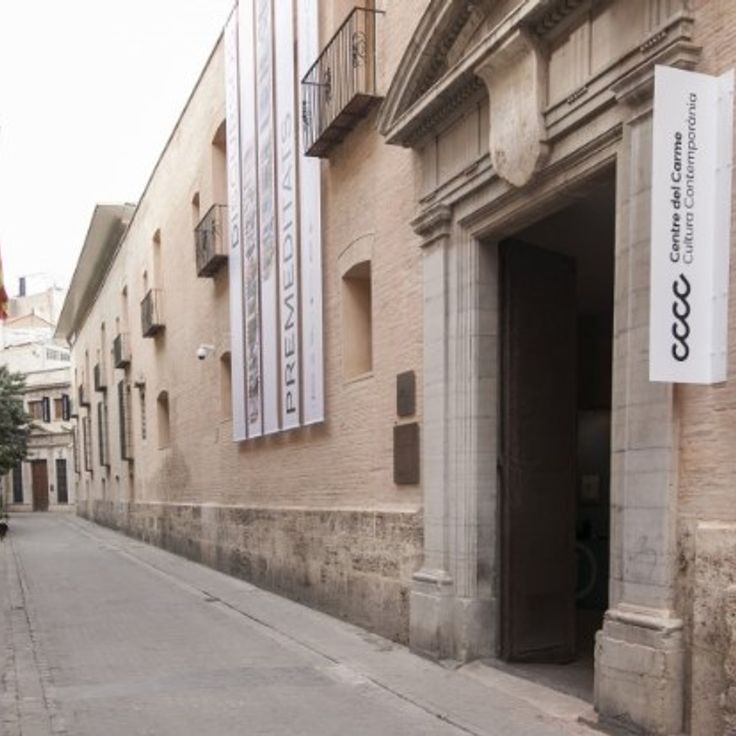
The Convent del Carmen displays paintings and sculptures from Valencia's medieval history in its 13th-century rooms. The convent's Gothic arcades surround a courtyard where Carmelite monks once lived. Former chapels now hold altarpieces brought here from Valencian churches and convents over time. The collection includes religious objects, wooden sculptures, and frescoes that document the liturgical life of the region between the 13th and 17th centuries. From the cloister, visitors reach the upper floors where paintings and liturgical vestments are on display.
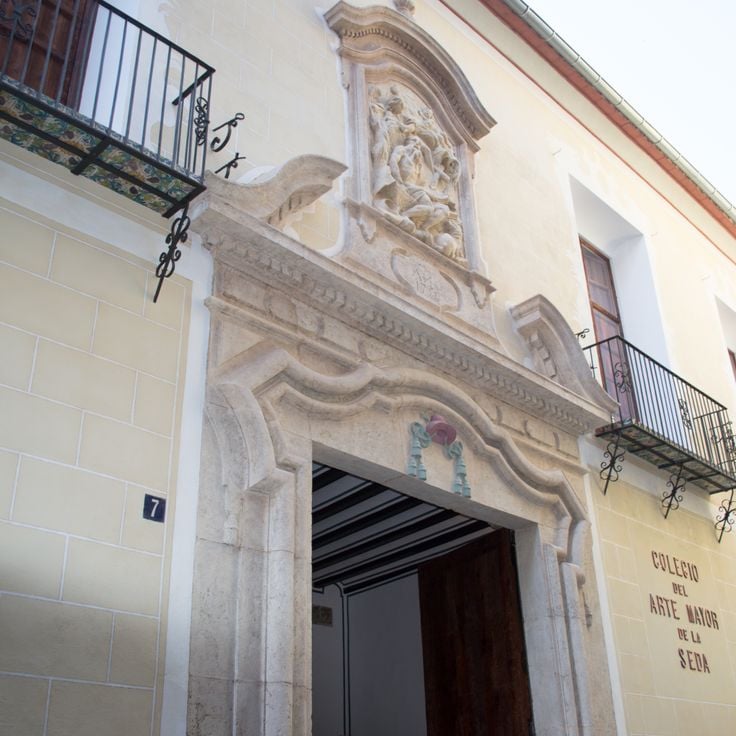
The Colegio del Arte Mayor de la Seda preserves the history of silk production that shaped Valencia since the fifteenth century. The rooms of this former guild house hold original looms and spinning machines that show how craftsmen once worked. The walls are covered with documents, contracts and guild regulations that demonstrate the economic importance of this craft for the city. You see fabric patterns, tools and objects that make the daily life of silk weavers understandable. The rooms themselves date from the time when Valencia was an important center for silk trade, and they maintain this atmosphere today. Here you understand how much this industry determined the life of the city and how the guilds organized their members.
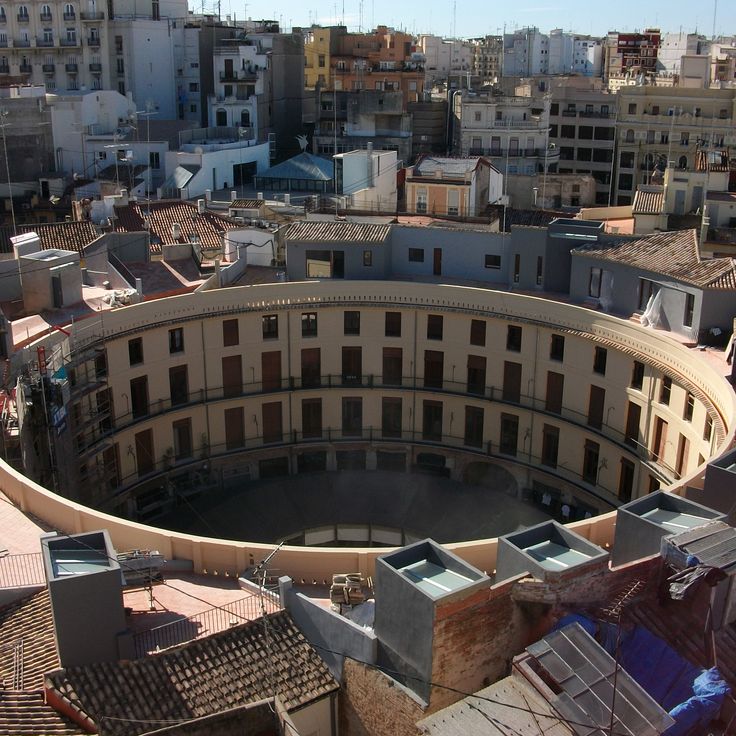
This circular market was built in 1840 and measures approximately 65 feet across (about 20 meters). The round structure houses small shops where craftspeople display and sell their work using traditional methods. The architecture creates a sheltered space where visitors can move between the different stalls and observe the products of local artisans.
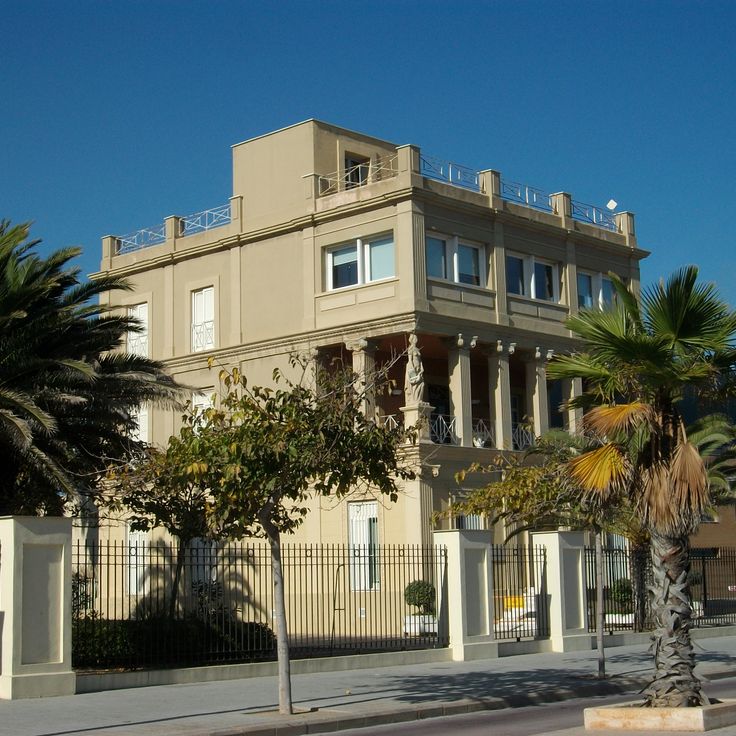
The Casa-Museu de Blasco Ibáñez sits along the seafront in Valencia, in the house where the writer Vicente Blasco Ibáñez once lived. Inside, you can see his personal belongings, books, and furniture arranged as he left them. Blasco Ibáñez was one of the most widely read Spanish novelists of his era, and this house gives a direct sense of how he lived and worked.
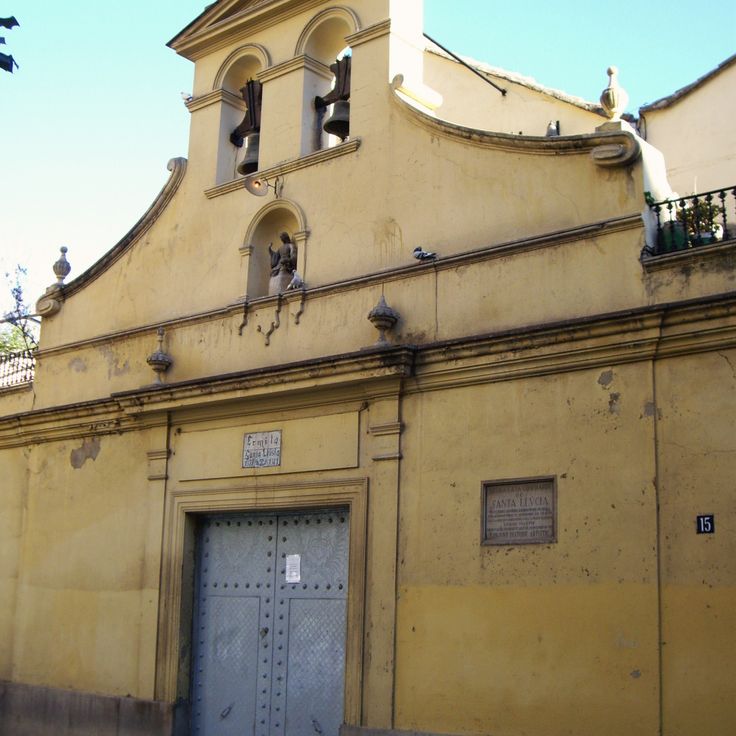
The Ermita de Santa Lucía stands on Carrer del Hospital in Valencia. Built in the thirteenth century, it started as an Islamic place of worship before being turned into a Christian church in the Romanesque style. The stone walls, small windows, and thick structure reflect how people built back then, with simple lines and solid forms. Today the chapel sits quietly among the surrounding houses, a reminder of a time when Valencia moved between different faiths and each left its mark. Walking past, you feel the calm that old places like this carry, and you see how history settles into stone and stays there, even as the city around it grows and changes.
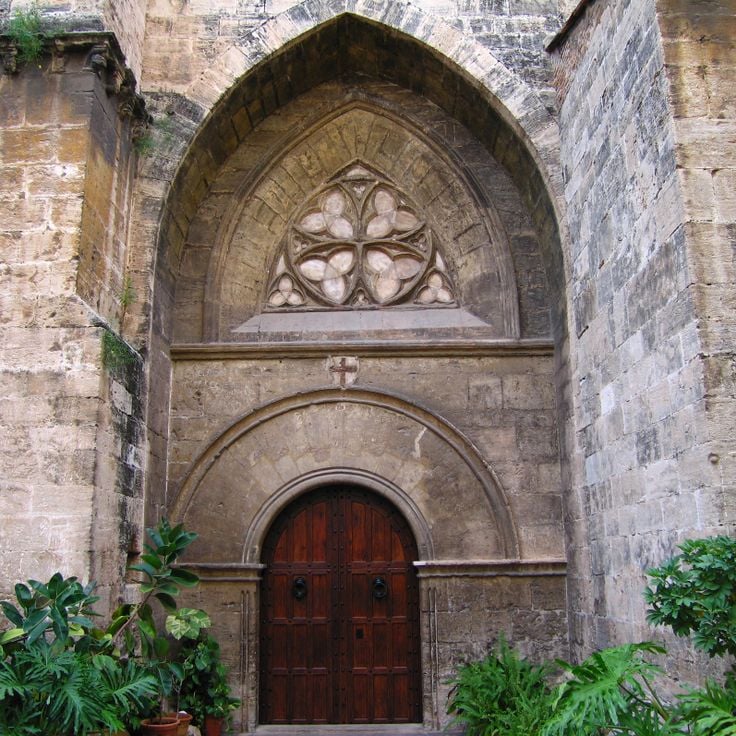
This Romanesque church was built in the 13th century and shows architectural features from different periods. The building combines Romanesque foundations with Gothic vaulting and Baroque decorations added in later centuries. Stone walls shape the interior with their cool surfaces, while soft light spreads through the windows. The churchyard borders small chapels and a cloister, where traces of medieval wall paintings can still be seen. The church has served as a place of worship since its foundation and preserves the marks of its long history between the Romanesque arches and the Baroque altars that decorate the nave.
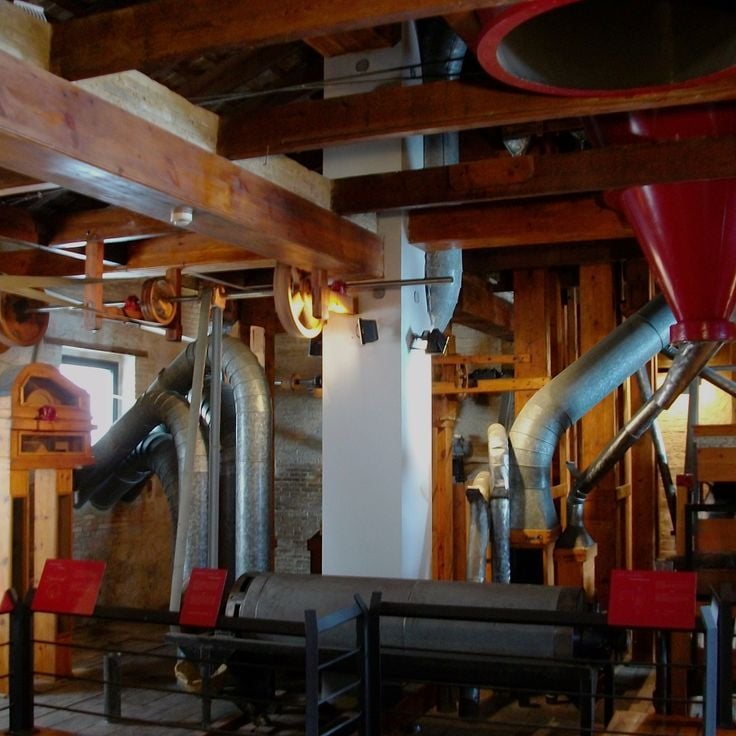
This museum occupies a former rice mill on the outskirts of Valencia and shows tools, machines, and steps used over centuries to process the grain. Display rooms hold wooden paddle wheels, stone grinding rollers, and iron presses once driven by water power. Panels explain the importance of rice farming to the region since the Middle Ages and the role of mills in the local economy. From the windows you can still see irrigation channels that once carried water to the fields. The museum explains how grain from the field became the finished product and how this work shaped daily life for local people.
El Saler offers a 4-mile (6-kilometer) stretch of sand bordered by pine forests and dunes. The area sits between the Mediterranean coast and the Albufera Natural Park. The beach slopes gently into the water, while rows of green trees behind it provide shade. Many locals come here to swim or walk the paths that wind through the dunes. The surroundings feel natural and uncrowded, especially outside the summer months when fewer visitors arrive. The winds constantly reshape the dunes, and the scent of pine mixes with the salty sea air.
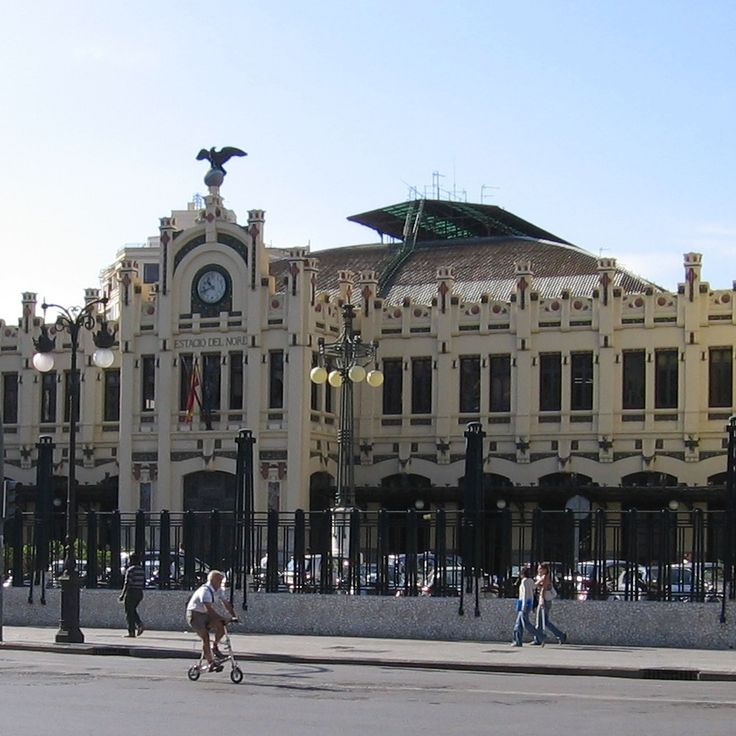
The North Station was built in 1917 and shows regional craftsmanship through its decoration. The facades carry mosaics featuring oranges, a symbol of the nearby fields, and ceramic tiles displaying traditional patterns. The waiting halls preserve their original decorations, where travelers discover the connection between early 20th-century architecture and local identity. These elements make the station a witness to how public buildings in Valencia integrated local culture into their structure.
The building La Nau was constructed in 1498 and originally served as the seat of the University of Valencia. Inside, visitors find a historic library with thousands of volumes from different centuries and a museum documenting the city's academic history. The rooms display collections of manuscripts, scientific instruments, and documents that trace the evolution of university life. The courtyard connects the different areas and offers a place to pause. The building stands in the old town and complements visits to the Gothic churches and medieval city gates.
The Cathedral of Valencia shows how different periods come together in one place. Started in the 13th century, the building brings together Romanesque forms, Gothic arches and Baroque decorations added over the centuries. The bell tower rises about 50 meters (165 feet) above the old town and offers a wide view over the rooftops to the coast after climbing the spiral staircase. Inside, the cathedral holds religious artworks and relics, including a chalice that many believe to be the Holy Grail. The side chapels display paintings and sculptures from the Renaissance and Baroque periods. From outside, you can clearly see the different construction phases: the old stone walls next to the later renewed facades. The cathedral stands on Plaza de la Reina, where people meet and cafés fill the squares.
This late Gothic trading hall from the 15th century served Valencian merchants as a meeting place for the silk trade. The high-ceilinged hall displays slender twisted columns made of stone that branch upward to support ribbed vaulting. Light filters through narrow windows onto the stone floor where deals were negotiated for centuries. On the upper floor sits a wood-paneled room where the merchant consulate held meetings. The courtyard connects different sections of the building, including a tower with prison cells for traders who failed to pay their debts. The facade shows pointed arches and gargoyles typical of the era when Valencia ranked among Europe's leading silk centers.
The City of Arts and Sciences gathers several white concrete buildings along a long axis in the former bed of the Turia River. The shapes suggest skeletons, eyes, or wings, with arches spanning shallow pools of water. The site houses a science museum with interactive exhibits, a cinema with a hemispherical screen, a theater for opera and concerts, and the Oceanogràfic, an aquarium holding thousands of marine animals in tanks that recreate oceans and coastlines. The architecture was completed in the late nineties and early two thousands and draws visitors who walk among the structures, cross bridges over the water, and watch the reflections.
The Océanographique houses around 45,000 marine animals from 500 species, displayed in nine underwater towers. Visitors walk through large glass tunnels and observe sharks, belugas, sea lions, and tropical fish from different climate zones. The tanks are divided by habitat: the Mediterranean, polar regions, tropical seas, the open ocean, and wetlands. The building sits in the former riverbed of the Turia and belongs to the City of Arts and Sciences, built in the late nineties. The architecture resembles a giant white skeleton with curved walls and open passages. Outside, shallow pools host nesting seabirds.
These two medieval towers formed the western entrance to the city in the 15th century. The thick stone walls still show the marks left by cannonballs during the Napoleonic Wars. You can see traces of past battles on the facades when you stand in front of the massive round towers. The construction resembles other fortifications of that era, with high walls and narrow openings. From the outside, you notice how these towers once connected to the city walls, which have mostly disappeared today. The Torres de Quart marked the boundary between the protected interior and the fields outside the city for a long time.
This market guides travelers through rows of stalls selling vegetables, fish, meat, and the typical ingredients of the region. The building from the 1920s combines steel, glass, and ceramic in an architectural style that was common across Europe at that time. Under the high domes, oranges, tomatoes, and peppers are stacked next to Iberian ham and fresh seafood. Vendors call out their offerings, shoppers compare prices and fill their baskets with seasonal products. The market remains a lively place where locals meet every morning to shop and visitors discover the variety of Valencian cuisine.
This square has been the heart of the city since the first century and now houses the basilica and the Water Tribunal, which meets every Thursday. Roman remains rest beneath the pavement, from the time when the forum stood here. The Neptune Fountain occupies the center of the square, surrounded by buildings from different periods. In the morning, locals fill the space, heading to the basilica or resting on benches in the shade. The facades show Gothic elements alongside Baroque decorations, evidence of renovations over the centuries.
This concert hall from 1987 stands at the edge of the Turia Garden and houses four rooms for concerts, film screenings, and art exhibitions. The curved shapes of glass and concrete belong to the early examples of contemporary architecture in Valencia. Orchestras, chamber music groups, and soloists perform here regularly. The rooms are named by size and welcome between a few dozen and more than a thousand visitors depending on the event. Local artists display their work in the foyer. Stairs lead from the entrance to the different levels. The wide windows let in daylight and open views onto the park. In the evening the facades light up and mark the building as one of the places where the cultural life of the city unfolds.
This 15th-century Gothic church hides an unexpected spectacle behind its plain stone walls. The vaulted ceilings and walls disappear entirely beneath baroque frescoes depicting biblical scenes that transform the entire interior into a painted canvas. Light filters through tall windows, illuminating the painted surfaces where saints, angels, and religious allegories line up side by side. The Church of San Nicolás stands in the old town of Valencia and shows how two stylistic periods can merge: the Gothic structure remains visible in the ribbed vaults, while the decoration follows the baroque taste of the 17th and 18th centuries.
The Musée des Beaux-Arts displays Spanish paintings from the 14th to the 20th century in a classical building near the edge of the old riverbed. Works by Goya, Velázquez and other masters hang alongside regional artists from the Valencia area. The collection includes religious panels from medieval times, portraits from the Golden Age and paintings from later periods. Visitors walk through several rooms with high ceilings where light enters through wide windows. A visit typically takes one to two hours depending on how long you pause before each piece. The museum sits quietly in a park and ranks among the city's important art collections.
The Turia Garden follows the old riverbed and connects the historic old town with the modern districts. For nine kilometers (about six miles), paths run under bridges from different centuries, passing planted zones, soccer and basketball courts, and playgrounds for children. Locals jog in the early morning or cycle in the afternoon along the routes, while families picnic under palm trees and pines. The park cuts through Valencia as a green axis that people use to move from one neighborhood to the next without crossing major roads. At the western end, you reach residential areas and markets; at the eastern edge lie the buildings of the City of Arts and Sciences. The former riverbanks now form slopes where trees grow and benches sit in the shade. In some sections, water collects in shallow pools where birds drink and rest. You see groups training, walkers with dogs, or students reading books on the grass.
The Mestalla Stadium opened in 1923 and is the oldest active football venue in Spain's top division. The stands hold over forty-eight thousand spectators. On match days, the steep seating fills up, sitting close to the pitch and creating a direct connection between fans and players. The structure shows elements from different decades, from the original arches to later expansions. This stadium sits in the eastern part of Valencia, linking the city to its long football tradition.
Bioparc Valencia creates spaces that mimic natural landscapes. Giraffes, elephants, and other species from Africa live in areas designed to look like savannas, forests, and wetlands. Visitors walk along paths separated from the animals by vegetation or gentle moats, so barriers are barely noticeable. The park was built to let different species exist side by side, as they would in the wild. You see zebras near antelopes or lemurs moving through trees. The grounds cover several hectares and are divided into zones representing different African regions. The zoo opened in 2008 and shows how modern animal care works when cages and bars are removed. Staff members explain how the animals behave and what they need to thrive in these reconstructed habitats.
This institute presents contemporary art in two buildings connected by an underground passage. The collection shows paintings, sculptures and installations from Spanish and international artists from the 20th and 21st centuries. Rotating exhibitions focus on modern movements such as surrealism, pop art and conceptual currents. The spaces spread across several floors with natural light entering through large windows. A photography archive preserves images of the Valencian cultural scene since the 1950s. The museum sits near the former riverbed, surrounded by gardens and walking paths.
These Gothic twin towers served as a city gate and prison from the 14th century onward. The towers reach a height of 33 meters (108 feet) and once guarded the northern entrance to the city. Their massive stone walls display medieval defensive architecture, while the battlements and turrets reveal their military purpose. From the top, views extend over the old town and the former Turia riverbed. The towers survived wars and sieges and remain among the few preserved sections of the old city fortifications.
The Roman theater of Sagunto stands about 19 miles (30 kilometers) north of Valencia and dates back to the first century. The seating rows climb the hillside and once held thousands of spectators. The stone structure still shows the original layout of the tiers and the stage area. Restoration work in the twentieth century allowed performances to take place again in the open air. From the upper rows, you can see the surrounding landscape and the nearby coast. The theater forms part of an ancient settlement whose ruins spread across the hill.
Plage de la Malvarrosa stretches for about 2 miles (3 kilometers) along the coast, just minutes from Valencia's historic center. The light-colored sand welcomes visitors throughout the year, while the palm-lined promenade invites leisurely walks. Sports facilities sit directly on the beach, where locals and travelers play volleyball or engage in other activities. Restaurants and bars line the waterfront street, serving paella and seafood pulled straight from the Mediterranean. On weekends, this beach fills with families enjoying the warm climate and calm waters.
This nature reserve spreads across rice paddies, lagoons, and reed beds still worked by traditional methods. Fishermen push off in flat boats to catch eels and mullets, while farmers plan their harvests around the seasons. The area lies between the sea and the coast, cut through by narrow channels and paths winding through the reeds. Birds fly over the water, especially in spring and fall when migrating species stop here to rest. Along the edges stand small houses where fishermen mend their nets. The park preserves a landscape shaped by rice farming for centuries, with flat fields that flood in some seasons and turn a deep green in others.
The Archaeological Centre of L'Almoina reveals Valencia's history beneath street level, directly under the Plaza de la Virgen. This underground museum displays ruins of Roman baths, parts of a Visigothic episcopal seat, and foundations of Moorish buildings lying side by side. The visit leads through several eras, from the first century to medieval times, showing how the city developed over the centuries. Remains are accessible through glass floors and walkways, allowing close observation of the layers of the past. Stone walls, mosaics, and water conduits show daily life of people who lived here more than two thousand years ago. The excavations were discovered in the nineties during construction work and then opened to the public.
The Sierra Calderona rises north of the city and forms a wide mountain range covered in pine forests, dry valleys and peaks that reach heights of over 3000 feet (900 meters). Trails lead through woodland sections, past abandoned farmsteads and to the remains of medieval towers that once guarded trade routes. On clear days, the view extends from the highest points all the way to the coast. Cork oaks and holm oaks grow in the valley floors, while rosemary and thyme thrive on the drier slopes. The park attracts hikers looking for quiet and space away from the busy beaches.
The monastery of San Miguel de los Reyes shows the architectural heritage of the Renaissance that endures in Valencia alongside the more recent constructions. The building from the 16th century was once inhabited by the Hieronymites and now serves as the seat of the Library of Valencia, which preserves manuscripts, incunabula, and printed works from different periods. The cloister opens onto a courtyard surrounded by arcades, while the church has a vaulted nave with side chapels. The rooms on the upper floor house the collections, which are accessible to researchers and visitors. The quiet place invites you to discover the connection between the religious life of past centuries and its cultural use today.
El Cabanyal shows the former life of a fishing village that is now part of Valence. The houses carry colorful ceramic tiles on the facades, often with floral patterns or geometric shapes typical of Mediterranean architecture. The streets run parallel to the coast, a layout that still comes from the time when fishermen pulled their boats along the beach. Many buildings from the 19th and early 20th centuries still stand, some renovated, others with visible marks of time. In the alleys you find small shops, bars and restaurants serving fish dishes. On weekends locals come here for lunch. The beach is a few minutes' walk away. The neighborhood keeps its character despite the urban development around it and offers a look into the tradition of Valence's coastal dwellers.
This garden from 1802 gathers more than three thousand plant species from different climates. The beds follow old classification systems, while greenhouses shelter exotic specimens. A herbarium holds two hundred thousand preserved plants that researchers have collected over centuries. The library contains botanical works that visitors can consult. Old trees shade the paths that wind between the plantings. The garden sits quietly and offers space to walk among the collections.
The Convent del Carmen displays paintings and sculptures from Valencia's medieval history in its 13th-century rooms. The convent's Gothic arcades surround a courtyard where Carmelite monks once lived. Former chapels now hold altarpieces brought here from Valencian churches and convents over time. The collection includes religious objects, wooden sculptures, and frescoes that document the liturgical life of the region between the 13th and 17th centuries. From the cloister, visitors reach the upper floors where paintings and liturgical vestments are on display.
The Colegio del Arte Mayor de la Seda preserves the history of silk production that shaped Valencia since the fifteenth century. The rooms of this former guild house hold original looms and spinning machines that show how craftsmen once worked. The walls are covered with documents, contracts and guild regulations that demonstrate the economic importance of this craft for the city. You see fabric patterns, tools and objects that make the daily life of silk weavers understandable. The rooms themselves date from the time when Valencia was an important center for silk trade, and they maintain this atmosphere today. Here you understand how much this industry determined the life of the city and how the guilds organized their members.
This circular market was built in 1840 and measures approximately 65 feet across (about 20 meters). The round structure houses small shops where craftspeople display and sell their work using traditional methods. The architecture creates a sheltered space where visitors can move between the different stalls and observe the products of local artisans.
The Casa-Museu de Blasco Ibáñez sits along the seafront in Valencia, in the house where the writer Vicente Blasco Ibáñez once lived. Inside, you can see his personal belongings, books, and furniture arranged as he left them. Blasco Ibáñez was one of the most widely read Spanish novelists of his era, and this house gives a direct sense of how he lived and worked.
The Ermita de Santa Lucía stands on Carrer del Hospital in Valencia. Built in the thirteenth century, it started as an Islamic place of worship before being turned into a Christian church in the Romanesque style. The stone walls, small windows, and thick structure reflect how people built back then, with simple lines and solid forms. Today the chapel sits quietly among the surrounding houses, a reminder of a time when Valencia moved between different faiths and each left its mark. Walking past, you feel the calm that old places like this carry, and you see how history settles into stone and stays there, even as the city around it grows and changes.
This Romanesque church was built in the 13th century and shows architectural features from different periods. The building combines Romanesque foundations with Gothic vaulting and Baroque decorations added in later centuries. Stone walls shape the interior with their cool surfaces, while soft light spreads through the windows. The churchyard borders small chapels and a cloister, where traces of medieval wall paintings can still be seen. The church has served as a place of worship since its foundation and preserves the marks of its long history between the Romanesque arches and the Baroque altars that decorate the nave.
This museum occupies a former rice mill on the outskirts of Valencia and shows tools, machines, and steps used over centuries to process the grain. Display rooms hold wooden paddle wheels, stone grinding rollers, and iron presses once driven by water power. Panels explain the importance of rice farming to the region since the Middle Ages and the role of mills in the local economy. From the windows you can still see irrigation channels that once carried water to the fields. The museum explains how grain from the field became the finished product and how this work shaped daily life for local people.
El Saler offers a 4-mile (6-kilometer) stretch of sand bordered by pine forests and dunes. The area sits between the Mediterranean coast and the Albufera Natural Park. The beach slopes gently into the water, while rows of green trees behind it provide shade. Many locals come here to swim or walk the paths that wind through the dunes. The surroundings feel natural and uncrowded, especially outside the summer months when fewer visitors arrive. The winds constantly reshape the dunes, and the scent of pine mixes with the salty sea air.
The North Station was built in 1917 and shows regional craftsmanship through its decoration. The facades carry mosaics featuring oranges, a symbol of the nearby fields, and ceramic tiles displaying traditional patterns. The waiting halls preserve their original decorations, where travelers discover the connection between early 20th-century architecture and local identity. These elements make the station a witness to how public buildings in Valencia integrated local culture into their structure.
The building La Nau was constructed in 1498 and originally served as the seat of the University of Valencia. Inside, visitors find a historic library with thousands of volumes from different centuries and a museum documenting the city's academic history. The rooms display collections of manuscripts, scientific instruments, and documents that trace the evolution of university life. The courtyard connects the different areas and offers a place to pause. The building stands in the old town and complements visits to the Gothic churches and medieval city gates.
The Cathedral of Valencia shows how different periods come together in one place. Started in the 13th century, the building brings together Romanesque forms, Gothic arches and Baroque decorations added over the centuries. The bell tower rises about 50 meters (165 feet) above the old town and offers a wide view over the rooftops to the coast after climbing the spiral staircase. Inside, the cathedral holds religious artworks and relics, including a chalice that many believe to be the Holy Grail. The side chapels display paintings and sculptures from the Renaissance and Baroque periods. From outside, you can clearly see the different construction phases: the old stone walls next to the later renewed facades. The cathedral stands on Plaza de la Reina, where people meet and cafés fill the squares.
This late Gothic trading hall from the 15th century served Valencian merchants as a meeting place for the silk trade. The high-ceilinged hall displays slender twisted columns made of stone that branch upward to support ribbed vaulting. Light filters through narrow windows onto the stone floor where deals were negotiated for centuries. On the upper floor sits a wood-paneled room where the merchant consulate held meetings. The courtyard connects different sections of the building, including a tower with prison cells for traders who failed to pay their debts. The facade shows pointed arches and gargoyles typical of the era when Valencia ranked among Europe's leading silk centers.
The City of Arts and Sciences gathers several white concrete buildings along a long axis in the former bed of the Turia River. The shapes suggest skeletons, eyes, or wings, with arches spanning shallow pools of water. The site houses a science museum with interactive exhibits, a cinema with a hemispherical screen, a theater for opera and concerts, and the Oceanogràfic, an aquarium holding thousands of marine animals in tanks that recreate oceans and coastlines. The architecture was completed in the late nineties and early two thousands and draws visitors who walk among the structures, cross bridges over the water, and watch the reflections.
The Océanographique houses around 45,000 marine animals from 500 species, displayed in nine underwater towers. Visitors walk through large glass tunnels and observe sharks, belugas, sea lions, and tropical fish from different climate zones. The tanks are divided by habitat: the Mediterranean, polar regions, tropical seas, the open ocean, and wetlands. The building sits in the former riverbed of the Turia and belongs to the City of Arts and Sciences, built in the late nineties. The architecture resembles a giant white skeleton with curved walls and open passages. Outside, shallow pools host nesting seabirds.
These two medieval towers formed the western entrance to the city in the 15th century. The thick stone walls still show the marks left by cannonballs during the Napoleonic Wars. You can see traces of past battles on the facades when you stand in front of the massive round towers. The construction resembles other fortifications of that era, with high walls and narrow openings. From the outside, you notice how these towers once connected to the city walls, which have mostly disappeared today. The Torres de Quart marked the boundary between the protected interior and the fields outside the city for a long time.
This market guides travelers through rows of stalls selling vegetables, fish, meat, and the typical ingredients of the region. The building from the 1920s combines steel, glass, and ceramic in an architectural style that was common across Europe at that time. Under the high domes, oranges, tomatoes, and peppers are stacked next to Iberian ham and fresh seafood. Vendors call out their offerings, shoppers compare prices and fill their baskets with seasonal products. The market remains a lively place where locals meet every morning to shop and visitors discover the variety of Valencian cuisine.
This square has been the heart of the city since the first century and now houses the basilica and the Water Tribunal, which meets every Thursday. Roman remains rest beneath the pavement, from the time when the forum stood here. The Neptune Fountain occupies the center of the square, surrounded by buildings from different periods. In the morning, locals fill the space, heading to the basilica or resting on benches in the shade. The facades show Gothic elements alongside Baroque decorations, evidence of renovations over the centuries.
This concert hall from 1987 stands at the edge of the Turia Garden and houses four rooms for concerts, film screenings, and art exhibitions. The curved shapes of glass and concrete belong to the early examples of contemporary architecture in Valencia. Orchestras, chamber music groups, and soloists perform here regularly. The rooms are named by size and welcome between a few dozen and more than a thousand visitors depending on the event. Local artists display their work in the foyer. Stairs lead from the entrance to the different levels. The wide windows let in daylight and open views onto the park. In the evening the facades light up and mark the building as one of the places where the cultural life of the city unfolds.
This 15th-century Gothic church hides an unexpected spectacle behind its plain stone walls. The vaulted ceilings and walls disappear entirely beneath baroque frescoes depicting biblical scenes that transform the entire interior into a painted canvas. Light filters through tall windows, illuminating the painted surfaces where saints, angels, and religious allegories line up side by side. The Church of San Nicolás stands in the old town of Valencia and shows how two stylistic periods can merge: the Gothic structure remains visible in the ribbed vaults, while the decoration follows the baroque taste of the 17th and 18th centuries.
The Musée des Beaux-Arts displays Spanish paintings from the 14th to the 20th century in a classical building near the edge of the old riverbed. Works by Goya, Velázquez and other masters hang alongside regional artists from the Valencia area. The collection includes religious panels from medieval times, portraits from the Golden Age and paintings from later periods. Visitors walk through several rooms with high ceilings where light enters through wide windows. A visit typically takes one to two hours depending on how long you pause before each piece. The museum sits quietly in a park and ranks among the city's important art collections.
The Turia Garden follows the old riverbed and connects the historic old town with the modern districts. For nine kilometers (about six miles), paths run under bridges from different centuries, passing planted zones, soccer and basketball courts, and playgrounds for children. Locals jog in the early morning or cycle in the afternoon along the routes, while families picnic under palm trees and pines. The park cuts through Valencia as a green axis that people use to move from one neighborhood to the next without crossing major roads. At the western end, you reach residential areas and markets; at the eastern edge lie the buildings of the City of Arts and Sciences. The former riverbanks now form slopes where trees grow and benches sit in the shade. In some sections, water collects in shallow pools where birds drink and rest. You see groups training, walkers with dogs, or students reading books on the grass.
The Mestalla Stadium opened in 1923 and is the oldest active football venue in Spain's top division. The stands hold over forty-eight thousand spectators. On match days, the steep seating fills up, sitting close to the pitch and creating a direct connection between fans and players. The structure shows elements from different decades, from the original arches to later expansions. This stadium sits in the eastern part of Valencia, linking the city to its long football tradition.
Bioparc Valencia creates spaces that mimic natural landscapes. Giraffes, elephants, and other species from Africa live in areas designed to look like savannas, forests, and wetlands. Visitors walk along paths separated from the animals by vegetation or gentle moats, so barriers are barely noticeable. The park was built to let different species exist side by side, as they would in the wild. You see zebras near antelopes or lemurs moving through trees. The grounds cover several hectares and are divided into zones representing different African regions. The zoo opened in 2008 and shows how modern animal care works when cages and bars are removed. Staff members explain how the animals behave and what they need to thrive in these reconstructed habitats.
This institute presents contemporary art in two buildings connected by an underground passage. The collection shows paintings, sculptures and installations from Spanish and international artists from the 20th and 21st centuries. Rotating exhibitions focus on modern movements such as surrealism, pop art and conceptual currents. The spaces spread across several floors with natural light entering through large windows. A photography archive preserves images of the Valencian cultural scene since the 1950s. The museum sits near the former riverbed, surrounded by gardens and walking paths.
These Gothic twin towers served as a city gate and prison from the 14th century onward. The towers reach a height of 33 meters (108 feet) and once guarded the northern entrance to the city. Their massive stone walls display medieval defensive architecture, while the battlements and turrets reveal their military purpose. From the top, views extend over the old town and the former Turia riverbed. The towers survived wars and sieges and remain among the few preserved sections of the old city fortifications.
The Roman theater of Sagunto stands about 19 miles (30 kilometers) north of Valencia and dates back to the first century. The seating rows climb the hillside and once held thousands of spectators. The stone structure still shows the original layout of the tiers and the stage area. Restoration work in the twentieth century allowed performances to take place again in the open air. From the upper rows, you can see the surrounding landscape and the nearby coast. The theater forms part of an ancient settlement whose ruins spread across the hill.
Plage de la Malvarrosa stretches for about 2 miles (3 kilometers) along the coast, just minutes from Valencia's historic center. The light-colored sand welcomes visitors throughout the year, while the palm-lined promenade invites leisurely walks. Sports facilities sit directly on the beach, where locals and travelers play volleyball or engage in other activities. Restaurants and bars line the waterfront street, serving paella and seafood pulled straight from the Mediterranean. On weekends, this beach fills with families enjoying the warm climate and calm waters.
This nature reserve spreads across rice paddies, lagoons, and reed beds still worked by traditional methods. Fishermen push off in flat boats to catch eels and mullets, while farmers plan their harvests around the seasons. The area lies between the sea and the coast, cut through by narrow channels and paths winding through the reeds. Birds fly over the water, especially in spring and fall when migrating species stop here to rest. Along the edges stand small houses where fishermen mend their nets. The park preserves a landscape shaped by rice farming for centuries, with flat fields that flood in some seasons and turn a deep green in others.
The Archaeological Centre of L'Almoina reveals Valencia's history beneath street level, directly under the Plaza de la Virgen. This underground museum displays ruins of Roman baths, parts of a Visigothic episcopal seat, and foundations of Moorish buildings lying side by side. The visit leads through several eras, from the first century to medieval times, showing how the city developed over the centuries. Remains are accessible through glass floors and walkways, allowing close observation of the layers of the past. Stone walls, mosaics, and water conduits show daily life of people who lived here more than two thousand years ago. The excavations were discovered in the nineties during construction work and then opened to the public.
The Sierra Calderona rises north of the city and forms a wide mountain range covered in pine forests, dry valleys and peaks that reach heights of over 3000 feet (900 meters). Trails lead through woodland sections, past abandoned farmsteads and to the remains of medieval towers that once guarded trade routes. On clear days, the view extends from the highest points all the way to the coast. Cork oaks and holm oaks grow in the valley floors, while rosemary and thyme thrive on the drier slopes. The park attracts hikers looking for quiet and space away from the busy beaches.
The monastery of San Miguel de los Reyes shows the architectural heritage of the Renaissance that endures in Valencia alongside the more recent constructions. The building from the 16th century was once inhabited by the Hieronymites and now serves as the seat of the Library of Valencia, which preserves manuscripts, incunabula, and printed works from different periods. The cloister opens onto a courtyard surrounded by arcades, while the church has a vaulted nave with side chapels. The rooms on the upper floor house the collections, which are accessible to researchers and visitors. The quiet place invites you to discover the connection between the religious life of past centuries and its cultural use today.
El Cabanyal shows the former life of a fishing village that is now part of Valence. The houses carry colorful ceramic tiles on the facades, often with floral patterns or geometric shapes typical of Mediterranean architecture. The streets run parallel to the coast, a layout that still comes from the time when fishermen pulled their boats along the beach. Many buildings from the 19th and early 20th centuries still stand, some renovated, others with visible marks of time. In the alleys you find small shops, bars and restaurants serving fish dishes. On weekends locals come here for lunch. The beach is a few minutes' walk away. The neighborhood keeps its character despite the urban development around it and offers a look into the tradition of Valence's coastal dwellers.
This garden from 1802 gathers more than three thousand plant species from different climates. The beds follow old classification systems, while greenhouses shelter exotic specimens. A herbarium holds two hundred thousand preserved plants that researchers have collected over centuries. The library contains botanical works that visitors can consult. Old trees shade the paths that wind between the plantings. The garden sits quietly and offers space to walk among the collections.
The Convent del Carmen displays paintings and sculptures from Valencia's medieval history in its 13th-century rooms. The convent's Gothic arcades surround a courtyard where Carmelite monks once lived. Former chapels now hold altarpieces brought here from Valencian churches and convents over time. The collection includes religious objects, wooden sculptures, and frescoes that document the liturgical life of the region between the 13th and 17th centuries. From the cloister, visitors reach the upper floors where paintings and liturgical vestments are on display.
The Colegio del Arte Mayor de la Seda preserves the history of silk production that shaped Valencia since the fifteenth century. The rooms of this former guild house hold original looms and spinning machines that show how craftsmen once worked. The walls are covered with documents, contracts and guild regulations that demonstrate the economic importance of this craft for the city. You see fabric patterns, tools and objects that make the daily life of silk weavers understandable. The rooms themselves date from the time when Valencia was an important center for silk trade, and they maintain this atmosphere today. Here you understand how much this industry determined the life of the city and how the guilds organized their members.
This circular market was built in 1840 and measures approximately 65 feet across (about 20 meters). The round structure houses small shops where craftspeople display and sell their work using traditional methods. The architecture creates a sheltered space where visitors can move between the different stalls and observe the products of local artisans.
The Casa-Museu de Blasco Ibáñez sits along the seafront in Valencia, in the house where the writer Vicente Blasco Ibáñez once lived. Inside, you can see his personal belongings, books, and furniture arranged as he left them. Blasco Ibáñez was one of the most widely read Spanish novelists of his era, and this house gives a direct sense of how he lived and worked.
The Ermita de Santa Lucía stands on Carrer del Hospital in Valencia. Built in the thirteenth century, it started as an Islamic place of worship before being turned into a Christian church in the Romanesque style. The stone walls, small windows, and thick structure reflect how people built back then, with simple lines and solid forms. Today the chapel sits quietly among the surrounding houses, a reminder of a time when Valencia moved between different faiths and each left its mark. Walking past, you feel the calm that old places like this carry, and you see how history settles into stone and stays there, even as the city around it grows and changes.
This Romanesque church was built in the 13th century and shows architectural features from different periods. The building combines Romanesque foundations with Gothic vaulting and Baroque decorations added in later centuries. Stone walls shape the interior with their cool surfaces, while soft light spreads through the windows. The churchyard borders small chapels and a cloister, where traces of medieval wall paintings can still be seen. The church has served as a place of worship since its foundation and preserves the marks of its long history between the Romanesque arches and the Baroque altars that decorate the nave.
This museum occupies a former rice mill on the outskirts of Valencia and shows tools, machines, and steps used over centuries to process the grain. Display rooms hold wooden paddle wheels, stone grinding rollers, and iron presses once driven by water power. Panels explain the importance of rice farming to the region since the Middle Ages and the role of mills in the local economy. From the windows you can still see irrigation channels that once carried water to the fields. The museum explains how grain from the field became the finished product and how this work shaped daily life for local people.
El Saler offers a 4-mile (6-kilometer) stretch of sand bordered by pine forests and dunes. The area sits between the Mediterranean coast and the Albufera Natural Park. The beach slopes gently into the water, while rows of green trees behind it provide shade. Many locals come here to swim or walk the paths that wind through the dunes. The surroundings feel natural and uncrowded, especially outside the summer months when fewer visitors arrive. The winds constantly reshape the dunes, and the scent of pine mixes with the salty sea air.
The North Station was built in 1917 and shows regional craftsmanship through its decoration. The facades carry mosaics featuring oranges, a symbol of the nearby fields, and ceramic tiles displaying traditional patterns. The waiting halls preserve their original decorations, where travelers discover the connection between early 20th-century architecture and local identity. These elements make the station a witness to how public buildings in Valencia integrated local culture into their structure.
The building La Nau was constructed in 1498 and originally served as the seat of the University of Valencia. Inside, visitors find a historic library with thousands of volumes from different centuries and a museum documenting the city's academic history. The rooms display collections of manuscripts, scientific instruments, and documents that trace the evolution of university life. The courtyard connects the different areas and offers a place to pause. The building stands in the old town and complements visits to the Gothic churches and medieval city gates.