See the monuments around you in AROpen chests in the app
Around Us is built for your phone — point your camera at the streets and discover the monuments and places around you in augmented reality.Around Us is built for your phone — chests unlock when you walk, explore and capture nearby places.
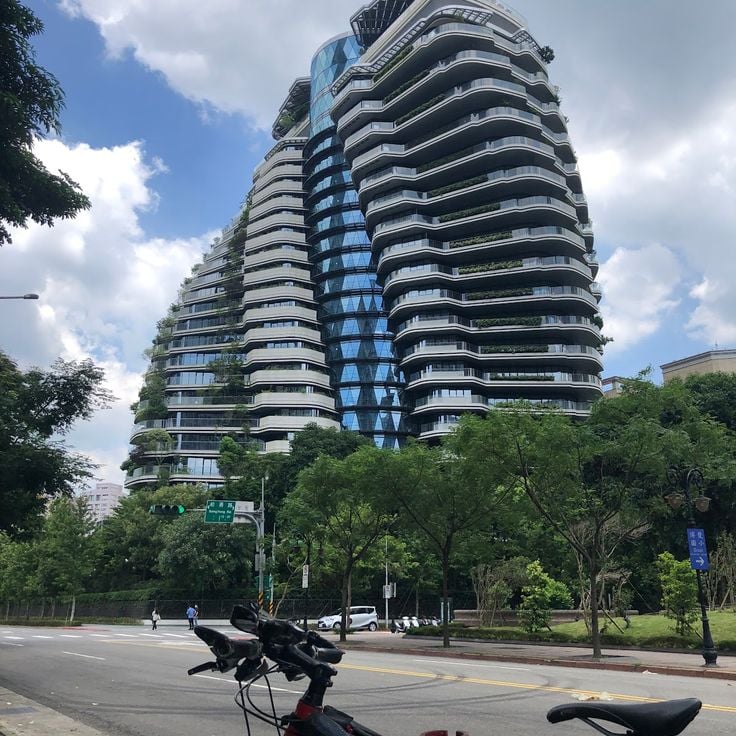
Twisted architectural towers with innovative rotating designs
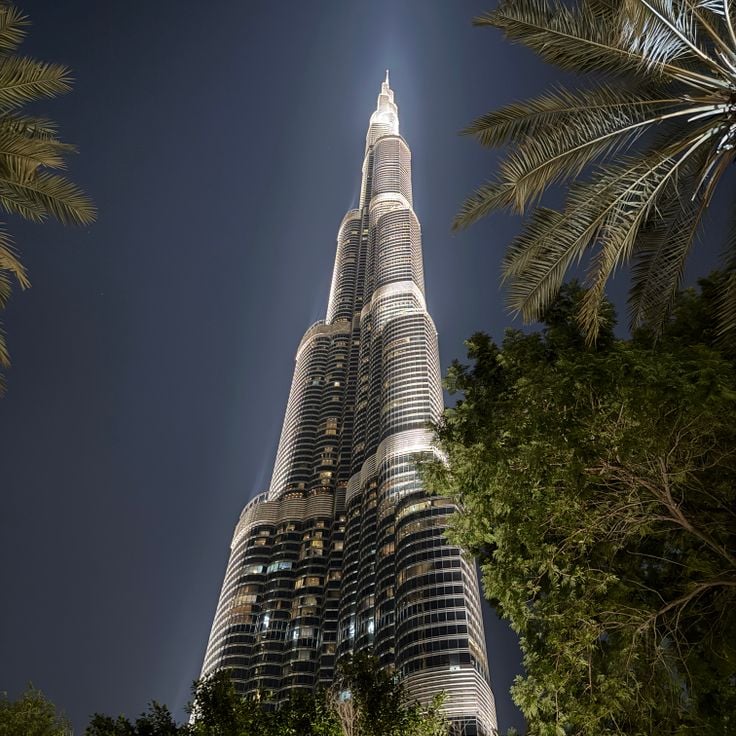
Contemporary skyscrapers push the boundaries of vertical architecture with structures that challenge gravity through rotations, twists, and spirals. These buildings reflect advances in structural engineering and allow for residential, commercial, and cultural structures with facades that sometimes rotate 90 degrees from base to top. The Cayan Tower in Dubai stands out with its 1,014-foot height and a full rotation across 73 floors, while the Shanghai Tower reaches 2,073 feet thanks to a twisted shape that reduces wind pressure.
These structures can be found worldwide. The Absolute World Towers in Mississauga, Canada, feature wavy designs that earned them the nickname Marilyn Monroe Towers. In Prague, the Dancing House impresses with its curved glass walls contrasting with surrounding historic architecture. The Soumaya Museum in Mexico City displays an asymmetric form covered with thousands of hexagonal aluminum panels. The Lakhta Tower in Saint Petersburg and Capital Gate in Abu Dhabi complete this international selection, illustrating how contemporary architects transform city skylines through engineering feats that combine aesthetics with structural performance.
Twisted architectural towers with innovative rotating designs
Contemporary skyscrapers push the boundaries of vertical architecture with structures that challenge gravity through rotations, twists, and spirals. These buildings reflect advances in structural engineering and allow for residential, commercial, and cultural structures with facades that sometimes rotate 90 degrees from base to top. The Cayan Tower in Dubai stands out with its 1,014-foot height and a full rotation across 73 floors, while the Shanghai Tower reaches 2,073 feet thanks to a twisted shape that reduces wind pressure.
These structures can be found worldwide. The Absolute World Towers in Mississauga, Canada, feature wavy designs that earned them the nickname Marilyn Monroe Towers. In Prague, the Dancing House impresses with its curved glass walls contrasting with surrounding historic architecture. The Soumaya Museum in Mexico City displays an asymmetric form covered with thousands of hexagonal aluminum panels. The Lakhta Tower in Saint Petersburg and Capital Gate in Abu Dhabi complete this international selection, illustrating how contemporary architects transform city skylines through engineering feats that combine aesthetics with structural performance.
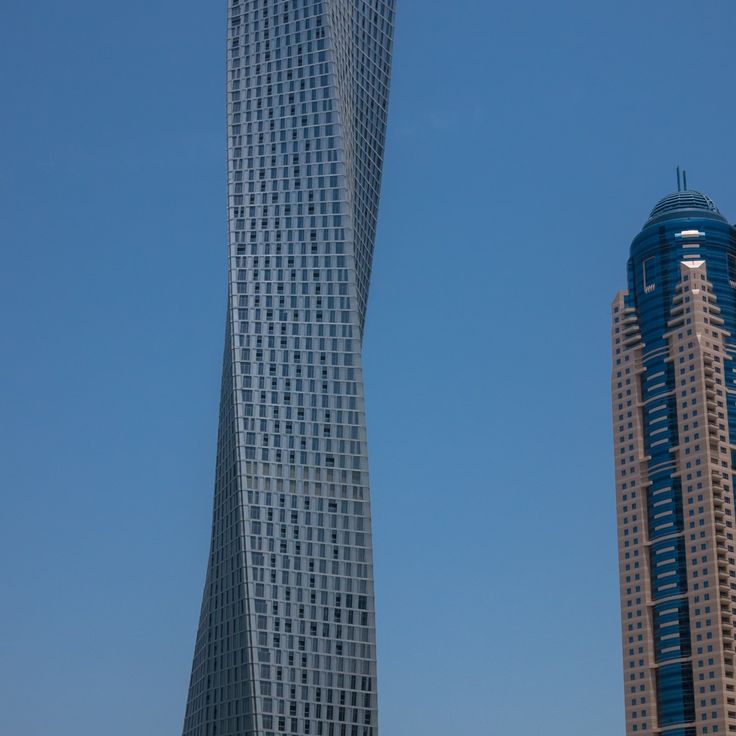
The Cayan Tower reaches a height of 1,000 feet (305 meters) and rotates 90 degrees from base to top across 73 floors. This residential high-rise in Dubai Marina uses a reinforced concrete structure in which each floor is offset by 1.2 degrees from the one below. The twist distributes wind loads and provides varied views for residents on all levels. Completed in 2013, the building contains 495 residential units and ranks among the tallest twisted towers in the world.
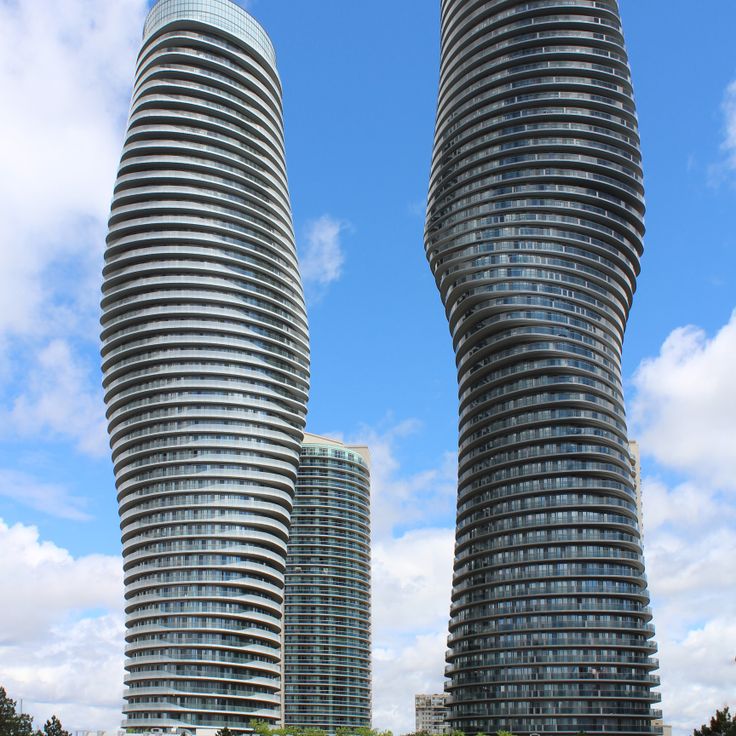
These two residential towers in Mississauga rise to 590 feet (180 meters) and 525 feet (160 meters), defining the city's skyline through their undulating facades. The Absolute World Towers rotate continuously from foundation to crown, with each floor offset from the one below. Construction was completed in 2012, housing 507 residential units across both structures. The organic forms emerged from a design that combines structural efficiency with sculptural presence, using a reinforced concrete skeleton with prefabricated balconies.
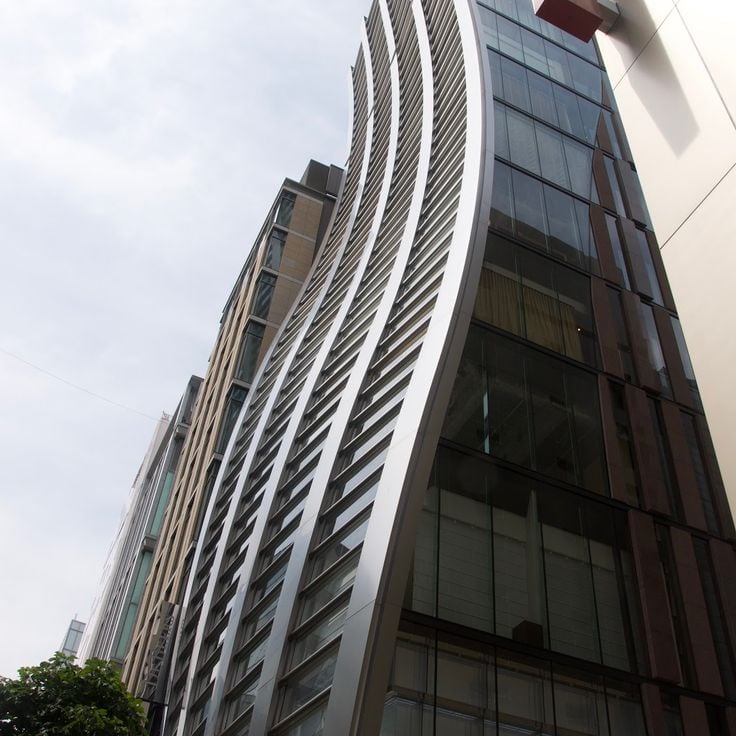
The De Beers Ginza Building in Tokyo is an eleven story jewelry structure whose twisted form provides an alternative geometry to the strict orthogonal grid of the Ginza district. Designed by architects Jun Mitsui and Associates between 2005 and 2007, the facade consists of triangular glass panels that generate varying optical effects under daylight and artificial illumination. The rotation of floors around a central axis creates a dynamic exterior skin that contrasts with adjacent commercial structures. This architectural solution adapts to the tight urban lots of Tokyo and demonstrates how vertical buildings can pursue innovative formal approaches within constrained footprints. The building serves as retail space for diamond jewelry and houses private sales rooms on upper floors.
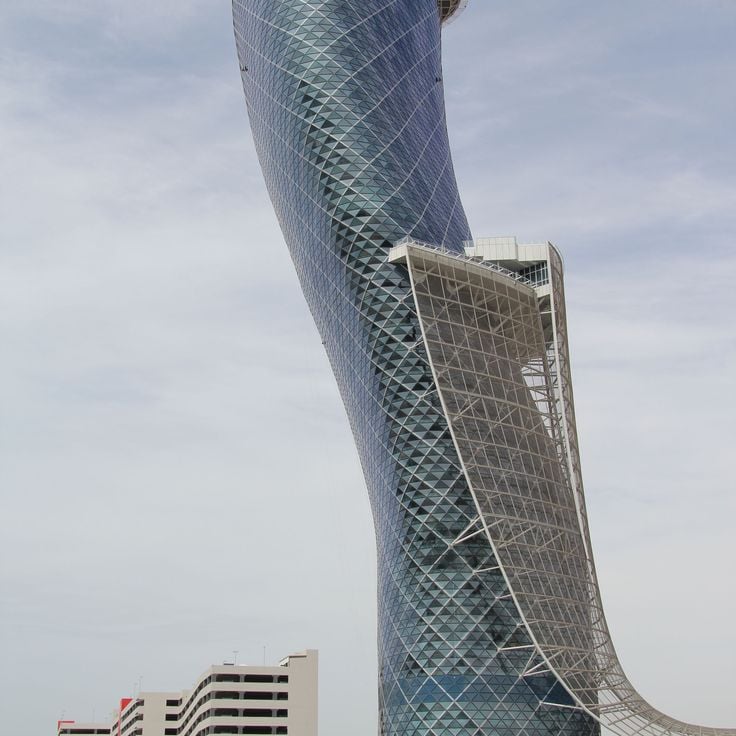
Capital Gate is a 160-meter (525-foot) tower in Abu Dhabi's Al Manhal business district that leans 18 degrees to the west, holding the Guinness World Record for the greatest artificial lean in a building. Completed between 2007 and 2011, the 35-story structure houses offices and a Hyatt hotel, with the upper floors of the leaning section reserved for hotel rooms. Structural stability is achieved through a pre-tensioned steel mesh containing 15,000 cubic meters (19,620 cubic yards) of concrete that counterbalances the off-center weight distribution, while the outward-leaning facade is clad in a glass curtain wall made of diamond-shaped panels. The building exemplifies the towers featured in this collection that reshape urban skylines through engineering innovation and unconventional forms.
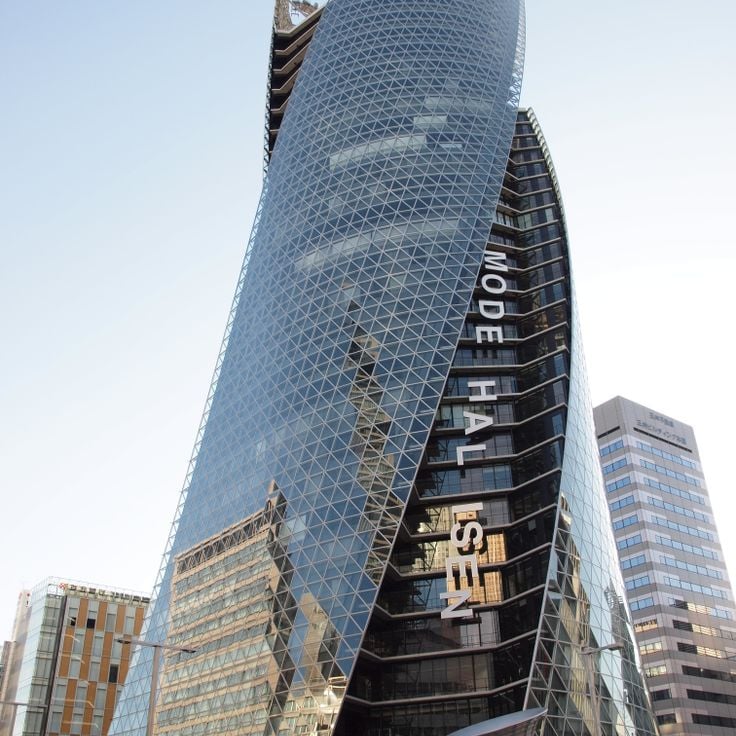
The Mode Gakuen Spiral Towers in Nagoya rises 558 feet (170 meters) and displays a three-part structure where three curved wings wind around a central core. Completed in 2008, this office building houses educational facilities and demonstrates an architectural solution that combines functionality with a distinctive vertical form. The spiral arrangement of the three towers creates a characteristic silhouette in Nagoya's skyline and shows how contemporary high-rise architecture establishes new urban landmarks through structural innovation.
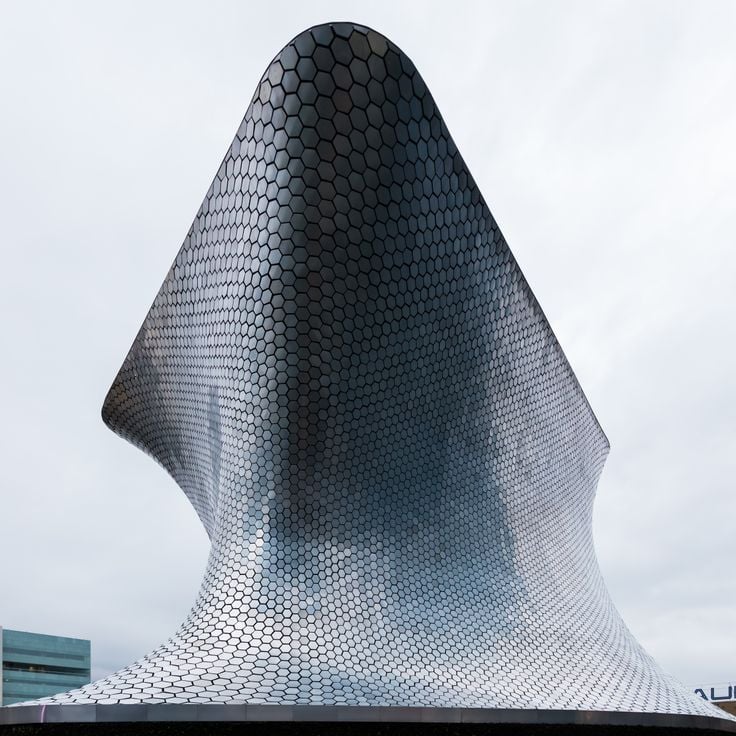
The Museo Soumaya in Mexico City rises 46 meters (150 feet) with an asymmetrical silhouette. The building tapers from a narrow base to a broad, curved crown and is clad in 16,000 hexagonal aluminum panels that reflect daylight. This architectural structure houses an extensive art collection and demonstrates how contemporary museum design uses geometric variation and innovative facade techniques to shape urban spaces. The museum joins a roster of international buildings that set new standards in vertical architecture through unconventional forms.
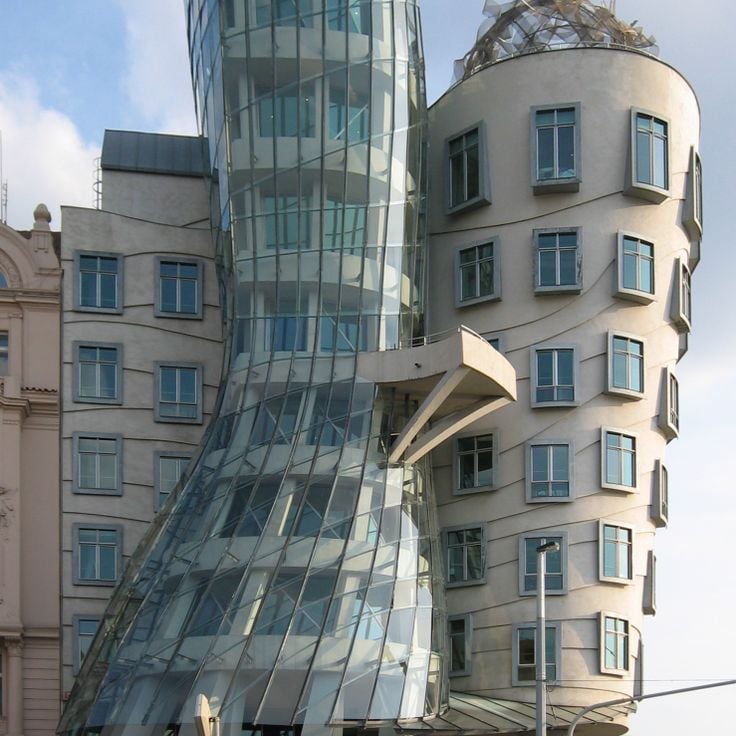
The Dancing House has stood on the Vltava riverbank since 1996, introducing an unconventional element to the historic cityscape with its tilted facades and curved glass walls. The design by Vlado Milunić and Frank Gehry consists of two interlocking towers whose asymmetric form suggests a dancing couple. The building houses office spaces and a restaurant on the top floor that provides views across the Old Town rooftops. The structure rises 240 feet (73 meters) and ranks as one of the most notable examples of contemporary architecture in the Czech Republic.
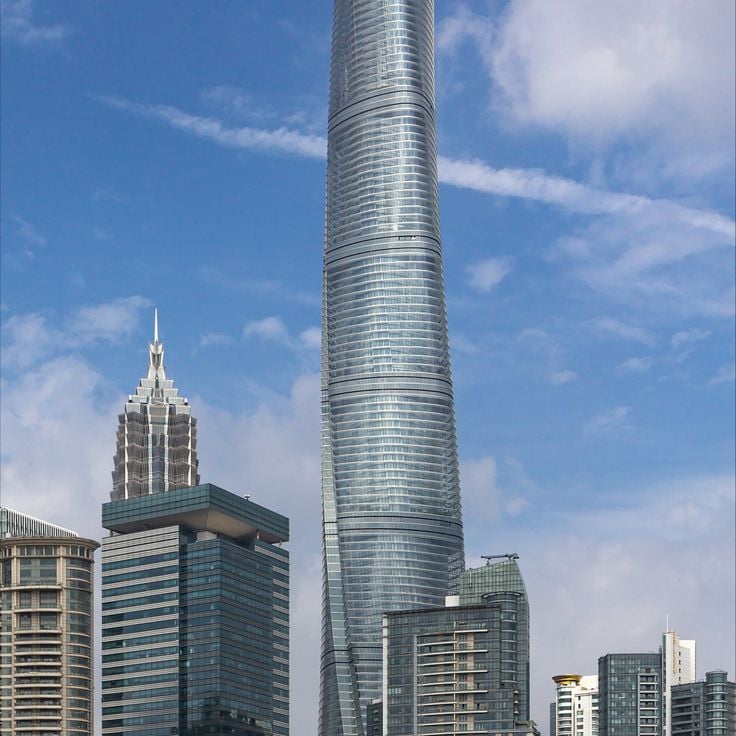
The Shanghai Tower rises 2,073 feet (632 meters) in the Lujiazui financial district and demonstrates how twisted structures reduce wind loads at extreme heights. The skyscraper's glass facade rotates 120 degrees between base and summit, creating an aerodynamic form that enabled engineers to construct one of China's tallest towers. This architectural solution combines engineering achievement with practical function in a building that houses offices, hotels and observation platforms.
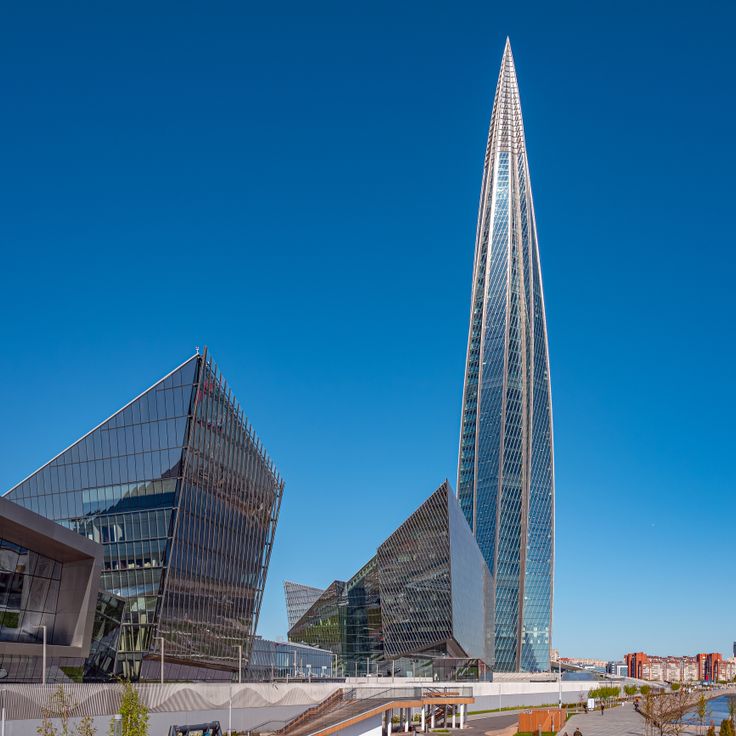
The Lakhta Tower in Saint Petersburg stands at 462 meters (1516 feet), making it the tallest building in Europe and demonstrating how modern engineering solutions enable extreme heights in a challenging climate. Designed by Tony Kettle and Gorproject and completed in 2019, the tower houses the headquarters of energy company Gazprom along with office space and public areas. Its glass and metal facade rotates through five stages across the building's height, reducing wind loads on the structure. The foundation extends 82 meters (269 feet) into the ground, anchoring the structure in the soft soil near the Baltic Sea. The rotation of the facade gives the tower its distinctive silhouette that differs from conventional high rises and redefines the city skyline.
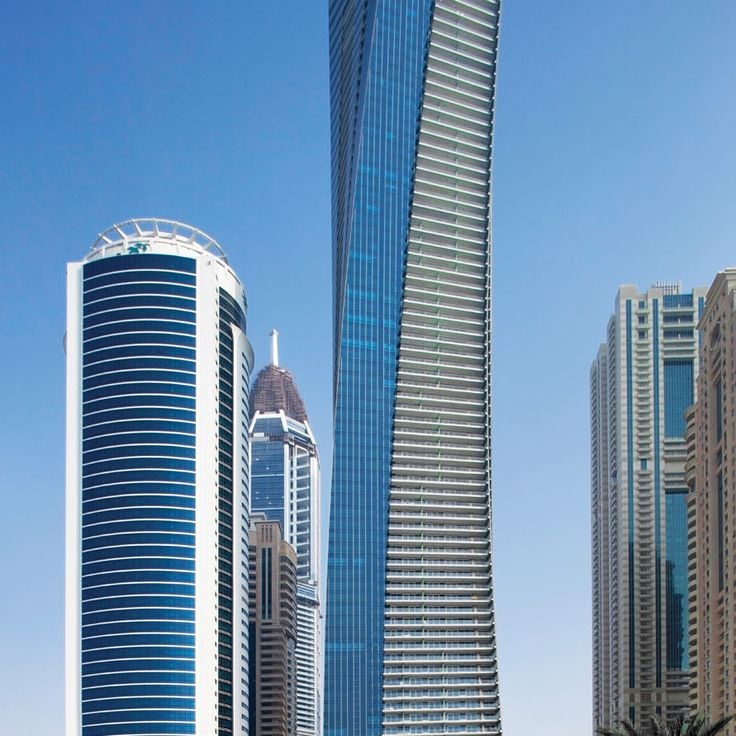
Ocean Heights is a 1,017-foot (310-meter) residential tower in Dubai Marina with 83 floors that rotates 90 degrees from base to top. Completed in 2010, the structure follows the architectural trend of twisted high-rises that gained prominence in the Gulf states since the mid-2000s. The rotation provides varying perspectives across the Arabian Gulf and the marina for residential units. The building belongs to a generation of towers that use geometric deformation to distinguish themselves within the densely developed skylines of the Emirates. Dubai Marina concentrates over 200 high-rises along a narrow strip of land beside an artificial canal, and Ocean Heights stands out among the numerous prismatic towers through its vertical twist.
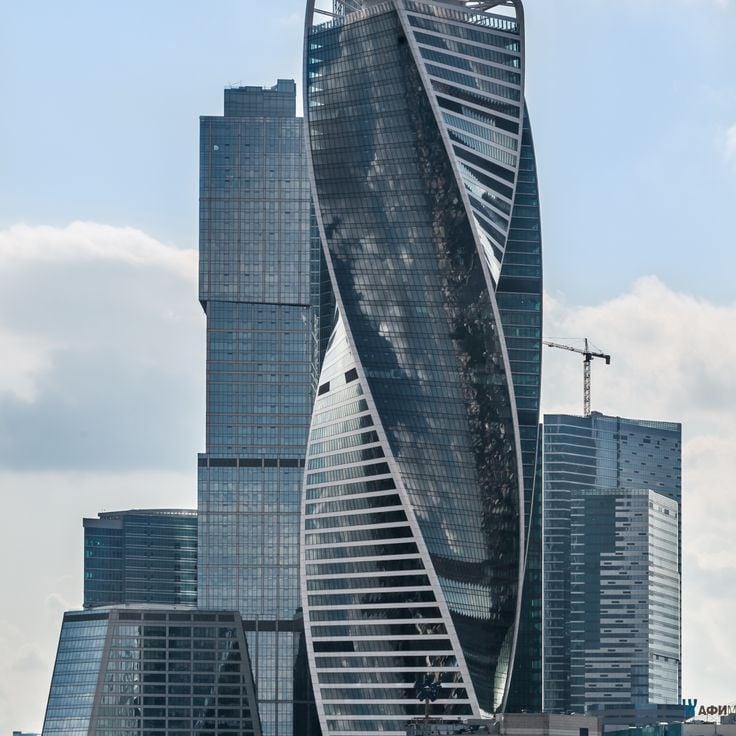
The Evolution Tower rises 246 meters (807 feet) above Moscow with a spiraling white facade inspired by elements of Saint Basil's Cathedral. Each of its 54 floors rotates three degrees relative to the one below, creating a full 162-degree rotation over the building's height. Completed in 2014, the structure serves primarily as an office building within the Moscow City business district. The twist required specialized engineering solutions for elevator shafts and utility lines running through the entire rotated structure.
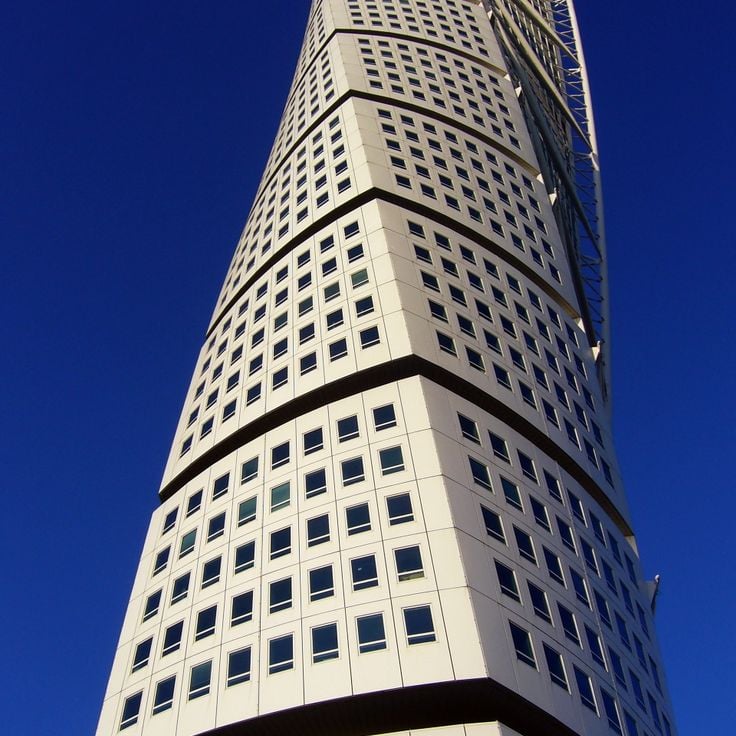
The Turning Torso stands 190 meters (620 feet) tall and has marked a turning point in Scandinavian architecture since its completion in 2005. Santiago Calatrava designed this residential tower based on his own sculpture of a twisting human torso. The structure consists of nine segments of five floors each, arranged in a spiral around a central core, completing a 90 degree rotation between the bottom and top floors. The tower contains 147 apartments across 54 levels and was Scandinavia's tallest building when it opened.
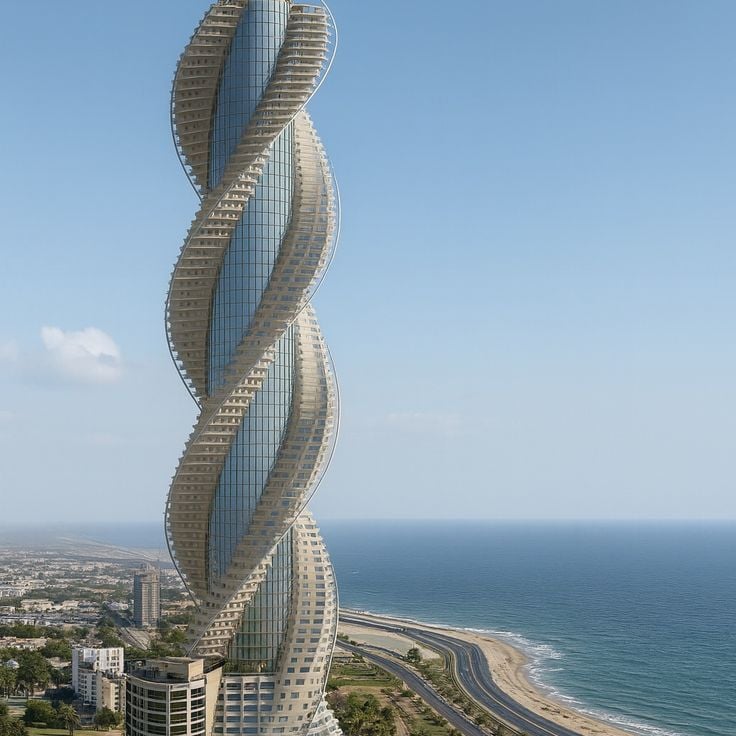
The Burj Almasa rises to 1,420 feet (432 meters) with a full 360-degree twist across its 93 floors. This tower in Jeddah uses its spiral structure to reduce wind loads while creating a distinct silhouette along the Red Sea coastline. The rotating form provides different views from each floor and demonstrates advanced engineering in high-rise construction. The building houses residential units, offices and commercial spaces that benefit from the structural solution. This construction joins the international development of rotating skyscrapers that combine technical innovation with urban presence.
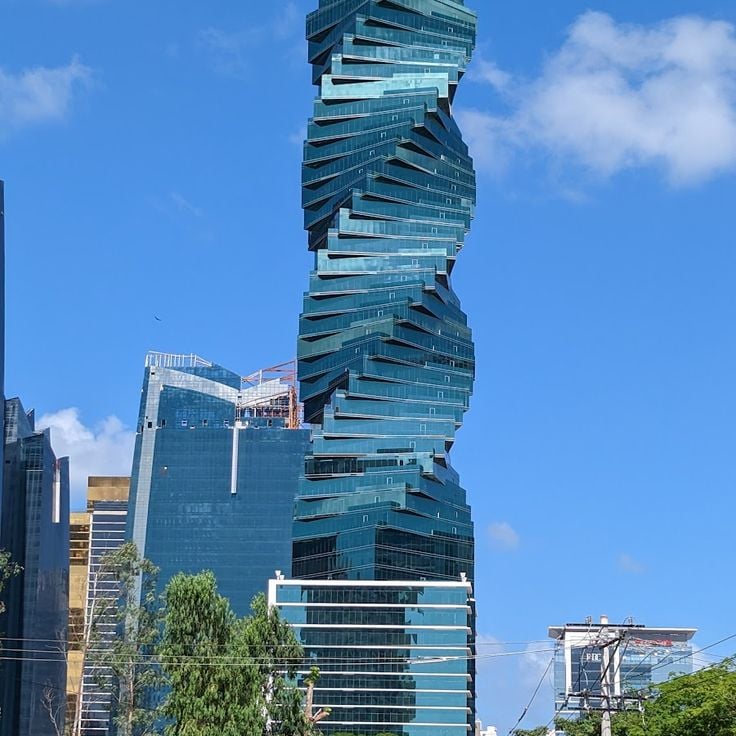
This 243 meter (797 foot) residential tower in Panama City rotates its facade through 315 degrees over 53 floors. Completed in 2011, the structure uses a spiraling form to reduce wind loads while providing continuous balconies on each level. The rotation distributes evenly across the building's height, creating a profile that shifts continuously from base to top. Located along the city's waterfront, the tower demonstrates how structural considerations for wind resistance can translate into recognizable architectural form. The design combines structural efficiency with functional residential units in one of Central America's tallest buildings.
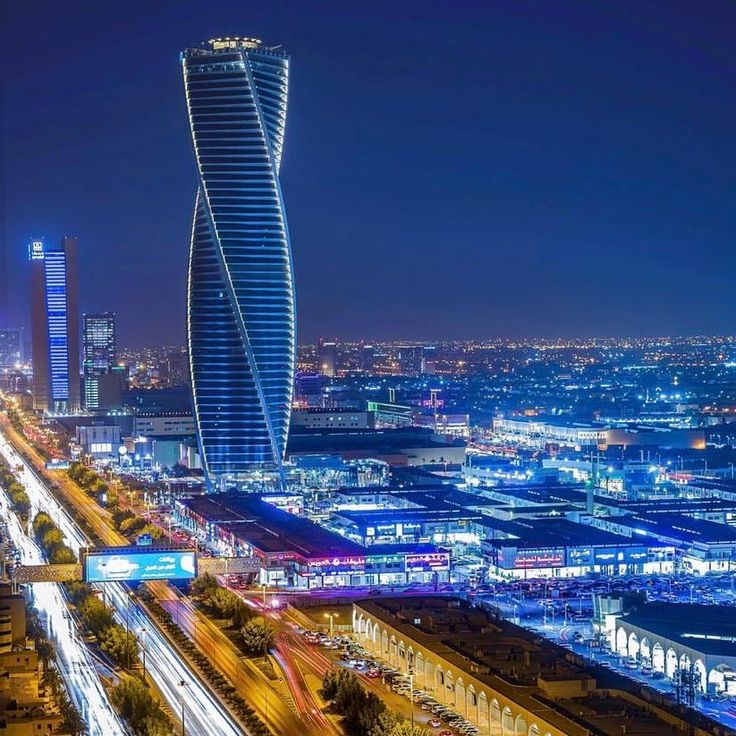
The Al Majdoul Tower rises 244 meters (800 feet) and rotates 135 degrees across its 54 floors. This building in the Saudi capital uses its twisted form to reduce wind loads while creating varied orientations for different levels. The design demonstrates how structural engineering in tall buildings combines functional requirements with architectural expression. The tower contributes to Riyadh's expanding skyline, where several projects are driving the city's vertical growth. The rotated structure allows for optimized sight lines and natural lighting across its various occupied levels.
The United Tower in Manama rises 200 meters across 47 floors. The building features a 180-degree rotation between its base and summit, achieved through offset floor plates. This construction technique distributes wind loads more evenly and allows residential units to face different directions depending on their level. The facade combines glass and aluminum, with each floor slightly rotated relative to the one below. The tower represents a notable example of contemporary architecture in the Middle East and demonstrates the structural possibilities of rotating high-rise design in urban settings.
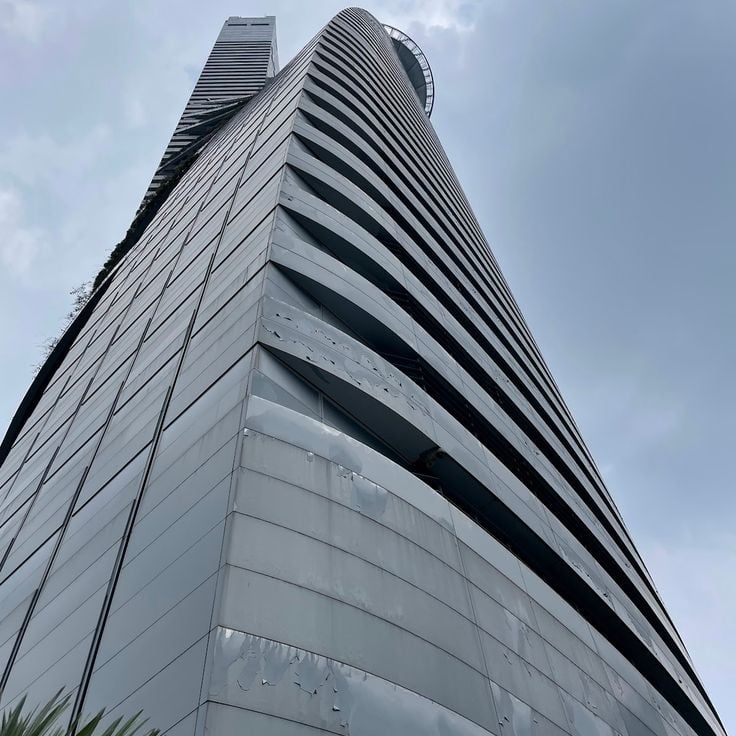
The Telekom Tower rises 55 stories in central Kuala Lumpur and was completed in 2001. This structure serves as a telecommunications hub, housing offices and broadcasting equipment. Its design addresses the functional requirements of the industry while integrating technical infrastructure into the Malaysian capital's urban skyline. The tower combines operational telecommunications facilities with administrative space and contributes to the development of the business district.
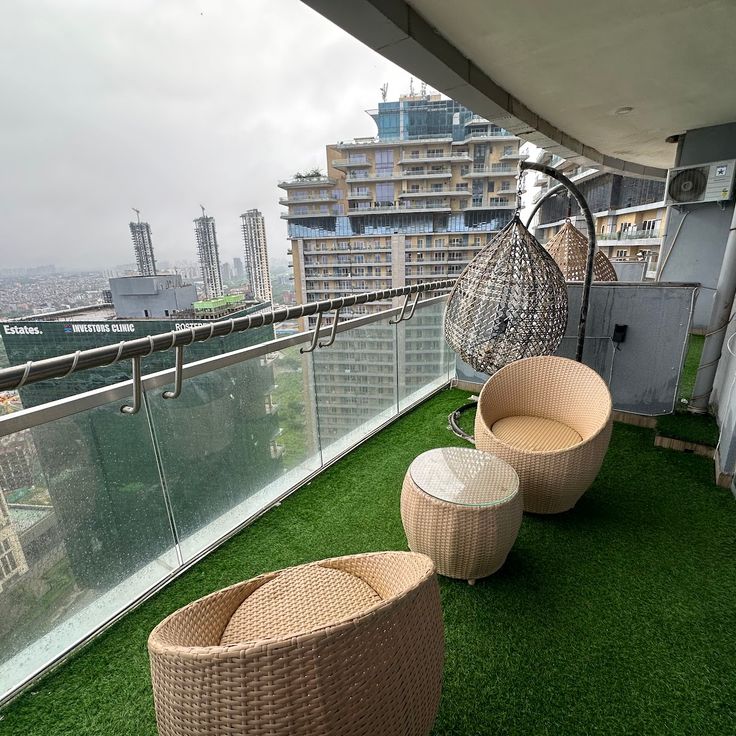
Supernova Spira is a 300-meter (984-foot) residential tower in Noida that twists 146 degrees across 80 floors. The spiral design reduces wind loads while creating different viewing perspectives on each level overlooking the Delhi metropolitan region. The building employs high-performance concrete and steel structural elements to achieve the progressive rotation of its facade. This architectural solution demonstrates the application of contemporary engineering techniques in Indian high-rise construction and contributes to the evolving skyline of Noida.
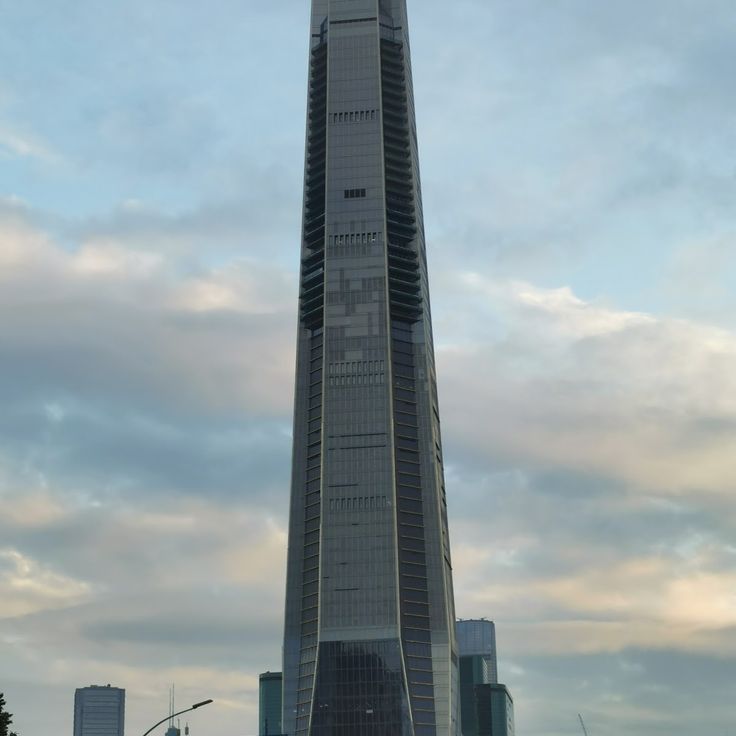
The Shimao Qianhai Center rises 964 feet (294 meters) above Shenzhen and features a helical structure that extends across 63 floors. This rotation of the facade demonstrates the ability of contemporary architects to design vertical buildings with dynamic forms that follow the principles of structural engineering while shaping the urban skyline.
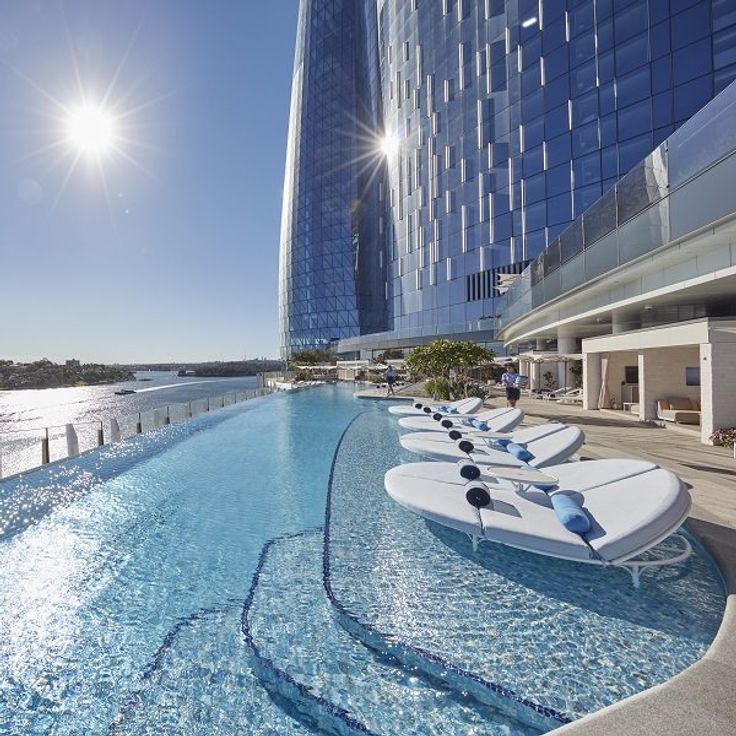
Crown Sydney is a 271-meter residential and hotel tower whose facade rotates 60 degrees across 75 stories. Completed in 2020 on the Barangaroo waterfront, the structure uses a spiraling form that reduces wind loads while giving each floor a slightly offset position. Designed by WilkinsonEyre, the tower demonstrates how rotational architecture shapes vertical living and commercial space in Australia's largest city.
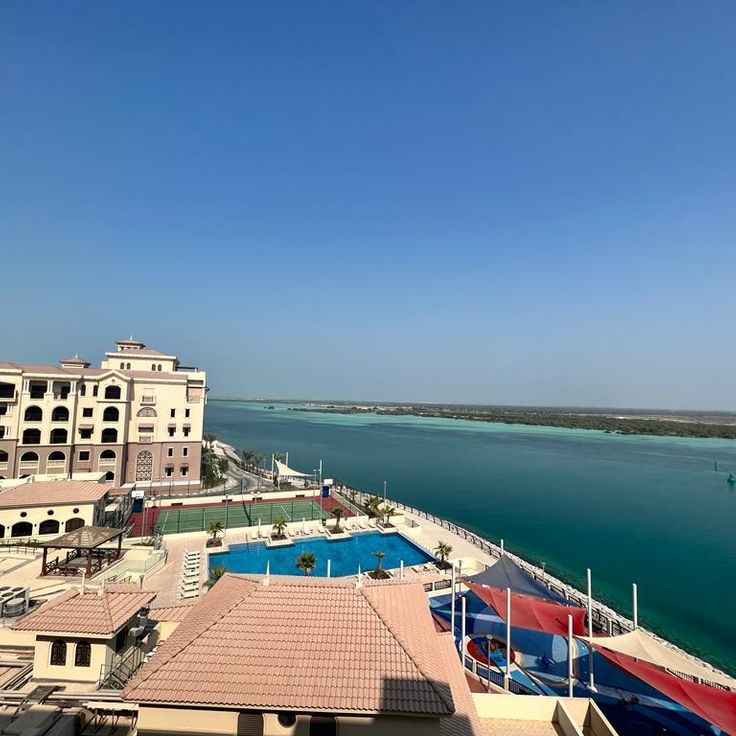
The Regent Emirates Pearl Tower reaches 255 meters in height and rotates 25 degrees across its 52 floors. Completed in 2008 in Abu Dhabi, this building combines residential and commercial spaces within a spiral structure created by recessed balconies on each level. This architectural solution provides outdoor areas for residents while giving the structure its distinctive twisted profile. The design employs a reinforced concrete skeleton that allows for the vertical rotation, while the glass facade reduces wind load and allows natural light into interior spaces.
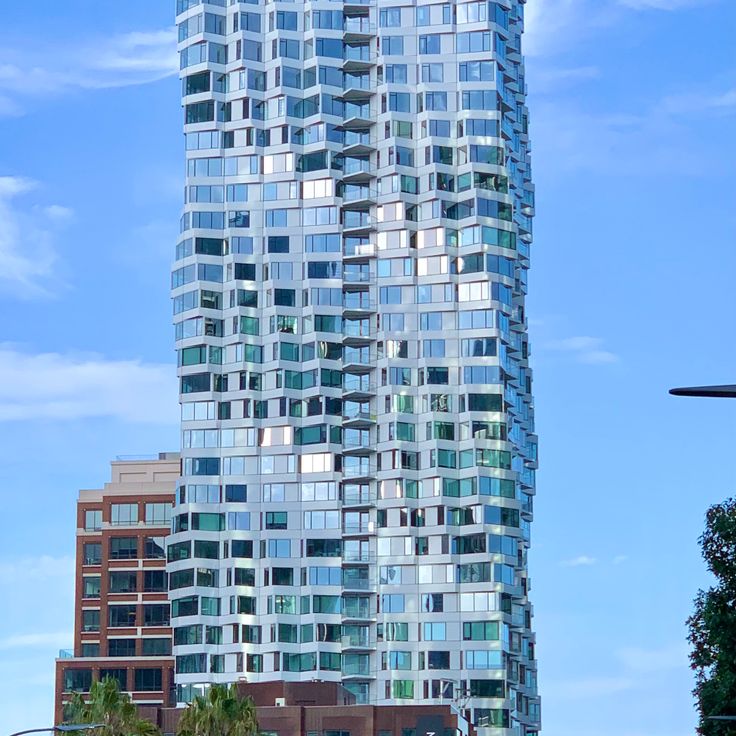
Mira Tower rises 397 feet (121 meters) in downtown San Francisco, displaying a continuous spiral design through modules repeated every eleven floors. The residential tower's facade consists of protruding bay windows that twist along the entire height of the building, giving the 39-story structure its distinctive appearance. This modular construction method enables efficient building practices while maintaining architectural precision. The tower fits into the current development of high-rises with rotating or twisted structures and demonstrates technical solutions for high-density urban living.
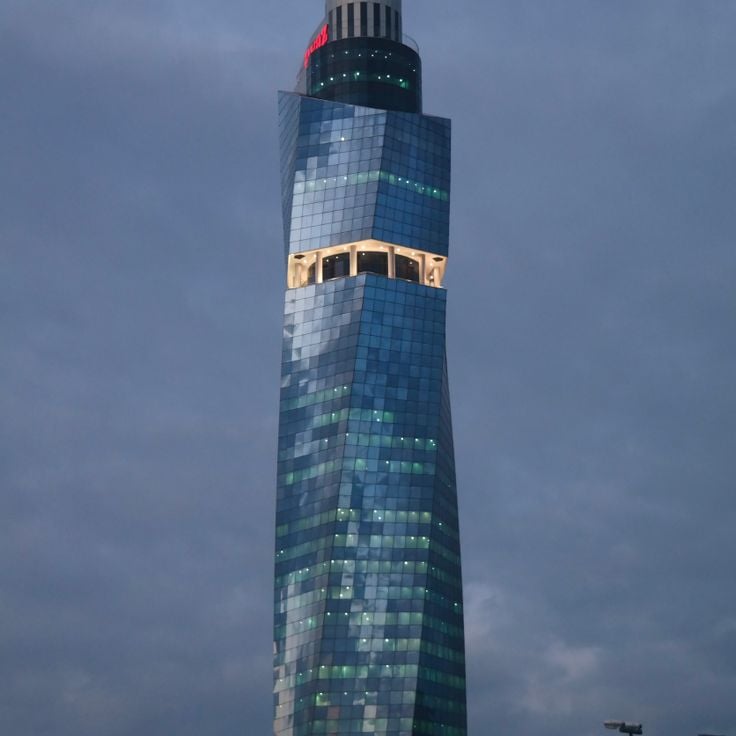
The Avaz Twist Tower rises 176 meters (577 feet) above Sarajevo and has reshaped the city's skyline since its completion in 2008. This 39-story structure serves as headquarters for the Avaz media group, while its spiraling facade gives the building its distinctive profile. The design incorporates office spaces within a twisted exterior shell that demonstrates engineering solutions for vertical construction. The tower represents a turning point in Sarajevo's contemporary architectural development and stands as a modern addition to the urban landscape.
Tao Zhu Ying Yuan Tower rises 305 feet (93 meters) and was completed in 2018 as a residential building. Its spiral architecture rotates each floor 4.5 degrees from the level below, creating a continuous vertical twist throughout the structure. This construction technique represents one of the contemporary approaches in high-rise development that uses structural rotation to generate new design possibilities for residential towers.
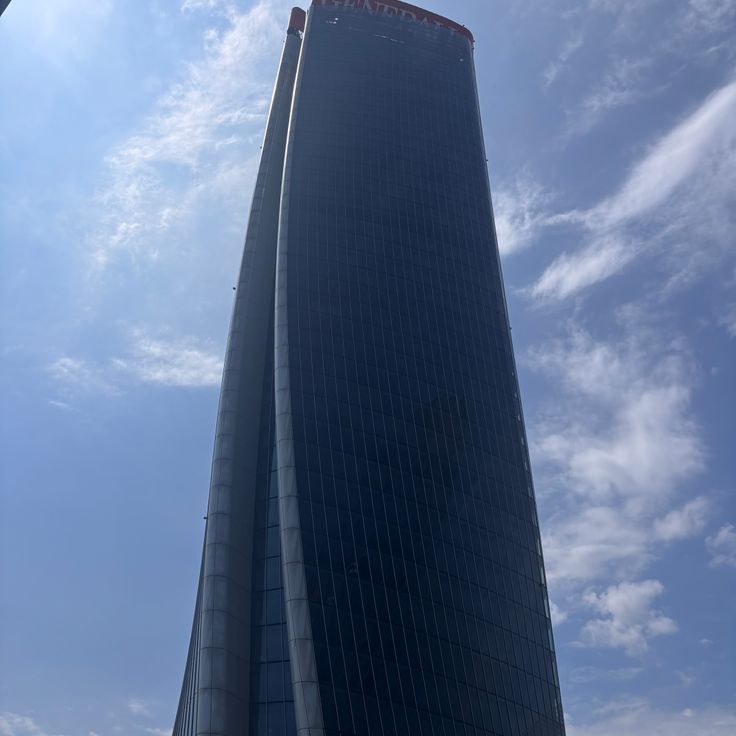
The Generali Tower rises 557 feet (170 meters) above the CityLife business district and demonstrates how contemporary office towers combine functional requirements with modern structural forms. The 44-story building rotates approximately 16 degrees from base to top, creating a continuous spiral movement across its glass facade. The construction incorporates energy efficiency systems including photovoltaic panels and heat recovery mechanisms. Completed in 2015 from designs by Zaha Hadid Architects, the project developed load-bearing structures with triangular elements to enable the torsion across the full height.
The Cayan Tower reaches a height of 1,000 feet (305 meters) and rotates 90 degrees from base to top across 73 floors. This residential high-rise in Dubai Marina uses a reinforced concrete structure in which each floor is offset by 1.2 degrees from the one below. The twist distributes wind loads and provides varied views for residents on all levels. Completed in 2013, the building contains 495 residential units and ranks among the tallest twisted towers in the world.
These two residential towers in Mississauga rise to 590 feet (180 meters) and 525 feet (160 meters), defining the city's skyline through their undulating facades. The Absolute World Towers rotate continuously from foundation to crown, with each floor offset from the one below. Construction was completed in 2012, housing 507 residential units across both structures. The organic forms emerged from a design that combines structural efficiency with sculptural presence, using a reinforced concrete skeleton with prefabricated balconies.
The De Beers Ginza Building in Tokyo is an eleven story jewelry structure whose twisted form provides an alternative geometry to the strict orthogonal grid of the Ginza district. Designed by architects Jun Mitsui and Associates between 2005 and 2007, the facade consists of triangular glass panels that generate varying optical effects under daylight and artificial illumination. The rotation of floors around a central axis creates a dynamic exterior skin that contrasts with adjacent commercial structures. This architectural solution adapts to the tight urban lots of Tokyo and demonstrates how vertical buildings can pursue innovative formal approaches within constrained footprints. The building serves as retail space for diamond jewelry and houses private sales rooms on upper floors.
Capital Gate is a 160-meter (525-foot) tower in Abu Dhabi's Al Manhal business district that leans 18 degrees to the west, holding the Guinness World Record for the greatest artificial lean in a building. Completed between 2007 and 2011, the 35-story structure houses offices and a Hyatt hotel, with the upper floors of the leaning section reserved for hotel rooms. Structural stability is achieved through a pre-tensioned steel mesh containing 15,000 cubic meters (19,620 cubic yards) of concrete that counterbalances the off-center weight distribution, while the outward-leaning facade is clad in a glass curtain wall made of diamond-shaped panels. The building exemplifies the towers featured in this collection that reshape urban skylines through engineering innovation and unconventional forms.
The Mode Gakuen Spiral Towers in Nagoya rises 558 feet (170 meters) and displays a three-part structure where three curved wings wind around a central core. Completed in 2008, this office building houses educational facilities and demonstrates an architectural solution that combines functionality with a distinctive vertical form. The spiral arrangement of the three towers creates a characteristic silhouette in Nagoya's skyline and shows how contemporary high-rise architecture establishes new urban landmarks through structural innovation.
The Museo Soumaya in Mexico City rises 46 meters (150 feet) with an asymmetrical silhouette. The building tapers from a narrow base to a broad, curved crown and is clad in 16,000 hexagonal aluminum panels that reflect daylight. This architectural structure houses an extensive art collection and demonstrates how contemporary museum design uses geometric variation and innovative facade techniques to shape urban spaces. The museum joins a roster of international buildings that set new standards in vertical architecture through unconventional forms.
The Dancing House has stood on the Vltava riverbank since 1996, introducing an unconventional element to the historic cityscape with its tilted facades and curved glass walls. The design by Vlado Milunić and Frank Gehry consists of two interlocking towers whose asymmetric form suggests a dancing couple. The building houses office spaces and a restaurant on the top floor that provides views across the Old Town rooftops. The structure rises 240 feet (73 meters) and ranks as one of the most notable examples of contemporary architecture in the Czech Republic.
The Shanghai Tower rises 2,073 feet (632 meters) in the Lujiazui financial district and demonstrates how twisted structures reduce wind loads at extreme heights. The skyscraper's glass facade rotates 120 degrees between base and summit, creating an aerodynamic form that enabled engineers to construct one of China's tallest towers. This architectural solution combines engineering achievement with practical function in a building that houses offices, hotels and observation platforms.
The Lakhta Tower in Saint Petersburg stands at 462 meters (1516 feet), making it the tallest building in Europe and demonstrating how modern engineering solutions enable extreme heights in a challenging climate. Designed by Tony Kettle and Gorproject and completed in 2019, the tower houses the headquarters of energy company Gazprom along with office space and public areas. Its glass and metal facade rotates through five stages across the building's height, reducing wind loads on the structure. The foundation extends 82 meters (269 feet) into the ground, anchoring the structure in the soft soil near the Baltic Sea. The rotation of the facade gives the tower its distinctive silhouette that differs from conventional high rises and redefines the city skyline.
Ocean Heights is a 1,017-foot (310-meter) residential tower in Dubai Marina with 83 floors that rotates 90 degrees from base to top. Completed in 2010, the structure follows the architectural trend of twisted high-rises that gained prominence in the Gulf states since the mid-2000s. The rotation provides varying perspectives across the Arabian Gulf and the marina for residential units. The building belongs to a generation of towers that use geometric deformation to distinguish themselves within the densely developed skylines of the Emirates. Dubai Marina concentrates over 200 high-rises along a narrow strip of land beside an artificial canal, and Ocean Heights stands out among the numerous prismatic towers through its vertical twist.
The Evolution Tower rises 246 meters (807 feet) above Moscow with a spiraling white facade inspired by elements of Saint Basil's Cathedral. Each of its 54 floors rotates three degrees relative to the one below, creating a full 162-degree rotation over the building's height. Completed in 2014, the structure serves primarily as an office building within the Moscow City business district. The twist required specialized engineering solutions for elevator shafts and utility lines running through the entire rotated structure.
The Turning Torso stands 190 meters (620 feet) tall and has marked a turning point in Scandinavian architecture since its completion in 2005. Santiago Calatrava designed this residential tower based on his own sculpture of a twisting human torso. The structure consists of nine segments of five floors each, arranged in a spiral around a central core, completing a 90 degree rotation between the bottom and top floors. The tower contains 147 apartments across 54 levels and was Scandinavia's tallest building when it opened.
The Burj Almasa rises to 1,420 feet (432 meters) with a full 360-degree twist across its 93 floors. This tower in Jeddah uses its spiral structure to reduce wind loads while creating a distinct silhouette along the Red Sea coastline. The rotating form provides different views from each floor and demonstrates advanced engineering in high-rise construction. The building houses residential units, offices and commercial spaces that benefit from the structural solution. This construction joins the international development of rotating skyscrapers that combine technical innovation with urban presence.
This 243 meter (797 foot) residential tower in Panama City rotates its facade through 315 degrees over 53 floors. Completed in 2011, the structure uses a spiraling form to reduce wind loads while providing continuous balconies on each level. The rotation distributes evenly across the building's height, creating a profile that shifts continuously from base to top. Located along the city's waterfront, the tower demonstrates how structural considerations for wind resistance can translate into recognizable architectural form. The design combines structural efficiency with functional residential units in one of Central America's tallest buildings.
The Al Majdoul Tower rises 244 meters (800 feet) and rotates 135 degrees across its 54 floors. This building in the Saudi capital uses its twisted form to reduce wind loads while creating varied orientations for different levels. The design demonstrates how structural engineering in tall buildings combines functional requirements with architectural expression. The tower contributes to Riyadh's expanding skyline, where several projects are driving the city's vertical growth. The rotated structure allows for optimized sight lines and natural lighting across its various occupied levels.
The United Tower in Manama rises 200 meters across 47 floors. The building features a 180-degree rotation between its base and summit, achieved through offset floor plates. This construction technique distributes wind loads more evenly and allows residential units to face different directions depending on their level. The facade combines glass and aluminum, with each floor slightly rotated relative to the one below. The tower represents a notable example of contemporary architecture in the Middle East and demonstrates the structural possibilities of rotating high-rise design in urban settings.
The Telekom Tower rises 55 stories in central Kuala Lumpur and was completed in 2001. This structure serves as a telecommunications hub, housing offices and broadcasting equipment. Its design addresses the functional requirements of the industry while integrating technical infrastructure into the Malaysian capital's urban skyline. The tower combines operational telecommunications facilities with administrative space and contributes to the development of the business district.
Supernova Spira is a 300-meter (984-foot) residential tower in Noida that twists 146 degrees across 80 floors. The spiral design reduces wind loads while creating different viewing perspectives on each level overlooking the Delhi metropolitan region. The building employs high-performance concrete and steel structural elements to achieve the progressive rotation of its facade. This architectural solution demonstrates the application of contemporary engineering techniques in Indian high-rise construction and contributes to the evolving skyline of Noida.
The Shimao Qianhai Center rises 964 feet (294 meters) above Shenzhen and features a helical structure that extends across 63 floors. This rotation of the facade demonstrates the ability of contemporary architects to design vertical buildings with dynamic forms that follow the principles of structural engineering while shaping the urban skyline.
Crown Sydney is a 271-meter residential and hotel tower whose facade rotates 60 degrees across 75 stories. Completed in 2020 on the Barangaroo waterfront, the structure uses a spiraling form that reduces wind loads while giving each floor a slightly offset position. Designed by WilkinsonEyre, the tower demonstrates how rotational architecture shapes vertical living and commercial space in Australia's largest city.
The Regent Emirates Pearl Tower reaches 255 meters in height and rotates 25 degrees across its 52 floors. Completed in 2008 in Abu Dhabi, this building combines residential and commercial spaces within a spiral structure created by recessed balconies on each level. This architectural solution provides outdoor areas for residents while giving the structure its distinctive twisted profile. The design employs a reinforced concrete skeleton that allows for the vertical rotation, while the glass facade reduces wind load and allows natural light into interior spaces.
Mira Tower rises 397 feet (121 meters) in downtown San Francisco, displaying a continuous spiral design through modules repeated every eleven floors. The residential tower's facade consists of protruding bay windows that twist along the entire height of the building, giving the 39-story structure its distinctive appearance. This modular construction method enables efficient building practices while maintaining architectural precision. The tower fits into the current development of high-rises with rotating or twisted structures and demonstrates technical solutions for high-density urban living.
The Avaz Twist Tower rises 176 meters (577 feet) above Sarajevo and has reshaped the city's skyline since its completion in 2008. This 39-story structure serves as headquarters for the Avaz media group, while its spiraling facade gives the building its distinctive profile. The design incorporates office spaces within a twisted exterior shell that demonstrates engineering solutions for vertical construction. The tower represents a turning point in Sarajevo's contemporary architectural development and stands as a modern addition to the urban landscape.
Tao Zhu Ying Yuan Tower rises 305 feet (93 meters) and was completed in 2018 as a residential building. Its spiral architecture rotates each floor 4.5 degrees from the level below, creating a continuous vertical twist throughout the structure. This construction technique represents one of the contemporary approaches in high-rise development that uses structural rotation to generate new design possibilities for residential towers.
The Generali Tower rises 557 feet (170 meters) above the CityLife business district and demonstrates how contemporary office towers combine functional requirements with modern structural forms. The 44-story building rotates approximately 16 degrees from base to top, creating a continuous spiral movement across its glass facade. The construction incorporates energy efficiency systems including photovoltaic panels and heat recovery mechanisms. Completed in 2015 from designs by Zaha Hadid Architects, the project developed load-bearing structures with triangular elements to enable the torsion across the full height.
The Cayan Tower reaches a height of 1,000 feet (305 meters) and rotates 90 degrees from base to top across 73 floors. This residential high-rise in Dubai Marina uses a reinforced concrete structure in which each floor is offset by 1.2 degrees from the one below. The twist distributes wind loads and provides varied views for residents on all levels. Completed in 2013, the building contains 495 residential units and ranks among the tallest twisted towers in the world.
These two residential towers in Mississauga rise to 590 feet (180 meters) and 525 feet (160 meters), defining the city's skyline through their undulating facades. The Absolute World Towers rotate continuously from foundation to crown, with each floor offset from the one below. Construction was completed in 2012, housing 507 residential units across both structures. The organic forms emerged from a design that combines structural efficiency with sculptural presence, using a reinforced concrete skeleton with prefabricated balconies.
The De Beers Ginza Building in Tokyo is an eleven story jewelry structure whose twisted form provides an alternative geometry to the strict orthogonal grid of the Ginza district. Designed by architects Jun Mitsui and Associates between 2005 and 2007, the facade consists of triangular glass panels that generate varying optical effects under daylight and artificial illumination. The rotation of floors around a central axis creates a dynamic exterior skin that contrasts with adjacent commercial structures. This architectural solution adapts to the tight urban lots of Tokyo and demonstrates how vertical buildings can pursue innovative formal approaches within constrained footprints. The building serves as retail space for diamond jewelry and houses private sales rooms on upper floors.
Capital Gate is a 160-meter (525-foot) tower in Abu Dhabi's Al Manhal business district that leans 18 degrees to the west, holding the Guinness World Record for the greatest artificial lean in a building. Completed between 2007 and 2011, the 35-story structure houses offices and a Hyatt hotel, with the upper floors of the leaning section reserved for hotel rooms. Structural stability is achieved through a pre-tensioned steel mesh containing 15,000 cubic meters (19,620 cubic yards) of concrete that counterbalances the off-center weight distribution, while the outward-leaning facade is clad in a glass curtain wall made of diamond-shaped panels. The building exemplifies the towers featured in this collection that reshape urban skylines through engineering innovation and unconventional forms.
The Mode Gakuen Spiral Towers in Nagoya rises 558 feet (170 meters) and displays a three-part structure where three curved wings wind around a central core. Completed in 2008, this office building houses educational facilities and demonstrates an architectural solution that combines functionality with a distinctive vertical form. The spiral arrangement of the three towers creates a characteristic silhouette in Nagoya's skyline and shows how contemporary high-rise architecture establishes new urban landmarks through structural innovation.
The Museo Soumaya in Mexico City rises 46 meters (150 feet) with an asymmetrical silhouette. The building tapers from a narrow base to a broad, curved crown and is clad in 16,000 hexagonal aluminum panels that reflect daylight. This architectural structure houses an extensive art collection and demonstrates how contemporary museum design uses geometric variation and innovative facade techniques to shape urban spaces. The museum joins a roster of international buildings that set new standards in vertical architecture through unconventional forms.
The Dancing House has stood on the Vltava riverbank since 1996, introducing an unconventional element to the historic cityscape with its tilted facades and curved glass walls. The design by Vlado Milunić and Frank Gehry consists of two interlocking towers whose asymmetric form suggests a dancing couple. The building houses office spaces and a restaurant on the top floor that provides views across the Old Town rooftops. The structure rises 240 feet (73 meters) and ranks as one of the most notable examples of contemporary architecture in the Czech Republic.
The Shanghai Tower rises 2,073 feet (632 meters) in the Lujiazui financial district and demonstrates how twisted structures reduce wind loads at extreme heights. The skyscraper's glass facade rotates 120 degrees between base and summit, creating an aerodynamic form that enabled engineers to construct one of China's tallest towers. This architectural solution combines engineering achievement with practical function in a building that houses offices, hotels and observation platforms.
The Lakhta Tower in Saint Petersburg stands at 462 meters (1516 feet), making it the tallest building in Europe and demonstrating how modern engineering solutions enable extreme heights in a challenging climate. Designed by Tony Kettle and Gorproject and completed in 2019, the tower houses the headquarters of energy company Gazprom along with office space and public areas. Its glass and metal facade rotates through five stages across the building's height, reducing wind loads on the structure. The foundation extends 82 meters (269 feet) into the ground, anchoring the structure in the soft soil near the Baltic Sea. The rotation of the facade gives the tower its distinctive silhouette that differs from conventional high rises and redefines the city skyline.
Ocean Heights is a 1,017-foot (310-meter) residential tower in Dubai Marina with 83 floors that rotates 90 degrees from base to top. Completed in 2010, the structure follows the architectural trend of twisted high-rises that gained prominence in the Gulf states since the mid-2000s. The rotation provides varying perspectives across the Arabian Gulf and the marina for residential units. The building belongs to a generation of towers that use geometric deformation to distinguish themselves within the densely developed skylines of the Emirates. Dubai Marina concentrates over 200 high-rises along a narrow strip of land beside an artificial canal, and Ocean Heights stands out among the numerous prismatic towers through its vertical twist.
The Evolution Tower rises 246 meters (807 feet) above Moscow with a spiraling white facade inspired by elements of Saint Basil's Cathedral. Each of its 54 floors rotates three degrees relative to the one below, creating a full 162-degree rotation over the building's height. Completed in 2014, the structure serves primarily as an office building within the Moscow City business district. The twist required specialized engineering solutions for elevator shafts and utility lines running through the entire rotated structure.
The Turning Torso stands 190 meters (620 feet) tall and has marked a turning point in Scandinavian architecture since its completion in 2005. Santiago Calatrava designed this residential tower based on his own sculpture of a twisting human torso. The structure consists of nine segments of five floors each, arranged in a spiral around a central core, completing a 90 degree rotation between the bottom and top floors. The tower contains 147 apartments across 54 levels and was Scandinavia's tallest building when it opened.
The Burj Almasa rises to 1,420 feet (432 meters) with a full 360-degree twist across its 93 floors. This tower in Jeddah uses its spiral structure to reduce wind loads while creating a distinct silhouette along the Red Sea coastline. The rotating form provides different views from each floor and demonstrates advanced engineering in high-rise construction. The building houses residential units, offices and commercial spaces that benefit from the structural solution. This construction joins the international development of rotating skyscrapers that combine technical innovation with urban presence.
This 243 meter (797 foot) residential tower in Panama City rotates its facade through 315 degrees over 53 floors. Completed in 2011, the structure uses a spiraling form to reduce wind loads while providing continuous balconies on each level. The rotation distributes evenly across the building's height, creating a profile that shifts continuously from base to top. Located along the city's waterfront, the tower demonstrates how structural considerations for wind resistance can translate into recognizable architectural form. The design combines structural efficiency with functional residential units in one of Central America's tallest buildings.
The Al Majdoul Tower rises 244 meters (800 feet) and rotates 135 degrees across its 54 floors. This building in the Saudi capital uses its twisted form to reduce wind loads while creating varied orientations for different levels. The design demonstrates how structural engineering in tall buildings combines functional requirements with architectural expression. The tower contributes to Riyadh's expanding skyline, where several projects are driving the city's vertical growth. The rotated structure allows for optimized sight lines and natural lighting across its various occupied levels.
The United Tower in Manama rises 200 meters across 47 floors. The building features a 180-degree rotation between its base and summit, achieved through offset floor plates. This construction technique distributes wind loads more evenly and allows residential units to face different directions depending on their level. The facade combines glass and aluminum, with each floor slightly rotated relative to the one below. The tower represents a notable example of contemporary architecture in the Middle East and demonstrates the structural possibilities of rotating high-rise design in urban settings.
The Telekom Tower rises 55 stories in central Kuala Lumpur and was completed in 2001. This structure serves as a telecommunications hub, housing offices and broadcasting equipment. Its design addresses the functional requirements of the industry while integrating technical infrastructure into the Malaysian capital's urban skyline. The tower combines operational telecommunications facilities with administrative space and contributes to the development of the business district.
Supernova Spira is a 300-meter (984-foot) residential tower in Noida that twists 146 degrees across 80 floors. The spiral design reduces wind loads while creating different viewing perspectives on each level overlooking the Delhi metropolitan region. The building employs high-performance concrete and steel structural elements to achieve the progressive rotation of its facade. This architectural solution demonstrates the application of contemporary engineering techniques in Indian high-rise construction and contributes to the evolving skyline of Noida.
The Shimao Qianhai Center rises 964 feet (294 meters) above Shenzhen and features a helical structure that extends across 63 floors. This rotation of the facade demonstrates the ability of contemporary architects to design vertical buildings with dynamic forms that follow the principles of structural engineering while shaping the urban skyline.
Crown Sydney is a 271-meter residential and hotel tower whose facade rotates 60 degrees across 75 stories. Completed in 2020 on the Barangaroo waterfront, the structure uses a spiraling form that reduces wind loads while giving each floor a slightly offset position. Designed by WilkinsonEyre, the tower demonstrates how rotational architecture shapes vertical living and commercial space in Australia's largest city.
The Regent Emirates Pearl Tower reaches 255 meters in height and rotates 25 degrees across its 52 floors. Completed in 2008 in Abu Dhabi, this building combines residential and commercial spaces within a spiral structure created by recessed balconies on each level. This architectural solution provides outdoor areas for residents while giving the structure its distinctive twisted profile. The design employs a reinforced concrete skeleton that allows for the vertical rotation, while the glass facade reduces wind load and allows natural light into interior spaces.
Mira Tower rises 397 feet (121 meters) in downtown San Francisco, displaying a continuous spiral design through modules repeated every eleven floors. The residential tower's facade consists of protruding bay windows that twist along the entire height of the building, giving the 39-story structure its distinctive appearance. This modular construction method enables efficient building practices while maintaining architectural precision. The tower fits into the current development of high-rises with rotating or twisted structures and demonstrates technical solutions for high-density urban living.
The Avaz Twist Tower rises 176 meters (577 feet) above Sarajevo and has reshaped the city's skyline since its completion in 2008. This 39-story structure serves as headquarters for the Avaz media group, while its spiraling facade gives the building its distinctive profile. The design incorporates office spaces within a twisted exterior shell that demonstrates engineering solutions for vertical construction. The tower represents a turning point in Sarajevo's contemporary architectural development and stands as a modern addition to the urban landscape.
Tao Zhu Ying Yuan Tower rises 305 feet (93 meters) and was completed in 2018 as a residential building. Its spiral architecture rotates each floor 4.5 degrees from the level below, creating a continuous vertical twist throughout the structure. This construction technique represents one of the contemporary approaches in high-rise development that uses structural rotation to generate new design possibilities for residential towers.
The Generali Tower rises 557 feet (170 meters) above the CityLife business district and demonstrates how contemporary office towers combine functional requirements with modern structural forms. The 44-story building rotates approximately 16 degrees from base to top, creating a continuous spiral movement across its glass facade. The construction incorporates energy efficiency systems including photovoltaic panels and heat recovery mechanisms. Completed in 2015 from designs by Zaha Hadid Architects, the project developed load-bearing structures with triangular elements to enable the torsion across the full height.