See the monuments around you in AROpen chests in the app
Around Us is built for your phone — point your camera at the streets and discover the monuments and places around you in augmented reality.Around Us is built for your phone — chests unlock when you walk, explore and capture nearby places.
French lighthouses line approximately 3,400 miles (5,500 km) of coast, from the English Channel to the Mediterranean Sea. These maritime structures, built between the 17th and 20th centuries, occupy strategic locations on rocky promontories, islands, and sometimes in open sea. Constructed from granite, limestone, or masonry, they reflect changes in building techniques and the emphasis on maritime safety.
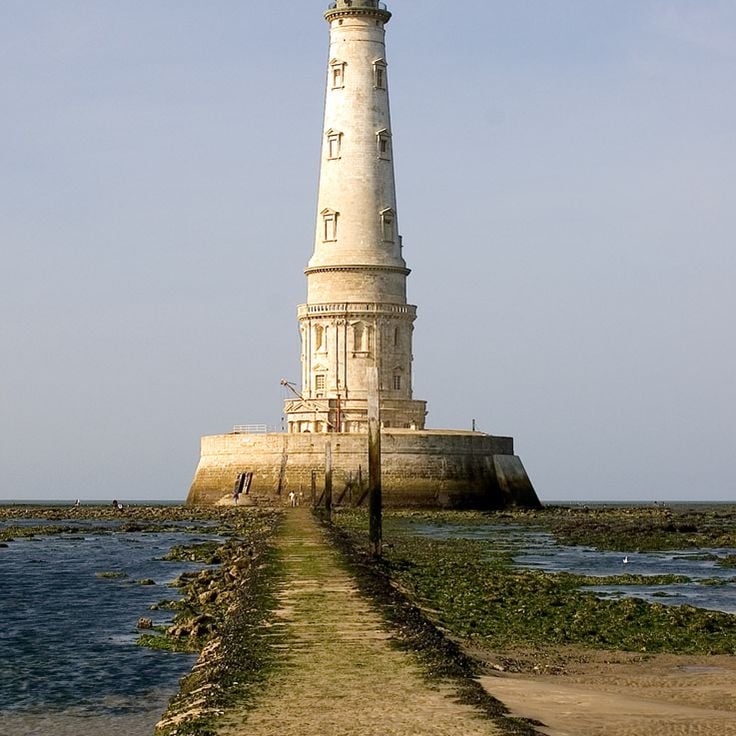
Among the most notable are the Cordouan lighthouse, located offshore of the Gironde estuary and listed as a UNESCO World Heritage site, and the Vierge island in Brittany, which, at 272 feet (82.5 meters), is the tallest stone tower in Europe. The Jument and Vieille lighthouses, situated off Ouessant and Raz de Sein, demonstrate the technical challenges of building at sea, while those at Cap Ferret, Calais, and Ploumanac'h serve as coastal landmarks for over a century. Most of these installations remain operational, and several are open to visitors, offering insights into their interior architecture and the living conditions of their keepers.
French lighthouses line approximately 3,400 miles (5,500 km) of coast, from the English Channel to the Mediterranean Sea. These maritime structures, built between the 17th and 20th centuries, occupy strategic locations on rocky promontories, islands, and sometimes in open sea. Constructed from granite, limestone, or masonry, they reflect changes in building techniques and the emphasis on maritime safety.
Among the most notable are the Cordouan lighthouse, located offshore of the Gironde estuary and listed as a UNESCO World Heritage site, and the Vierge island in Brittany, which, at 272 feet (82.5 meters), is the tallest stone tower in Europe. The Jument and Vieille lighthouses, situated off Ouessant and Raz de Sein, demonstrate the technical challenges of building at sea, while those at Cap Ferret, Calais, and Ploumanac'h serve as coastal landmarks for over a century. Most of these installations remain operational, and several are open to visitors, offering insights into their interior architecture and the living conditions of their keepers.
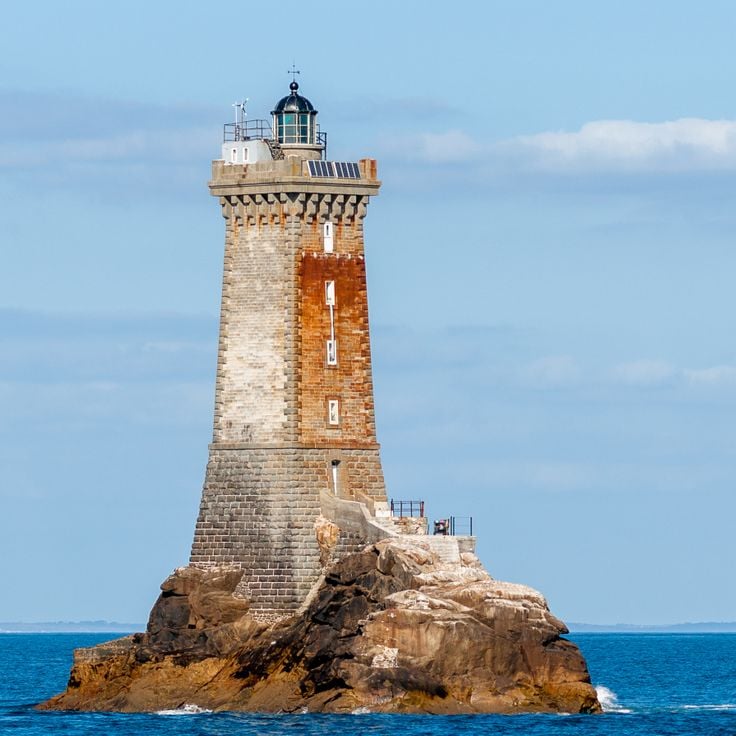
This lighthouse has stood on an isolated rock off Ouessant since 1911, where the sea ranks among the roughest in Europe. The 47-meter (154-foot) cylindrical granite tower was built over seven years under extreme conditions and had to withstand waves reaching up to 20 meters (66 feet) in height. The construction required specialized anchoring techniques into the rock and reinforced foundations against the Atlantic's force. The Phare de la Jument remains one of the most technically demanding offshore structures on the French coast and serves as one of the most striking examples of lighthouse engineering under extreme maritime conditions. The station was manned by keepers until 1991 and now operates automatically.
This full-scale replica of the Les Eclaireurs lighthouse from Tierra del Fuego stands in La Rochelle. The reproduction reaches 36 feet (11 meters) in height and replicates the architecture of the late 19th-century Argentine original. The structure was built as a tribute to the Argentine lighthouse erected on the Beagle Channel near Ushuaia. The La Rochelle lighthouse serves as a landmark on the harbor grounds and recalls the maritime connection between the French Atlantic coast and South American waters.
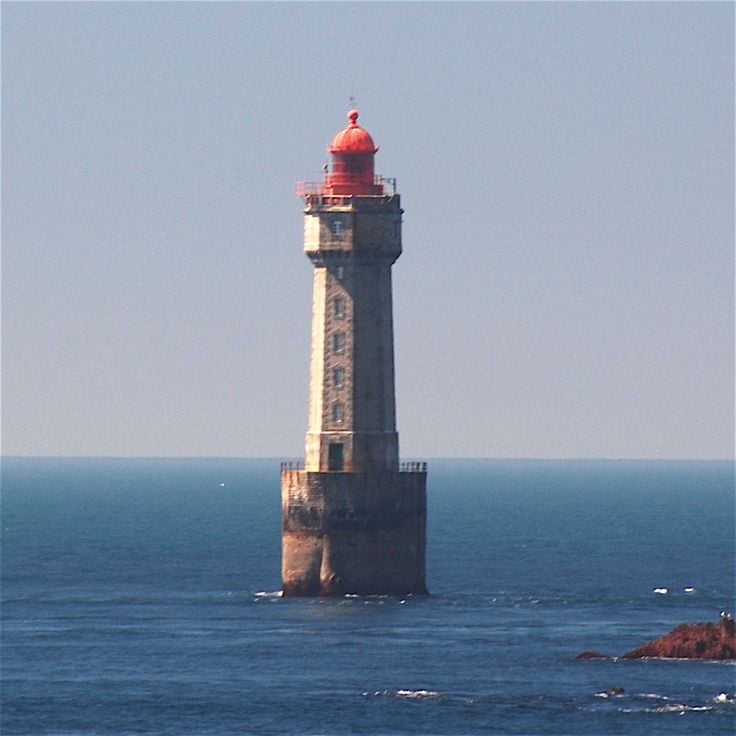
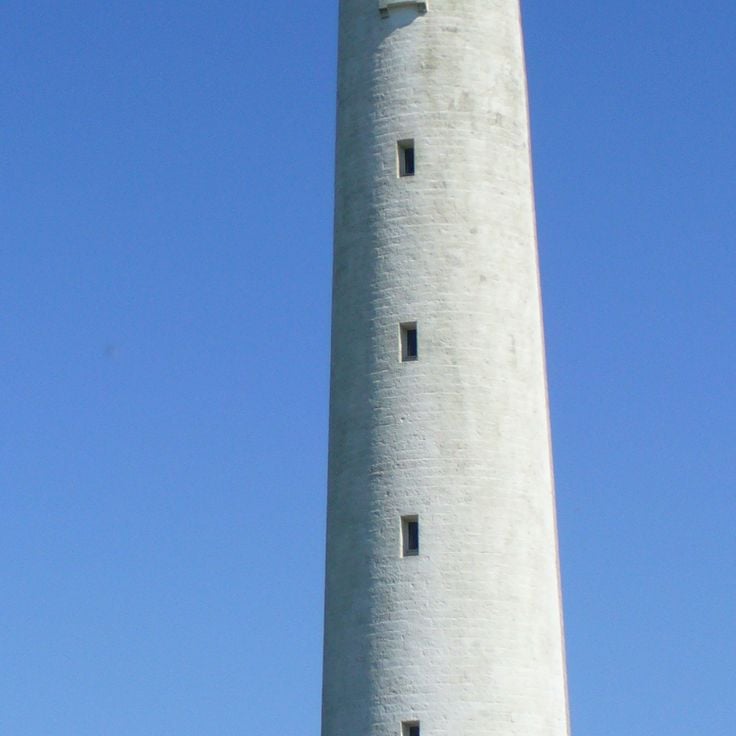
This 270-foot maritime tower built in 1902 rises from the waters off the coast of Plouguerneau and stands as the tallest stone lighthouse in Europe. The structure uses white granite in a cylindrical form with a spiral staircase of 397 steps leading to the top. Construction took six years and required transporting materials by sea to the small island. The lighthouse emits a white light with a range of approximately 27 nautical miles (50 kilometers), marking the Lividic rocks and the northwestern coast of Brittany. Inside, opal glass panels line the walls and equipment remains from the days when keepers maintained the station. Visitors can climb the tower after a boat crossing from Lilia harbor and reach the platform for views over the Finistère coastline. The structure replaced an earlier 1845 tower and continues to operate today as an active navigational aid.
The Phare de la Vieille stands on a rock formation off the Raz de Sein, where Atlantic currents meet with particular intensity. Built between 1882 and 1887 from granite, this octagonal tower reaches 89 feet (27 meters) in height. The exposed location made construction technically demanding and required a robust design capable of withstanding regular storm surges. The lighthouse remains operational and serves as a maritime reference point in one of the busiest shipping routes along the Breton coast.
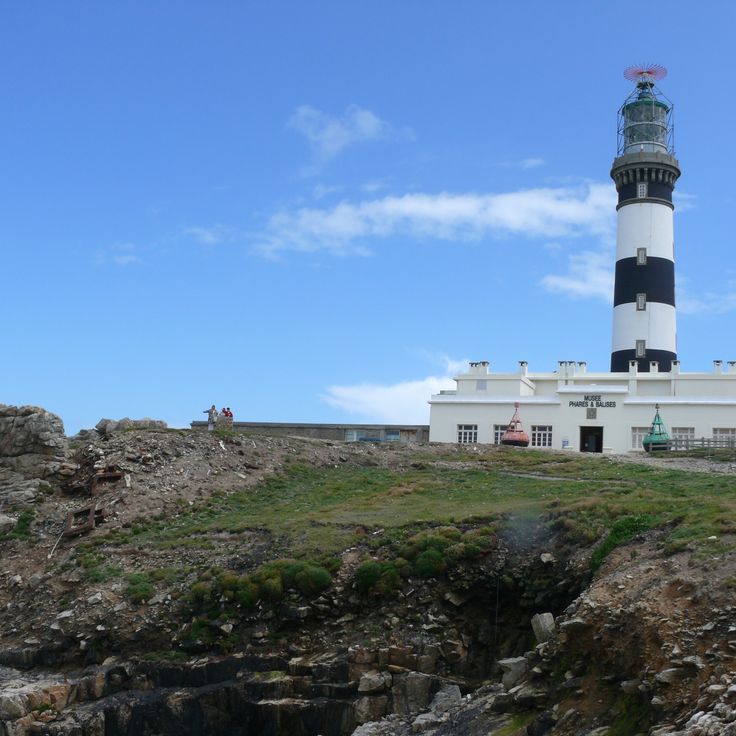
The Phare du Créac'h stands on the western tip of Ouessant Island and has monitored one of Europe's busiest shipping lanes since 1863. This square granite tower rises 54 meters (177 feet) and projects a beam with a range of 60 kilometers (37 miles), guiding vessels through the Ouessant Traffic Separation Scheme. The facility also houses a museum dedicated to lighthouses and maritime beacons, documenting the history of maritime signaling. The lighthouse remains an active navigational aid for international maritime traffic.
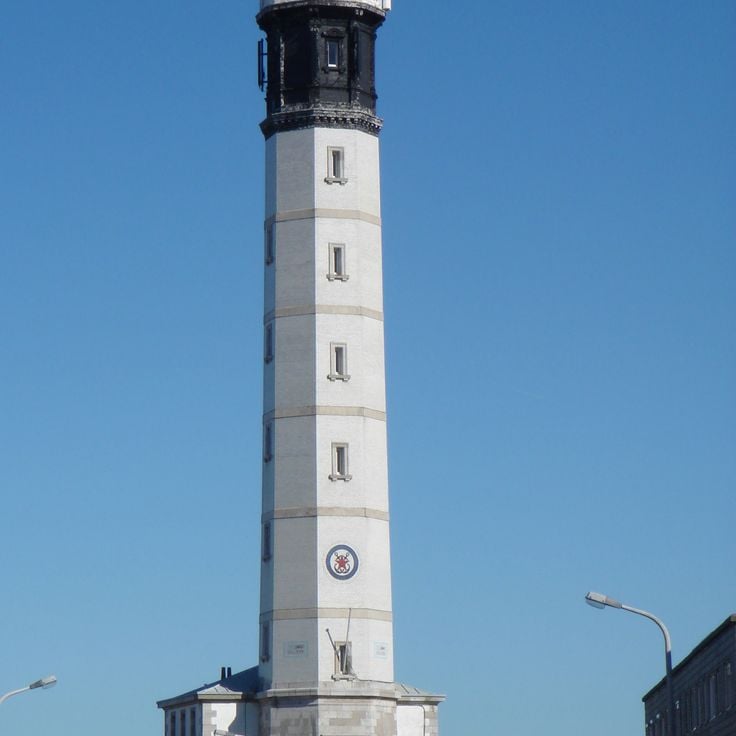
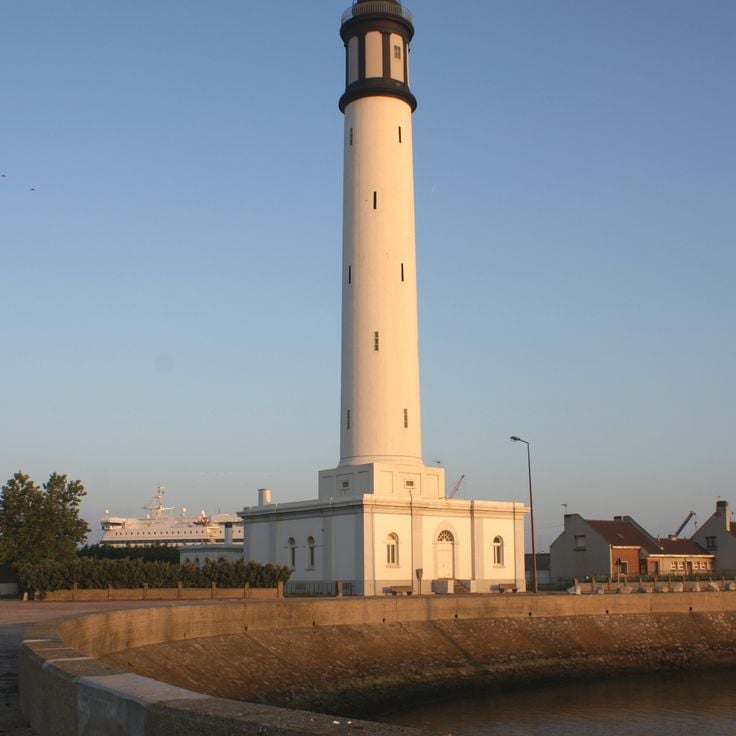
The Calais lighthouse has stood at the harbor entrance since 1848, serving as a navigation aid for Channel shipping. The octagonal tower of white stone rises 51 meters (167 feet) above sea level and marks one of Europe's busiest shipping routes. The structure combines functionality with the typical architecture of 19th-century French coastal beacons and remains an important reference point for maritime safety in this region.
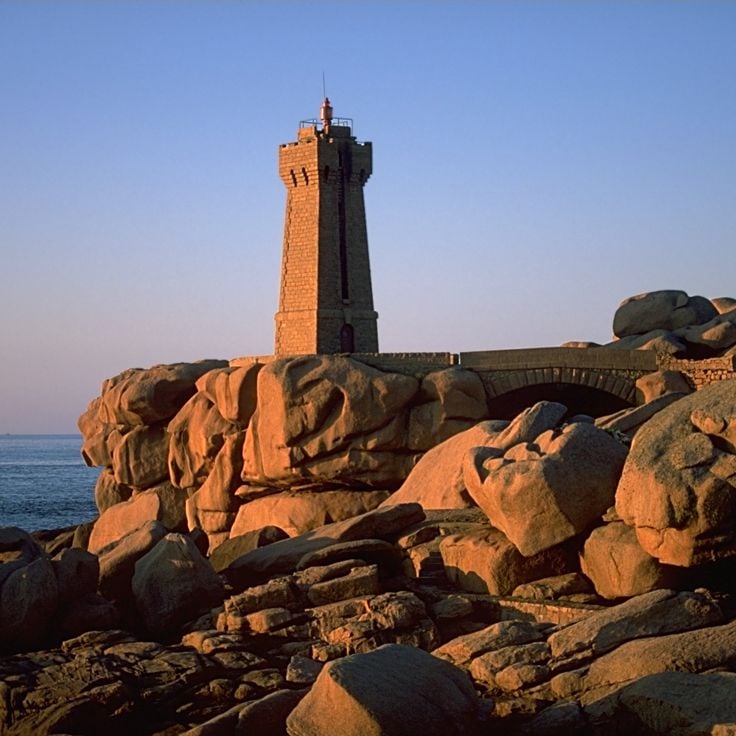
This lighthouse built with pink granite dates from 1946 and guides vessels along the Breton coast of granite rock formations. The 50-foot (15-meter) tower projects its beam up to 19 miles (30 kilometers) across the sea. It sits on a rocky promontory in the commune of Perros-Guirec and marks the northern boundary of Lannion Bay. The structure uses local granite that gives this coastal section its characteristic pink hue. The lighthouse continues to serve its original navigation purpose for maritime traffic in the English Channel.
This 17th-century lighthouse remains the oldest operational lighthouse in France. Built on a rocky plateau in the sea, it measures 223 feet (68 meters) and contains seven floors.
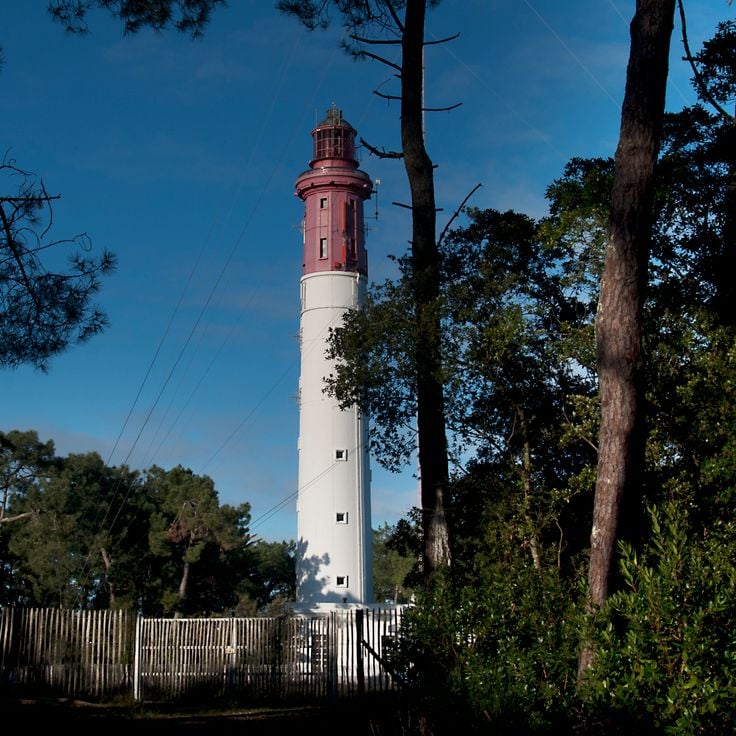
This cylindrical tower from 1840 rises 170 feet (52 meters) above the Arcachon Basin, marking the southern flank of the channel entrance. Built from limestone and brick masonry, the structure sends its signal across the waterway that connects the Atlantic to the sheltered inland waters. Visitors can climb the 258 steps to examine the optical apparatus and view the Dune du Pilat, the peninsula and the oyster beds below.
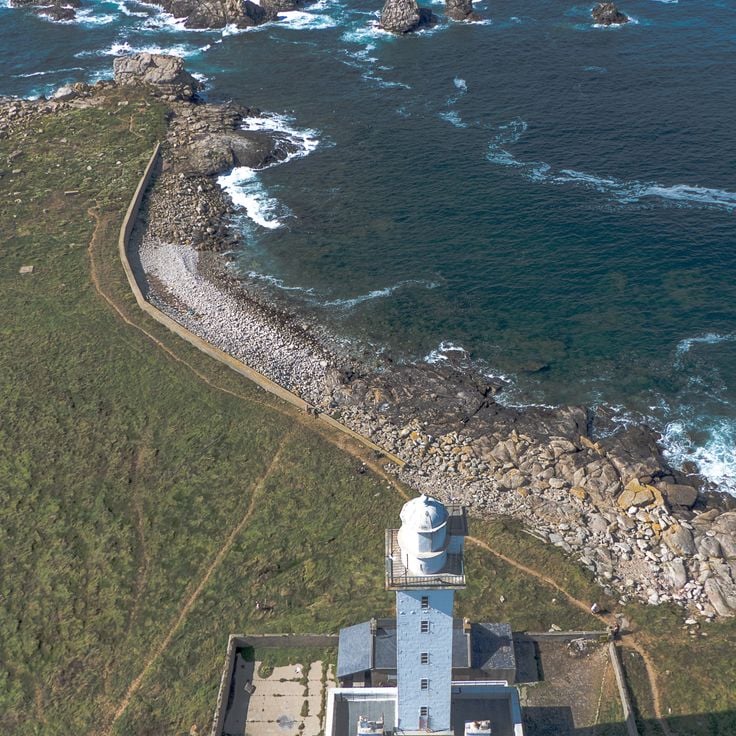
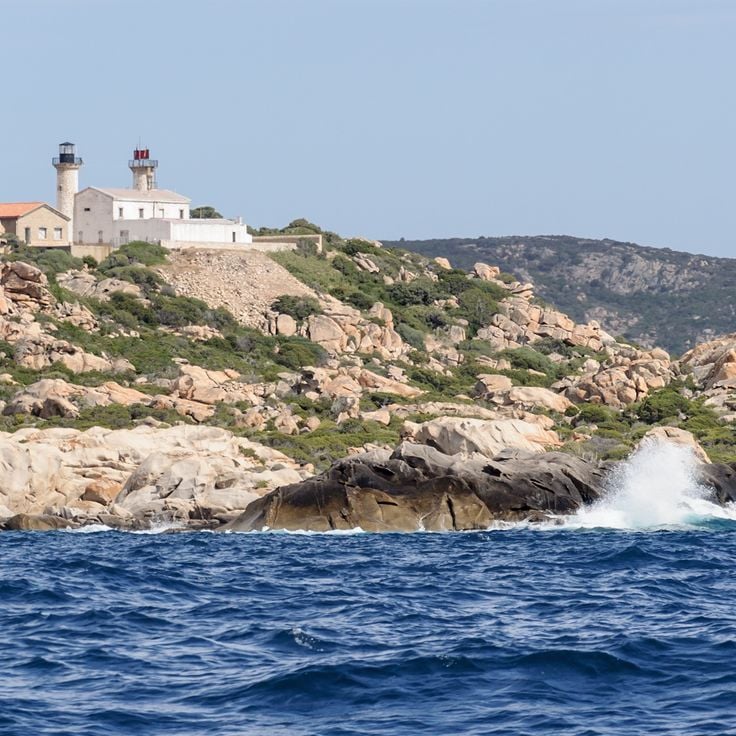
The Phare de Senetosa stands on a rocky promontory along the southwestern coast of Corsica, marking one of the most exposed sections of the French Mediterranean coastline. This 17-meter (56-foot) cylindrical granite tower was built in 1892 to secure navigation along this rugged shore. The construction follows standard techniques used for Mediterranean coastal lighthouses of that era, with solid granite stone walls designed to withstand frequent storms. The lighthouse sits on a headland near the southern tip of the island and has served as a navigational aid for more than a century for vessels traveling between Corsica and Sardinia.
This 184-foot (57-meter) limestone tower stands at the western tip of Île de Ré and has guided shipping since 1854. The installation sends three white flashes every 15 seconds, marking the entrance to the Pertuis Breton. Visitors can climb the 257 steps to the viewing platform, which offers views across the Atlantic, neighboring Oléron Island and the Poitou coastline. The old tower from 1682 still stands beside the newer structure and can also be visited.
The Feu de Saint-Pol is an 18-meter (59-foot) metal structure built in 1869 on the harbor jetty in Dunkirk. The light marks the entrance to the harbor basin and serves as a navigational aid for vessels approaching the access channel. The structure belongs to a category of functional light stations installed along the French Channel coast during the 19th century. Saint-Pol stands at the eastern end of the Dunkirk harbor complex, where the light continues to operate as an active navigational aid for maritime traffic.
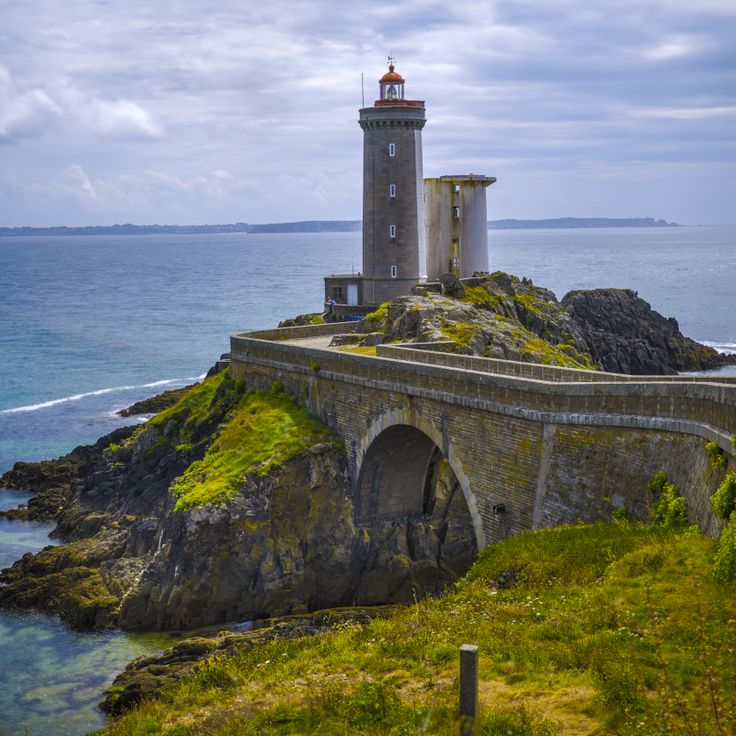
This lighthouse was built in 1848 on the coast of Plouzané and has marked the entrance to the Brest roadstead for over 170 years. The stone tower rises 27 meters (89 feet) above sea level and sits on a rocky promontory that becomes cut off from the mainland at high tide. The square design distinguishes it from most round lighthouses along the Breton coast. A stone footbridge connects the tower to the shore and provides access at low tide. The beacon continues to send navigation signals to vessels entering one of France's major military and commercial ports. The location offers a direct view of the narrows through which all shipping traffic to Brest must pass.
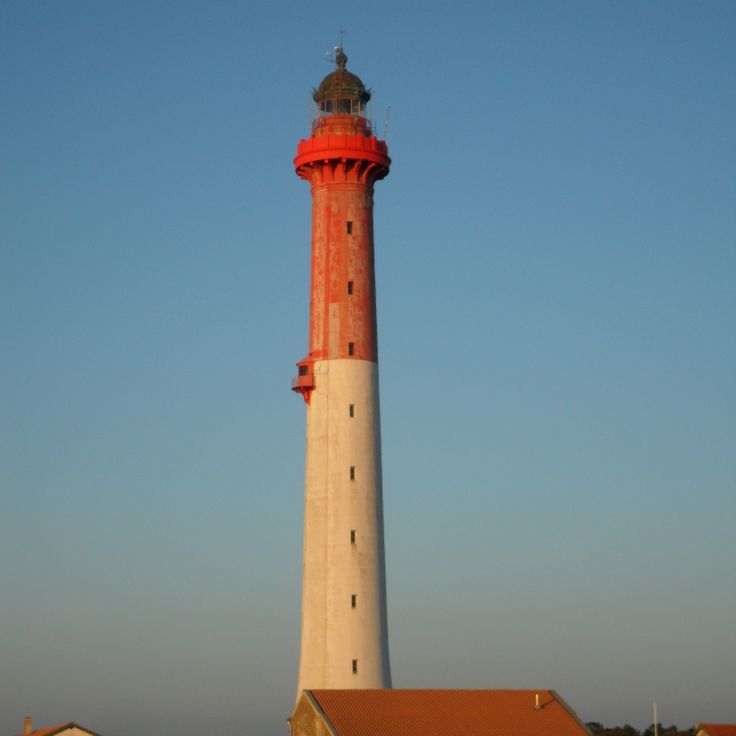
The Phare de la Coubre rises 64 meters above the Arvert peninsula on the Atlantic coast and has marked the entrance to the Gironde estuary since 1905. This white masonry tower rests on a conical base and was constructed after the collapse of its predecessor, which fell victim to coastal erosion. The lighthouse optic projects its signal up to 32 miles (52 kilometers) out to sea, warning vessels of the dangerous sandbanks along the Côte Sauvage. The structure stands within the La Coubre state forest, a coastal pine woodland planted in the 19th century to stabilize the dunes. The lighthouse is open to visitors, with 300 steps leading to the observation platform.
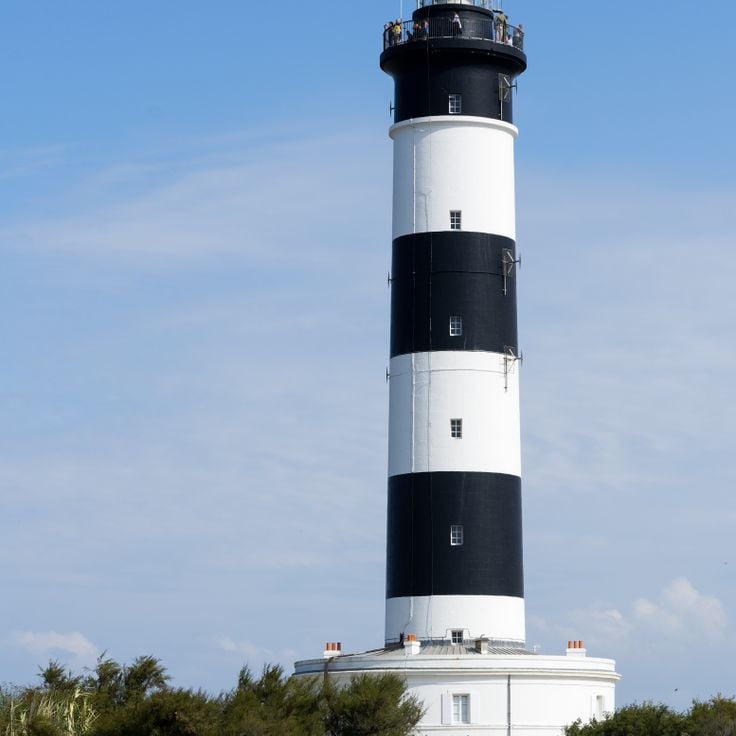
This lighthouse has marked the northern tip of Île d'Oléron since 1836, guiding vessels entering the Charente estuary. The 151 feet (46 meters) stone tower rises from a rocky promontory on the Atlantic coast, painted in horizontal black and white bands. The lantern was renovated in 1895 and remained staffed by keepers until automation in the late 20th century. The structure aids navigation along the Charente-Maritime coastline, where currents and shoals complicate shipping. The tower is open to visitors and offers views from its gallery across the island, the Bay of Aix, and on clear days to the mainland coast.
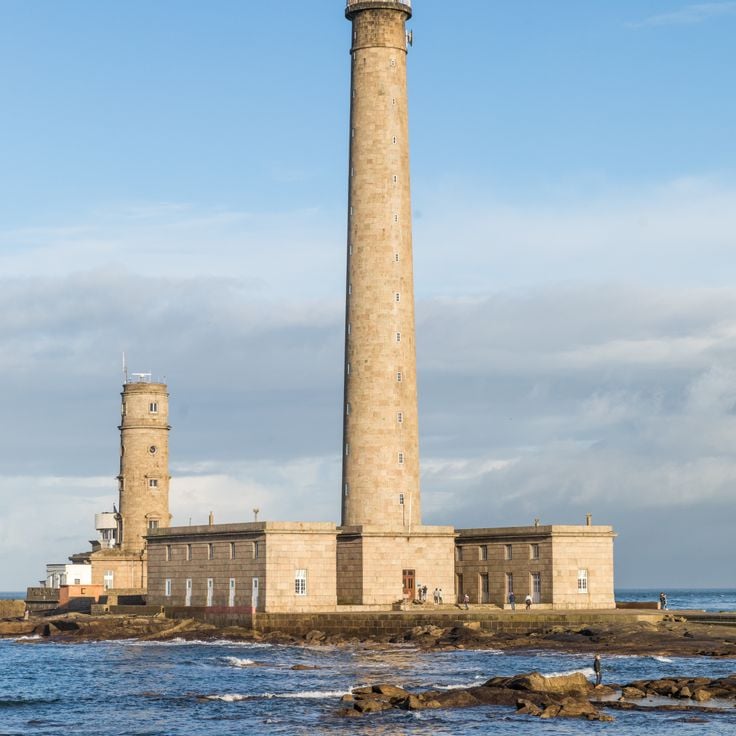
The Gatteville Lighthouse has stood since 1834 at the northern tip of the Cotentin Peninsula, rising 75 feet (23 meters) from its granite base. Built following numerous shipwrecks in this exposed passage between the English Channel and the Atlantic, the tower houses an interior spiral staircase with 365 steps leading to the lantern room that continues to monitor coastal waters. The structure ranks among the tallest lighthouses in France and opens for visits during scheduled hours, with the climb offering views across the Norman coastline.
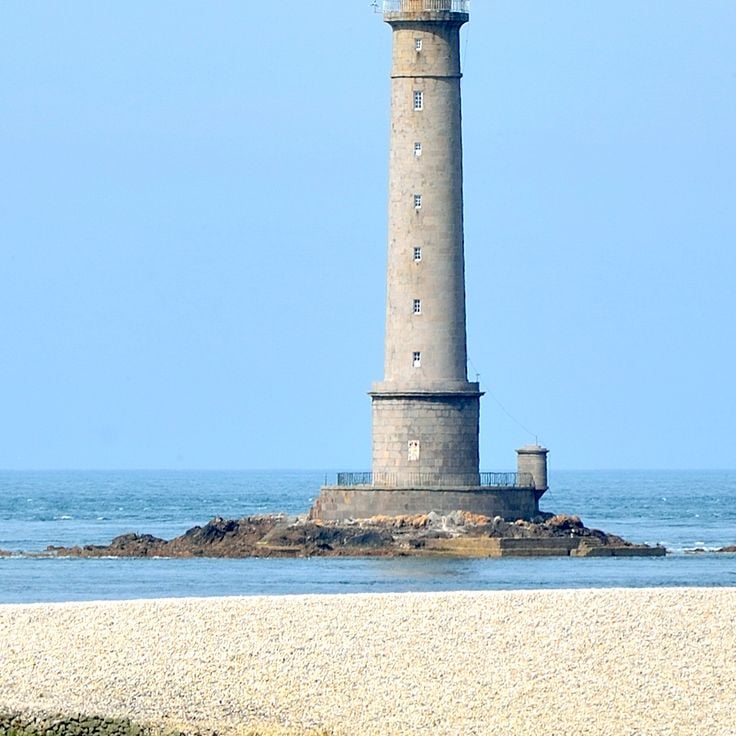
This lighthouse was built in granite in 1837 on the rocky point of Gros du Raz. The Phare de Goury has served for nearly two centuries as a navigation marker through the Raz Blanchard, one of Europe's most challenging straits between the English Channel and the Atlantic, where powerful tidal currents reach speeds of up to 9 knots (17 km/h) and complicate vessel passage. The structure stands 85 feet (26 meters) tall and sits directly beside the local sea rescue station.
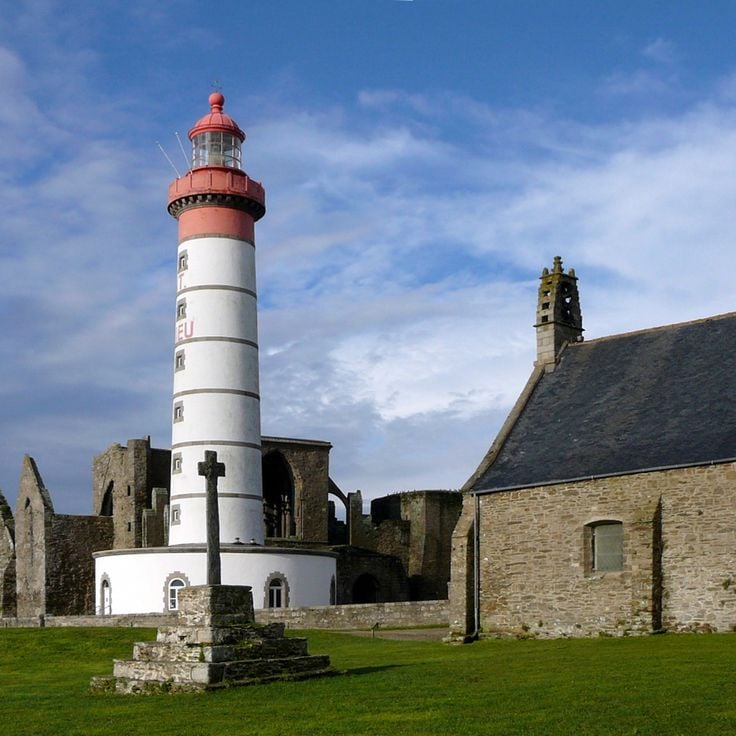
This square tower was built in 1835 adjacent to the ruins of a 12th-century Benedictine abbey and reaches a height of 121 feet (37 meters). The Phare de Saint-Mathieu marks the entrance to the Brest roadstead at the western tip of Brittany and stands on a strategic rocky promontory above the Atlantic. The construction in local granite stone integrates with the historic monastic site, whose remains create one of the most distinctive lighthouse locations in France. The tower remains in operation as an active maritime beacon and offers views across the coastal waters and adjacent ruins from its platform.
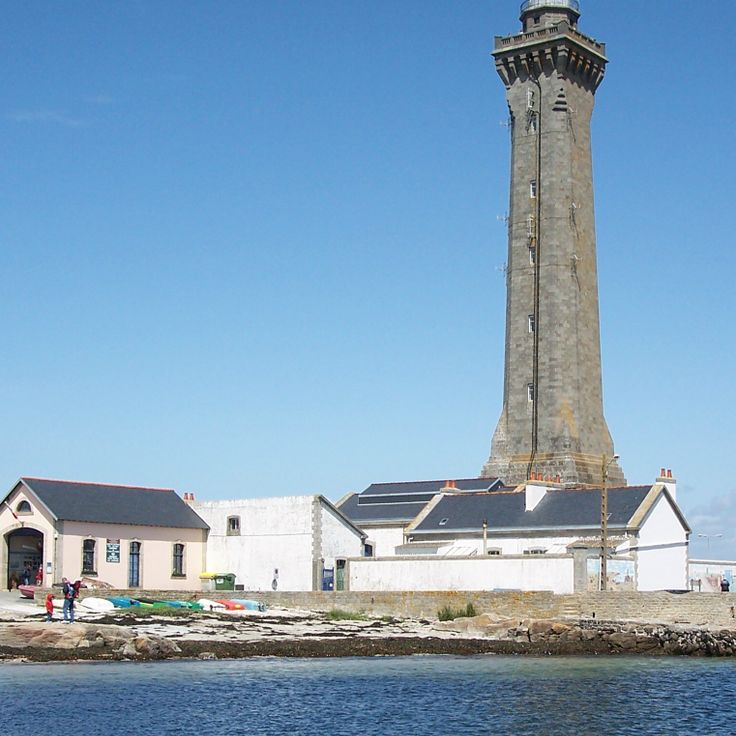
This lighthouse rises as an octagonal tower reaching 213 feet (65 meters) on the Breton coast and was built in 1897 at Penmarc'h using granite. The Marquise de Blocqueville financed the construction, which was named after the Battle of Eckmühl. 307 steps lead to the lantern gallery, where the beacon projects 31 miles (50 kilometers) across the Atlantic and secures navigation along this exposed stretch of coastline. The facility remains operational and can be visited, with the climb allowing visitors to discover the technical equipment and functioning of the maritime signaling station.
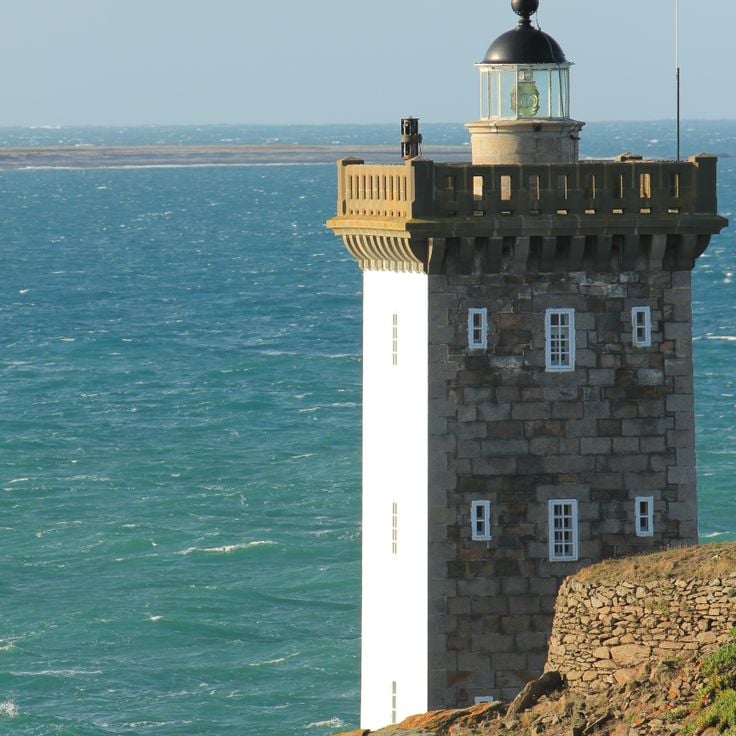
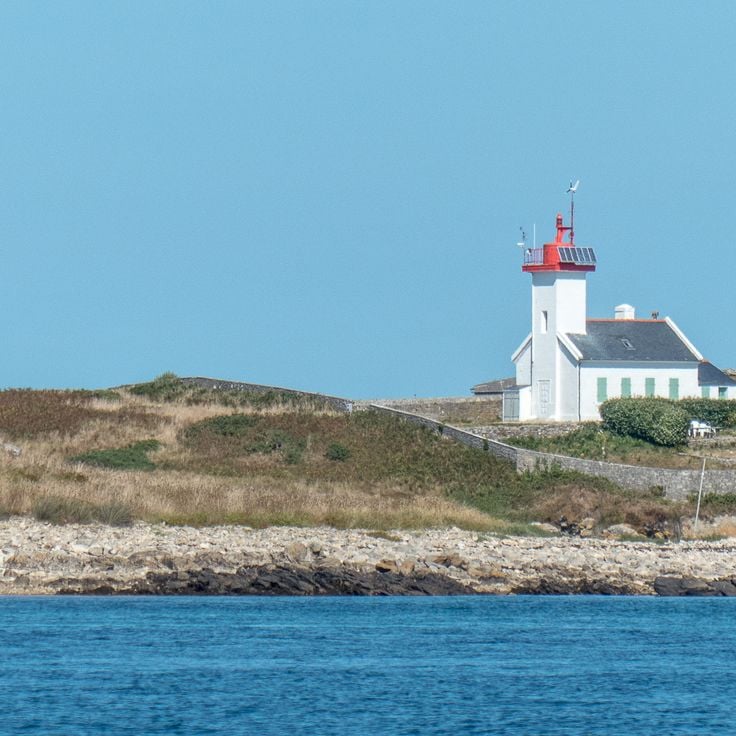
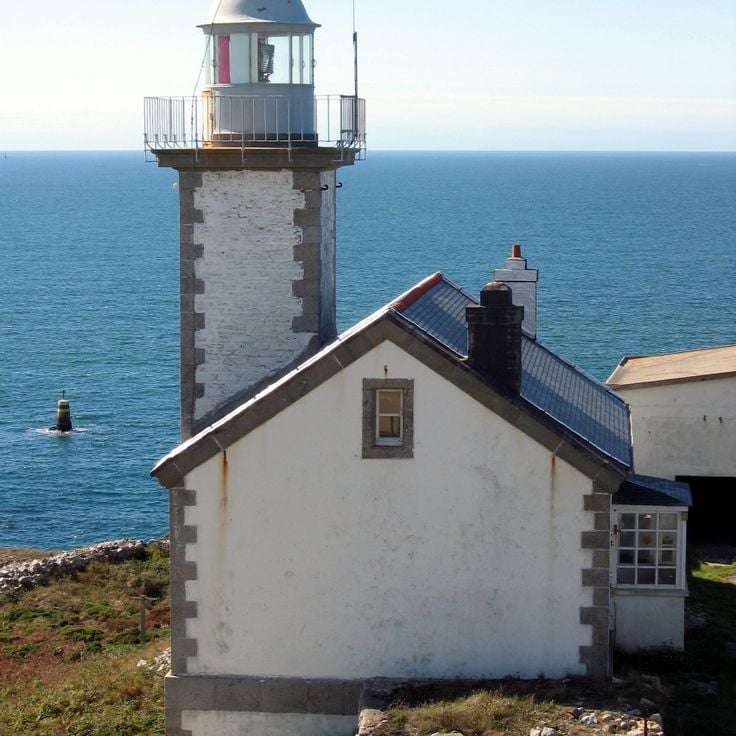
This white lighthouse stands on the Kermorvan peninsula at the entrance to the bay of Le Conquet. The cylindrical tower rises 66 feet (20 meters) and was built in 1849 using granite blocks, marking the northern approach to the harbor. The facility includes the tower and an adjacent keeper's house that was occupied until the light was automated. From this position, the structure monitors the waters between the peninsula and the offshore islands of the Molène archipelago. The lighthouse remains operational and emits a white flashing light to guide maritime traffic.
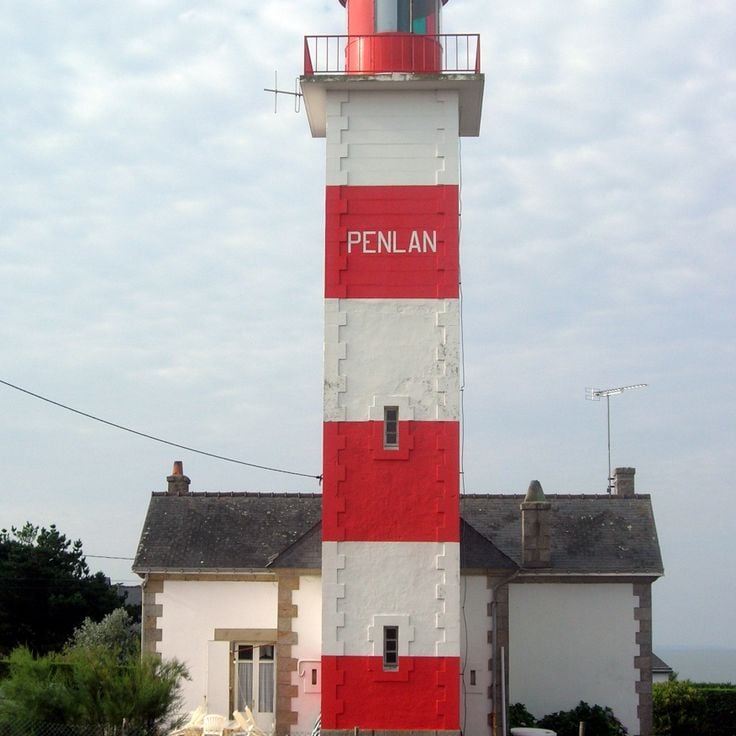
This white tower has marked the entrance to the Vilaine estuary since 1887 on the southern Brittany coast. The Pen-Lan lighthouse stands on an exposed point, sending its signals across the waters between the Gulf of Morbihan and the open Atlantic coastline. The construction follows the standards of late 19th-century maritime safety installations and serves navigation in these waters characterized by shoals and currents. The tower ranks among the functional coastal beacons guiding vessel traffic along the southern Brittany shore.
The Planier lighthouse stands on a barren rock island roughly 8 miles (13 kilometers) southwest of Marseille, marking the approach to the city's harbor. The current concrete structure was built in 1944 after German forces destroyed the original tower during World War II and rises approximately 200 feet (60 meters) in height. The octagonal tower houses an automated light with a range of about 28 nautical miles. Its exposed position on the uninhabited rock plateau makes Planier one of the most isolated lights on the French Mediterranean coast. The site is accessible by boat, though landing depends on weather conditions.
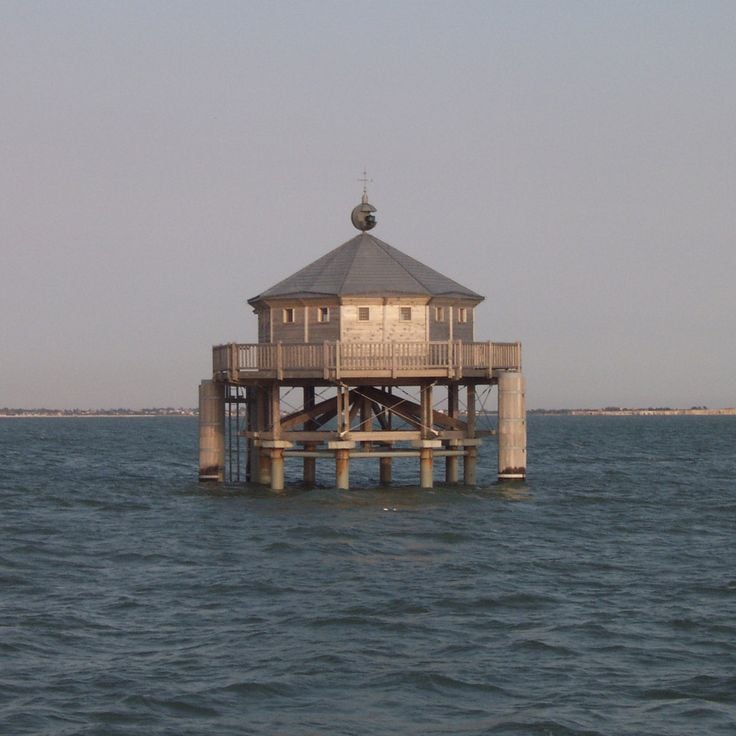
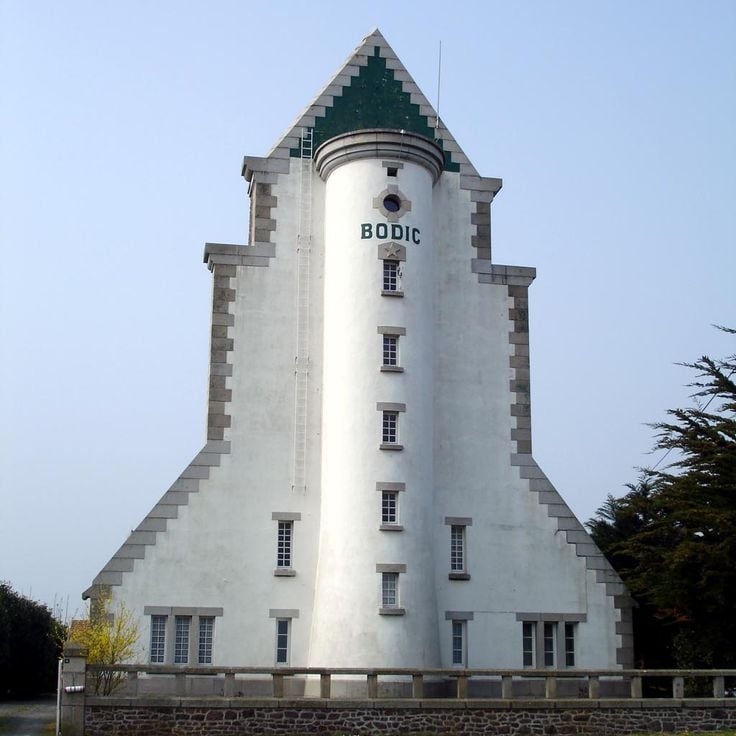
The Bodic lighthouse has marked the entrance to the Trieux estuary in Côtes-d'Armor since 1867. This structure combines a cylindrical tower with a trapezoidal facade and belongs to the maritime installations built during the 19th century to secure the Breton coastal waters. Its position enables orientation in this estuary area, where navigation requires specific knowledge of local currents.
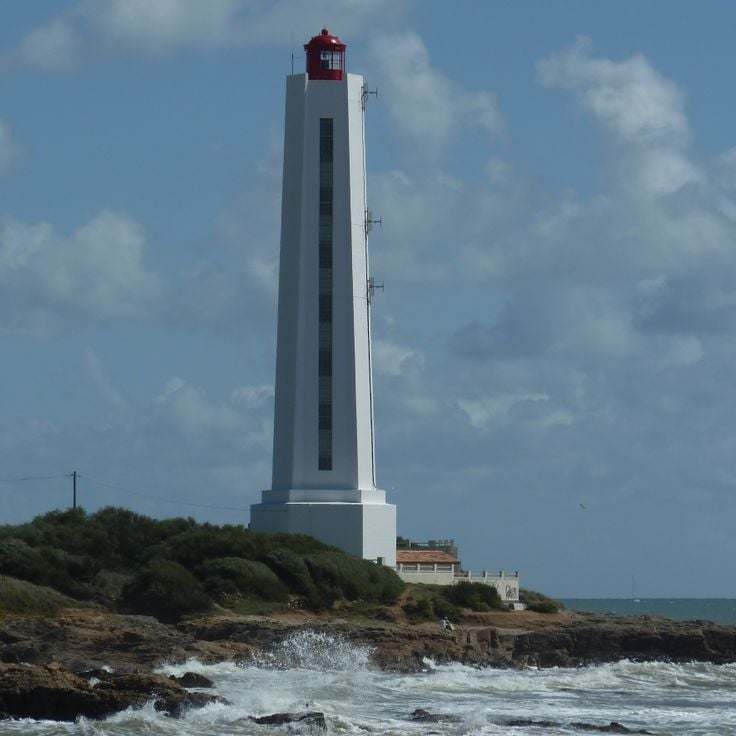
The Armandèche lighthouse was built in 1968 to mark the entrance to the harbor at Les Sables-d'Olonne on the French Atlantic coast. This 128-foot (39-meter) square concrete tower carries an automated lantern whose signal reaches 17 miles (28 kilometers) out to sea. The modern structure replaced earlier beacons and continues to guide navigation along this busy coastal stretch where fishing vessels and recreational craft operate year-round.
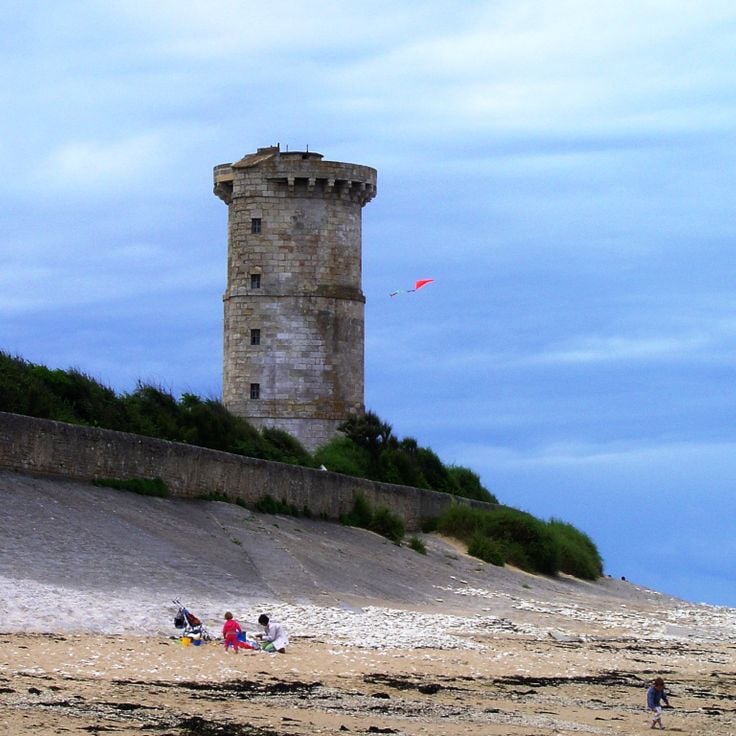
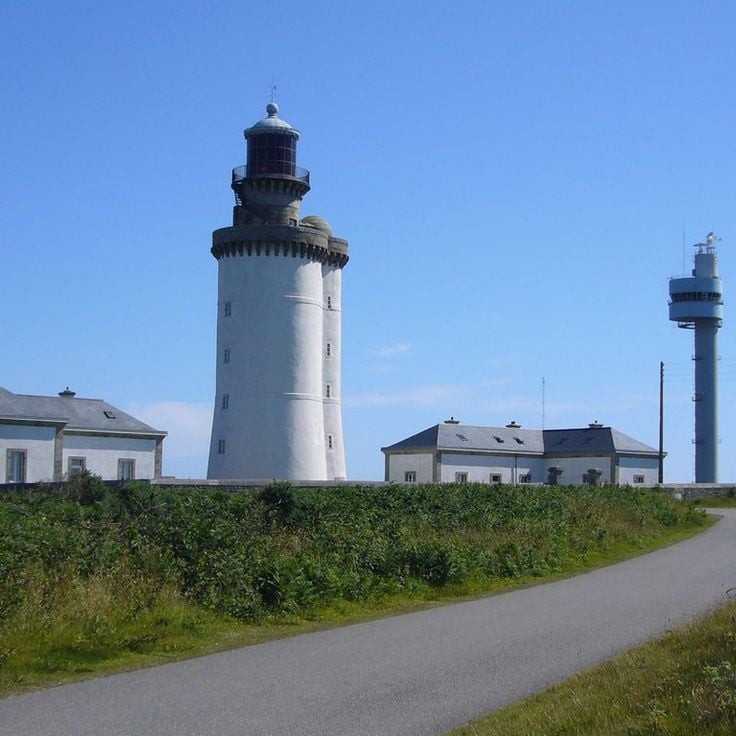
The Phare du Stiff was built in 1695 on the island of Ouessant and stands 108 feet (33 meters) tall, making it the oldest active lighthouse in Brittany. Commissioned by Vauban, it has marked the northwestern approach to the English Channel and the dangerous waters surrounding the island for over three centuries. The tower has undergone several modernizations and has operated fully automated since 1996. Its exposed position at the western tip of France made it a strategic structure for maritime traffic between the Atlantic and the English Channel.
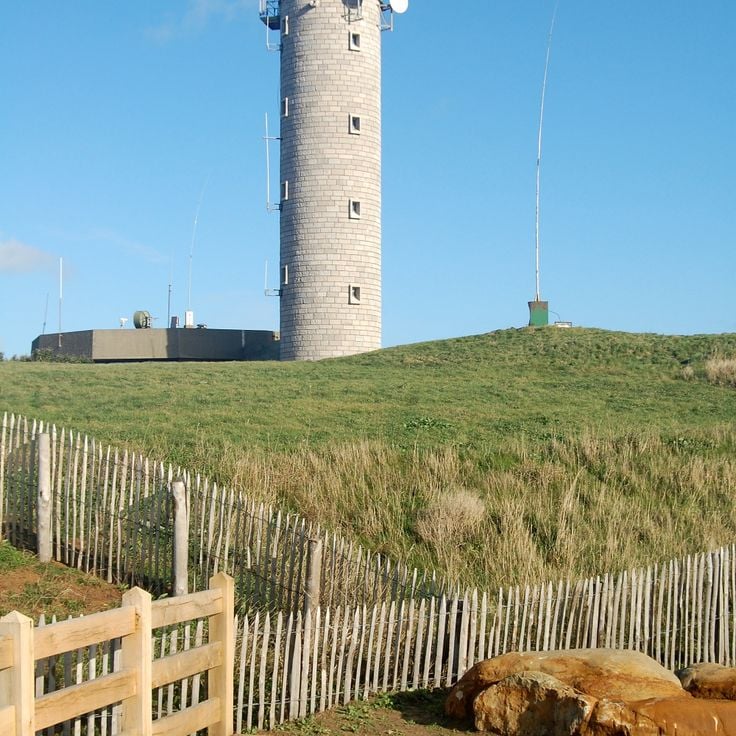
This gray granite lighthouse rises 37 meters (121 feet) at the western tip of Brittany. Built in 1894, the square tower stands on the Trezien peninsula and marks the dangerous waters off the coast of Plouarzel. An interior staircase of 182 steps leads to the lantern that once warned vessels navigating between the English Channel and the Iroise Sea. The granite construction follows the typical design of Breton coastal lights from the late 19th century, when the French maritime service expanded its signaling system along these rocky shorelines.
This lighthouse, built in 1845, stands as a cylindrical stone tower reaching 15 meters (49 feet) in height at the entrance to the Aber-Wrac'h. The structure, made from cut stone blocks, marks the approach to this tidal river along the northern coast of Brittany. The facility has been modernized with solar power and continues to serve its original function as a navigational aid for vessels entering this section of coast characterized by rocks and shallow waters.
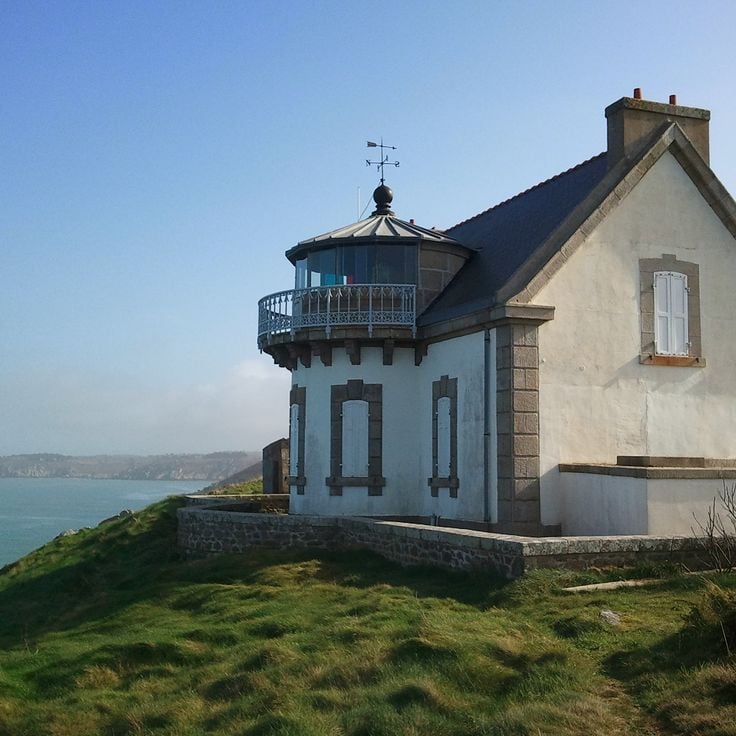
The Phare du Toulinguet was built in 1848 on the Crozon Peninsula and has guided vessels through the Brest roadstead for over 170 years. The 56-foot (17 meter) tower stands on a rocky promontory along the western coast of Brittany, marking the southern approach to one of France's major naval bases. The structure consists of the lighthouse proper and an adjoining keeper's dwelling, both constructed from local granite. The location provides a commanding view of the passage between the open Atlantic and the sheltered waters of Brest harbor, a route heavily trafficked by commercial and military vessels.
The Cap Fréhel lighthouse has stood on a 230-foot (70-meter) cliff along the Breton Emerald Coast since 1950, marking one of the most prominent points on the French northern coastline. Its pink granite tower rises 108 feet (33 meters), placing the beacon at a total elevation of 338 feet (103 meters) above sea level. This structure replaced an earlier lighthouse built in 1847 that sustained damage during World War II. With a range of 34 miles (55 kilometers), this lighthouse ranks among the most powerful navigational aids in Brittany, securing passage along a stretch of coast where tides generate strong currents. The 145 steps lead to the viewing platform, which offers views across the Bay of Saint-Malo, the offshore islands and the surrounding heathland.
This lighthouse on the Pas-de-Calais coast stands on a 165-foot (50-meter) cliff between Calais and Boulogne-sur-Mer. The concrete tower, built in 1957, rises 236 feet (72 meters) and sends its signal across 29 nautical miles (54 kilometers). Cap Gris-Nez marks the narrowest point of the English Channel, just 17 miles (28 kilometers) from the English coast. The lighthouse guides maritime traffic through one of Europe's busiest shipping lanes and can be visited by appointment.
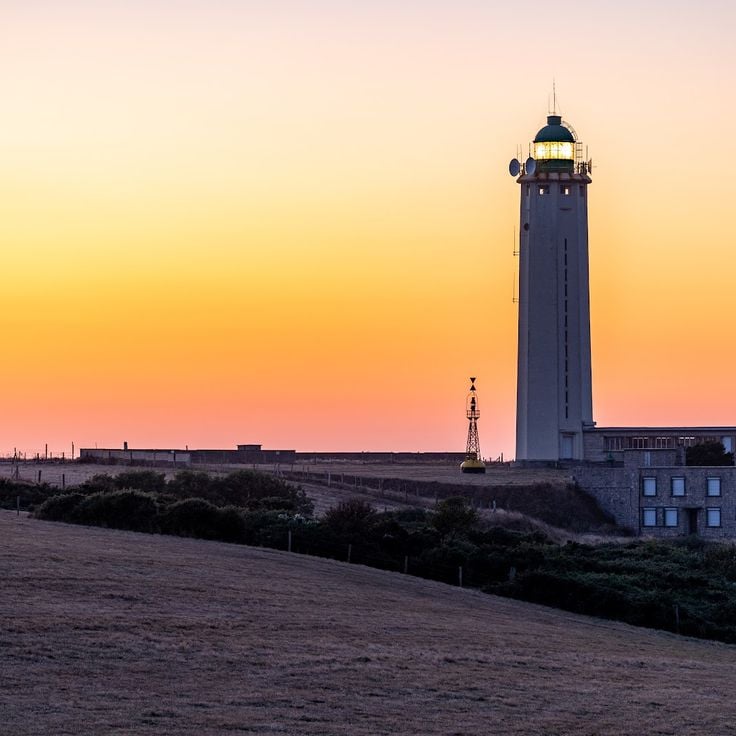
The Antifer lighthouse was built in 1894 on the steep cliff of Cap d'Antifer in Normandy and marks one of the key navigation points along the Alabaster Coast between Le Havre and Fécamp. This 102-foot (31-meter) tower of pale limestone stands 367 feet (112 meters) above sea level and has been sending its light signals up to 29 nautical miles across the English Channel for more than a century. The lighthouse's exposed position above the rugged chalk cliffs illustrates the engineering challenges of building maritime infrastructure along this windswept coast, where geological formations face erosion and strong currents.
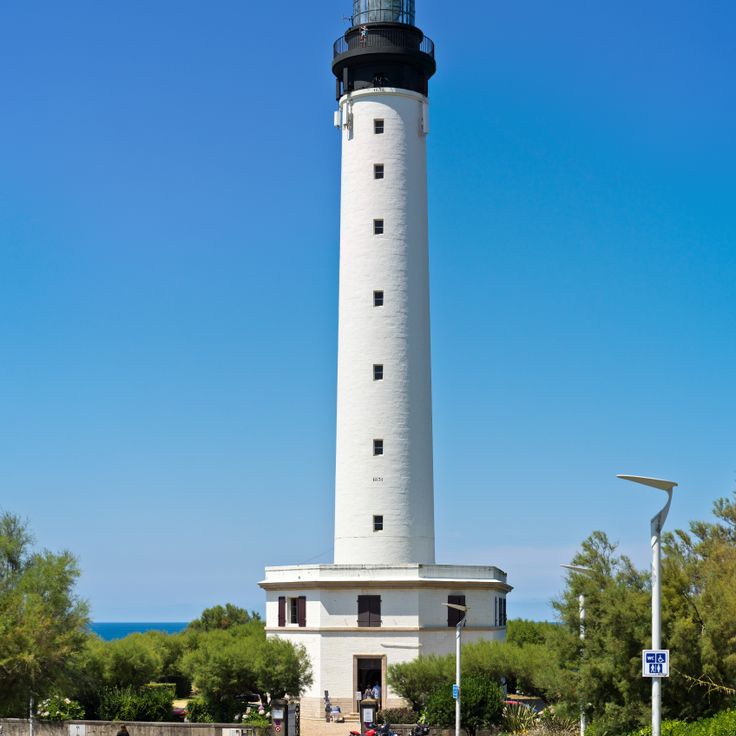
The Biarritz lighthouse has marked the Pointe Saint-Martin since 1834, guiding maritime traffic along the Basque coast. The 144-foot (44-meter) stone tower stands on a rocky promontory overlooking the Bay of Biscay. Its optical system projects a white flashing light with a range of 26 nautical miles. A spiral staircase of 248 steps leads to the observation platform, offering views from the Pyrenees to the Landes coastline. The lighthouse remains in active operation and opens to the public on selected days. The surrounding cliffs and beaches rank among the most visited sites in the city.
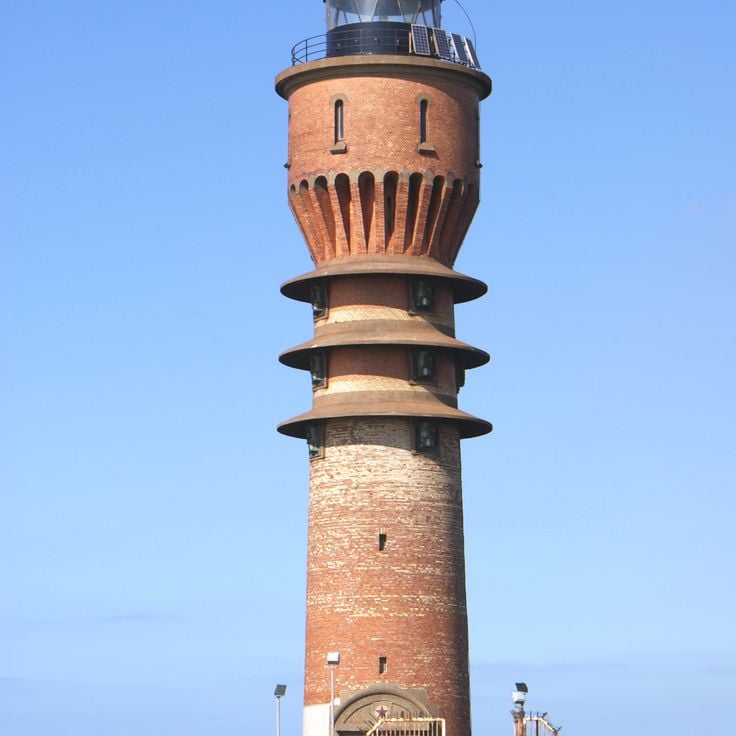
The Dunkerque lighthouse has stood since 1843 on a jetty at the entrance to the harbor of this northern French city on the English Channel. The 207-foot (63-meter) brick tower with its octagonal form replaced a smaller eighteenth-century lighthouse and marks the approach to one of the most important commercial ports on the French coast. The facility still serves active navigation and its construction follows the typical building methods of nineteenth-century lighthouse projects. The structure documents the maritime history of the region and its importance for sea trade between France and northern Europe.
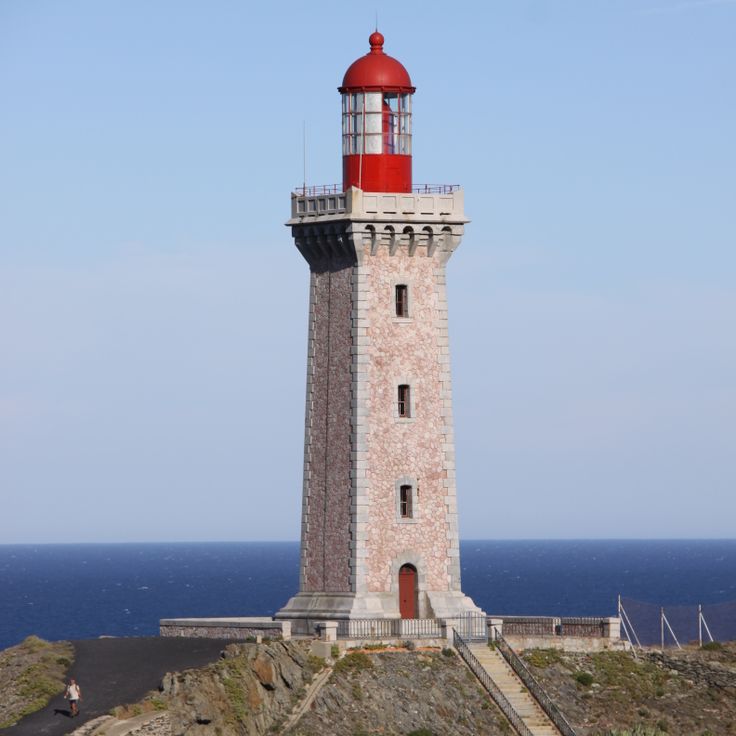
The Cap Béar lighthouse has stood since 1905 on a limestone promontory 260 feet (80 meters) above the Mediterranean, marking the southern boundary of the Côte Vermeille. Its 85-foot (26-meter) white masonry tower was fitted with a third-order Fresnel lens that provides guidance to vessels traveling routes between Spain and the Gulf of Lion. The facility includes the main structure with adjoining keeper quarters and technical rooms housing electrical equipment that replaced the original petroleum lamps in the 1950s. Access is via a narrow road from Port-Vendres, and visitors can climb the tower and examine the machinery during scheduled opening periods.
This stone tower was built in 1842 on Pointe du Millier at the western end of the Baie de Douarnenez, along the southern coast of Cap Sizun. The 79-foot (24-meter) structure, constructed from local granite, stands at the edge of a cliff above the Atlantic and has sent its signal for more than 180 years, securing passage between the mainland and Île de Sein. The lighthouse can be reached via a coastal footpath from the village of Beuzec-Cap-Sizun and provides access to one of the most rugged stretches of the Breton coast.
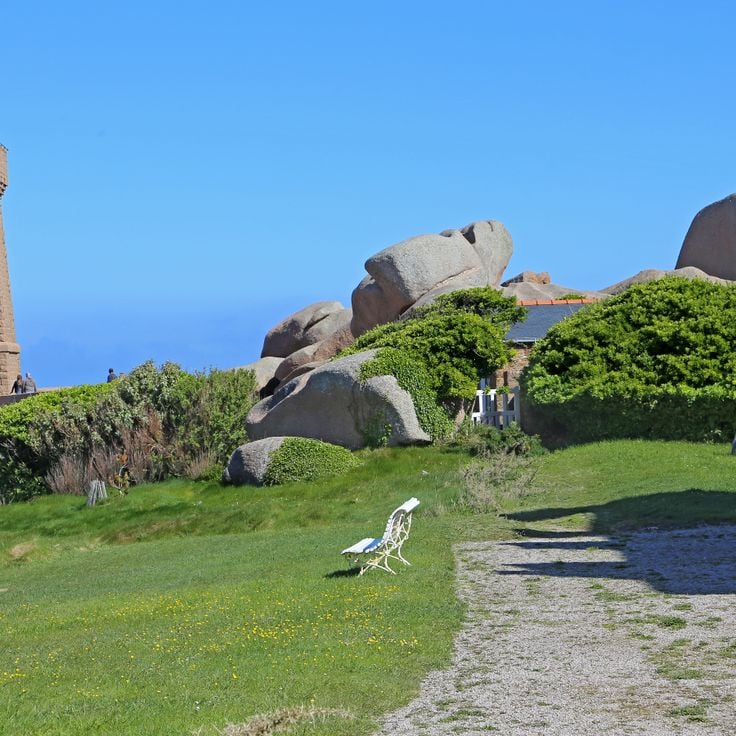
This lighthouse built of reddish granite was erected in 1946 at Pointe de Squewel and overlooks the Côte de Granit Rose. The 49-foot (15-meter) tower stands on a rocky promontory among the characteristic granite formations of Ploumanac'h and marks the entrance to the harbor. The structure replaces an earlier wooden lighthouse from the nineteenth century and remains in operation as an active navigation aid. Access is via the coastal footpath GR 34, which connects the main granite rock formations of the region.
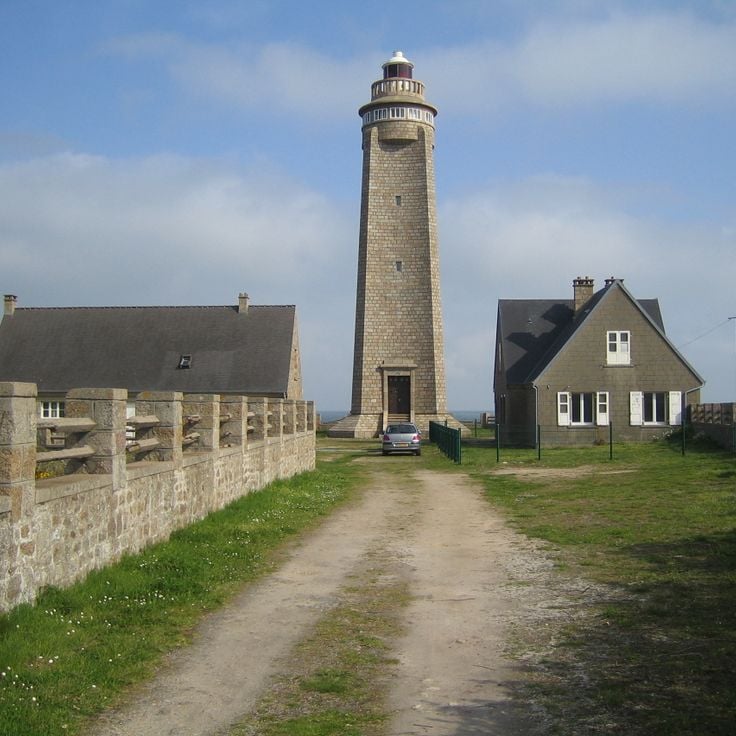
The Cap Lévi lighthouse has stood since 1858 on a 131-foot (41-meter) cliff at the northern tip of the Cotentin Peninsula, marking the approach to the Cherbourg roadstead. This 107-foot (32.7-meter) granite tower served for centuries as a critical navigation aid for vessels crossing the English Channel. The compound includes several outbuildings that once housed the keepers and their families. The light, originally oil-powered, reaches approximately 25 nautical miles and was converted to electric operation in 1990.
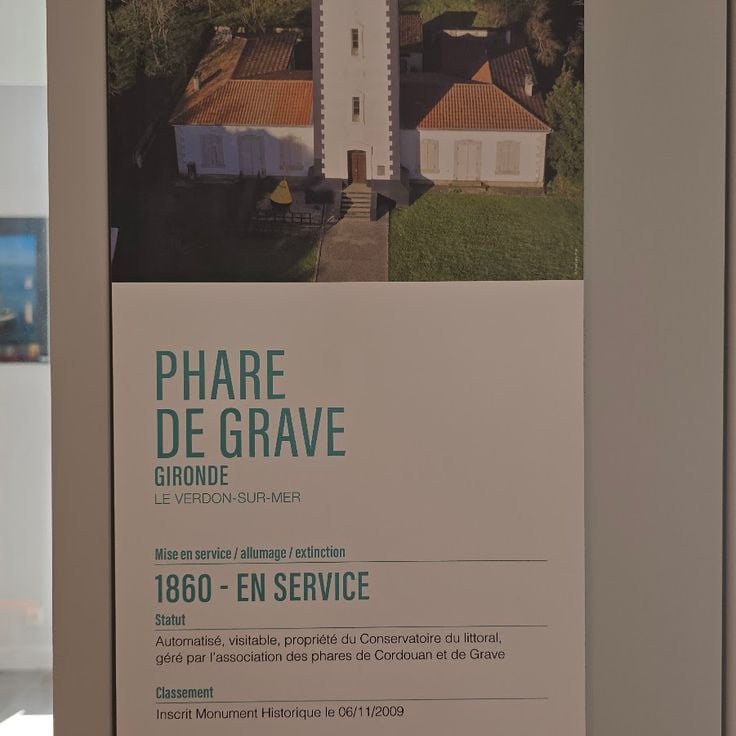
The Phare de Grave has stood since 1860 at the northern entrance to the Gironde estuary, marking the approach to the port of Le Verdon. This 95-foot (29-meter) lighthouse in pale masonry was built to secure navigation along one of France's busiest shipping routes. Its white cylindrical form with horizontal red bands makes it visible across the Atlantic coastline. The structure remains operational and continues to serve as a landmark for vessels passing between Royan and the Médoc peninsula.
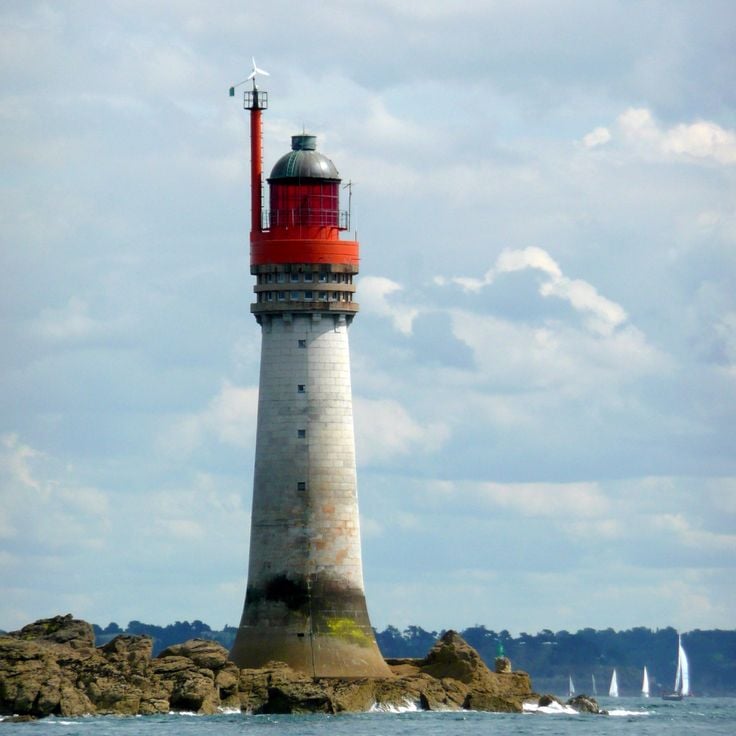
The Grand Jardin stands off the coast of Saint-Malo and has marked the approach to the bay since 1865. This 89-foot (27-meter) granite lighthouse was built on an isolated reef and warns vessels of the dangerous shallows in the shipping channel. The structure follows the classic French lighthouse design with a cylindrical form and a cast iron lantern room. The facility sits roughly 2.5 miles (4 kilometers) from the harbor entrance and projects its light signal across 18 nautical miles. Automation came in 1979, ending the permanent crew assignment. The lighthouse remains active for maritime traffic in this busy stretch of water between the Rance estuary and the outlying islands.
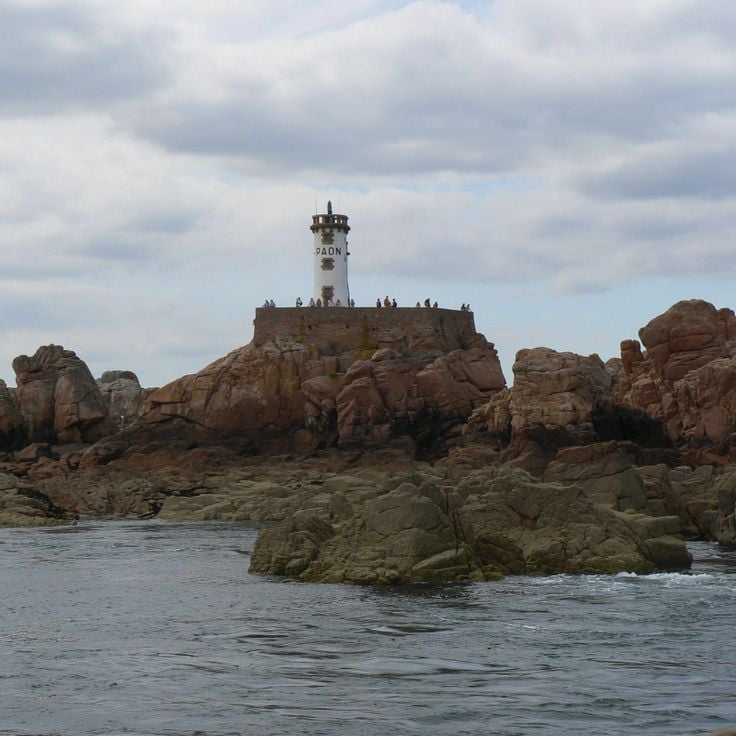
The Paon Lighthouse stands on Île de Bréhat off the coast of Brittany and has marked the western entrance to the archipelago since 1860. The 72-foot (22-meter) pink granite tower was built on the island's highest point and serves as an essential navigation aid for vessels traveling between the mainland and the archipelago of ninety small islands. The structure blends into the island's characteristic granite landscape, whose pink-hued rocks have earned it the nickname "Island of Flowers." The lighthouse is accessible by boat from the mainland and sits about a 10-minute walk from the island's main harbor. The facility operates automatically and is not open to visitors, though it offers a good vantage point over the coastline from outside.
This lighthouse has stood on an isolated rock off Ouessant since 1911, where the sea ranks among the roughest in Europe. The 47-meter (154-foot) cylindrical granite tower was built over seven years under extreme conditions and had to withstand waves reaching up to 20 meters (66 feet) in height. The construction required specialized anchoring techniques into the rock and reinforced foundations against the Atlantic's force. The Phare de la Jument remains one of the most technically demanding offshore structures on the French coast and serves as one of the most striking examples of lighthouse engineering under extreme maritime conditions. The station was manned by keepers until 1991 and now operates automatically.
This full-scale replica of the Les Eclaireurs lighthouse from Tierra del Fuego stands in La Rochelle. The reproduction reaches 36 feet (11 meters) in height and replicates the architecture of the late 19th-century Argentine original. The structure was built as a tribute to the Argentine lighthouse erected on the Beagle Channel near Ushuaia. The La Rochelle lighthouse serves as a landmark on the harbor grounds and recalls the maritime connection between the French Atlantic coast and South American waters.
This 270-foot maritime tower built in 1902 rises from the waters off the coast of Plouguerneau and stands as the tallest stone lighthouse in Europe. The structure uses white granite in a cylindrical form with a spiral staircase of 397 steps leading to the top. Construction took six years and required transporting materials by sea to the small island. The lighthouse emits a white light with a range of approximately 27 nautical miles (50 kilometers), marking the Lividic rocks and the northwestern coast of Brittany. Inside, opal glass panels line the walls and equipment remains from the days when keepers maintained the station. Visitors can climb the tower after a boat crossing from Lilia harbor and reach the platform for views over the Finistère coastline. The structure replaced an earlier 1845 tower and continues to operate today as an active navigational aid.
The Phare de la Vieille stands on a rock formation off the Raz de Sein, where Atlantic currents meet with particular intensity. Built between 1882 and 1887 from granite, this octagonal tower reaches 89 feet (27 meters) in height. The exposed location made construction technically demanding and required a robust design capable of withstanding regular storm surges. The lighthouse remains operational and serves as a maritime reference point in one of the busiest shipping routes along the Breton coast.
The Phare du Créac'h stands on the western tip of Ouessant Island and has monitored one of Europe's busiest shipping lanes since 1863. This square granite tower rises 54 meters (177 feet) and projects a beam with a range of 60 kilometers (37 miles), guiding vessels through the Ouessant Traffic Separation Scheme. The facility also houses a museum dedicated to lighthouses and maritime beacons, documenting the history of maritime signaling. The lighthouse remains an active navigational aid for international maritime traffic.
The Calais lighthouse has stood at the harbor entrance since 1848, serving as a navigation aid for Channel shipping. The octagonal tower of white stone rises 51 meters (167 feet) above sea level and marks one of Europe's busiest shipping routes. The structure combines functionality with the typical architecture of 19th-century French coastal beacons and remains an important reference point for maritime safety in this region.
This lighthouse built with pink granite dates from 1946 and guides vessels along the Breton coast of granite rock formations. The 50-foot (15-meter) tower projects its beam up to 19 miles (30 kilometers) across the sea. It sits on a rocky promontory in the commune of Perros-Guirec and marks the northern boundary of Lannion Bay. The structure uses local granite that gives this coastal section its characteristic pink hue. The lighthouse continues to serve its original navigation purpose for maritime traffic in the English Channel.
This 17th-century lighthouse remains the oldest operational lighthouse in France. Built on a rocky plateau in the sea, it measures 223 feet (68 meters) and contains seven floors.
This cylindrical tower from 1840 rises 170 feet (52 meters) above the Arcachon Basin, marking the southern flank of the channel entrance. Built from limestone and brick masonry, the structure sends its signal across the waterway that connects the Atlantic to the sheltered inland waters. Visitors can climb the 258 steps to examine the optical apparatus and view the Dune du Pilat, the peninsula and the oyster beds below.
The Phare de Senetosa stands on a rocky promontory along the southwestern coast of Corsica, marking one of the most exposed sections of the French Mediterranean coastline. This 17-meter (56-foot) cylindrical granite tower was built in 1892 to secure navigation along this rugged shore. The construction follows standard techniques used for Mediterranean coastal lighthouses of that era, with solid granite stone walls designed to withstand frequent storms. The lighthouse sits on a headland near the southern tip of the island and has served as a navigational aid for more than a century for vessels traveling between Corsica and Sardinia.
This 184-foot (57-meter) limestone tower stands at the western tip of Île de Ré and has guided shipping since 1854. The installation sends three white flashes every 15 seconds, marking the entrance to the Pertuis Breton. Visitors can climb the 257 steps to the viewing platform, which offers views across the Atlantic, neighboring Oléron Island and the Poitou coastline. The old tower from 1682 still stands beside the newer structure and can also be visited.
The Feu de Saint-Pol is an 18-meter (59-foot) metal structure built in 1869 on the harbor jetty in Dunkirk. The light marks the entrance to the harbor basin and serves as a navigational aid for vessels approaching the access channel. The structure belongs to a category of functional light stations installed along the French Channel coast during the 19th century. Saint-Pol stands at the eastern end of the Dunkirk harbor complex, where the light continues to operate as an active navigational aid for maritime traffic.
This lighthouse was built in 1848 on the coast of Plouzané and has marked the entrance to the Brest roadstead for over 170 years. The stone tower rises 27 meters (89 feet) above sea level and sits on a rocky promontory that becomes cut off from the mainland at high tide. The square design distinguishes it from most round lighthouses along the Breton coast. A stone footbridge connects the tower to the shore and provides access at low tide. The beacon continues to send navigation signals to vessels entering one of France's major military and commercial ports. The location offers a direct view of the narrows through which all shipping traffic to Brest must pass.
The Phare de la Coubre rises 64 meters above the Arvert peninsula on the Atlantic coast and has marked the entrance to the Gironde estuary since 1905. This white masonry tower rests on a conical base and was constructed after the collapse of its predecessor, which fell victim to coastal erosion. The lighthouse optic projects its signal up to 32 miles (52 kilometers) out to sea, warning vessels of the dangerous sandbanks along the Côte Sauvage. The structure stands within the La Coubre state forest, a coastal pine woodland planted in the 19th century to stabilize the dunes. The lighthouse is open to visitors, with 300 steps leading to the observation platform.
This lighthouse has marked the northern tip of Île d'Oléron since 1836, guiding vessels entering the Charente estuary. The 151 feet (46 meters) stone tower rises from a rocky promontory on the Atlantic coast, painted in horizontal black and white bands. The lantern was renovated in 1895 and remained staffed by keepers until automation in the late 20th century. The structure aids navigation along the Charente-Maritime coastline, where currents and shoals complicate shipping. The tower is open to visitors and offers views from its gallery across the island, the Bay of Aix, and on clear days to the mainland coast.
The Gatteville Lighthouse has stood since 1834 at the northern tip of the Cotentin Peninsula, rising 75 feet (23 meters) from its granite base. Built following numerous shipwrecks in this exposed passage between the English Channel and the Atlantic, the tower houses an interior spiral staircase with 365 steps leading to the lantern room that continues to monitor coastal waters. The structure ranks among the tallest lighthouses in France and opens for visits during scheduled hours, with the climb offering views across the Norman coastline.
This lighthouse was built in granite in 1837 on the rocky point of Gros du Raz. The Phare de Goury has served for nearly two centuries as a navigation marker through the Raz Blanchard, one of Europe's most challenging straits between the English Channel and the Atlantic, where powerful tidal currents reach speeds of up to 9 knots (17 km/h) and complicate vessel passage. The structure stands 85 feet (26 meters) tall and sits directly beside the local sea rescue station.
This square tower was built in 1835 adjacent to the ruins of a 12th-century Benedictine abbey and reaches a height of 121 feet (37 meters). The Phare de Saint-Mathieu marks the entrance to the Brest roadstead at the western tip of Brittany and stands on a strategic rocky promontory above the Atlantic. The construction in local granite stone integrates with the historic monastic site, whose remains create one of the most distinctive lighthouse locations in France. The tower remains in operation as an active maritime beacon and offers views across the coastal waters and adjacent ruins from its platform.
This lighthouse rises as an octagonal tower reaching 213 feet (65 meters) on the Breton coast and was built in 1897 at Penmarc'h using granite. The Marquise de Blocqueville financed the construction, which was named after the Battle of Eckmühl. 307 steps lead to the lantern gallery, where the beacon projects 31 miles (50 kilometers) across the Atlantic and secures navigation along this exposed stretch of coastline. The facility remains operational and can be visited, with the climb allowing visitors to discover the technical equipment and functioning of the maritime signaling station.
This white lighthouse stands on the Kermorvan peninsula at the entrance to the bay of Le Conquet. The cylindrical tower rises 66 feet (20 meters) and was built in 1849 using granite blocks, marking the northern approach to the harbor. The facility includes the tower and an adjacent keeper's house that was occupied until the light was automated. From this position, the structure monitors the waters between the peninsula and the offshore islands of the Molène archipelago. The lighthouse remains operational and emits a white flashing light to guide maritime traffic.
This white tower has marked the entrance to the Vilaine estuary since 1887 on the southern Brittany coast. The Pen-Lan lighthouse stands on an exposed point, sending its signals across the waters between the Gulf of Morbihan and the open Atlantic coastline. The construction follows the standards of late 19th-century maritime safety installations and serves navigation in these waters characterized by shoals and currents. The tower ranks among the functional coastal beacons guiding vessel traffic along the southern Brittany shore.
The Planier lighthouse stands on a barren rock island roughly 8 miles (13 kilometers) southwest of Marseille, marking the approach to the city's harbor. The current concrete structure was built in 1944 after German forces destroyed the original tower during World War II and rises approximately 200 feet (60 meters) in height. The octagonal tower houses an automated light with a range of about 28 nautical miles. Its exposed position on the uninhabited rock plateau makes Planier one of the most isolated lights on the French Mediterranean coast. The site is accessible by boat, though landing depends on weather conditions.
The Bodic lighthouse has marked the entrance to the Trieux estuary in Côtes-d'Armor since 1867. This structure combines a cylindrical tower with a trapezoidal facade and belongs to the maritime installations built during the 19th century to secure the Breton coastal waters. Its position enables orientation in this estuary area, where navigation requires specific knowledge of local currents.
The Armandèche lighthouse was built in 1968 to mark the entrance to the harbor at Les Sables-d'Olonne on the French Atlantic coast. This 128-foot (39-meter) square concrete tower carries an automated lantern whose signal reaches 17 miles (28 kilometers) out to sea. The modern structure replaced earlier beacons and continues to guide navigation along this busy coastal stretch where fishing vessels and recreational craft operate year-round.
The Phare du Stiff was built in 1695 on the island of Ouessant and stands 108 feet (33 meters) tall, making it the oldest active lighthouse in Brittany. Commissioned by Vauban, it has marked the northwestern approach to the English Channel and the dangerous waters surrounding the island for over three centuries. The tower has undergone several modernizations and has operated fully automated since 1996. Its exposed position at the western tip of France made it a strategic structure for maritime traffic between the Atlantic and the English Channel.
This gray granite lighthouse rises 37 meters (121 feet) at the western tip of Brittany. Built in 1894, the square tower stands on the Trezien peninsula and marks the dangerous waters off the coast of Plouarzel. An interior staircase of 182 steps leads to the lantern that once warned vessels navigating between the English Channel and the Iroise Sea. The granite construction follows the typical design of Breton coastal lights from the late 19th century, when the French maritime service expanded its signaling system along these rocky shorelines.
This lighthouse, built in 1845, stands as a cylindrical stone tower reaching 15 meters (49 feet) in height at the entrance to the Aber-Wrac'h. The structure, made from cut stone blocks, marks the approach to this tidal river along the northern coast of Brittany. The facility has been modernized with solar power and continues to serve its original function as a navigational aid for vessels entering this section of coast characterized by rocks and shallow waters.
The Phare du Toulinguet was built in 1848 on the Crozon Peninsula and has guided vessels through the Brest roadstead for over 170 years. The 56-foot (17 meter) tower stands on a rocky promontory along the western coast of Brittany, marking the southern approach to one of France's major naval bases. The structure consists of the lighthouse proper and an adjoining keeper's dwelling, both constructed from local granite. The location provides a commanding view of the passage between the open Atlantic and the sheltered waters of Brest harbor, a route heavily trafficked by commercial and military vessels.
The Cap Fréhel lighthouse has stood on a 230-foot (70-meter) cliff along the Breton Emerald Coast since 1950, marking one of the most prominent points on the French northern coastline. Its pink granite tower rises 108 feet (33 meters), placing the beacon at a total elevation of 338 feet (103 meters) above sea level. This structure replaced an earlier lighthouse built in 1847 that sustained damage during World War II. With a range of 34 miles (55 kilometers), this lighthouse ranks among the most powerful navigational aids in Brittany, securing passage along a stretch of coast where tides generate strong currents. The 145 steps lead to the viewing platform, which offers views across the Bay of Saint-Malo, the offshore islands and the surrounding heathland.
This lighthouse on the Pas-de-Calais coast stands on a 165-foot (50-meter) cliff between Calais and Boulogne-sur-Mer. The concrete tower, built in 1957, rises 236 feet (72 meters) and sends its signal across 29 nautical miles (54 kilometers). Cap Gris-Nez marks the narrowest point of the English Channel, just 17 miles (28 kilometers) from the English coast. The lighthouse guides maritime traffic through one of Europe's busiest shipping lanes and can be visited by appointment.
The Antifer lighthouse was built in 1894 on the steep cliff of Cap d'Antifer in Normandy and marks one of the key navigation points along the Alabaster Coast between Le Havre and Fécamp. This 102-foot (31-meter) tower of pale limestone stands 367 feet (112 meters) above sea level and has been sending its light signals up to 29 nautical miles across the English Channel for more than a century. The lighthouse's exposed position above the rugged chalk cliffs illustrates the engineering challenges of building maritime infrastructure along this windswept coast, where geological formations face erosion and strong currents.
The Biarritz lighthouse has marked the Pointe Saint-Martin since 1834, guiding maritime traffic along the Basque coast. The 144-foot (44-meter) stone tower stands on a rocky promontory overlooking the Bay of Biscay. Its optical system projects a white flashing light with a range of 26 nautical miles. A spiral staircase of 248 steps leads to the observation platform, offering views from the Pyrenees to the Landes coastline. The lighthouse remains in active operation and opens to the public on selected days. The surrounding cliffs and beaches rank among the most visited sites in the city.
The Dunkerque lighthouse has stood since 1843 on a jetty at the entrance to the harbor of this northern French city on the English Channel. The 207-foot (63-meter) brick tower with its octagonal form replaced a smaller eighteenth-century lighthouse and marks the approach to one of the most important commercial ports on the French coast. The facility still serves active navigation and its construction follows the typical building methods of nineteenth-century lighthouse projects. The structure documents the maritime history of the region and its importance for sea trade between France and northern Europe.
The Cap Béar lighthouse has stood since 1905 on a limestone promontory 260 feet (80 meters) above the Mediterranean, marking the southern boundary of the Côte Vermeille. Its 85-foot (26-meter) white masonry tower was fitted with a third-order Fresnel lens that provides guidance to vessels traveling routes between Spain and the Gulf of Lion. The facility includes the main structure with adjoining keeper quarters and technical rooms housing electrical equipment that replaced the original petroleum lamps in the 1950s. Access is via a narrow road from Port-Vendres, and visitors can climb the tower and examine the machinery during scheduled opening periods.
This stone tower was built in 1842 on Pointe du Millier at the western end of the Baie de Douarnenez, along the southern coast of Cap Sizun. The 79-foot (24-meter) structure, constructed from local granite, stands at the edge of a cliff above the Atlantic and has sent its signal for more than 180 years, securing passage between the mainland and Île de Sein. The lighthouse can be reached via a coastal footpath from the village of Beuzec-Cap-Sizun and provides access to one of the most rugged stretches of the Breton coast.
This lighthouse built of reddish granite was erected in 1946 at Pointe de Squewel and overlooks the Côte de Granit Rose. The 49-foot (15-meter) tower stands on a rocky promontory among the characteristic granite formations of Ploumanac'h and marks the entrance to the harbor. The structure replaces an earlier wooden lighthouse from the nineteenth century and remains in operation as an active navigation aid. Access is via the coastal footpath GR 34, which connects the main granite rock formations of the region.
The Cap Lévi lighthouse has stood since 1858 on a 131-foot (41-meter) cliff at the northern tip of the Cotentin Peninsula, marking the approach to the Cherbourg roadstead. This 107-foot (32.7-meter) granite tower served for centuries as a critical navigation aid for vessels crossing the English Channel. The compound includes several outbuildings that once housed the keepers and their families. The light, originally oil-powered, reaches approximately 25 nautical miles and was converted to electric operation in 1990.
The Phare de Grave has stood since 1860 at the northern entrance to the Gironde estuary, marking the approach to the port of Le Verdon. This 95-foot (29-meter) lighthouse in pale masonry was built to secure navigation along one of France's busiest shipping routes. Its white cylindrical form with horizontal red bands makes it visible across the Atlantic coastline. The structure remains operational and continues to serve as a landmark for vessels passing between Royan and the Médoc peninsula.
The Grand Jardin stands off the coast of Saint-Malo and has marked the approach to the bay since 1865. This 89-foot (27-meter) granite lighthouse was built on an isolated reef and warns vessels of the dangerous shallows in the shipping channel. The structure follows the classic French lighthouse design with a cylindrical form and a cast iron lantern room. The facility sits roughly 2.5 miles (4 kilometers) from the harbor entrance and projects its light signal across 18 nautical miles. Automation came in 1979, ending the permanent crew assignment. The lighthouse remains active for maritime traffic in this busy stretch of water between the Rance estuary and the outlying islands.
The Paon Lighthouse stands on Île de Bréhat off the coast of Brittany and has marked the western entrance to the archipelago since 1860. The 72-foot (22-meter) pink granite tower was built on the island's highest point and serves as an essential navigation aid for vessels traveling between the mainland and the archipelago of ninety small islands. The structure blends into the island's characteristic granite landscape, whose pink-hued rocks have earned it the nickname "Island of Flowers." The lighthouse is accessible by boat from the mainland and sits about a 10-minute walk from the island's main harbor. The facility operates automatically and is not open to visitors, though it offers a good vantage point over the coastline from outside.
This lighthouse has stood on an isolated rock off Ouessant since 1911, where the sea ranks among the roughest in Europe. The 47-meter (154-foot) cylindrical granite tower was built over seven years under extreme conditions and had to withstand waves reaching up to 20 meters (66 feet) in height. The construction required specialized anchoring techniques into the rock and reinforced foundations against the Atlantic's force. The Phare de la Jument remains one of the most technically demanding offshore structures on the French coast and serves as one of the most striking examples of lighthouse engineering under extreme maritime conditions. The station was manned by keepers until 1991 and now operates automatically.
This full-scale replica of the Les Eclaireurs lighthouse from Tierra del Fuego stands in La Rochelle. The reproduction reaches 36 feet (11 meters) in height and replicates the architecture of the late 19th-century Argentine original. The structure was built as a tribute to the Argentine lighthouse erected on the Beagle Channel near Ushuaia. The La Rochelle lighthouse serves as a landmark on the harbor grounds and recalls the maritime connection between the French Atlantic coast and South American waters.
This 270-foot maritime tower built in 1902 rises from the waters off the coast of Plouguerneau and stands as the tallest stone lighthouse in Europe. The structure uses white granite in a cylindrical form with a spiral staircase of 397 steps leading to the top. Construction took six years and required transporting materials by sea to the small island. The lighthouse emits a white light with a range of approximately 27 nautical miles (50 kilometers), marking the Lividic rocks and the northwestern coast of Brittany. Inside, opal glass panels line the walls and equipment remains from the days when keepers maintained the station. Visitors can climb the tower after a boat crossing from Lilia harbor and reach the platform for views over the Finistère coastline. The structure replaced an earlier 1845 tower and continues to operate today as an active navigational aid.
The Phare de la Vieille stands on a rock formation off the Raz de Sein, where Atlantic currents meet with particular intensity. Built between 1882 and 1887 from granite, this octagonal tower reaches 89 feet (27 meters) in height. The exposed location made construction technically demanding and required a robust design capable of withstanding regular storm surges. The lighthouse remains operational and serves as a maritime reference point in one of the busiest shipping routes along the Breton coast.
The Phare du Créac'h stands on the western tip of Ouessant Island and has monitored one of Europe's busiest shipping lanes since 1863. This square granite tower rises 54 meters (177 feet) and projects a beam with a range of 60 kilometers (37 miles), guiding vessels through the Ouessant Traffic Separation Scheme. The facility also houses a museum dedicated to lighthouses and maritime beacons, documenting the history of maritime signaling. The lighthouse remains an active navigational aid for international maritime traffic.
The Calais lighthouse has stood at the harbor entrance since 1848, serving as a navigation aid for Channel shipping. The octagonal tower of white stone rises 51 meters (167 feet) above sea level and marks one of Europe's busiest shipping routes. The structure combines functionality with the typical architecture of 19th-century French coastal beacons and remains an important reference point for maritime safety in this region.
This lighthouse built with pink granite dates from 1946 and guides vessels along the Breton coast of granite rock formations. The 50-foot (15-meter) tower projects its beam up to 19 miles (30 kilometers) across the sea. It sits on a rocky promontory in the commune of Perros-Guirec and marks the northern boundary of Lannion Bay. The structure uses local granite that gives this coastal section its characteristic pink hue. The lighthouse continues to serve its original navigation purpose for maritime traffic in the English Channel.
This 17th-century lighthouse remains the oldest operational lighthouse in France. Built on a rocky plateau in the sea, it measures 223 feet (68 meters) and contains seven floors.
This cylindrical tower from 1840 rises 170 feet (52 meters) above the Arcachon Basin, marking the southern flank of the channel entrance. Built from limestone and brick masonry, the structure sends its signal across the waterway that connects the Atlantic to the sheltered inland waters. Visitors can climb the 258 steps to examine the optical apparatus and view the Dune du Pilat, the peninsula and the oyster beds below.
The Phare de Senetosa stands on a rocky promontory along the southwestern coast of Corsica, marking one of the most exposed sections of the French Mediterranean coastline. This 17-meter (56-foot) cylindrical granite tower was built in 1892 to secure navigation along this rugged shore. The construction follows standard techniques used for Mediterranean coastal lighthouses of that era, with solid granite stone walls designed to withstand frequent storms. The lighthouse sits on a headland near the southern tip of the island and has served as a navigational aid for more than a century for vessels traveling between Corsica and Sardinia.
This 184-foot (57-meter) limestone tower stands at the western tip of Île de Ré and has guided shipping since 1854. The installation sends three white flashes every 15 seconds, marking the entrance to the Pertuis Breton. Visitors can climb the 257 steps to the viewing platform, which offers views across the Atlantic, neighboring Oléron Island and the Poitou coastline. The old tower from 1682 still stands beside the newer structure and can also be visited.
The Feu de Saint-Pol is an 18-meter (59-foot) metal structure built in 1869 on the harbor jetty in Dunkirk. The light marks the entrance to the harbor basin and serves as a navigational aid for vessels approaching the access channel. The structure belongs to a category of functional light stations installed along the French Channel coast during the 19th century. Saint-Pol stands at the eastern end of the Dunkirk harbor complex, where the light continues to operate as an active navigational aid for maritime traffic.
This lighthouse was built in 1848 on the coast of Plouzané and has marked the entrance to the Brest roadstead for over 170 years. The stone tower rises 27 meters (89 feet) above sea level and sits on a rocky promontory that becomes cut off from the mainland at high tide. The square design distinguishes it from most round lighthouses along the Breton coast. A stone footbridge connects the tower to the shore and provides access at low tide. The beacon continues to send navigation signals to vessels entering one of France's major military and commercial ports. The location offers a direct view of the narrows through which all shipping traffic to Brest must pass.
The Phare de la Coubre rises 64 meters above the Arvert peninsula on the Atlantic coast and has marked the entrance to the Gironde estuary since 1905. This white masonry tower rests on a conical base and was constructed after the collapse of its predecessor, which fell victim to coastal erosion. The lighthouse optic projects its signal up to 32 miles (52 kilometers) out to sea, warning vessels of the dangerous sandbanks along the Côte Sauvage. The structure stands within the La Coubre state forest, a coastal pine woodland planted in the 19th century to stabilize the dunes. The lighthouse is open to visitors, with 300 steps leading to the observation platform.
This lighthouse has marked the northern tip of Île d'Oléron since 1836, guiding vessels entering the Charente estuary. The 151 feet (46 meters) stone tower rises from a rocky promontory on the Atlantic coast, painted in horizontal black and white bands. The lantern was renovated in 1895 and remained staffed by keepers until automation in the late 20th century. The structure aids navigation along the Charente-Maritime coastline, where currents and shoals complicate shipping. The tower is open to visitors and offers views from its gallery across the island, the Bay of Aix, and on clear days to the mainland coast.
The Gatteville Lighthouse has stood since 1834 at the northern tip of the Cotentin Peninsula, rising 75 feet (23 meters) from its granite base. Built following numerous shipwrecks in this exposed passage between the English Channel and the Atlantic, the tower houses an interior spiral staircase with 365 steps leading to the lantern room that continues to monitor coastal waters. The structure ranks among the tallest lighthouses in France and opens for visits during scheduled hours, with the climb offering views across the Norman coastline.
This lighthouse was built in granite in 1837 on the rocky point of Gros du Raz. The Phare de Goury has served for nearly two centuries as a navigation marker through the Raz Blanchard, one of Europe's most challenging straits between the English Channel and the Atlantic, where powerful tidal currents reach speeds of up to 9 knots (17 km/h) and complicate vessel passage. The structure stands 85 feet (26 meters) tall and sits directly beside the local sea rescue station.
This square tower was built in 1835 adjacent to the ruins of a 12th-century Benedictine abbey and reaches a height of 121 feet (37 meters). The Phare de Saint-Mathieu marks the entrance to the Brest roadstead at the western tip of Brittany and stands on a strategic rocky promontory above the Atlantic. The construction in local granite stone integrates with the historic monastic site, whose remains create one of the most distinctive lighthouse locations in France. The tower remains in operation as an active maritime beacon and offers views across the coastal waters and adjacent ruins from its platform.
This lighthouse rises as an octagonal tower reaching 213 feet (65 meters) on the Breton coast and was built in 1897 at Penmarc'h using granite. The Marquise de Blocqueville financed the construction, which was named after the Battle of Eckmühl. 307 steps lead to the lantern gallery, where the beacon projects 31 miles (50 kilometers) across the Atlantic and secures navigation along this exposed stretch of coastline. The facility remains operational and can be visited, with the climb allowing visitors to discover the technical equipment and functioning of the maritime signaling station.
This white lighthouse stands on the Kermorvan peninsula at the entrance to the bay of Le Conquet. The cylindrical tower rises 66 feet (20 meters) and was built in 1849 using granite blocks, marking the northern approach to the harbor. The facility includes the tower and an adjacent keeper's house that was occupied until the light was automated. From this position, the structure monitors the waters between the peninsula and the offshore islands of the Molène archipelago. The lighthouse remains operational and emits a white flashing light to guide maritime traffic.
This white tower has marked the entrance to the Vilaine estuary since 1887 on the southern Brittany coast. The Pen-Lan lighthouse stands on an exposed point, sending its signals across the waters between the Gulf of Morbihan and the open Atlantic coastline. The construction follows the standards of late 19th-century maritime safety installations and serves navigation in these waters characterized by shoals and currents. The tower ranks among the functional coastal beacons guiding vessel traffic along the southern Brittany shore.
The Planier lighthouse stands on a barren rock island roughly 8 miles (13 kilometers) southwest of Marseille, marking the approach to the city's harbor. The current concrete structure was built in 1944 after German forces destroyed the original tower during World War II and rises approximately 200 feet (60 meters) in height. The octagonal tower houses an automated light with a range of about 28 nautical miles. Its exposed position on the uninhabited rock plateau makes Planier one of the most isolated lights on the French Mediterranean coast. The site is accessible by boat, though landing depends on weather conditions.
The Bodic lighthouse has marked the entrance to the Trieux estuary in Côtes-d'Armor since 1867. This structure combines a cylindrical tower with a trapezoidal facade and belongs to the maritime installations built during the 19th century to secure the Breton coastal waters. Its position enables orientation in this estuary area, where navigation requires specific knowledge of local currents.
The Armandèche lighthouse was built in 1968 to mark the entrance to the harbor at Les Sables-d'Olonne on the French Atlantic coast. This 128-foot (39-meter) square concrete tower carries an automated lantern whose signal reaches 17 miles (28 kilometers) out to sea. The modern structure replaced earlier beacons and continues to guide navigation along this busy coastal stretch where fishing vessels and recreational craft operate year-round.
The Phare du Stiff was built in 1695 on the island of Ouessant and stands 108 feet (33 meters) tall, making it the oldest active lighthouse in Brittany. Commissioned by Vauban, it has marked the northwestern approach to the English Channel and the dangerous waters surrounding the island for over three centuries. The tower has undergone several modernizations and has operated fully automated since 1996. Its exposed position at the western tip of France made it a strategic structure for maritime traffic between the Atlantic and the English Channel.
This gray granite lighthouse rises 37 meters (121 feet) at the western tip of Brittany. Built in 1894, the square tower stands on the Trezien peninsula and marks the dangerous waters off the coast of Plouarzel. An interior staircase of 182 steps leads to the lantern that once warned vessels navigating between the English Channel and the Iroise Sea. The granite construction follows the typical design of Breton coastal lights from the late 19th century, when the French maritime service expanded its signaling system along these rocky shorelines.
This lighthouse, built in 1845, stands as a cylindrical stone tower reaching 15 meters (49 feet) in height at the entrance to the Aber-Wrac'h. The structure, made from cut stone blocks, marks the approach to this tidal river along the northern coast of Brittany. The facility has been modernized with solar power and continues to serve its original function as a navigational aid for vessels entering this section of coast characterized by rocks and shallow waters.
The Phare du Toulinguet was built in 1848 on the Crozon Peninsula and has guided vessels through the Brest roadstead for over 170 years. The 56-foot (17 meter) tower stands on a rocky promontory along the western coast of Brittany, marking the southern approach to one of France's major naval bases. The structure consists of the lighthouse proper and an adjoining keeper's dwelling, both constructed from local granite. The location provides a commanding view of the passage between the open Atlantic and the sheltered waters of Brest harbor, a route heavily trafficked by commercial and military vessels.
The Cap Fréhel lighthouse has stood on a 230-foot (70-meter) cliff along the Breton Emerald Coast since 1950, marking one of the most prominent points on the French northern coastline. Its pink granite tower rises 108 feet (33 meters), placing the beacon at a total elevation of 338 feet (103 meters) above sea level. This structure replaced an earlier lighthouse built in 1847 that sustained damage during World War II. With a range of 34 miles (55 kilometers), this lighthouse ranks among the most powerful navigational aids in Brittany, securing passage along a stretch of coast where tides generate strong currents. The 145 steps lead to the viewing platform, which offers views across the Bay of Saint-Malo, the offshore islands and the surrounding heathland.
This lighthouse on the Pas-de-Calais coast stands on a 165-foot (50-meter) cliff between Calais and Boulogne-sur-Mer. The concrete tower, built in 1957, rises 236 feet (72 meters) and sends its signal across 29 nautical miles (54 kilometers). Cap Gris-Nez marks the narrowest point of the English Channel, just 17 miles (28 kilometers) from the English coast. The lighthouse guides maritime traffic through one of Europe's busiest shipping lanes and can be visited by appointment.
The Antifer lighthouse was built in 1894 on the steep cliff of Cap d'Antifer in Normandy and marks one of the key navigation points along the Alabaster Coast between Le Havre and Fécamp. This 102-foot (31-meter) tower of pale limestone stands 367 feet (112 meters) above sea level and has been sending its light signals up to 29 nautical miles across the English Channel for more than a century. The lighthouse's exposed position above the rugged chalk cliffs illustrates the engineering challenges of building maritime infrastructure along this windswept coast, where geological formations face erosion and strong currents.
The Biarritz lighthouse has marked the Pointe Saint-Martin since 1834, guiding maritime traffic along the Basque coast. The 144-foot (44-meter) stone tower stands on a rocky promontory overlooking the Bay of Biscay. Its optical system projects a white flashing light with a range of 26 nautical miles. A spiral staircase of 248 steps leads to the observation platform, offering views from the Pyrenees to the Landes coastline. The lighthouse remains in active operation and opens to the public on selected days. The surrounding cliffs and beaches rank among the most visited sites in the city.
The Dunkerque lighthouse has stood since 1843 on a jetty at the entrance to the harbor of this northern French city on the English Channel. The 207-foot (63-meter) brick tower with its octagonal form replaced a smaller eighteenth-century lighthouse and marks the approach to one of the most important commercial ports on the French coast. The facility still serves active navigation and its construction follows the typical building methods of nineteenth-century lighthouse projects. The structure documents the maritime history of the region and its importance for sea trade between France and northern Europe.
The Cap Béar lighthouse has stood since 1905 on a limestone promontory 260 feet (80 meters) above the Mediterranean, marking the southern boundary of the Côte Vermeille. Its 85-foot (26-meter) white masonry tower was fitted with a third-order Fresnel lens that provides guidance to vessels traveling routes between Spain and the Gulf of Lion. The facility includes the main structure with adjoining keeper quarters and technical rooms housing electrical equipment that replaced the original petroleum lamps in the 1950s. Access is via a narrow road from Port-Vendres, and visitors can climb the tower and examine the machinery during scheduled opening periods.
This stone tower was built in 1842 on Pointe du Millier at the western end of the Baie de Douarnenez, along the southern coast of Cap Sizun. The 79-foot (24-meter) structure, constructed from local granite, stands at the edge of a cliff above the Atlantic and has sent its signal for more than 180 years, securing passage between the mainland and Île de Sein. The lighthouse can be reached via a coastal footpath from the village of Beuzec-Cap-Sizun and provides access to one of the most rugged stretches of the Breton coast.
This lighthouse built of reddish granite was erected in 1946 at Pointe de Squewel and overlooks the Côte de Granit Rose. The 49-foot (15-meter) tower stands on a rocky promontory among the characteristic granite formations of Ploumanac'h and marks the entrance to the harbor. The structure replaces an earlier wooden lighthouse from the nineteenth century and remains in operation as an active navigation aid. Access is via the coastal footpath GR 34, which connects the main granite rock formations of the region.
The Cap Lévi lighthouse has stood since 1858 on a 131-foot (41-meter) cliff at the northern tip of the Cotentin Peninsula, marking the approach to the Cherbourg roadstead. This 107-foot (32.7-meter) granite tower served for centuries as a critical navigation aid for vessels crossing the English Channel. The compound includes several outbuildings that once housed the keepers and their families. The light, originally oil-powered, reaches approximately 25 nautical miles and was converted to electric operation in 1990.
The Phare de Grave has stood since 1860 at the northern entrance to the Gironde estuary, marking the approach to the port of Le Verdon. This 95-foot (29-meter) lighthouse in pale masonry was built to secure navigation along one of France's busiest shipping routes. Its white cylindrical form with horizontal red bands makes it visible across the Atlantic coastline. The structure remains operational and continues to serve as a landmark for vessels passing between Royan and the Médoc peninsula.
The Grand Jardin stands off the coast of Saint-Malo and has marked the approach to the bay since 1865. This 89-foot (27-meter) granite lighthouse was built on an isolated reef and warns vessels of the dangerous shallows in the shipping channel. The structure follows the classic French lighthouse design with a cylindrical form and a cast iron lantern room. The facility sits roughly 2.5 miles (4 kilometers) from the harbor entrance and projects its light signal across 18 nautical miles. Automation came in 1979, ending the permanent crew assignment. The lighthouse remains active for maritime traffic in this busy stretch of water between the Rance estuary and the outlying islands.
The Paon Lighthouse stands on Île de Bréhat off the coast of Brittany and has marked the western entrance to the archipelago since 1860. The 72-foot (22-meter) pink granite tower was built on the island's highest point and serves as an essential navigation aid for vessels traveling between the mainland and the archipelago of ninety small islands. The structure blends into the island's characteristic granite landscape, whose pink-hued rocks have earned it the nickname "Island of Flowers." The lighthouse is accessible by boat from the mainland and sits about a 10-minute walk from the island's main harbor. The facility operates automatically and is not open to visitors, though it offers a good vantage point over the coastline from outside.