See the monuments around you in AROpen chests in the app
Around Us is built for your phone — point your camera at the streets and discover the monuments and places around you in augmented reality.Around Us is built for your phone — chests unlock when you walk, explore and capture nearby places.
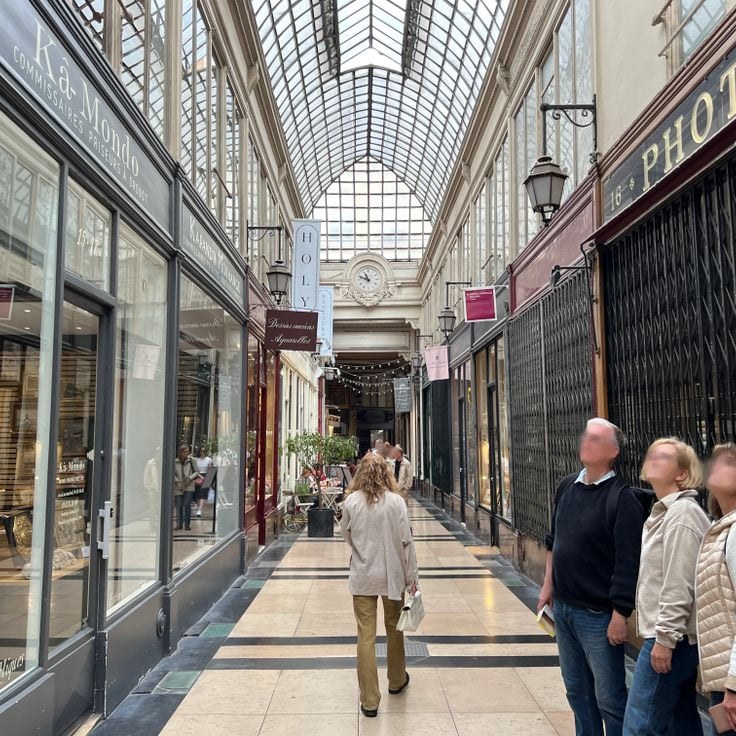
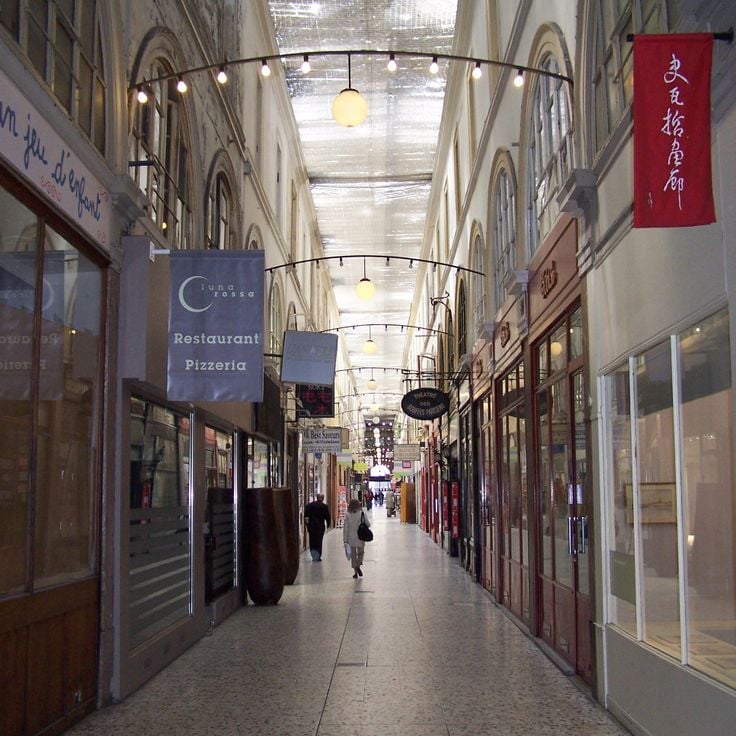
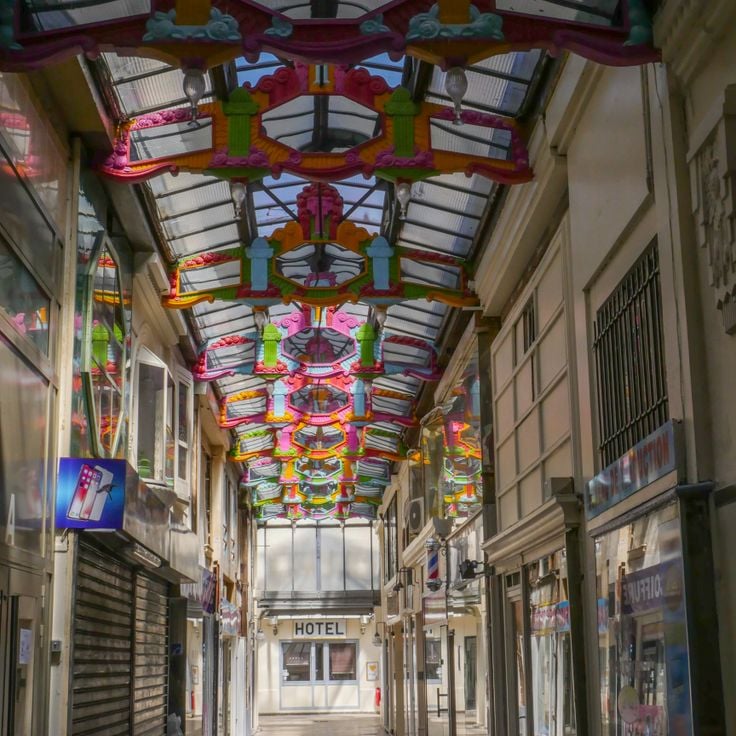
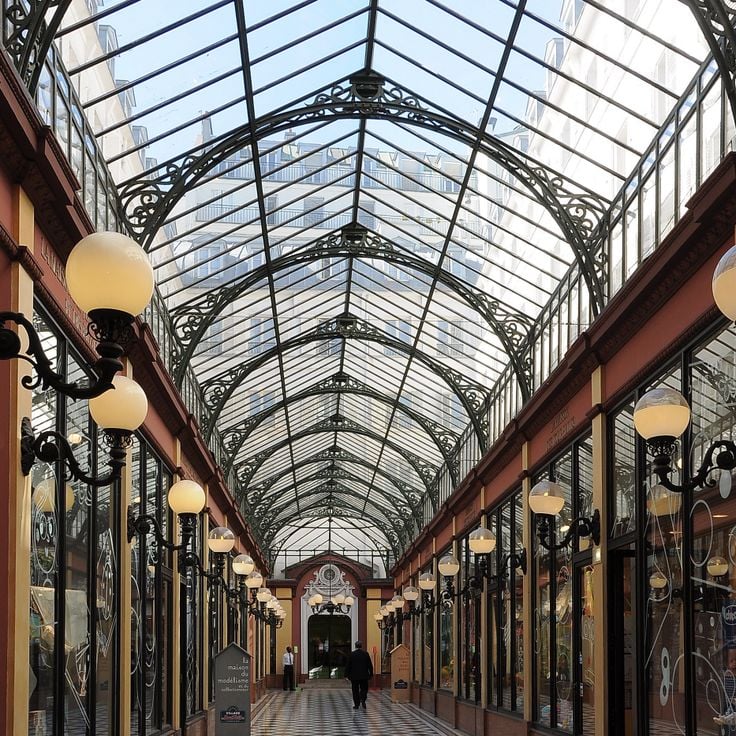
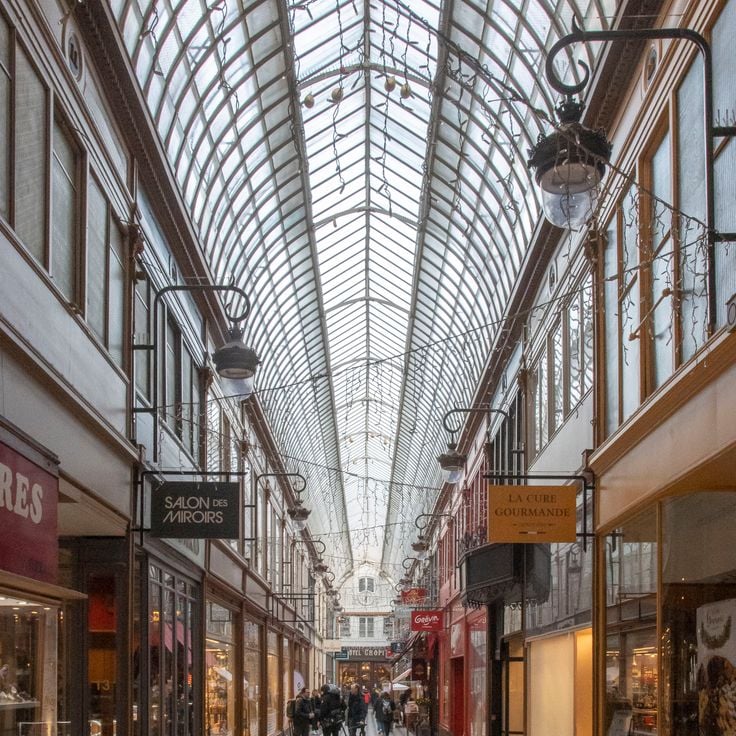
The covered passages of Paris are major commercial inventions from the early 19th century. Built between 1798 and 1850, these galleries shield pedestrians from weather and street mud with glass and wrought iron roofs. Passages like the Passage des Panoramas, opened in 1799, were pioneers with gas lighting, while Galerie Vivienne (1823) features mosaic floors and neoclassical decorations. The Passage du Grand-Cerf stands out with a height of 12 meters under its glass roof.
Today, around thirty passages remain in the 2nd, 9th, and 10th arrondissements. They host various shops: antique bookstores and fashion boutiques at Passage Choiseul, Indian restaurants and spice shops at Passage Brady, fabric vendors at Passage du Caire with Egyptian motifs. Galerie Colbert now houses two art research institutes. These galleries offer insights into a lesser-known part of 19th-century Paris commerce, preserving wooden facades, wrought iron railings, and period signage.
The covered passages of Paris are major commercial inventions from the early 19th century. Built between 1798 and 1850, these galleries shield pedestrians from weather and street mud with glass and wrought iron roofs. Passages like the Passage des Panoramas, opened in 1799, were pioneers with gas lighting, while Galerie Vivienne (1823) features mosaic floors and neoclassical decorations. The Passage du Grand-Cerf stands out with a height of 12 meters under its glass roof.
Today, around thirty passages remain in the 2nd, 9th, and 10th arrondissements. They host various shops: antique bookstores and fashion boutiques at Passage Choiseul, Indian restaurants and spice shops at Passage Brady, fabric vendors at Passage du Caire with Egyptian motifs. Galerie Colbert now houses two art research institutes. These galleries offer insights into a lesser-known part of 19th-century Paris commerce, preserving wooden facades, wrought iron railings, and period signage.
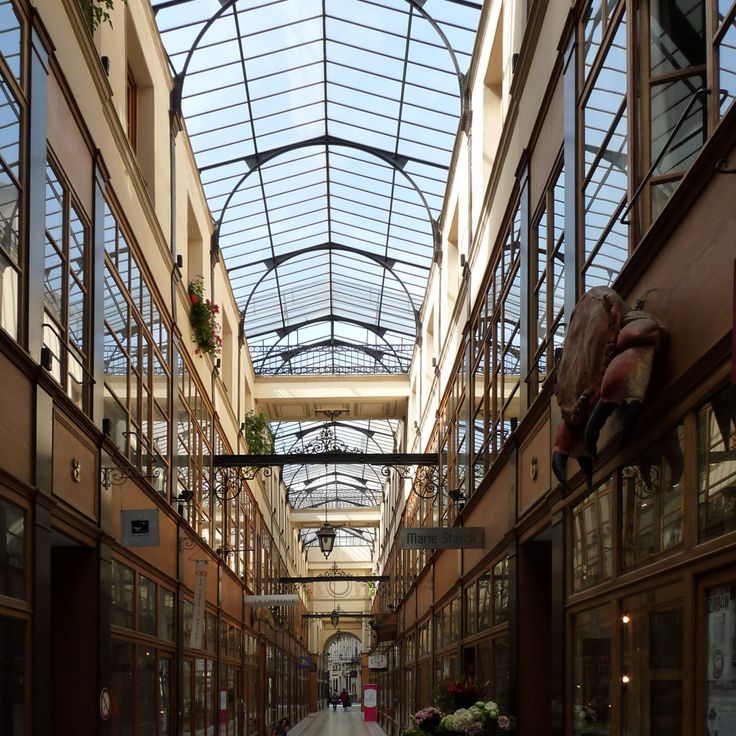
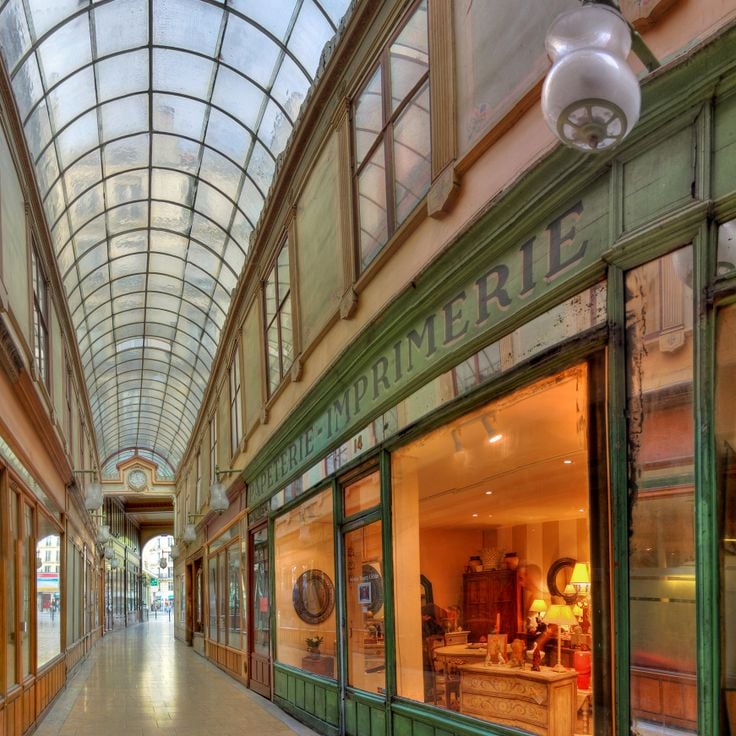
The Passage du Grand-Cerf stands among the tallest covered passages in the capital, with its glass roof reaching 12 meters high. This 19th-century gallery connects Rue Saint-Denis to Rue Dussoubs and preserves its wrought iron railings and wooden shop fronts. Artisans, furniture restorers, and designers work in the historic spaces. Daylight streams through the glass ceiling and illuminates the displays along the paved walkway. The Passage du Grand-Cerf represents the commercial innovation of early 19th-century Paris with its architecture and craft traditions.
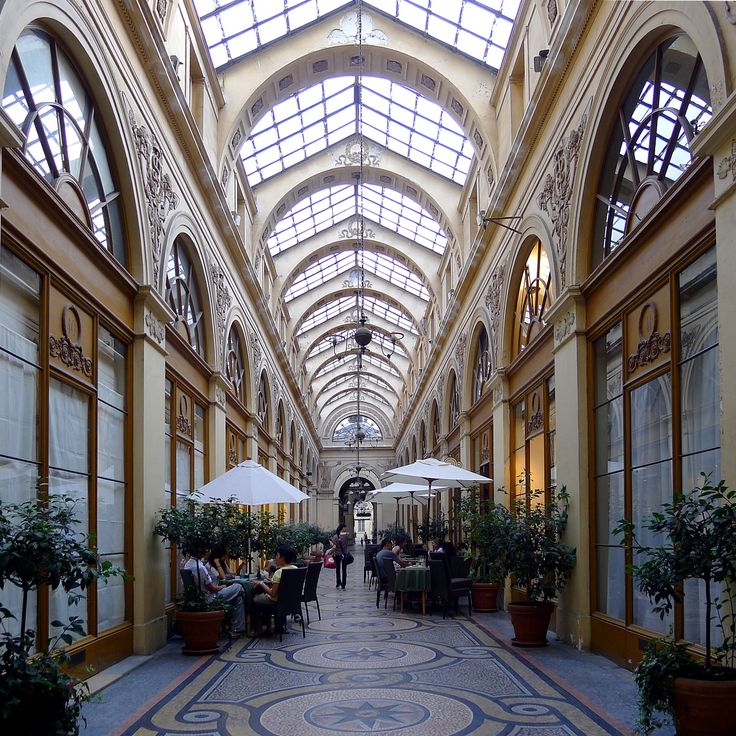
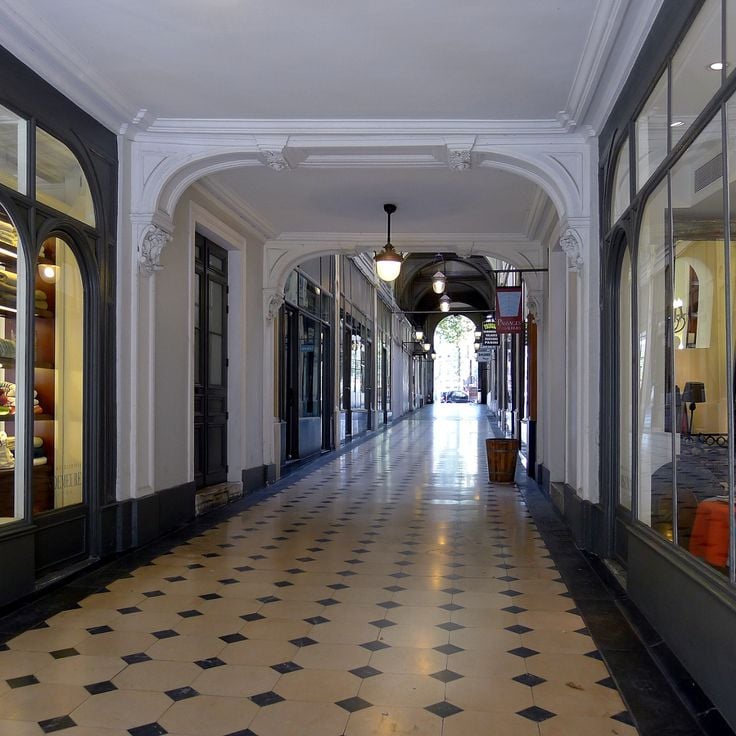
This gallery from 1823 belongs to the Paris covered passages that protect pedestrians from rain and street mud. The floors display mosaics with geometric patterns, and the walls carry ornaments in classical style with columns and garlands. Under the glass roof, fashion shops, bookstores with old editions, and restaurants line the corridors. Wooden storefronts and wrought iron railings frame the walkways. During the day, natural light filters through the glazing onto the patterned floors.
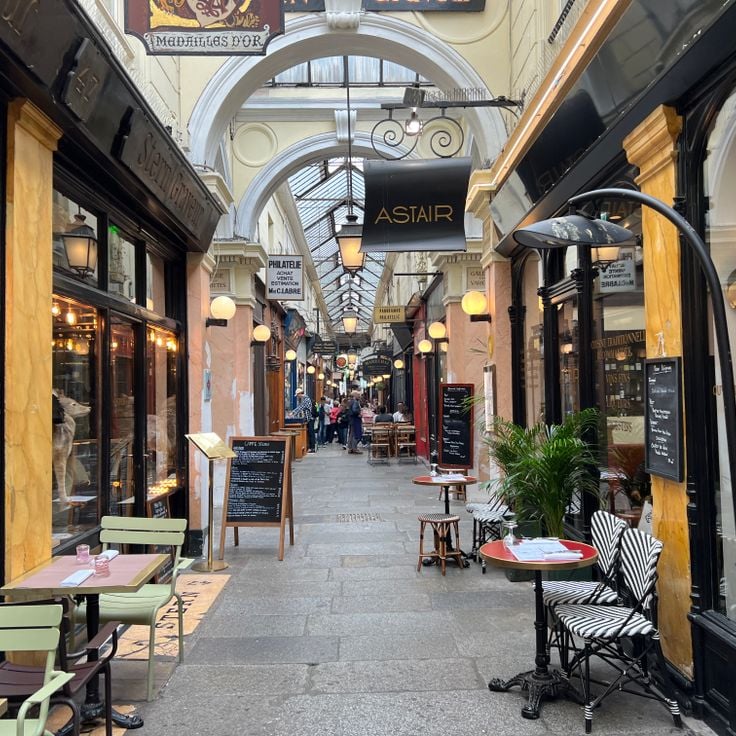
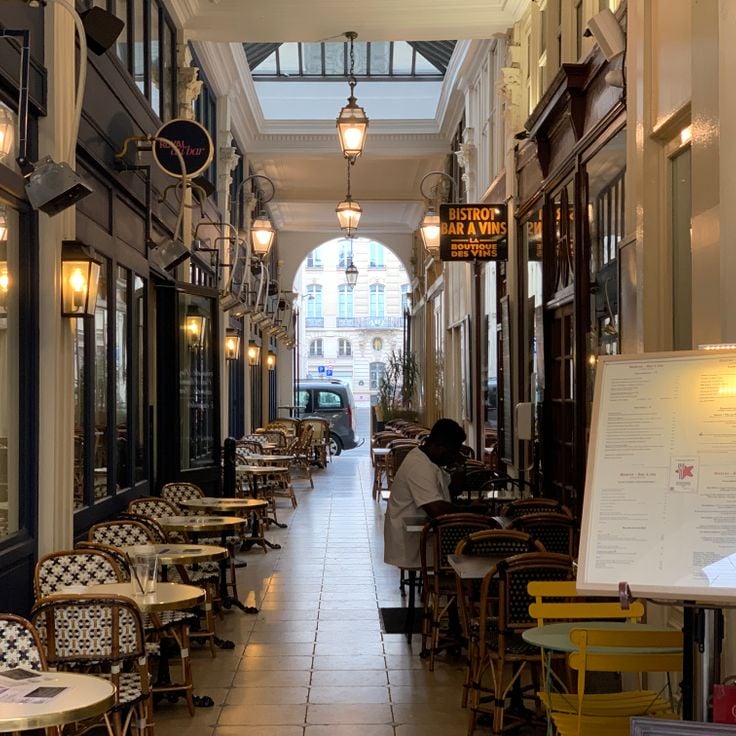
The Passage des Panoramas opened in 1799 as the first covered Parisian gallery with gas lighting. Today it remains a key example of the major commercial innovations that shaped early 19th-century Paris. This passage preserves the character of an original shopping street with narrow corridors, old wooden storefronts, and gas lamps still in place. Visitors find shops selling stamps, postcards, prints, and old photographs. In small restaurants and tearooms, people sit at round tables under the glass roof. The floor is made of worn stone slabs, and display windows show merchandise behind aged glass. The passage connects Boulevard Montmartre to Rue Saint-Marc.
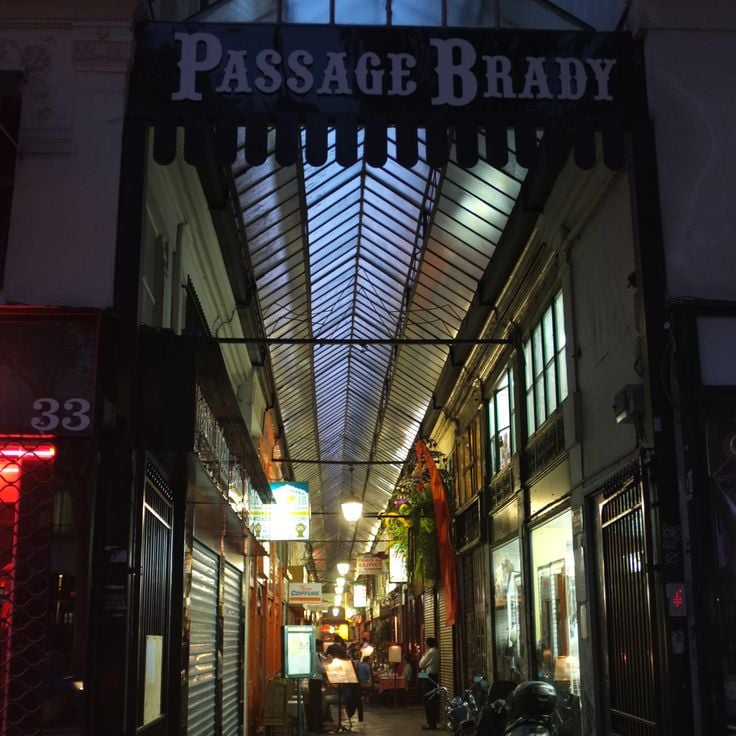
This passage from 1828 houses shops selling Indian fabrics and spices, along with restaurants serving South Asian cuisine. The neighborhood has become a meeting place that reflects the daily life and culinary traditions of the Indian and Pakistani communities in Paris. Walking through, you smell curry, cardamom, and coriander, while shop windows display colorful saris, golden jewelry, and bags of spices. The restaurants offer dishes like tandoori, biryani, and masala, often in small spaces with simple furnishings. The passage recalls the streets of Delhi or Lahore, with Hindi music in the background and conversations in multiple languages. The passage connects two parallel streets, allowing you to move quickly from one to the other while walking through this small world of Indian colors and scents.
The Passage Verdeau, built in 1847, is part of the covered passages network featured in this collection. This glass-roofed gallery runs between Rue de la Grange-Batelière and Rue du Faubourg Montmartre in the 9th arrondissement, connecting with Passage Jouffroy. Below the glass roof, you find old bookshops, shops selling collectibles, and dealers in historical photographs. Wooden display cases remain visible, along with wrought iron railings and patterned floor tiles. Some shops sell postcards, old posters, coins, or stamps. The passage has less foot traffic than larger galleries. Old signs hang on the walls, and light filters gently through the glass. This place draws collectors and lovers of vintage objects.
The Passage Choiseul was built in 1827 and stands as one of Paris's historic glass arcades. Inside, two levels of shops line the covered galleries, featuring fashion boutiques, bookstores with rare editions, delis, and art galleries. The passage connects Rue Saint-Augustin to Rue des Petits-Champs and runs through the second arrondissement with multiple entrances. Wooden storefronts, wrought-iron railings, and tile floors reflect how Parisian commerce looked in the 19th century. Throughout the day, locals walk through for shopping or to take a shortcut. The glass roof shelters visitors from weather while offering a quieter path than street-level walking.
The Passage Bourg-l'Abbé was built in 1828 and served as a center for newspaper publishers and print shops during the 19th century. This passage connects Rue de Palestro with Rue Saint-Denis and stands out for its high vaults, which give the walkway an airy feel. The original businesses along the passage have changed over time, but the structure with its 12-meter (40-foot) arches still reflects the industrial past of the place. Today this gallery runs through a quieter part of the 3rd arrondissement, where smaller shops and workshops have settled.
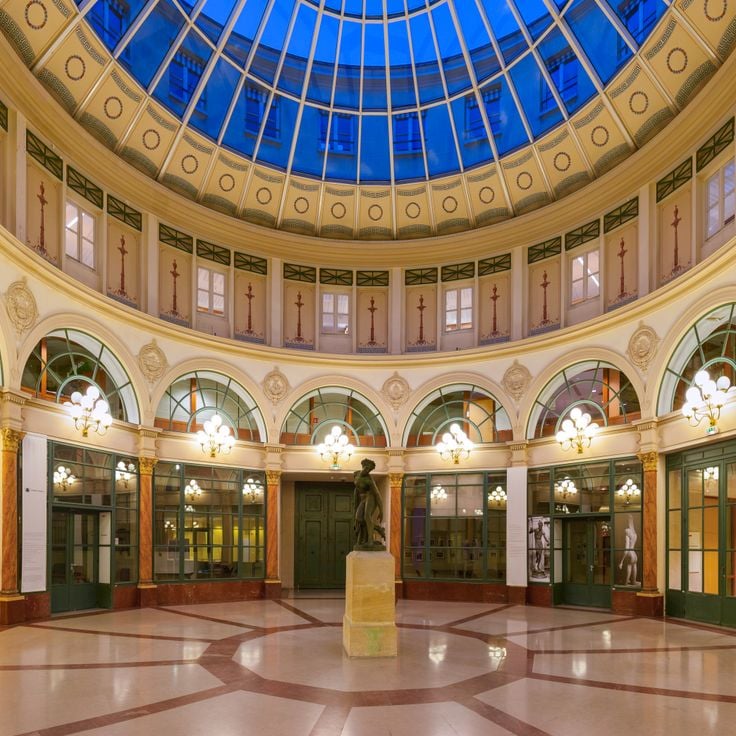
The Galerie Colbert is one of the covered passages featured in this collection of early 19th-century commercial galleries. Built in 1826, this passage connects Rue Vivienne to Rue des Petits-Champs and follows the architectural model of its neighboring Galerie Vivienne. A rotunda under a glass dome sits at the center, allowing natural light to flood the interior. Classical elements define the space: columns support the structure, and geometric patterns decorate the floor. Today, the Institut national d'histoire de l'art and the Bibliothèque de l'INHA occupy the gallery, making it a workplace for researchers and scholars. Visitors can walk through the passage and view the rotunda, experiencing one of the quieter covered passages in Paris.
The Passage Puteaux is one of the covered walkways from the 19th century that changed how people shopped in Paris. This narrow gallery connects two streets and shields visitors with a glass roof and wrought iron structures from rain and mud. The passage preserves the original architecture of its time, with wooden facades and details that show the commercial innovations of the early 19th century. Like other passages built between 1798 and 1850, the Passage Puteaux tells the story of how modern retail developed in the city.
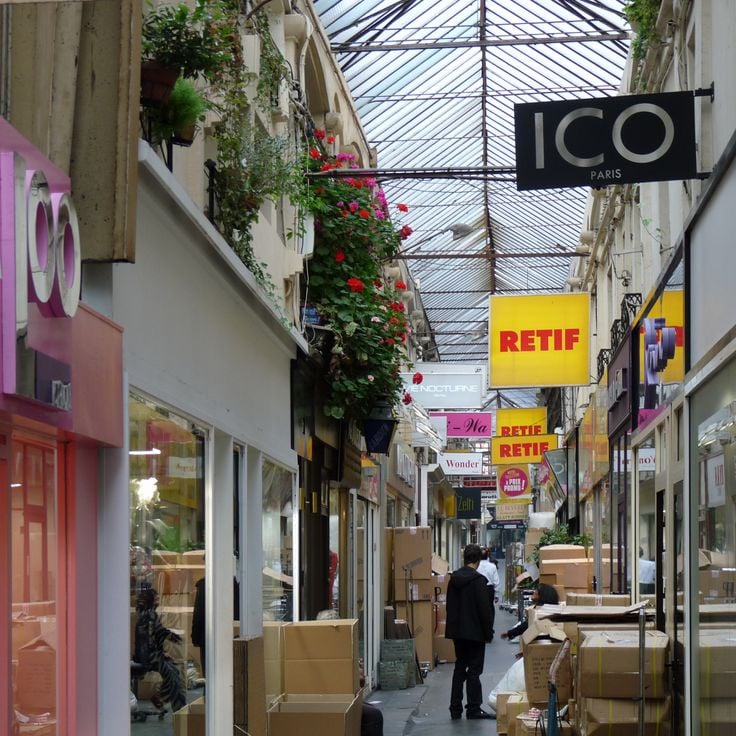
Opened in 1798, the Passage du Caire is one of the oldest covered passages in Paris and represents a major commercial invention of the early 19th century. Like other passages in the city, it shields visitors from weather and street mud with its glass and wrought iron roof. This passage stands out for its Egyptian decorative elements, which reflect the era's fascination with Egyptian art. Today it houses textile shops and wholesale merchants offering fabrics and other goods. With its wooden facades, iron railings, and period signage, the Passage du Caire preserves a piece of 19th-century Paris commerce.
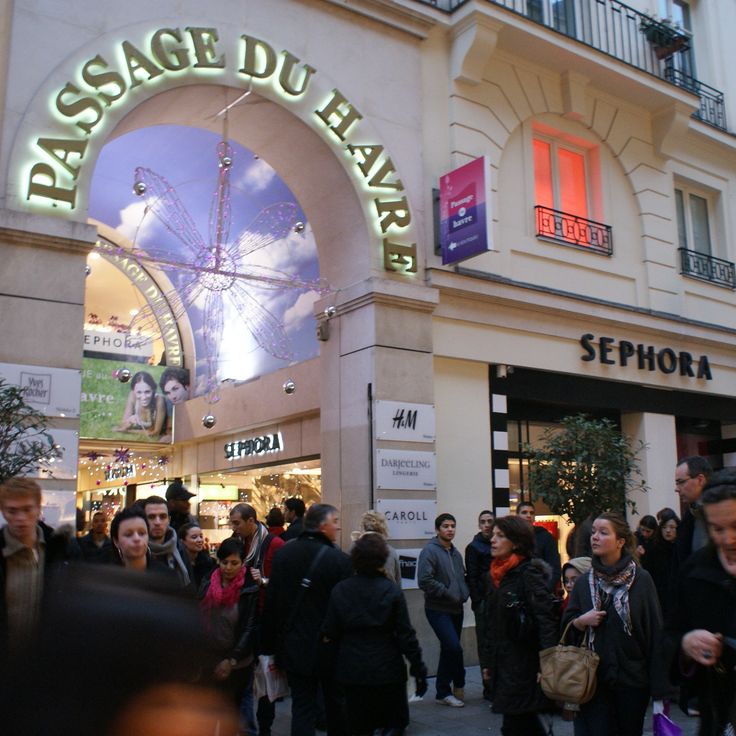
Passage du Havre is a 19th-century shopping arcade in the heart of Paris and part of the city's historic passage movement. The gallery was completely renovated in 1997 and now presents a modern face that sets it apart from other Parisian passages. The glass roof allows natural light to flood several floors of shops, cafes, and services. You will find mainly fashion chains, shoe stores, and restaurants aimed at a younger crowd. This passage connects Rue de Caumartin with Saint-Lazare station and is used daily by many commuters moving between trains and work. Unlike the historical passages with their wooden storefronts and wrought iron railings, this place feels functional and contemporary, almost like an ordinary shopping center.
This passage is one of the early covered galleries built as part of Paris' major commercial invention from the early 19th century. Constructed in 1785, Passage du Prado shelters visitors from weather and street mud beneath glass and wrought iron. A glass dome at its center brings daylight into the interior space. Ceramic tiles line the walls, creating a feel of another era. Here you find a setting away from street noise where traditional craft shops and small stores stand side by side, offering an honest look at how people once shopped in these protected galleries.
This passage is part of Paris's famous covered galleries, which emerged in the early 1800s. The Passage des Princes was built in 1860 and was the last covered gallery constructed in Paris during the 19th century. It was originally designed to house toy shops aimed at children. The glass roof lets daylight through and protects from rain. The architecture is simpler than older passages like Galerie Vivienne. After several renovations in the 20th century, the passage now holds various shops and restaurants. It connects two streets in the 2nd arrondissement and can be walked through freely during the day.
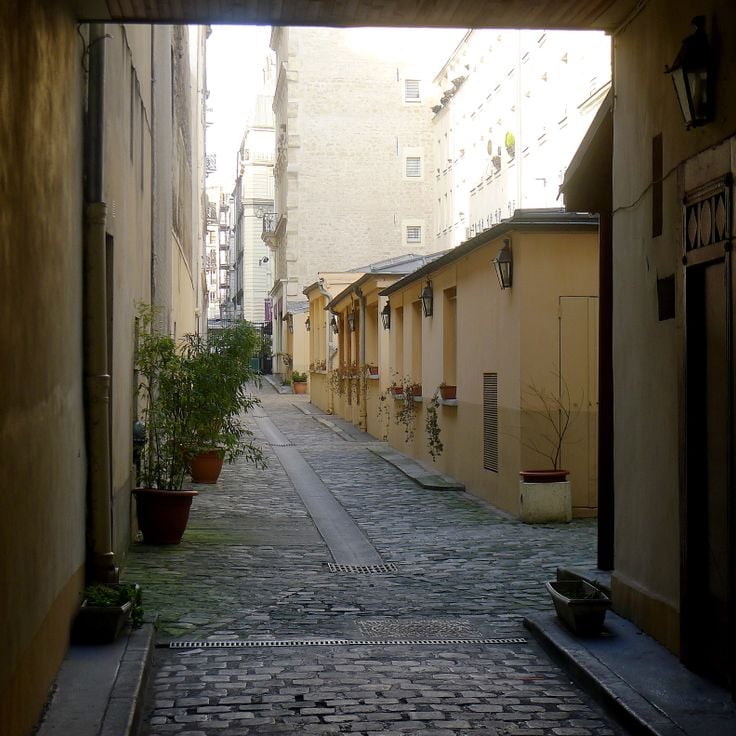
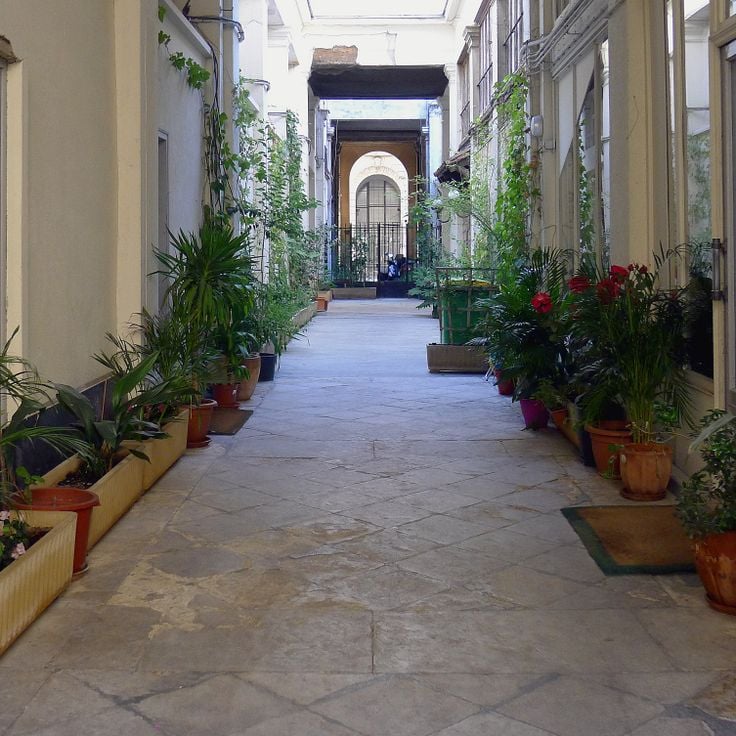
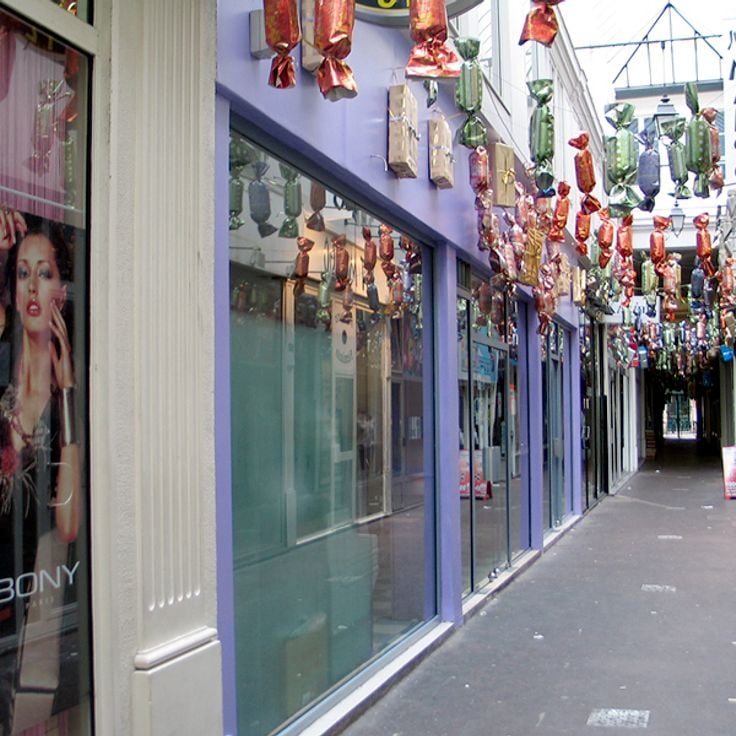
This passageway sits in the heart of a commercial district, offering shelter and quiet. The glass roof shields visitors from rain and sun. The shops sell fabrics, clothing, and everyday items. The narrow lane between storefronts echoes the covered passages built in the 19th century. Few tourists visit this place, so you can explore the boutiques at your own pace.
The Galerie de la Madeleine is a 19th-century covered passage that shows how these glass-roofed galleries protected Parisians from weather and street mud. It connects Rue Vignon to the square in front of the Madeleine church. Fine food shops, chocolatiers, gift stores, and specialty shops line both sides, selling confections, tea, spices, and quality food items. The glass ceiling allows daylight to reach the wooden shopfronts below. Pedestrians use the passage as a shortcut between nearby streets, especially during rain. The Madeleine church with its columns stands just outside the southern exit. Located in the 8th arrondissement, the gallery feels quieter than the busier passages found in the 2nd arrondissement.
The Passage du Ponceau is one of the simpler galleries from the first half of the 1800s within Paris's major commercial inventions. This covered passage has four entrances with wrought iron gates from that period. The glass roof lets daylight into the walkway. The passage connects several streets in the 2nd arrondissement and offers a direct route between the boulevards. The mood here is quieter than in the busier passages nearby. You find mainly shops for daily needs and small craft businesses. The architecture stays plain, without the ornate decorations of the Galerie Vivienne or the Passage Choiseul. The floor and walls bear the marks of time. This walkway lets you understand how early Parisian passages worked for regular commerce, before they became destinations for luxury shopping.
Passage Jouffroy is part of this collection of historic Parisian shopping galleries from the early 19th century. Built in 1847, this passage connects Boulevard Montmartre with Rue de la Grange-Batelière and lies between two other galleries linking different parts of the city. A glazed iron and glass roof shields visitors from weather and street mud. Marble slabs cover the floor, and the walls retain original wooden shopfront frames and wrought iron decorations from the construction period. The Grévin wax museum has its entrance directly onto the gallery. Antiquarian bookshops, small toy stores, and souvenir shops show how these passages served as commercial spaces in the 19th century.
Galerie Montpensier is one of the three galleries in the Palais Royal and exemplifies the commercial and cultural tradition that shaped these covered passages. The gallery runs along the Jardin du Palais Royal, framed by stone arcades that support the ground floor of the surrounding buildings. Visitors find quiet shops here and the Théâtre du Palais-Royal, which has presented shows since 1831. The arcades shield pedestrians from rain and offer a covered walkway for strolling. Dating from the 18th century, the gallery preserves its historical structure and design. Once a commercial and cultural hub of Paris, this passage still reflects the character of old architecture and urban life.
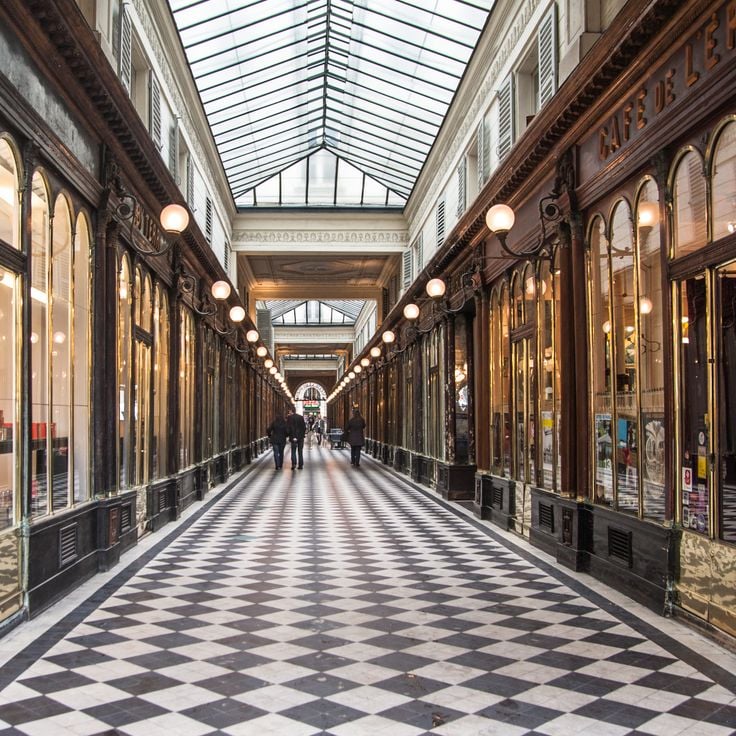
This passage has connected Rue Jean-Jacques Rousseau with Rue du Bouloi since 1826. Galerie Véro-Dodat is one of the early covered galleries of Paris and bears the name of its two founders, both butchers. The glass roof lets natural light fall onto the black and white floor tiles. Along the walls, wooden paneling alternates with gilded pilasters and columns. The shop windows display antiques, furniture, old books and art objects. Some stores have kept their original wooden fronts. The space feels quiet and theatrical, with dim lighting and light foot traffic. At the end of the passage, the view opens onto a street in the first arrondissement.
This passage from 1763 is one of the oldest covered galleries in Paris and represents one of the earliest examples of these commercial spaces. The Saumon houses small shops and craftspeople's workshops. The storefronts and windows follow traditional designs. The passage shows what these places looked like before the major construction projects of the 1800s. Walking through the narrow space, you see the commercial architecture of the 18th century. The passage feels quiet and almost hidden between the neighborhood streets.
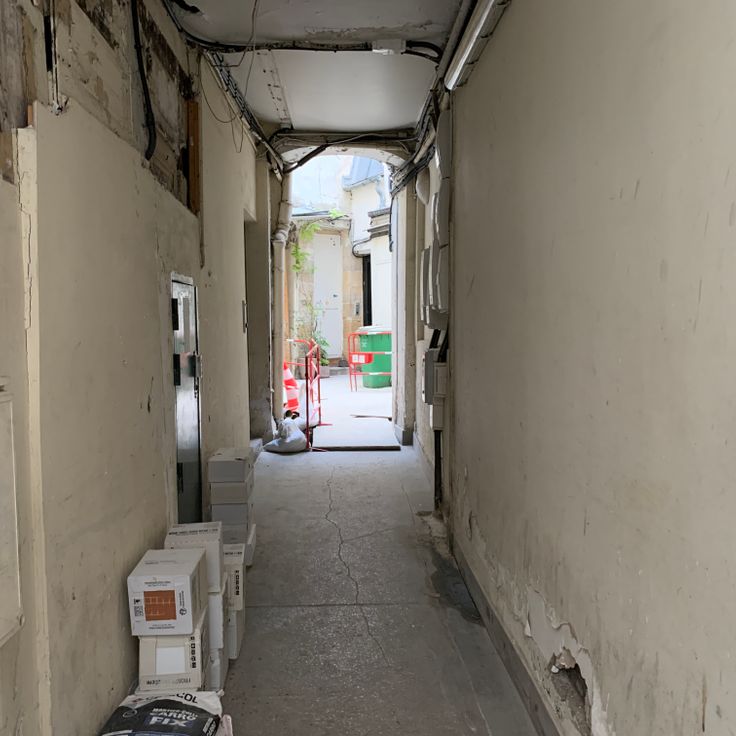
This passage de l'Ancre is a narrow connection between Rue de Turbigo and Rue Saint-Martin. At just two meters wide, it ranks among the most confined covered passages in Paris. Unlike the grand commercial galleries of the 19th century with their glass roofs and shops, this passage feels more like an old alley squeezed between buildings. It is quiet and secluded. Only a few pedestrians use this route as a shortcut between the two streets in the second arrondissement.
The Passage des Deux Pavillons belongs to the covered passages of Paris built in the early 1800s to shelter pedestrians from weather and muddy streets. This passageway connects Rue de Beaujolais to Rue des Petits-Champs in the 1st arrondissement. It is narrow and quiet, with fewer shops than other Parisian passages. The glass roof allows daylight to filter through. A few small shops line the sides. People walk through it to move between streets more quickly, especially when it rains.
The Galerie Feydeau combines old architecture with present-day businesses and offices. The building dates from the 19th century and is part of the covered passages that once transformed shopping in Paris. Today the space houses workplaces and shops that blend the historic appearance with modern functions. The passage shows how these old thoroughfares continue to serve the community, even as they have moved beyond their original role as shopping galleries.
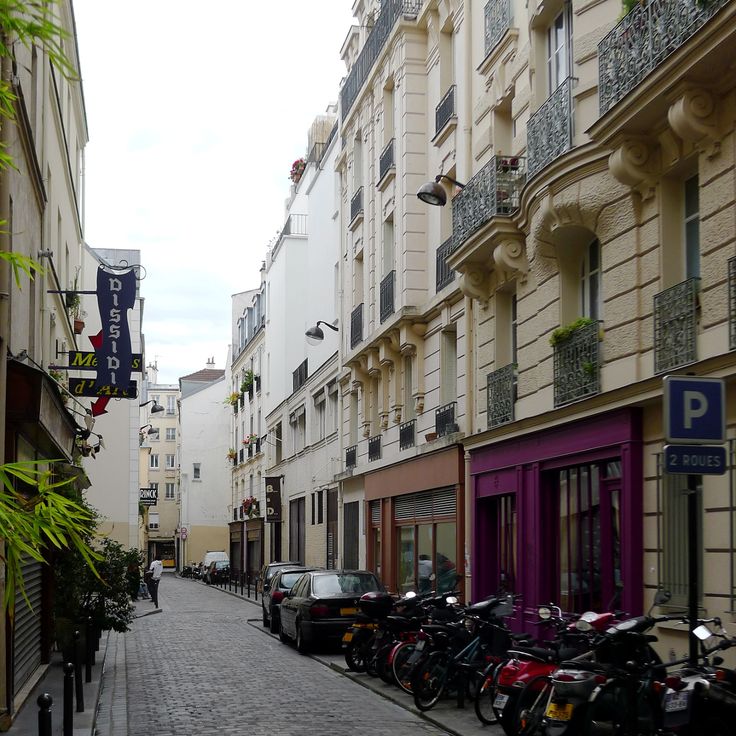
This passage in the collection of covered passages of Paris shows traditional Parisian architecture between Rue du Faubourg Saint-Antoine and Avenue Ledru-Rollin. It is part of a system of about thirty galleries built between 1798 and 1850 that sheltered pedestrians from weather and street mud. With its glass and wrought iron roof, wooden facades, and period signage, this passage preserves a piece of Paris commerce history from the early 19th century.
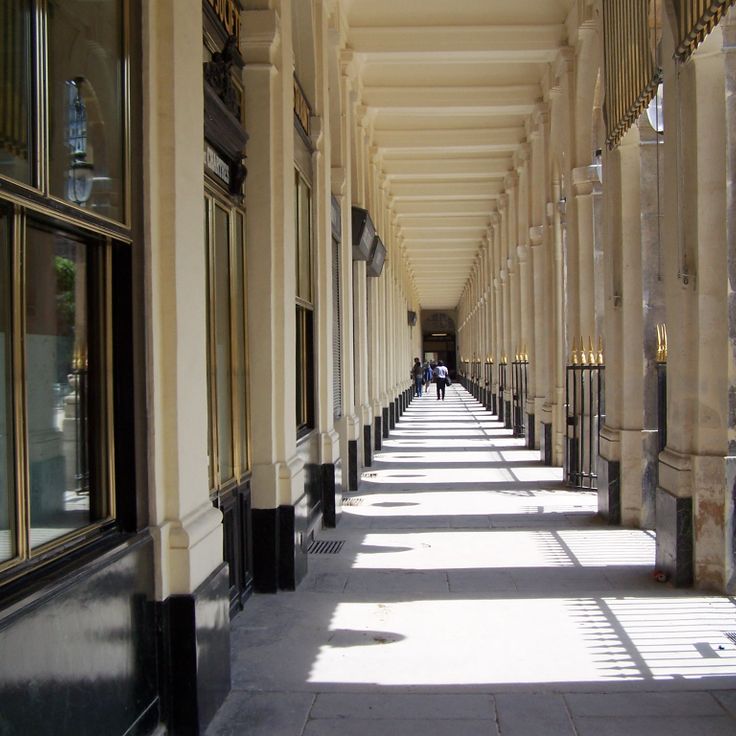
This gallery at the Palais Royal shows how the covered passages of Paris changed commerce in the 19th century. In the northern wing of the palace you will find French fashion houses and jewelry shops beneath the glass and iron arcades that once protected pedestrians from rain and muddy streets. The gallery sits beside the Comédie-Française and the Council of State, surrounded by the classical facades of the palace. You can still see the wooden storefronts and wrought iron details typical of these historic passages.
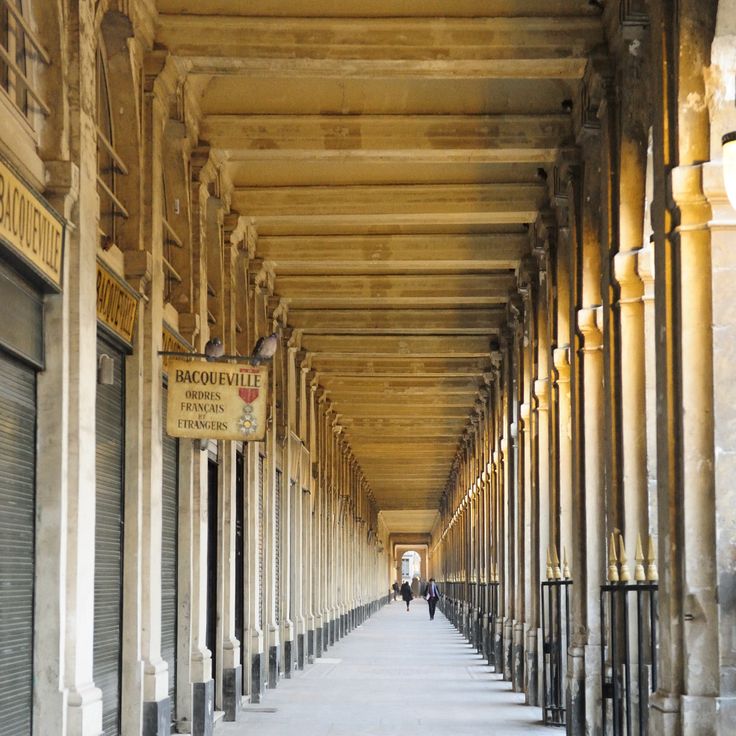
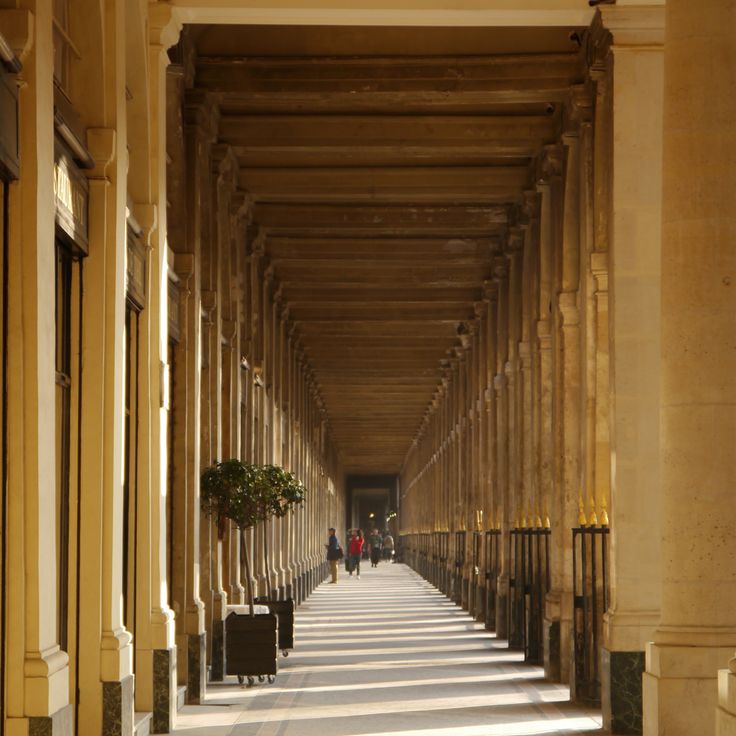
This covered passage in the Palais Royal was built in 1815 as part of the West Wing and connects arcaded walkways with restaurants and small shops. Stone columns support the structure and frame the storefronts. The ceiling keeps out rain while daylight filters through the glazing. Over the decades, small businesses selling vintage items, books, or art objects have settled here. Visitors pass through to reach the streets of the quarter from the palace garden. The passage feels quiet and somewhat hidden, as if walking through a private corridor. Weekday foot traffic is light; weekends bring more strollers. It offers insights into 19th-century Paris commerce through its preserved wooden facades, wrought iron railings, and period signage.
The Passage Sainte-Foy is among the quieter covered passages of Paris and preserves the character of 19th-century retail life. This short gallery connects two streets and is used by locals on their daily routes, while tourists typically walk past it. The passage houses small shops and workshops with original wooden storefronts and wrought iron details. Unlike more popular passages such as Galerie Vivienne or Passage des Panoramas, this gallery remains a faithful example of Parisian passages from the first half of the 19th century.
The Passage du Désir is one of Paris' covered passages, built between 1798 and 1850. This gallery protects pedestrians from weather and street mud with glass and wrought iron roofs. The Passage du Désir preserves wooden facades, wrought iron railings, and period signage from the 19th century. About thirty of these passages remain in the 2nd, 9th, and 10th arrondissements, showing how commerce operated in early modern Paris.
The Passage des Deux-Sœurs is part of Paris's collection of covered passages, major shopping galleries built between 1798 and 1850. These covered walkways were designed to protect pedestrians from rain and muddy streets with glass and wrought iron roofs. The Passage des Deux-Sœurs shares the character of other passages in the 2nd, 9th, and 10th arrondissements, featuring wooden facades, iron railings, and period details. Inside, shops offer glimpses into 19th-century commerce. Like its neighboring passages, this gallery reflects how Parisians shopped and moved through the city during the Industrial Age, preserving architectural elements and retail traditions from two centuries ago.
The Passage du Grand-Cerf stands among the tallest covered passages in the capital, with its glass roof reaching 12 meters high. This 19th-century gallery connects Rue Saint-Denis to Rue Dussoubs and preserves its wrought iron railings and wooden shop fronts. Artisans, furniture restorers, and designers work in the historic spaces. Daylight streams through the glass ceiling and illuminates the displays along the paved walkway. The Passage du Grand-Cerf represents the commercial innovation of early 19th-century Paris with its architecture and craft traditions.
This gallery from 1823 belongs to the Paris covered passages that protect pedestrians from rain and street mud. The floors display mosaics with geometric patterns, and the walls carry ornaments in classical style with columns and garlands. Under the glass roof, fashion shops, bookstores with old editions, and restaurants line the corridors. Wooden storefronts and wrought iron railings frame the walkways. During the day, natural light filters through the glazing onto the patterned floors.
The Passage des Panoramas opened in 1799 as the first covered Parisian gallery with gas lighting. Today it remains a key example of the major commercial innovations that shaped early 19th-century Paris. This passage preserves the character of an original shopping street with narrow corridors, old wooden storefronts, and gas lamps still in place. Visitors find shops selling stamps, postcards, prints, and old photographs. In small restaurants and tearooms, people sit at round tables under the glass roof. The floor is made of worn stone slabs, and display windows show merchandise behind aged glass. The passage connects Boulevard Montmartre to Rue Saint-Marc.
This passage from 1828 houses shops selling Indian fabrics and spices, along with restaurants serving South Asian cuisine. The neighborhood has become a meeting place that reflects the daily life and culinary traditions of the Indian and Pakistani communities in Paris. Walking through, you smell curry, cardamom, and coriander, while shop windows display colorful saris, golden jewelry, and bags of spices. The restaurants offer dishes like tandoori, biryani, and masala, often in small spaces with simple furnishings. The passage recalls the streets of Delhi or Lahore, with Hindi music in the background and conversations in multiple languages. The passage connects two parallel streets, allowing you to move quickly from one to the other while walking through this small world of Indian colors and scents.
The Passage Verdeau, built in 1847, is part of the covered passages network featured in this collection. This glass-roofed gallery runs between Rue de la Grange-Batelière and Rue du Faubourg Montmartre in the 9th arrondissement, connecting with Passage Jouffroy. Below the glass roof, you find old bookshops, shops selling collectibles, and dealers in historical photographs. Wooden display cases remain visible, along with wrought iron railings and patterned floor tiles. Some shops sell postcards, old posters, coins, or stamps. The passage has less foot traffic than larger galleries. Old signs hang on the walls, and light filters gently through the glass. This place draws collectors and lovers of vintage objects.
The Passage Choiseul was built in 1827 and stands as one of Paris's historic glass arcades. Inside, two levels of shops line the covered galleries, featuring fashion boutiques, bookstores with rare editions, delis, and art galleries. The passage connects Rue Saint-Augustin to Rue des Petits-Champs and runs through the second arrondissement with multiple entrances. Wooden storefronts, wrought-iron railings, and tile floors reflect how Parisian commerce looked in the 19th century. Throughout the day, locals walk through for shopping or to take a shortcut. The glass roof shelters visitors from weather while offering a quieter path than street-level walking.
The Passage Bourg-l'Abbé was built in 1828 and served as a center for newspaper publishers and print shops during the 19th century. This passage connects Rue de Palestro with Rue Saint-Denis and stands out for its high vaults, which give the walkway an airy feel. The original businesses along the passage have changed over time, but the structure with its 12-meter (40-foot) arches still reflects the industrial past of the place. Today this gallery runs through a quieter part of the 3rd arrondissement, where smaller shops and workshops have settled.
The Galerie Colbert is one of the covered passages featured in this collection of early 19th-century commercial galleries. Built in 1826, this passage connects Rue Vivienne to Rue des Petits-Champs and follows the architectural model of its neighboring Galerie Vivienne. A rotunda under a glass dome sits at the center, allowing natural light to flood the interior. Classical elements define the space: columns support the structure, and geometric patterns decorate the floor. Today, the Institut national d'histoire de l'art and the Bibliothèque de l'INHA occupy the gallery, making it a workplace for researchers and scholars. Visitors can walk through the passage and view the rotunda, experiencing one of the quieter covered passages in Paris.
The Passage Puteaux is one of the covered walkways from the 19th century that changed how people shopped in Paris. This narrow gallery connects two streets and shields visitors with a glass roof and wrought iron structures from rain and mud. The passage preserves the original architecture of its time, with wooden facades and details that show the commercial innovations of the early 19th century. Like other passages built between 1798 and 1850, the Passage Puteaux tells the story of how modern retail developed in the city.
Opened in 1798, the Passage du Caire is one of the oldest covered passages in Paris and represents a major commercial invention of the early 19th century. Like other passages in the city, it shields visitors from weather and street mud with its glass and wrought iron roof. This passage stands out for its Egyptian decorative elements, which reflect the era's fascination with Egyptian art. Today it houses textile shops and wholesale merchants offering fabrics and other goods. With its wooden facades, iron railings, and period signage, the Passage du Caire preserves a piece of 19th-century Paris commerce.
Passage du Havre is a 19th-century shopping arcade in the heart of Paris and part of the city's historic passage movement. The gallery was completely renovated in 1997 and now presents a modern face that sets it apart from other Parisian passages. The glass roof allows natural light to flood several floors of shops, cafes, and services. You will find mainly fashion chains, shoe stores, and restaurants aimed at a younger crowd. This passage connects Rue de Caumartin with Saint-Lazare station and is used daily by many commuters moving between trains and work. Unlike the historical passages with their wooden storefronts and wrought iron railings, this place feels functional and contemporary, almost like an ordinary shopping center.
This passage is one of the early covered galleries built as part of Paris' major commercial invention from the early 19th century. Constructed in 1785, Passage du Prado shelters visitors from weather and street mud beneath glass and wrought iron. A glass dome at its center brings daylight into the interior space. Ceramic tiles line the walls, creating a feel of another era. Here you find a setting away from street noise where traditional craft shops and small stores stand side by side, offering an honest look at how people once shopped in these protected galleries.
This passage is part of Paris's famous covered galleries, which emerged in the early 1800s. The Passage des Princes was built in 1860 and was the last covered gallery constructed in Paris during the 19th century. It was originally designed to house toy shops aimed at children. The glass roof lets daylight through and protects from rain. The architecture is simpler than older passages like Galerie Vivienne. After several renovations in the 20th century, the passage now holds various shops and restaurants. It connects two streets in the 2nd arrondissement and can be walked through freely during the day.
This passageway sits in the heart of a commercial district, offering shelter and quiet. The glass roof shields visitors from rain and sun. The shops sell fabrics, clothing, and everyday items. The narrow lane between storefronts echoes the covered passages built in the 19th century. Few tourists visit this place, so you can explore the boutiques at your own pace.
The Galerie de la Madeleine is a 19th-century covered passage that shows how these glass-roofed galleries protected Parisians from weather and street mud. It connects Rue Vignon to the square in front of the Madeleine church. Fine food shops, chocolatiers, gift stores, and specialty shops line both sides, selling confections, tea, spices, and quality food items. The glass ceiling allows daylight to reach the wooden shopfronts below. Pedestrians use the passage as a shortcut between nearby streets, especially during rain. The Madeleine church with its columns stands just outside the southern exit. Located in the 8th arrondissement, the gallery feels quieter than the busier passages found in the 2nd arrondissement.
The Passage du Ponceau is one of the simpler galleries from the first half of the 1800s within Paris's major commercial inventions. This covered passage has four entrances with wrought iron gates from that period. The glass roof lets daylight into the walkway. The passage connects several streets in the 2nd arrondissement and offers a direct route between the boulevards. The mood here is quieter than in the busier passages nearby. You find mainly shops for daily needs and small craft businesses. The architecture stays plain, without the ornate decorations of the Galerie Vivienne or the Passage Choiseul. The floor and walls bear the marks of time. This walkway lets you understand how early Parisian passages worked for regular commerce, before they became destinations for luxury shopping.
Passage Jouffroy is part of this collection of historic Parisian shopping galleries from the early 19th century. Built in 1847, this passage connects Boulevard Montmartre with Rue de la Grange-Batelière and lies between two other galleries linking different parts of the city. A glazed iron and glass roof shields visitors from weather and street mud. Marble slabs cover the floor, and the walls retain original wooden shopfront frames and wrought iron decorations from the construction period. The Grévin wax museum has its entrance directly onto the gallery. Antiquarian bookshops, small toy stores, and souvenir shops show how these passages served as commercial spaces in the 19th century.
Galerie Montpensier is one of the three galleries in the Palais Royal and exemplifies the commercial and cultural tradition that shaped these covered passages. The gallery runs along the Jardin du Palais Royal, framed by stone arcades that support the ground floor of the surrounding buildings. Visitors find quiet shops here and the Théâtre du Palais-Royal, which has presented shows since 1831. The arcades shield pedestrians from rain and offer a covered walkway for strolling. Dating from the 18th century, the gallery preserves its historical structure and design. Once a commercial and cultural hub of Paris, this passage still reflects the character of old architecture and urban life.
This passage has connected Rue Jean-Jacques Rousseau with Rue du Bouloi since 1826. Galerie Véro-Dodat is one of the early covered galleries of Paris and bears the name of its two founders, both butchers. The glass roof lets natural light fall onto the black and white floor tiles. Along the walls, wooden paneling alternates with gilded pilasters and columns. The shop windows display antiques, furniture, old books and art objects. Some stores have kept their original wooden fronts. The space feels quiet and theatrical, with dim lighting and light foot traffic. At the end of the passage, the view opens onto a street in the first arrondissement.
This passage from 1763 is one of the oldest covered galleries in Paris and represents one of the earliest examples of these commercial spaces. The Saumon houses small shops and craftspeople's workshops. The storefronts and windows follow traditional designs. The passage shows what these places looked like before the major construction projects of the 1800s. Walking through the narrow space, you see the commercial architecture of the 18th century. The passage feels quiet and almost hidden between the neighborhood streets.
This passage de l'Ancre is a narrow connection between Rue de Turbigo and Rue Saint-Martin. At just two meters wide, it ranks among the most confined covered passages in Paris. Unlike the grand commercial galleries of the 19th century with their glass roofs and shops, this passage feels more like an old alley squeezed between buildings. It is quiet and secluded. Only a few pedestrians use this route as a shortcut between the two streets in the second arrondissement.
The Passage des Deux Pavillons belongs to the covered passages of Paris built in the early 1800s to shelter pedestrians from weather and muddy streets. This passageway connects Rue de Beaujolais to Rue des Petits-Champs in the 1st arrondissement. It is narrow and quiet, with fewer shops than other Parisian passages. The glass roof allows daylight to filter through. A few small shops line the sides. People walk through it to move between streets more quickly, especially when it rains.
The Galerie Feydeau combines old architecture with present-day businesses and offices. The building dates from the 19th century and is part of the covered passages that once transformed shopping in Paris. Today the space houses workplaces and shops that blend the historic appearance with modern functions. The passage shows how these old thoroughfares continue to serve the community, even as they have moved beyond their original role as shopping galleries.
This passage in the collection of covered passages of Paris shows traditional Parisian architecture between Rue du Faubourg Saint-Antoine and Avenue Ledru-Rollin. It is part of a system of about thirty galleries built between 1798 and 1850 that sheltered pedestrians from weather and street mud. With its glass and wrought iron roof, wooden facades, and period signage, this passage preserves a piece of Paris commerce history from the early 19th century.
This gallery at the Palais Royal shows how the covered passages of Paris changed commerce in the 19th century. In the northern wing of the palace you will find French fashion houses and jewelry shops beneath the glass and iron arcades that once protected pedestrians from rain and muddy streets. The gallery sits beside the Comédie-Française and the Council of State, surrounded by the classical facades of the palace. You can still see the wooden storefronts and wrought iron details typical of these historic passages.
This covered passage in the Palais Royal was built in 1815 as part of the West Wing and connects arcaded walkways with restaurants and small shops. Stone columns support the structure and frame the storefronts. The ceiling keeps out rain while daylight filters through the glazing. Over the decades, small businesses selling vintage items, books, or art objects have settled here. Visitors pass through to reach the streets of the quarter from the palace garden. The passage feels quiet and somewhat hidden, as if walking through a private corridor. Weekday foot traffic is light; weekends bring more strollers. It offers insights into 19th-century Paris commerce through its preserved wooden facades, wrought iron railings, and period signage.
The Passage Sainte-Foy is among the quieter covered passages of Paris and preserves the character of 19th-century retail life. This short gallery connects two streets and is used by locals on their daily routes, while tourists typically walk past it. The passage houses small shops and workshops with original wooden storefronts and wrought iron details. Unlike more popular passages such as Galerie Vivienne or Passage des Panoramas, this gallery remains a faithful example of Parisian passages from the first half of the 19th century.
The Passage du Désir is one of Paris' covered passages, built between 1798 and 1850. This gallery protects pedestrians from weather and street mud with glass and wrought iron roofs. The Passage du Désir preserves wooden facades, wrought iron railings, and period signage from the 19th century. About thirty of these passages remain in the 2nd, 9th, and 10th arrondissements, showing how commerce operated in early modern Paris.
The Passage des Deux-Sœurs is part of Paris's collection of covered passages, major shopping galleries built between 1798 and 1850. These covered walkways were designed to protect pedestrians from rain and muddy streets with glass and wrought iron roofs. The Passage des Deux-Sœurs shares the character of other passages in the 2nd, 9th, and 10th arrondissements, featuring wooden facades, iron railings, and period details. Inside, shops offer glimpses into 19th-century commerce. Like its neighboring passages, this gallery reflects how Parisians shopped and moved through the city during the Industrial Age, preserving architectural elements and retail traditions from two centuries ago.
The Passage du Grand-Cerf stands among the tallest covered passages in the capital, with its glass roof reaching 12 meters high. This 19th-century gallery connects Rue Saint-Denis to Rue Dussoubs and preserves its wrought iron railings and wooden shop fronts. Artisans, furniture restorers, and designers work in the historic spaces. Daylight streams through the glass ceiling and illuminates the displays along the paved walkway. The Passage du Grand-Cerf represents the commercial innovation of early 19th-century Paris with its architecture and craft traditions.
This gallery from 1823 belongs to the Paris covered passages that protect pedestrians from rain and street mud. The floors display mosaics with geometric patterns, and the walls carry ornaments in classical style with columns and garlands. Under the glass roof, fashion shops, bookstores with old editions, and restaurants line the corridors. Wooden storefronts and wrought iron railings frame the walkways. During the day, natural light filters through the glazing onto the patterned floors.
The Passage des Panoramas opened in 1799 as the first covered Parisian gallery with gas lighting. Today it remains a key example of the major commercial innovations that shaped early 19th-century Paris. This passage preserves the character of an original shopping street with narrow corridors, old wooden storefronts, and gas lamps still in place. Visitors find shops selling stamps, postcards, prints, and old photographs. In small restaurants and tearooms, people sit at round tables under the glass roof. The floor is made of worn stone slabs, and display windows show merchandise behind aged glass. The passage connects Boulevard Montmartre to Rue Saint-Marc.
This passage from 1828 houses shops selling Indian fabrics and spices, along with restaurants serving South Asian cuisine. The neighborhood has become a meeting place that reflects the daily life and culinary traditions of the Indian and Pakistani communities in Paris. Walking through, you smell curry, cardamom, and coriander, while shop windows display colorful saris, golden jewelry, and bags of spices. The restaurants offer dishes like tandoori, biryani, and masala, often in small spaces with simple furnishings. The passage recalls the streets of Delhi or Lahore, with Hindi music in the background and conversations in multiple languages. The passage connects two parallel streets, allowing you to move quickly from one to the other while walking through this small world of Indian colors and scents.
The Passage Verdeau, built in 1847, is part of the covered passages network featured in this collection. This glass-roofed gallery runs between Rue de la Grange-Batelière and Rue du Faubourg Montmartre in the 9th arrondissement, connecting with Passage Jouffroy. Below the glass roof, you find old bookshops, shops selling collectibles, and dealers in historical photographs. Wooden display cases remain visible, along with wrought iron railings and patterned floor tiles. Some shops sell postcards, old posters, coins, or stamps. The passage has less foot traffic than larger galleries. Old signs hang on the walls, and light filters gently through the glass. This place draws collectors and lovers of vintage objects.
The Passage Choiseul was built in 1827 and stands as one of Paris's historic glass arcades. Inside, two levels of shops line the covered galleries, featuring fashion boutiques, bookstores with rare editions, delis, and art galleries. The passage connects Rue Saint-Augustin to Rue des Petits-Champs and runs through the second arrondissement with multiple entrances. Wooden storefronts, wrought-iron railings, and tile floors reflect how Parisian commerce looked in the 19th century. Throughout the day, locals walk through for shopping or to take a shortcut. The glass roof shelters visitors from weather while offering a quieter path than street-level walking.
The Passage Bourg-l'Abbé was built in 1828 and served as a center for newspaper publishers and print shops during the 19th century. This passage connects Rue de Palestro with Rue Saint-Denis and stands out for its high vaults, which give the walkway an airy feel. The original businesses along the passage have changed over time, but the structure with its 12-meter (40-foot) arches still reflects the industrial past of the place. Today this gallery runs through a quieter part of the 3rd arrondissement, where smaller shops and workshops have settled.
The Galerie Colbert is one of the covered passages featured in this collection of early 19th-century commercial galleries. Built in 1826, this passage connects Rue Vivienne to Rue des Petits-Champs and follows the architectural model of its neighboring Galerie Vivienne. A rotunda under a glass dome sits at the center, allowing natural light to flood the interior. Classical elements define the space: columns support the structure, and geometric patterns decorate the floor. Today, the Institut national d'histoire de l'art and the Bibliothèque de l'INHA occupy the gallery, making it a workplace for researchers and scholars. Visitors can walk through the passage and view the rotunda, experiencing one of the quieter covered passages in Paris.
The Passage Puteaux is one of the covered walkways from the 19th century that changed how people shopped in Paris. This narrow gallery connects two streets and shields visitors with a glass roof and wrought iron structures from rain and mud. The passage preserves the original architecture of its time, with wooden facades and details that show the commercial innovations of the early 19th century. Like other passages built between 1798 and 1850, the Passage Puteaux tells the story of how modern retail developed in the city.
Opened in 1798, the Passage du Caire is one of the oldest covered passages in Paris and represents a major commercial invention of the early 19th century. Like other passages in the city, it shields visitors from weather and street mud with its glass and wrought iron roof. This passage stands out for its Egyptian decorative elements, which reflect the era's fascination with Egyptian art. Today it houses textile shops and wholesale merchants offering fabrics and other goods. With its wooden facades, iron railings, and period signage, the Passage du Caire preserves a piece of 19th-century Paris commerce.
Passage du Havre is a 19th-century shopping arcade in the heart of Paris and part of the city's historic passage movement. The gallery was completely renovated in 1997 and now presents a modern face that sets it apart from other Parisian passages. The glass roof allows natural light to flood several floors of shops, cafes, and services. You will find mainly fashion chains, shoe stores, and restaurants aimed at a younger crowd. This passage connects Rue de Caumartin with Saint-Lazare station and is used daily by many commuters moving between trains and work. Unlike the historical passages with their wooden storefronts and wrought iron railings, this place feels functional and contemporary, almost like an ordinary shopping center.
This passage is one of the early covered galleries built as part of Paris' major commercial invention from the early 19th century. Constructed in 1785, Passage du Prado shelters visitors from weather and street mud beneath glass and wrought iron. A glass dome at its center brings daylight into the interior space. Ceramic tiles line the walls, creating a feel of another era. Here you find a setting away from street noise where traditional craft shops and small stores stand side by side, offering an honest look at how people once shopped in these protected galleries.
This passage is part of Paris's famous covered galleries, which emerged in the early 1800s. The Passage des Princes was built in 1860 and was the last covered gallery constructed in Paris during the 19th century. It was originally designed to house toy shops aimed at children. The glass roof lets daylight through and protects from rain. The architecture is simpler than older passages like Galerie Vivienne. After several renovations in the 20th century, the passage now holds various shops and restaurants. It connects two streets in the 2nd arrondissement and can be walked through freely during the day.
This passageway sits in the heart of a commercial district, offering shelter and quiet. The glass roof shields visitors from rain and sun. The shops sell fabrics, clothing, and everyday items. The narrow lane between storefronts echoes the covered passages built in the 19th century. Few tourists visit this place, so you can explore the boutiques at your own pace.
The Galerie de la Madeleine is a 19th-century covered passage that shows how these glass-roofed galleries protected Parisians from weather and street mud. It connects Rue Vignon to the square in front of the Madeleine church. Fine food shops, chocolatiers, gift stores, and specialty shops line both sides, selling confections, tea, spices, and quality food items. The glass ceiling allows daylight to reach the wooden shopfronts below. Pedestrians use the passage as a shortcut between nearby streets, especially during rain. The Madeleine church with its columns stands just outside the southern exit. Located in the 8th arrondissement, the gallery feels quieter than the busier passages found in the 2nd arrondissement.
The Passage du Ponceau is one of the simpler galleries from the first half of the 1800s within Paris's major commercial inventions. This covered passage has four entrances with wrought iron gates from that period. The glass roof lets daylight into the walkway. The passage connects several streets in the 2nd arrondissement and offers a direct route between the boulevards. The mood here is quieter than in the busier passages nearby. You find mainly shops for daily needs and small craft businesses. The architecture stays plain, without the ornate decorations of the Galerie Vivienne or the Passage Choiseul. The floor and walls bear the marks of time. This walkway lets you understand how early Parisian passages worked for regular commerce, before they became destinations for luxury shopping.
Passage Jouffroy is part of this collection of historic Parisian shopping galleries from the early 19th century. Built in 1847, this passage connects Boulevard Montmartre with Rue de la Grange-Batelière and lies between two other galleries linking different parts of the city. A glazed iron and glass roof shields visitors from weather and street mud. Marble slabs cover the floor, and the walls retain original wooden shopfront frames and wrought iron decorations from the construction period. The Grévin wax museum has its entrance directly onto the gallery. Antiquarian bookshops, small toy stores, and souvenir shops show how these passages served as commercial spaces in the 19th century.
Galerie Montpensier is one of the three galleries in the Palais Royal and exemplifies the commercial and cultural tradition that shaped these covered passages. The gallery runs along the Jardin du Palais Royal, framed by stone arcades that support the ground floor of the surrounding buildings. Visitors find quiet shops here and the Théâtre du Palais-Royal, which has presented shows since 1831. The arcades shield pedestrians from rain and offer a covered walkway for strolling. Dating from the 18th century, the gallery preserves its historical structure and design. Once a commercial and cultural hub of Paris, this passage still reflects the character of old architecture and urban life.
This passage has connected Rue Jean-Jacques Rousseau with Rue du Bouloi since 1826. Galerie Véro-Dodat is one of the early covered galleries of Paris and bears the name of its two founders, both butchers. The glass roof lets natural light fall onto the black and white floor tiles. Along the walls, wooden paneling alternates with gilded pilasters and columns. The shop windows display antiques, furniture, old books and art objects. Some stores have kept their original wooden fronts. The space feels quiet and theatrical, with dim lighting and light foot traffic. At the end of the passage, the view opens onto a street in the first arrondissement.
This passage from 1763 is one of the oldest covered galleries in Paris and represents one of the earliest examples of these commercial spaces. The Saumon houses small shops and craftspeople's workshops. The storefronts and windows follow traditional designs. The passage shows what these places looked like before the major construction projects of the 1800s. Walking through the narrow space, you see the commercial architecture of the 18th century. The passage feels quiet and almost hidden between the neighborhood streets.
This passage de l'Ancre is a narrow connection between Rue de Turbigo and Rue Saint-Martin. At just two meters wide, it ranks among the most confined covered passages in Paris. Unlike the grand commercial galleries of the 19th century with their glass roofs and shops, this passage feels more like an old alley squeezed between buildings. It is quiet and secluded. Only a few pedestrians use this route as a shortcut between the two streets in the second arrondissement.
The Passage des Deux Pavillons belongs to the covered passages of Paris built in the early 1800s to shelter pedestrians from weather and muddy streets. This passageway connects Rue de Beaujolais to Rue des Petits-Champs in the 1st arrondissement. It is narrow and quiet, with fewer shops than other Parisian passages. The glass roof allows daylight to filter through. A few small shops line the sides. People walk through it to move between streets more quickly, especially when it rains.
The Galerie Feydeau combines old architecture with present-day businesses and offices. The building dates from the 19th century and is part of the covered passages that once transformed shopping in Paris. Today the space houses workplaces and shops that blend the historic appearance with modern functions. The passage shows how these old thoroughfares continue to serve the community, even as they have moved beyond their original role as shopping galleries.
This passage in the collection of covered passages of Paris shows traditional Parisian architecture between Rue du Faubourg Saint-Antoine and Avenue Ledru-Rollin. It is part of a system of about thirty galleries built between 1798 and 1850 that sheltered pedestrians from weather and street mud. With its glass and wrought iron roof, wooden facades, and period signage, this passage preserves a piece of Paris commerce history from the early 19th century.
This gallery at the Palais Royal shows how the covered passages of Paris changed commerce in the 19th century. In the northern wing of the palace you will find French fashion houses and jewelry shops beneath the glass and iron arcades that once protected pedestrians from rain and muddy streets. The gallery sits beside the Comédie-Française and the Council of State, surrounded by the classical facades of the palace. You can still see the wooden storefronts and wrought iron details typical of these historic passages.
This covered passage in the Palais Royal was built in 1815 as part of the West Wing and connects arcaded walkways with restaurants and small shops. Stone columns support the structure and frame the storefronts. The ceiling keeps out rain while daylight filters through the glazing. Over the decades, small businesses selling vintage items, books, or art objects have settled here. Visitors pass through to reach the streets of the quarter from the palace garden. The passage feels quiet and somewhat hidden, as if walking through a private corridor. Weekday foot traffic is light; weekends bring more strollers. It offers insights into 19th-century Paris commerce through its preserved wooden facades, wrought iron railings, and period signage.
The Passage Sainte-Foy is among the quieter covered passages of Paris and preserves the character of 19th-century retail life. This short gallery connects two streets and is used by locals on their daily routes, while tourists typically walk past it. The passage houses small shops and workshops with original wooden storefronts and wrought iron details. Unlike more popular passages such as Galerie Vivienne or Passage des Panoramas, this gallery remains a faithful example of Parisian passages from the first half of the 19th century.
The Passage du Désir is one of Paris' covered passages, built between 1798 and 1850. This gallery protects pedestrians from weather and street mud with glass and wrought iron roofs. The Passage du Désir preserves wooden facades, wrought iron railings, and period signage from the 19th century. About thirty of these passages remain in the 2nd, 9th, and 10th arrondissements, showing how commerce operated in early modern Paris.
The Passage des Deux-Sœurs is part of Paris's collection of covered passages, major shopping galleries built between 1798 and 1850. These covered walkways were designed to protect pedestrians from rain and muddy streets with glass and wrought iron roofs. The Passage des Deux-Sœurs shares the character of other passages in the 2nd, 9th, and 10th arrondissements, featuring wooden facades, iron railings, and period details. Inside, shops offer glimpses into 19th-century commerce. Like its neighboring passages, this gallery reflects how Parisians shopped and moved through the city during the Industrial Age, preserving architectural elements and retail traditions from two centuries ago.