See the monuments around you in AROpen chests in the app
Around Us is built for your phone — point your camera at the streets and discover the monuments and places around you in augmented reality.Around Us is built for your phone — chests unlock when you walk, explore and capture nearby places.
Kansas holds millions of years of natural history written in stone, alongside monuments that capture the human spirit across centuries.
In Kansas, history is not only told in books. It also can be read in the land, in the rocks, and in the signs left by those who lived there long before us. Some places tell stories of a time almost impossible to imagine, when seas covered the land, and the terrain was shaped slowly by weather and time.
Other sites tell stories of more human days. You can see communities settling in, buildings that have stood for many years, artwork made in the area, and everyday objects that speak of a past time. Sometimes these are small details, sometimes larger structures, but all of them have a story to tell.
This collection links these two kinds of stories. One side shows natural places that reveal the age and strength of the land. The other side shows cultural and historic sites that help us understand how people used and changed the land. Between cliffs, stones, museums, sculptures, and old buildings, Kansas can be seen as a place much richer and more surprising than often thought.
Kansas holds millions of years of natural history written in stone, alongside monuments that capture the human spirit across centuries.
In Kansas, history is not only told in books. It also can be read in the land, in the rocks, and in the signs left by those who lived there long before us. Some places tell stories of a time almost impossible to imagine, when seas covered the land, and the terrain was shaped slowly by weather and time.
Other sites tell stories of more human days. You can see communities settling in, buildings that have stood for many years, artwork made in the area, and everyday objects that speak of a past time. Sometimes these are small details, sometimes larger structures, but all of them have a story to tell.
This collection links these two kinds of stories. One side shows natural places that reveal the age and strength of the land. The other side shows cultural and historic sites that help us understand how people used and changed the land. Between cliffs, stones, museums, sculptures, and old buildings, Kansas can be seen as a place much richer and more surprising than often thought.
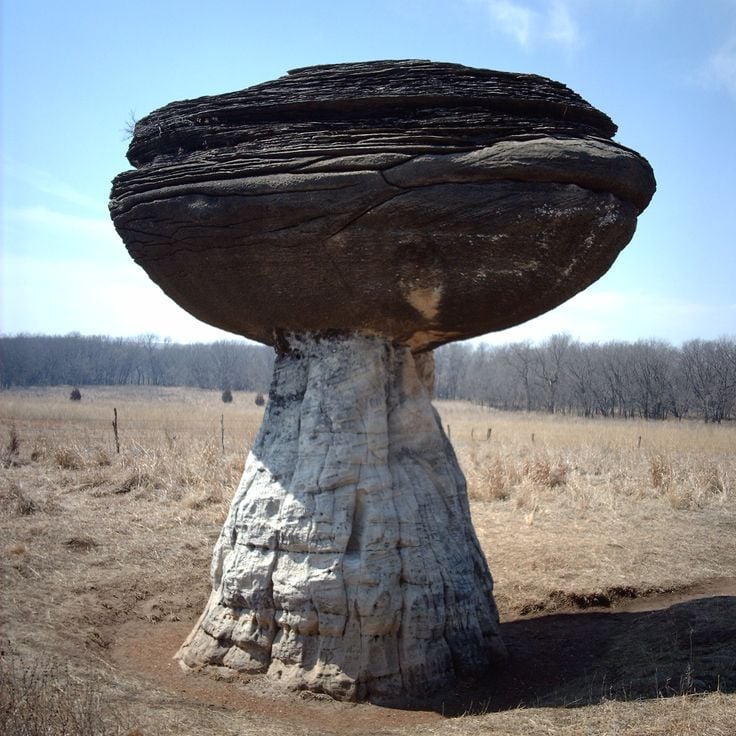
Mushroom Rock State Park, in Ellsworth County, is one of the stops in this collection dedicated to the natural history of Kansas. The sandstone here was shaped by wind and water over millions of years during the Cretaceous period. The harder rock on top held firm while the softer rock below wore away, creating shapes that look like giant mushrooms. A short walking path takes you around the formations so you can see them from every angle.
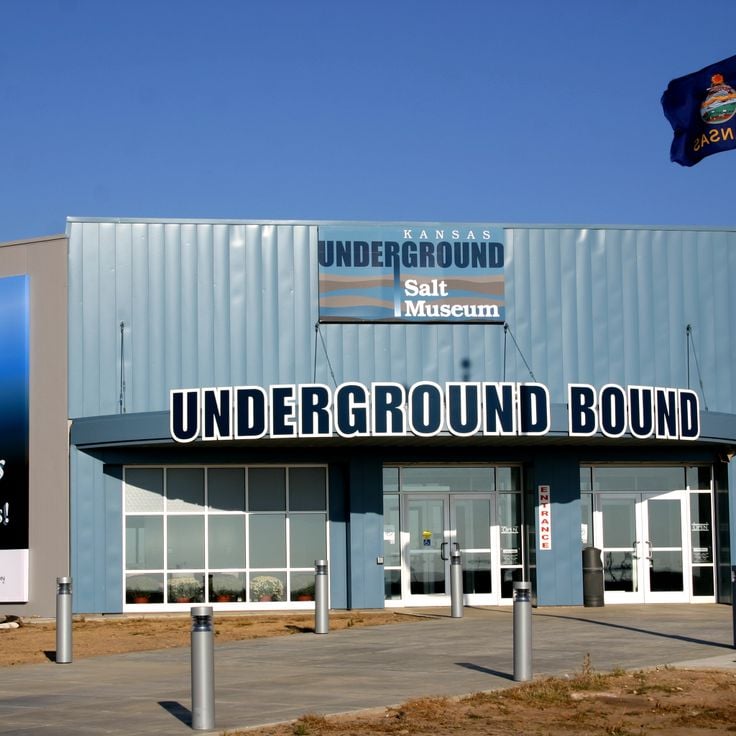
Strataca sits 200 meters (650 feet) below ground in an active salt mine near Hutchinson. You can walk through tunnels where salt has been extracted for decades. The rock walls around you are over 275 million years old, formed during the Permian period when a shallow sea covered this part of North America. Strataca shows how salt is pulled from the earth and gives a real sense of what it feels like to move through a working mine far below the surface.
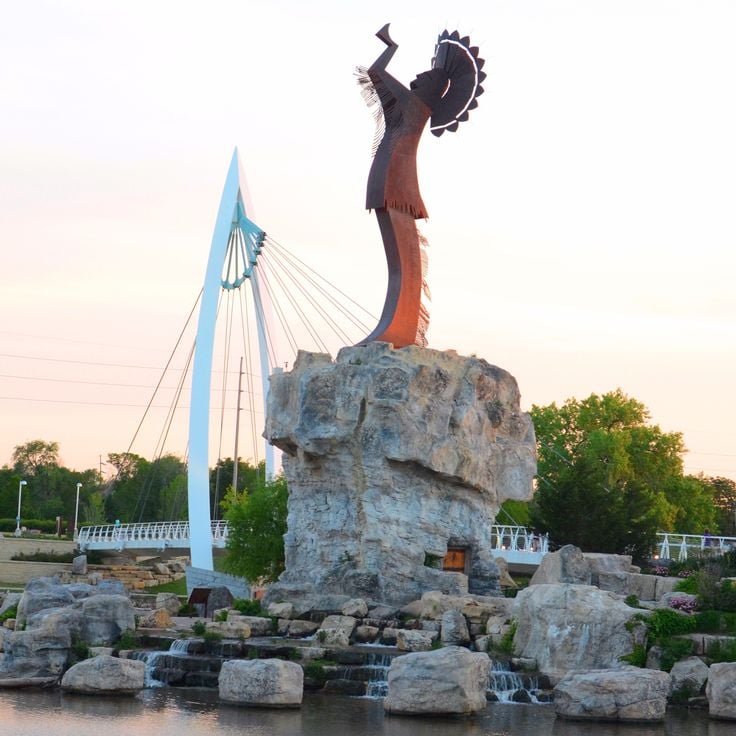
The Keeper of the Plains is a 13-meter (44-foot) steel sculpture standing where the Arkansas and Little Arkansas rivers meet in Wichita. Created in 1974 by artist Blackbear Bosin, it depicts an indigenous warrior and honors the native peoples of this region. Pedestrian bridges connect both riverbanks so visitors can walk right up to it. In the evenings, the figure is lit up and fire bowls burn at its base.
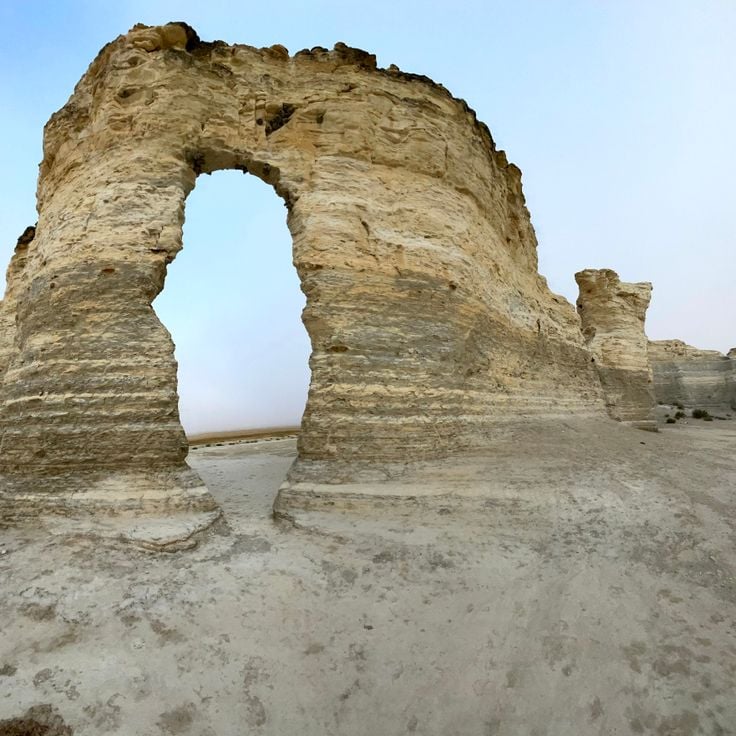
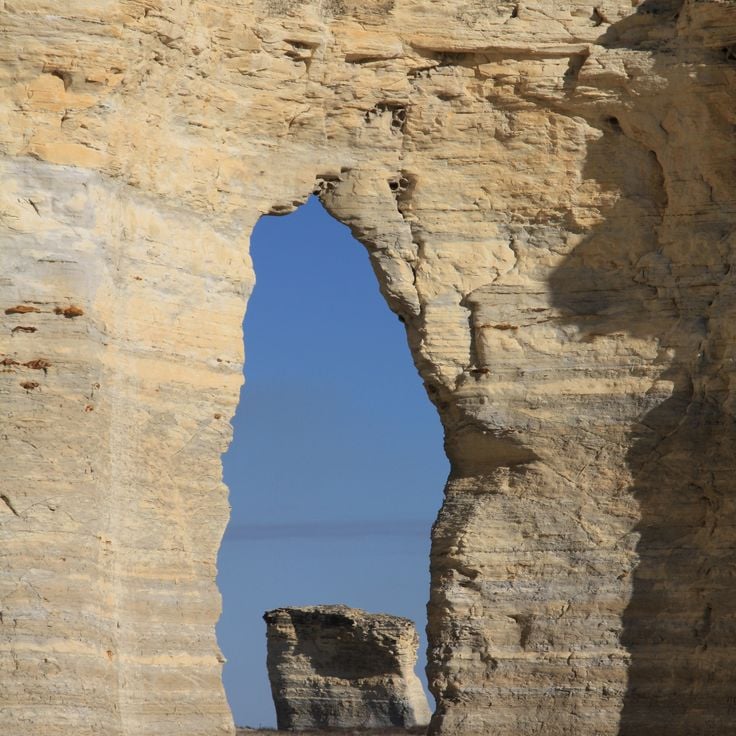
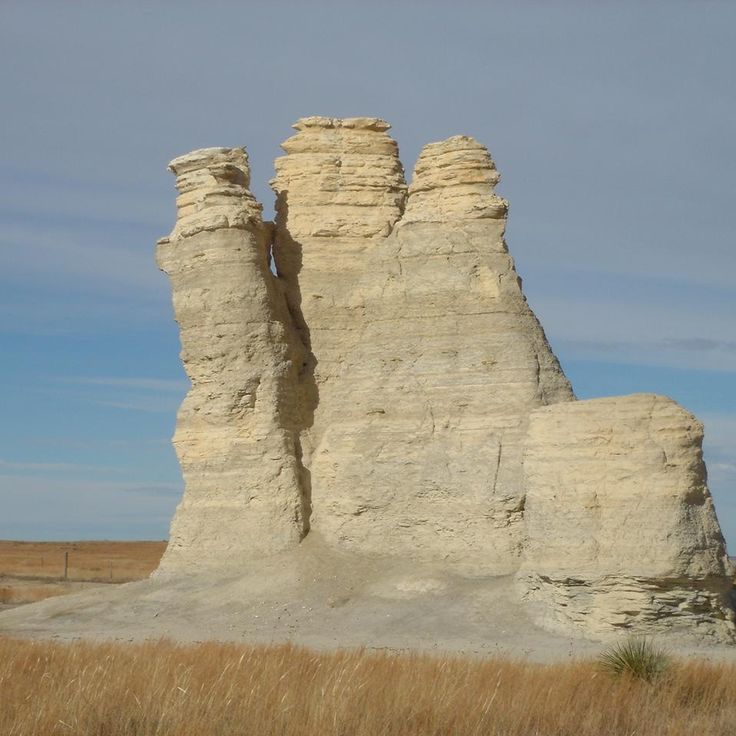
Monument Rocks are chalk formations in Gove County that formed about 80 million years ago, when a shallow inland sea covered this part of Kansas. The rocks rise up to 70 feet (21 meters) above the prairie in towers, arches, and columns of white to yellowish stone. Fossils of sea creatures are embedded in the layers. The site sits away from paved roads, in open grassland, and is free to visit.
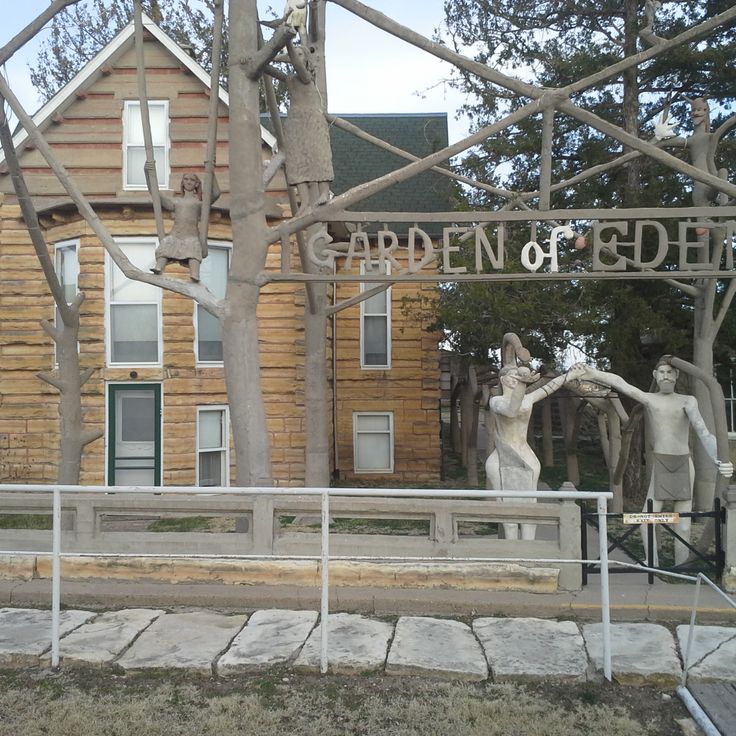
The Garden of Eden in Lucas is a collection of concrete sculptures that Samuel P. Dinsmoor built around his home between 1907 and 1928. The works show biblical scenes and his personal views on social life in early 20th-century America. This site is part of a collection that brings together natural formations, historic places, and cultural institutions across Kansas.
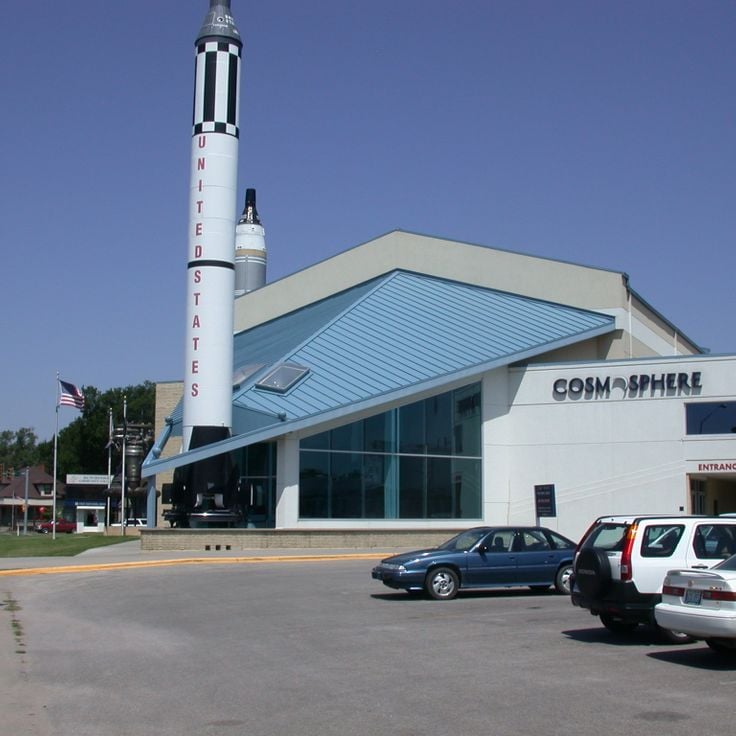
The Cosmosphere in Hutchinson holds one of the largest collections of space artifacts in the United States. You can see original capsules, spacesuits, and technical equipment from both American and Russian space programs. The halls walk you through the story of human spaceflight, from the early Mercury missions and Gemini program to the Apollo era. Soviet space history is also well represented, with objects from the Vostok and Soyuz programs on display.
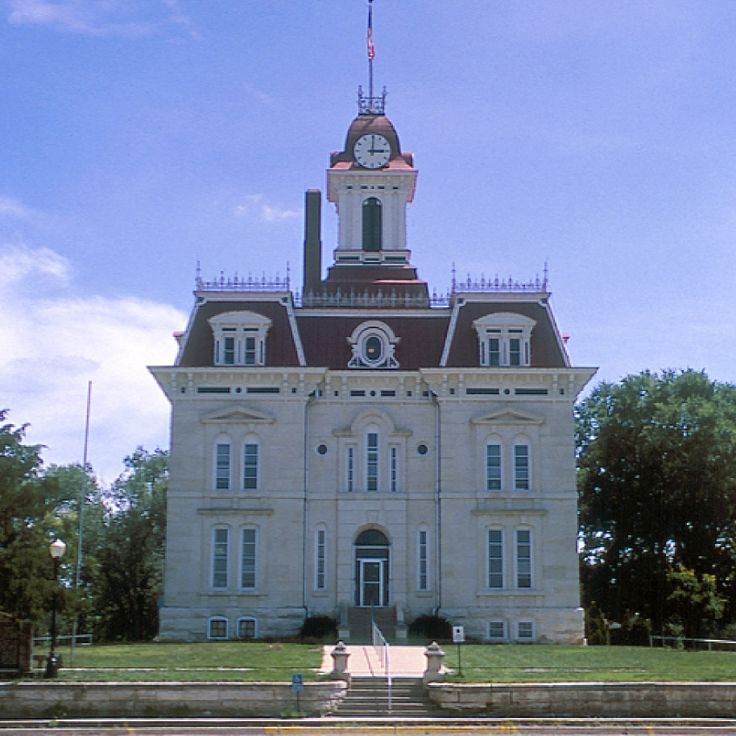
Cottonwood Falls sits at the heart of the Flint Hills in Kansas, where rolling grasslands of limestone and shale have resisted farming for centuries. The 1873 courthouse anchors Main Street and serves as the seat of Chase County. Walking through this small town, you quickly sense how closely everyday life here is tied to the open land around it.
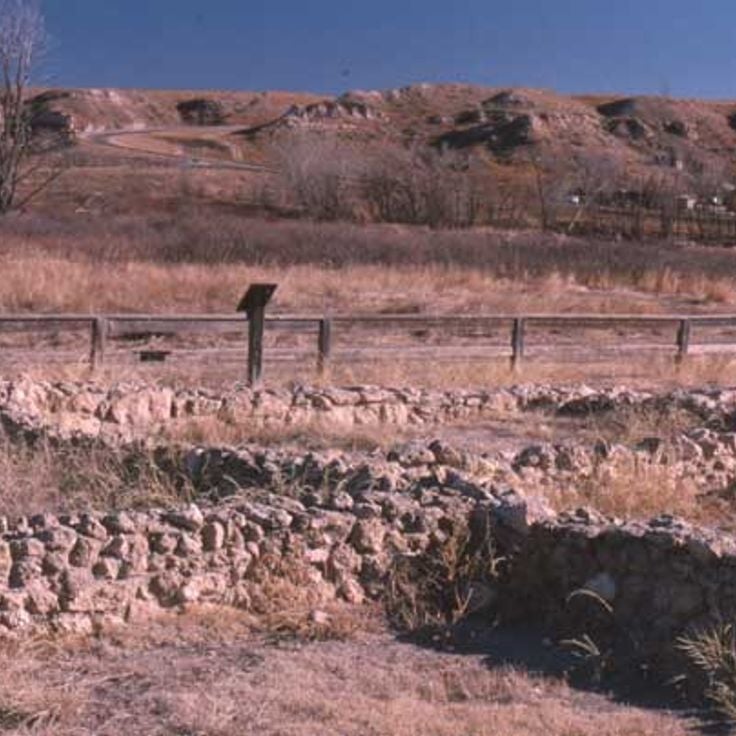
Lake Scott State Park surrounds a lake in western Kansas, in a landscape of sandstone formations and open prairie. Visitors can walk to the remains of a 17th-century Pueblo settlement once inhabited by the El Quarto people. Trails run along the shoreline and through low hills of sand-colored rock shaped by wind and rain over a very long time. Birds rest near the water and animals come to drink. This is a place where natural history and human traces meet, far from larger towns.
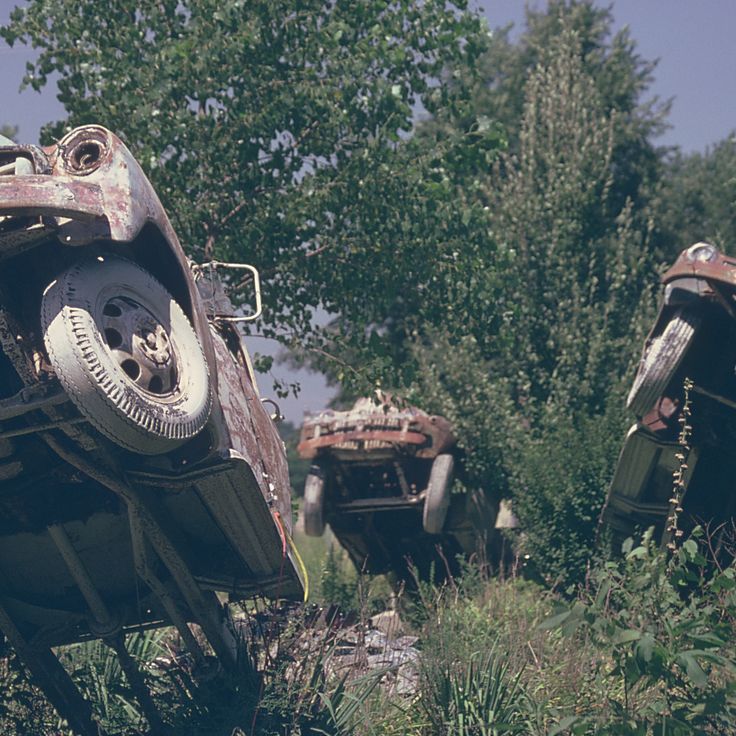
This outdoor art installation in Shawnee County features trucks and farm equipment driven vertically into the ground, standing upright like open-air sculptures. The works sit on private property but can be seen clearly from the public road without entering the grounds. As part of a collection that explores how people in Kansas shaped their land and left their mark, this site shows a local form of roadside creativity rooted in everyday rural life.
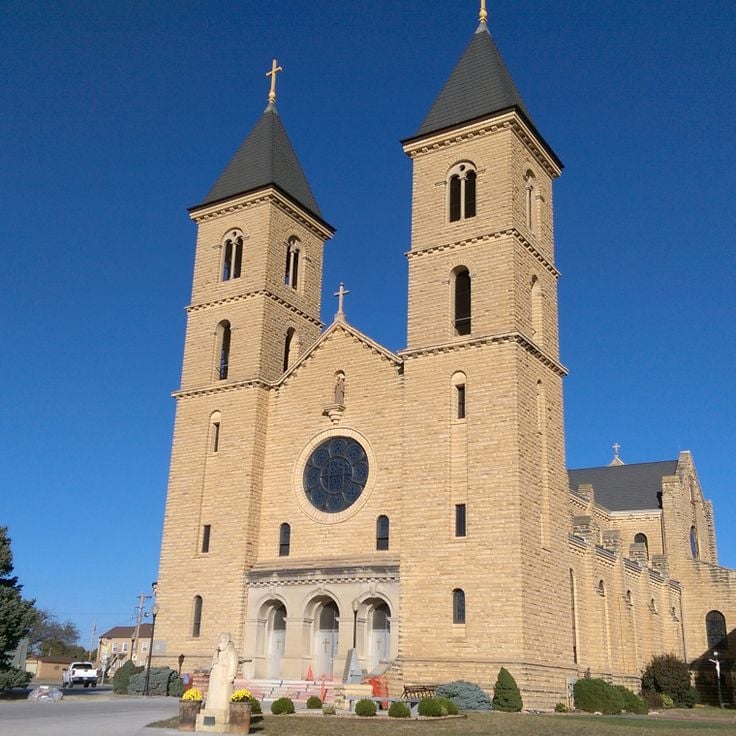
The Victoria Stone Church was completed in 1911 and stands as one of the most recognizable buildings in rural Kansas. Its twin bell towers rise 143 feet (43 meters) above the town, visible from far across the prairie. The interior seats around 1,100 people. The walls and structure are built from local limestone, a material that reflects the building traditions brought by German settlers who made this community their home. The church still holds services and community events today.
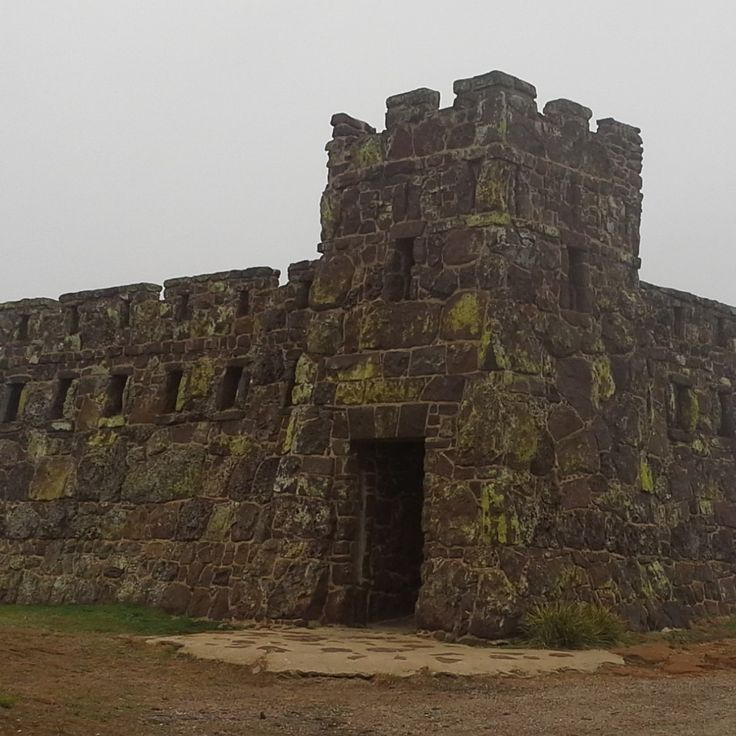
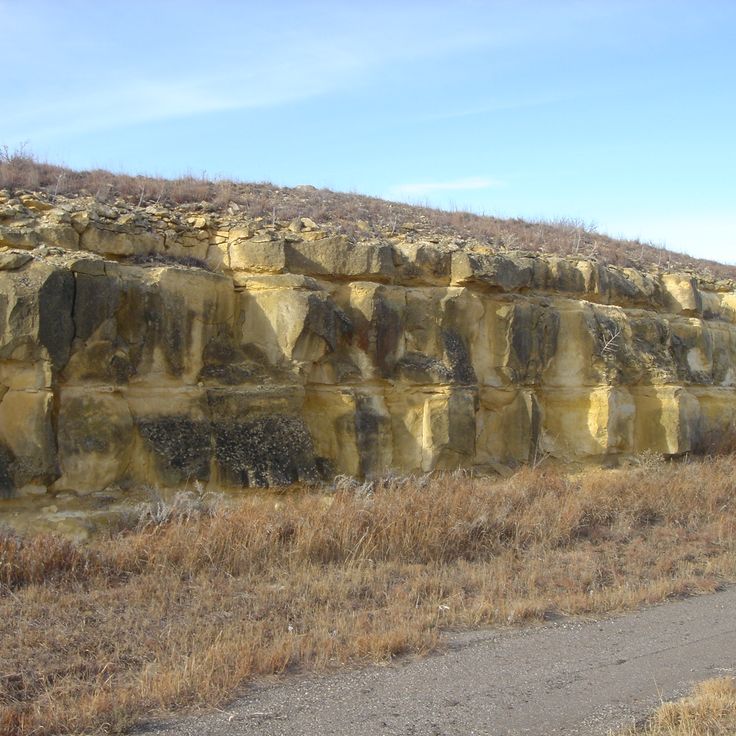
Historic Lookout Point sits on top of a sandstone hill in the Smoky Hills region of Saline County. The building is made from local stone and opens up a wide view over rolling terrain and grassland. Early settlers moving through Kansas used this spot as a landmark to find their way. A short path leads up the hill. Trees and low plants grow around the overlook. On clear days, the view reaches far across the land. This site gives a strong sense of what the landscape looks like here and why it mattered to the people who first passed through.
Reservoir State Park sits along the shore of a reservoir in Trego County, where limestone cliffs line the water's edge. These rocks are the remains of an ancient seabed that hardened over millions of years. People fish along the shoreline and camp on the designated grounds nearby. Trails run along the cliff edges and open up views over the flat land around. This park connects the deep geological past of Kansas with the way people spend time outdoors today.
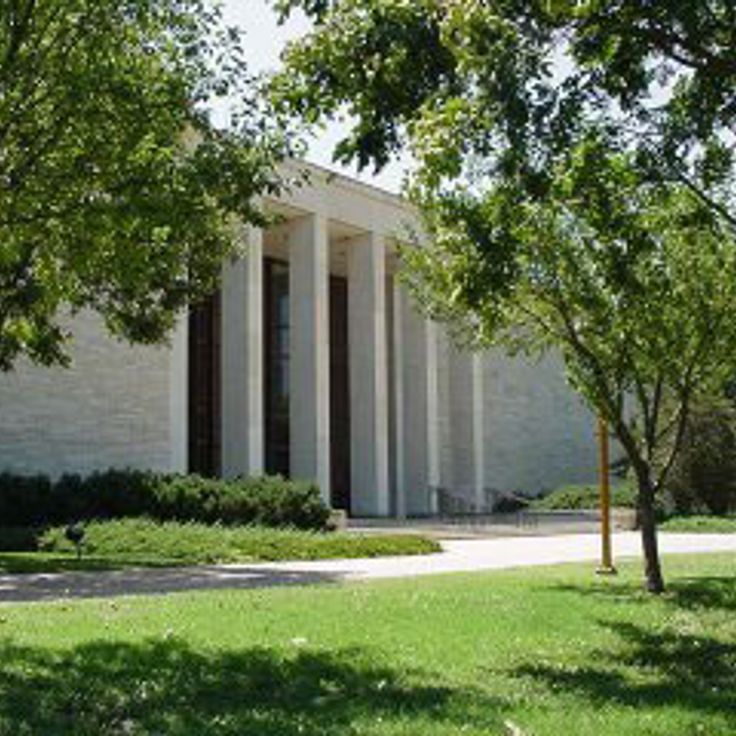
The Dwight D. Eisenhower Presidential Library in Abilene holds personal objects, photographs, and documents from Eisenhower's years as a general and as the 34th president of the United States. Visitors can see uniforms, military decorations, and diplomatic letters. A separate building holds his grave. The grounds also include his birthplace home. The exhibits cover World War II, the Cold War, and American politics in the 1950s.
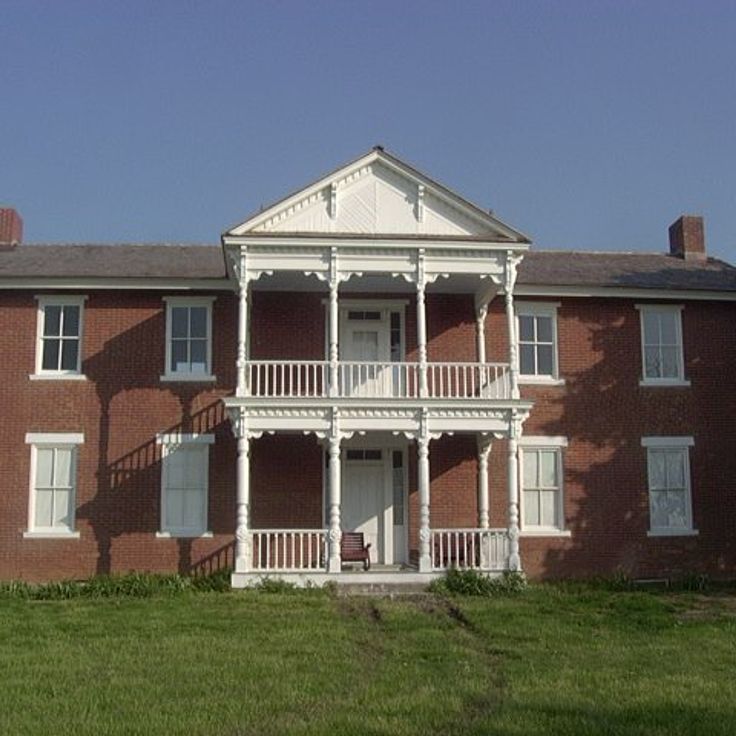
The Grinter Place State Historic Site in Kansas City is a timber house from 1857 that shows how early European settlers lived in Kansas Territory. The rooms hold furniture and objects from the mid-19th century. The building sits on the site of a former ferry crossing where travelers once made their way over the Kansas River, when the region was barely settled. It stands on its original foundation and gives a clear sense of daily life here before Kansas became a state in 1861.
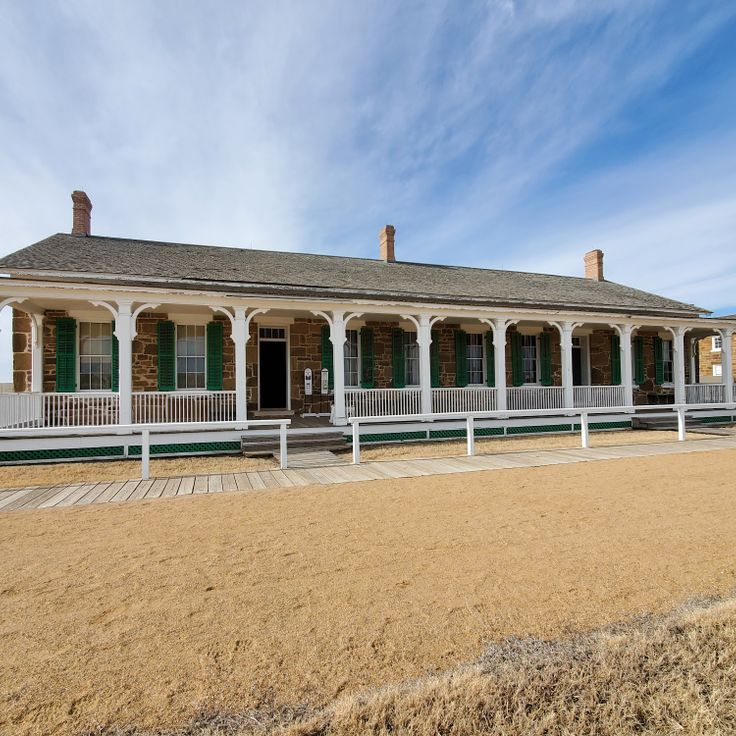
Fort Larned National Historic Site is a military post built in the 1860s to protect travelers along the Santa Fe Trail. Nine original stone buildings still stand around an open parade ground, including barracks, storerooms, and officers' quarters. The rooms hold period furniture and military equipment such as uniforms, weapons, and everyday tools. The fort operated from 1859 to 1878 as a supply station and a place for negotiations with Plains Indian groups. Sitting beside the Pawnee River, it once stood at a key passage for traders and settlers moving through Kansas in the 19th century.
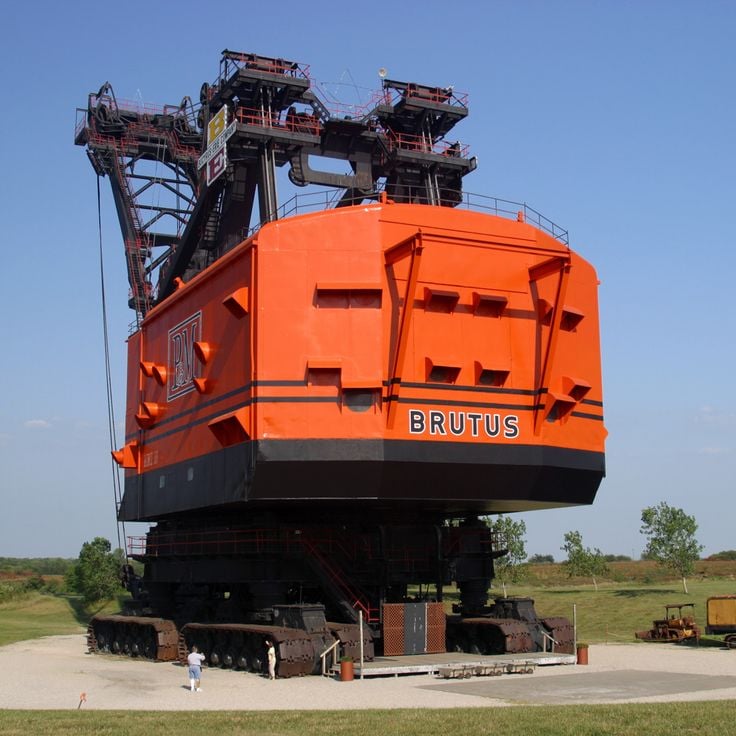
Big Brutus is a giant electric shovel that worked in coal mines until 1974 and now stands in West Mineral for anyone to visit. It rises about 160 feet (49 meters) tall and is one of the largest mining machines of its kind still standing in North America. Inside, you can walk through the control cabin, look at the drive wheels, and follow the mechanical systems up close. A small museum on the grounds tells the story of coal mining in Kansas. From the viewing platform, you can look out over the old mining areas nearby, now returned to open land.
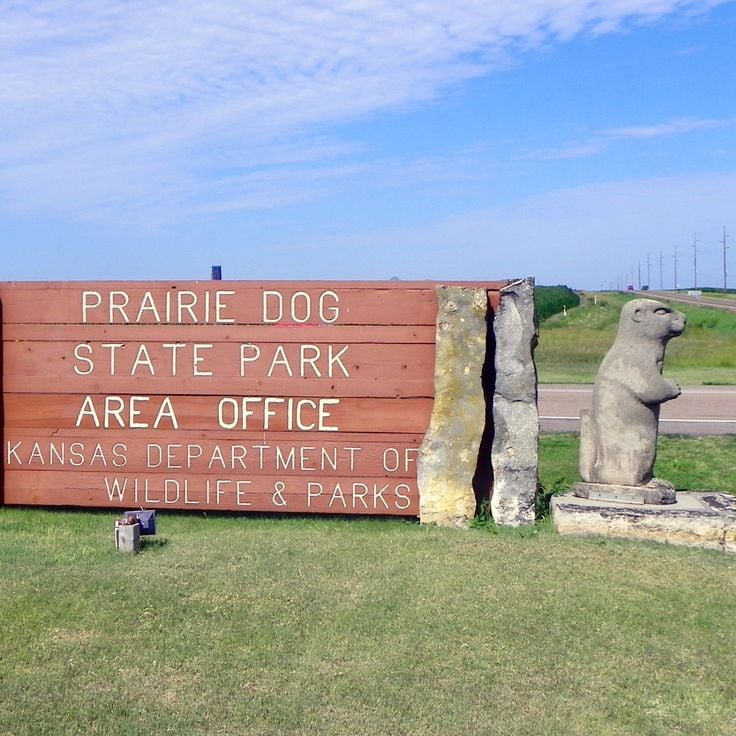
Prairie Dog State Park sits on the shores of Keith Sebelius Reservoir in the northwestern corner of Kansas. The park is home to an active colony of black-tailed prairie dogs living in a dedicated observation area, where you can watch these animals go about their daily routines. The reservoir offers fishing for catfish, bass, and walleye, as well as boating. The shoreline moves between open grassland and sandy beaches. Campsites, hiking trails, and picnic areas overlook the water. The prairie dog colony is open year-round and gives a close look at how these animals live together in the open prairie.
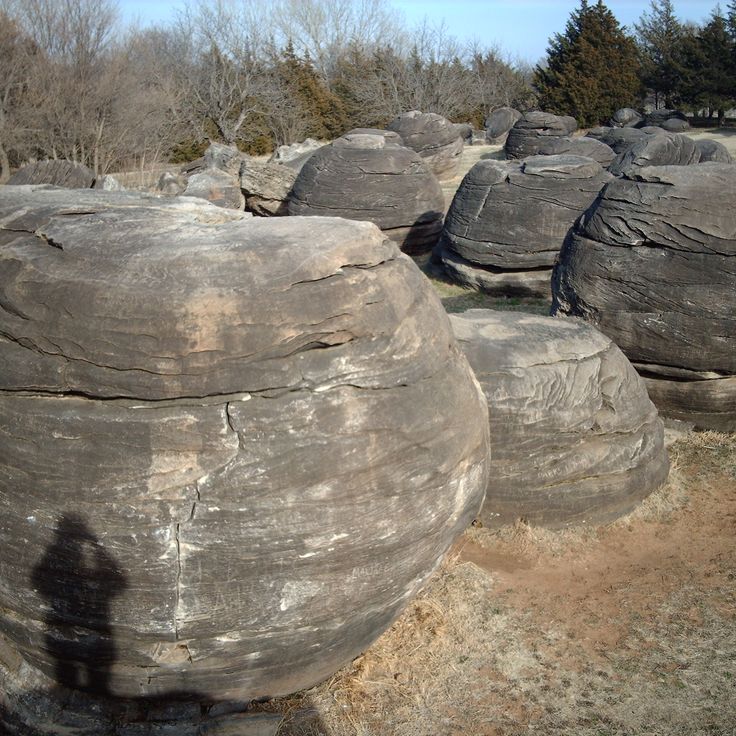
Rock City Park near Minneapolis shows more than 200 round sandstone boulders shaped by erosion over millions of years. These rocks belong to the Dakota Formation and sit out in the open, so you can walk right among them. The park fits naturally into this collection because it shows what the ground of Kansas is made of and how water and wind have shaped the land over time.
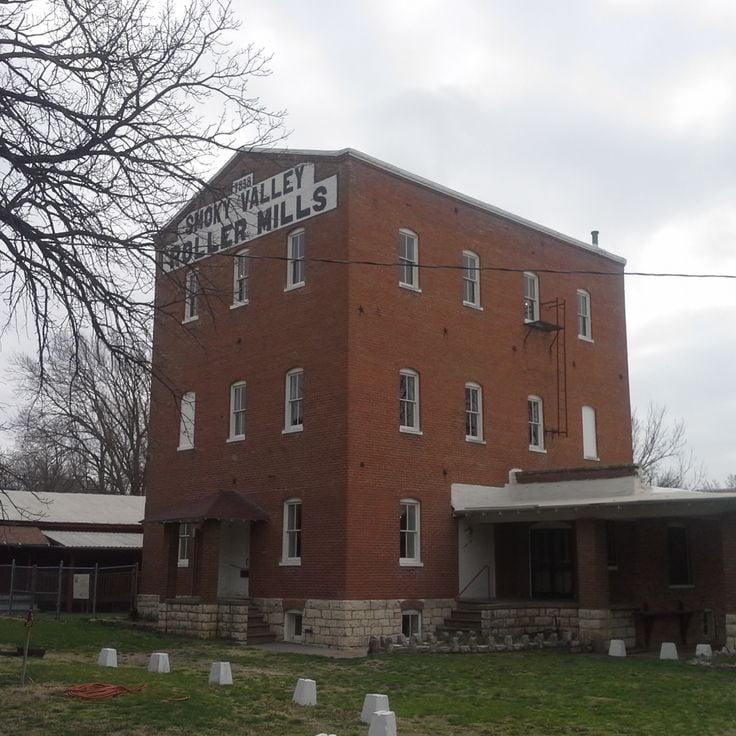
The Smoky Valley Roller Mill in Lindsborg is a working grain mill from the 19th century. Inside, the original grinding machines and tools used for flour production are still in place. Visitors can follow the steps of how grain was processed before industrial methods changed the way things were done. This mill gives a clear picture of what farming life looked like in Kansas during that era.
Castle Rock rises from the open prairie of Gove County in western Kansas as a set of limestone pillars that reach about 70 feet (21 meters) into the sky. The rock here was once part of a seafloor that covered this region around 80 million years ago. Over time, wind and water slowly wore away the softer material, leaving these towers standing alone on the flat land. Walking up to Castle Rock gives a strong sense of how old the ground beneath your feet really is.
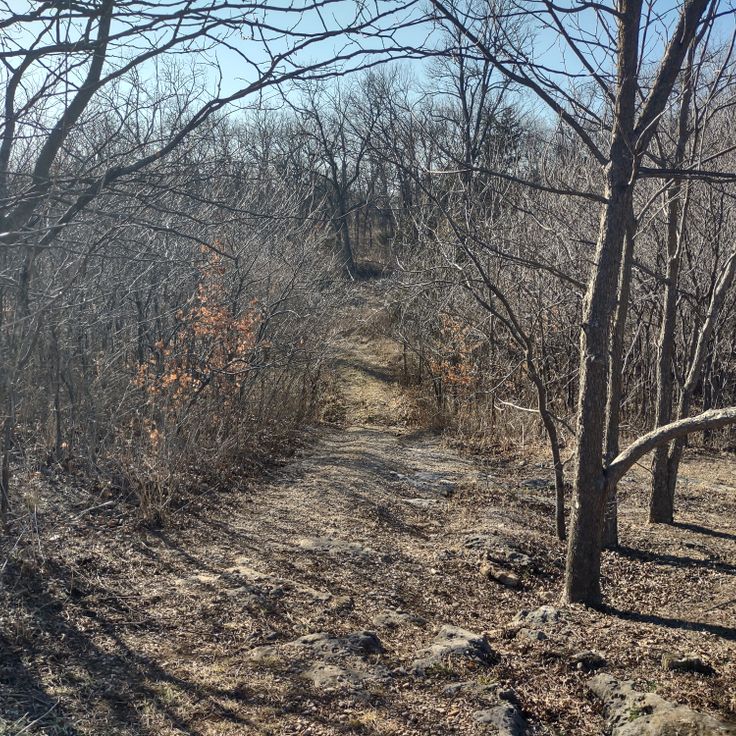
Elk City State Park sits in southeastern Kansas, where the land rolls gently and oaks line the trails. This park offers hiking routes through forested terrain, a lake for fishing and boating, and camping spots where you can spend time close to the woods and the water. The lake draws anglers and welcomes canoes and small boats. Along the shore and through the trees, wildlife is often within sight. As part of this collection on Kansas, this park shows the natural side of the state: land shaped over time, best understood by walking through it.
The Sternberg Museum of Natural History in Hays displays fossils from the Cretaceous period, when a shallow inland sea covered western Kansas. The exhibition halls hold complete skeletons of marine reptiles, including mosasaurs and plesiosaurs that lived here around 80 million years ago. The collections also feature fossilized fish, ammonites, and pterosaurs. A reconstructed diorama shows the prehistoric underwater world and its inhabitants. The museum also documents the geological layers of the Great Plains and preserves records of early settlement by European immigrants in the 1800s.
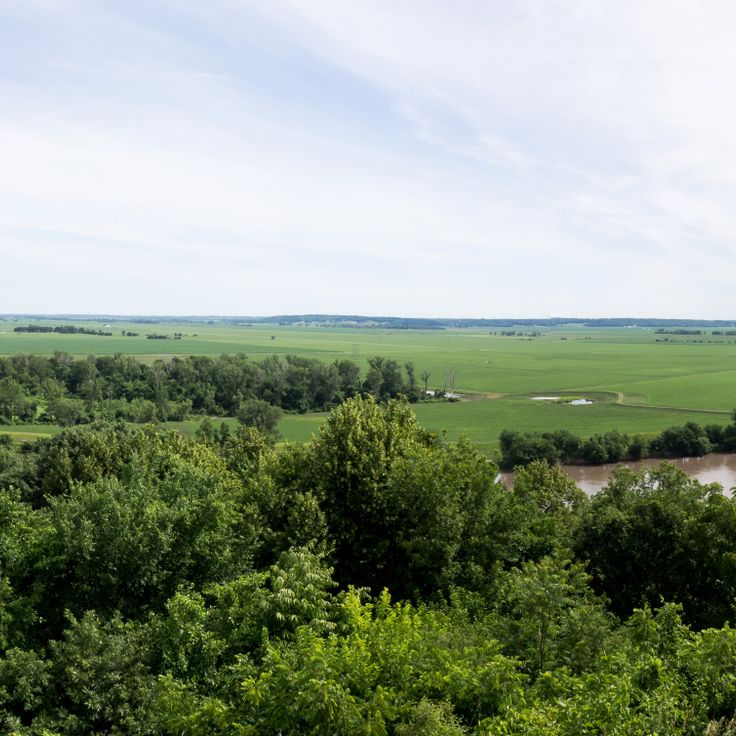
The Four-State Lookout sits on high ground above the Missouri River near White Cloud, and it is one of the few places where you can see four states at once. On clear days, Kansas, Missouri, Nebraska, and Iowa all come into view, with river bends, open fields, and wooded hills spreading out below. A marker on site points out which direction leads to which state. This lookout fits naturally into a collection about Kansas, showing how the land reaches beyond its own borders.
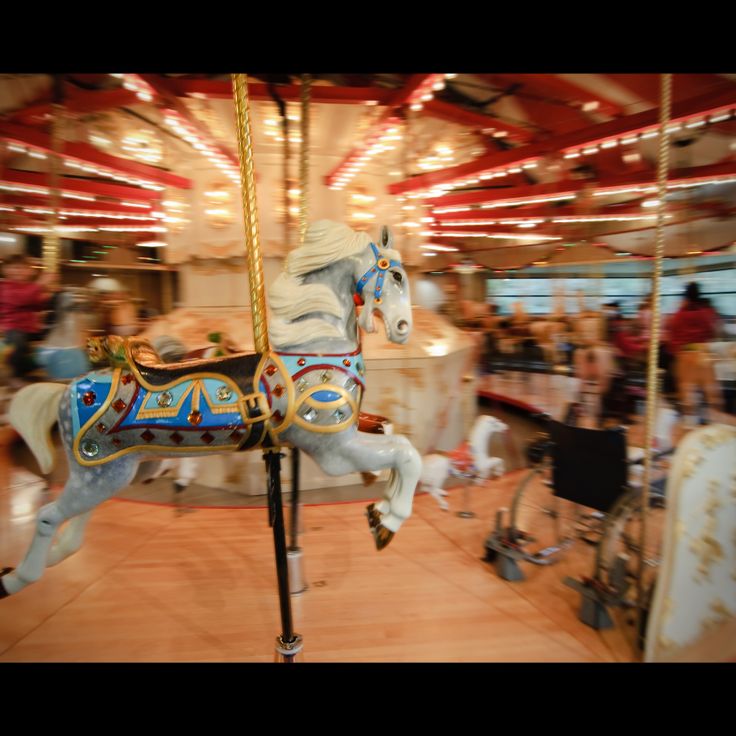
The C.W. Parker Carousel Museum in Leavenworth celebrates the craft of hand-carved carousels made in the 19th century, rooted in the story of a manufacturer who built his business right here in this city. Walking through the exhibition, you can get close to wooden horses and other animal figures, see the tools and mechanisms used in production, and understand how these rides were assembled and painted by hand. This museum connects the local history of Leavenworth to a broader American tradition of fairground art.
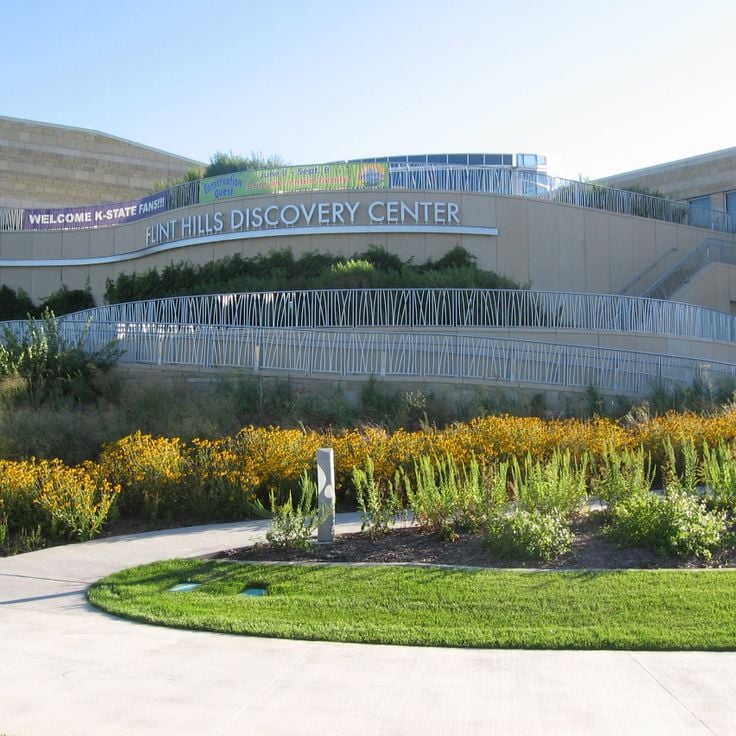
The Flint Hills Discovery Center in Manhattan, Kansas, tells the story of the tallgrass prairie and the people who have lived and worked across it. Exhibits walk you through how fire shapes the grassland, how ranching developed over time, and how geology connects to everyday life in this part of the state. The center sits at the edge of the Flint Hills, one of the last large stretches of tallgrass prairie in North America, and brings together natural history, farming traditions, and the story of 19th-century settlement in one place.
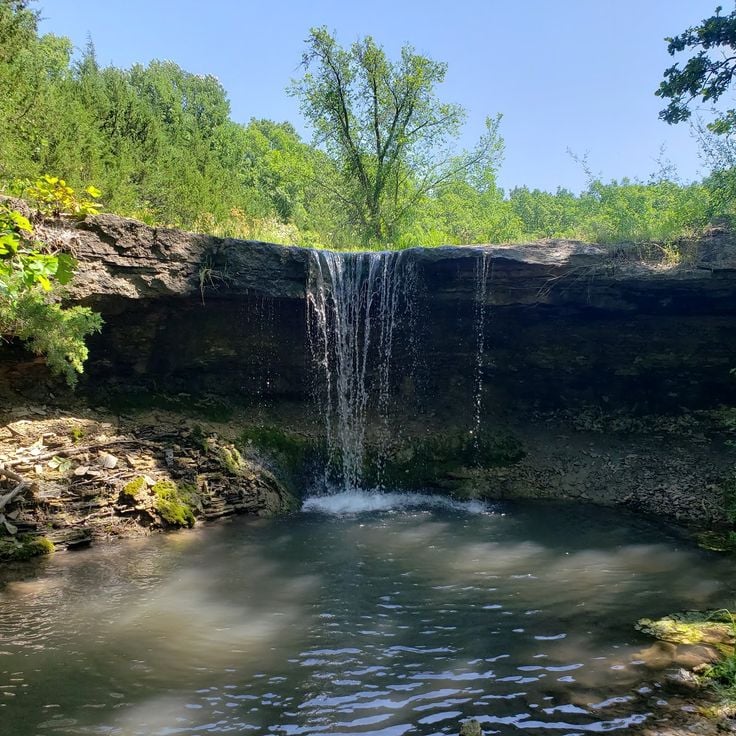
Alcove Springs was a resting place along the Oregon Trail, the route that thousands of settlers traveled west in the 19th century. At this spot in Kansas, a spring flows from the rock, a small waterfall drops into a pool, and names carved into stone recall the people who passed through. This place shows how the land itself shaped the daily lives of those travelers.
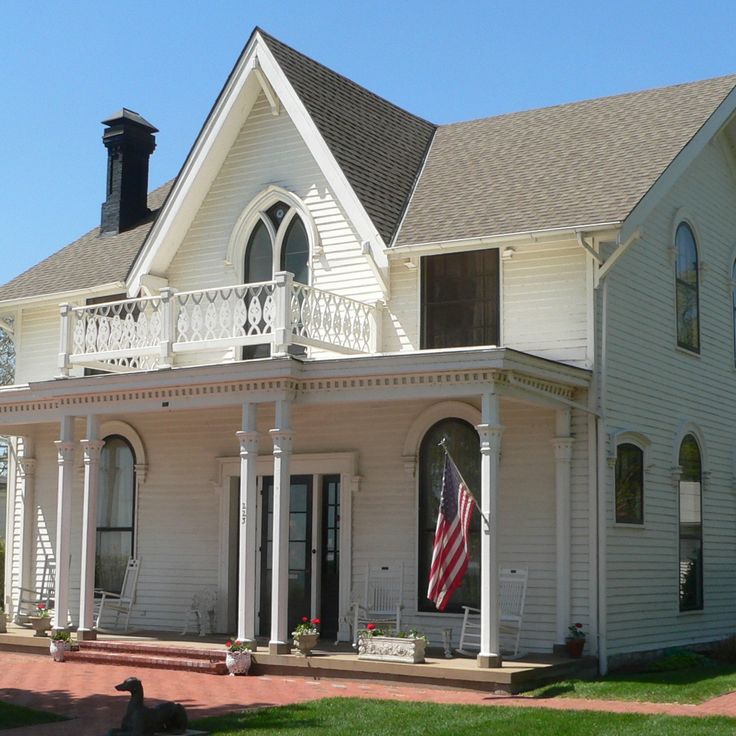
The Amelia Earhart Birthplace Museum stands in Atchison in the house where Amelia Earhart grew up, built in 1873. The rooms are arranged to show how the Earhart family lived in the late 19th century. Photos, personal objects, flight equipment, and documents trace how she became one of the most celebrated pilots in history.
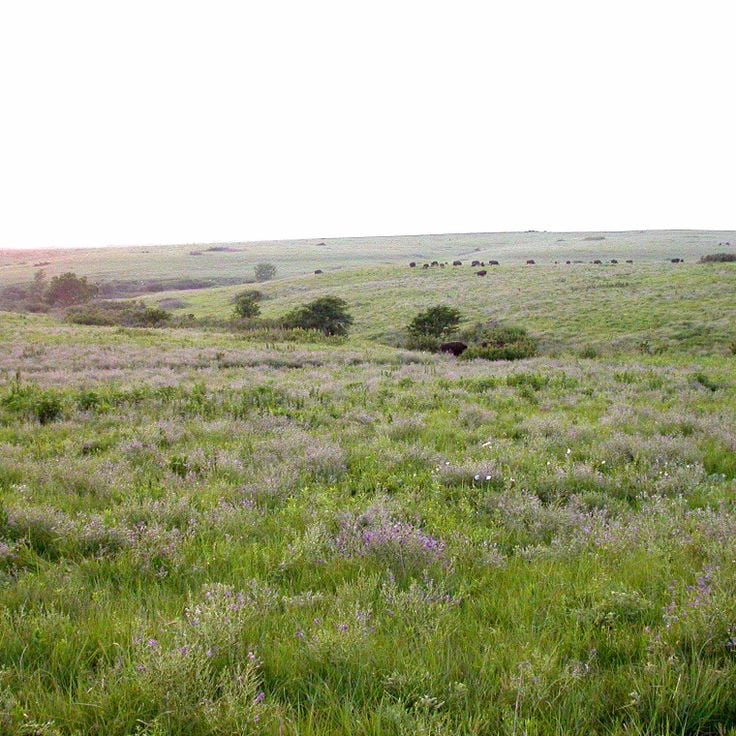
The Konza Prairie Biological Station in Riley County shows what the Kansas grasslands looked like before farming took over. Marked trails wind through tall grasses and seasonal wildflowers, giving visitors a chance to walk through land that has been studied by researchers for decades. The station sits within this collection as an example of the natural forces that shaped Kansas long before people began to build and cultivate it.
The Marais des Cygnes Massacre Site marks the killing of five settlers on May 19, 1858 by militias that supported slavery. This site is part of a collection that traces how people lived and left their mark on Kansas. A small museum on the grounds explains what happened that day and why, placing the event within the broader conflict of the Bleeding Kansas period, when violence between pro-slavery and anti-slavery groups tore through the region.
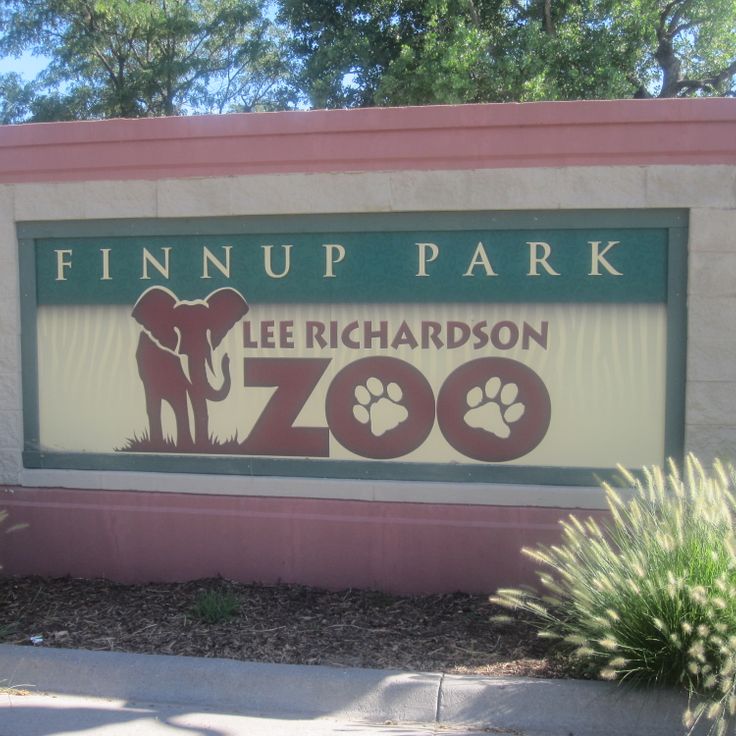
The Lee Richardson Zoo in Garden City is home to animals from several continents. Walking its paths, you can watch mammals, birds, and reptiles in their enclosures. The grounds sit inside a park with shade trees and open lawn areas. Families can attend talks and workshops, and signs along the way explain where each animal comes from and how it lives.
Little Jerusalem Badlands State Park, in Logan County, western Kansas, holds chalk formations from the Niobrara formation that took shape about 85 million years ago at the bottom of a shallow inland sea. The cliffs rise to around 100 feet (30 meters), and some rock towers stand alone above the surrounding plain. Walking through the park, you can read the layers of rock like pages of a very old story about a time when water covered this part of North America.
Mushroom Rock State Park, in Ellsworth County, is one of the stops in this collection dedicated to the natural history of Kansas. The sandstone here was shaped by wind and water over millions of years during the Cretaceous period. The harder rock on top held firm while the softer rock below wore away, creating shapes that look like giant mushrooms. A short walking path takes you around the formations so you can see them from every angle.
Strataca sits 200 meters (650 feet) below ground in an active salt mine near Hutchinson. You can walk through tunnels where salt has been extracted for decades. The rock walls around you are over 275 million years old, formed during the Permian period when a shallow sea covered this part of North America. Strataca shows how salt is pulled from the earth and gives a real sense of what it feels like to move through a working mine far below the surface.
The Keeper of the Plains is a 13-meter (44-foot) steel sculpture standing where the Arkansas and Little Arkansas rivers meet in Wichita. Created in 1974 by artist Blackbear Bosin, it depicts an indigenous warrior and honors the native peoples of this region. Pedestrian bridges connect both riverbanks so visitors can walk right up to it. In the evenings, the figure is lit up and fire bowls burn at its base.
Monument Rocks are chalk formations in Gove County that formed about 80 million years ago, when a shallow inland sea covered this part of Kansas. The rocks rise up to 70 feet (21 meters) above the prairie in towers, arches, and columns of white to yellowish stone. Fossils of sea creatures are embedded in the layers. The site sits away from paved roads, in open grassland, and is free to visit.
The Garden of Eden in Lucas is a collection of concrete sculptures that Samuel P. Dinsmoor built around his home between 1907 and 1928. The works show biblical scenes and his personal views on social life in early 20th-century America. This site is part of a collection that brings together natural formations, historic places, and cultural institutions across Kansas.
The Cosmosphere in Hutchinson holds one of the largest collections of space artifacts in the United States. You can see original capsules, spacesuits, and technical equipment from both American and Russian space programs. The halls walk you through the story of human spaceflight, from the early Mercury missions and Gemini program to the Apollo era. Soviet space history is also well represented, with objects from the Vostok and Soyuz programs on display.
Cottonwood Falls sits at the heart of the Flint Hills in Kansas, where rolling grasslands of limestone and shale have resisted farming for centuries. The 1873 courthouse anchors Main Street and serves as the seat of Chase County. Walking through this small town, you quickly sense how closely everyday life here is tied to the open land around it.
Lake Scott State Park surrounds a lake in western Kansas, in a landscape of sandstone formations and open prairie. Visitors can walk to the remains of a 17th-century Pueblo settlement once inhabited by the El Quarto people. Trails run along the shoreline and through low hills of sand-colored rock shaped by wind and rain over a very long time. Birds rest near the water and animals come to drink. This is a place where natural history and human traces meet, far from larger towns.
This outdoor art installation in Shawnee County features trucks and farm equipment driven vertically into the ground, standing upright like open-air sculptures. The works sit on private property but can be seen clearly from the public road without entering the grounds. As part of a collection that explores how people in Kansas shaped their land and left their mark, this site shows a local form of roadside creativity rooted in everyday rural life.
The Victoria Stone Church was completed in 1911 and stands as one of the most recognizable buildings in rural Kansas. Its twin bell towers rise 143 feet (43 meters) above the town, visible from far across the prairie. The interior seats around 1,100 people. The walls and structure are built from local limestone, a material that reflects the building traditions brought by German settlers who made this community their home. The church still holds services and community events today.
Historic Lookout Point sits on top of a sandstone hill in the Smoky Hills region of Saline County. The building is made from local stone and opens up a wide view over rolling terrain and grassland. Early settlers moving through Kansas used this spot as a landmark to find their way. A short path leads up the hill. Trees and low plants grow around the overlook. On clear days, the view reaches far across the land. This site gives a strong sense of what the landscape looks like here and why it mattered to the people who first passed through.
Reservoir State Park sits along the shore of a reservoir in Trego County, where limestone cliffs line the water's edge. These rocks are the remains of an ancient seabed that hardened over millions of years. People fish along the shoreline and camp on the designated grounds nearby. Trails run along the cliff edges and open up views over the flat land around. This park connects the deep geological past of Kansas with the way people spend time outdoors today.
The Dwight D. Eisenhower Presidential Library in Abilene holds personal objects, photographs, and documents from Eisenhower's years as a general and as the 34th president of the United States. Visitors can see uniforms, military decorations, and diplomatic letters. A separate building holds his grave. The grounds also include his birthplace home. The exhibits cover World War II, the Cold War, and American politics in the 1950s.
The Grinter Place State Historic Site in Kansas City is a timber house from 1857 that shows how early European settlers lived in Kansas Territory. The rooms hold furniture and objects from the mid-19th century. The building sits on the site of a former ferry crossing where travelers once made their way over the Kansas River, when the region was barely settled. It stands on its original foundation and gives a clear sense of daily life here before Kansas became a state in 1861.
Fort Larned National Historic Site is a military post built in the 1860s to protect travelers along the Santa Fe Trail. Nine original stone buildings still stand around an open parade ground, including barracks, storerooms, and officers' quarters. The rooms hold period furniture and military equipment such as uniforms, weapons, and everyday tools. The fort operated from 1859 to 1878 as a supply station and a place for negotiations with Plains Indian groups. Sitting beside the Pawnee River, it once stood at a key passage for traders and settlers moving through Kansas in the 19th century.
Big Brutus is a giant electric shovel that worked in coal mines until 1974 and now stands in West Mineral for anyone to visit. It rises about 160 feet (49 meters) tall and is one of the largest mining machines of its kind still standing in North America. Inside, you can walk through the control cabin, look at the drive wheels, and follow the mechanical systems up close. A small museum on the grounds tells the story of coal mining in Kansas. From the viewing platform, you can look out over the old mining areas nearby, now returned to open land.
Prairie Dog State Park sits on the shores of Keith Sebelius Reservoir in the northwestern corner of Kansas. The park is home to an active colony of black-tailed prairie dogs living in a dedicated observation area, where you can watch these animals go about their daily routines. The reservoir offers fishing for catfish, bass, and walleye, as well as boating. The shoreline moves between open grassland and sandy beaches. Campsites, hiking trails, and picnic areas overlook the water. The prairie dog colony is open year-round and gives a close look at how these animals live together in the open prairie.
Rock City Park near Minneapolis shows more than 200 round sandstone boulders shaped by erosion over millions of years. These rocks belong to the Dakota Formation and sit out in the open, so you can walk right among them. The park fits naturally into this collection because it shows what the ground of Kansas is made of and how water and wind have shaped the land over time.
The Smoky Valley Roller Mill in Lindsborg is a working grain mill from the 19th century. Inside, the original grinding machines and tools used for flour production are still in place. Visitors can follow the steps of how grain was processed before industrial methods changed the way things were done. This mill gives a clear picture of what farming life looked like in Kansas during that era.
Castle Rock rises from the open prairie of Gove County in western Kansas as a set of limestone pillars that reach about 70 feet (21 meters) into the sky. The rock here was once part of a seafloor that covered this region around 80 million years ago. Over time, wind and water slowly wore away the softer material, leaving these towers standing alone on the flat land. Walking up to Castle Rock gives a strong sense of how old the ground beneath your feet really is.
Elk City State Park sits in southeastern Kansas, where the land rolls gently and oaks line the trails. This park offers hiking routes through forested terrain, a lake for fishing and boating, and camping spots where you can spend time close to the woods and the water. The lake draws anglers and welcomes canoes and small boats. Along the shore and through the trees, wildlife is often within sight. As part of this collection on Kansas, this park shows the natural side of the state: land shaped over time, best understood by walking through it.
The Sternberg Museum of Natural History in Hays displays fossils from the Cretaceous period, when a shallow inland sea covered western Kansas. The exhibition halls hold complete skeletons of marine reptiles, including mosasaurs and plesiosaurs that lived here around 80 million years ago. The collections also feature fossilized fish, ammonites, and pterosaurs. A reconstructed diorama shows the prehistoric underwater world and its inhabitants. The museum also documents the geological layers of the Great Plains and preserves records of early settlement by European immigrants in the 1800s.
The Four-State Lookout sits on high ground above the Missouri River near White Cloud, and it is one of the few places where you can see four states at once. On clear days, Kansas, Missouri, Nebraska, and Iowa all come into view, with river bends, open fields, and wooded hills spreading out below. A marker on site points out which direction leads to which state. This lookout fits naturally into a collection about Kansas, showing how the land reaches beyond its own borders.
The C.W. Parker Carousel Museum in Leavenworth celebrates the craft of hand-carved carousels made in the 19th century, rooted in the story of a manufacturer who built his business right here in this city. Walking through the exhibition, you can get close to wooden horses and other animal figures, see the tools and mechanisms used in production, and understand how these rides were assembled and painted by hand. This museum connects the local history of Leavenworth to a broader American tradition of fairground art.
The Flint Hills Discovery Center in Manhattan, Kansas, tells the story of the tallgrass prairie and the people who have lived and worked across it. Exhibits walk you through how fire shapes the grassland, how ranching developed over time, and how geology connects to everyday life in this part of the state. The center sits at the edge of the Flint Hills, one of the last large stretches of tallgrass prairie in North America, and brings together natural history, farming traditions, and the story of 19th-century settlement in one place.
Alcove Springs was a resting place along the Oregon Trail, the route that thousands of settlers traveled west in the 19th century. At this spot in Kansas, a spring flows from the rock, a small waterfall drops into a pool, and names carved into stone recall the people who passed through. This place shows how the land itself shaped the daily lives of those travelers.
The Amelia Earhart Birthplace Museum stands in Atchison in the house where Amelia Earhart grew up, built in 1873. The rooms are arranged to show how the Earhart family lived in the late 19th century. Photos, personal objects, flight equipment, and documents trace how she became one of the most celebrated pilots in history.
The Konza Prairie Biological Station in Riley County shows what the Kansas grasslands looked like before farming took over. Marked trails wind through tall grasses and seasonal wildflowers, giving visitors a chance to walk through land that has been studied by researchers for decades. The station sits within this collection as an example of the natural forces that shaped Kansas long before people began to build and cultivate it.
The Marais des Cygnes Massacre Site marks the killing of five settlers on May 19, 1858 by militias that supported slavery. This site is part of a collection that traces how people lived and left their mark on Kansas. A small museum on the grounds explains what happened that day and why, placing the event within the broader conflict of the Bleeding Kansas period, when violence between pro-slavery and anti-slavery groups tore through the region.
The Lee Richardson Zoo in Garden City is home to animals from several continents. Walking its paths, you can watch mammals, birds, and reptiles in their enclosures. The grounds sit inside a park with shade trees and open lawn areas. Families can attend talks and workshops, and signs along the way explain where each animal comes from and how it lives.
Little Jerusalem Badlands State Park, in Logan County, western Kansas, holds chalk formations from the Niobrara formation that took shape about 85 million years ago at the bottom of a shallow inland sea. The cliffs rise to around 100 feet (30 meters), and some rock towers stand alone above the surrounding plain. Walking through the park, you can read the layers of rock like pages of a very old story about a time when water covered this part of North America.
Mushroom Rock State Park, in Ellsworth County, is one of the stops in this collection dedicated to the natural history of Kansas. The sandstone here was shaped by wind and water over millions of years during the Cretaceous period. The harder rock on top held firm while the softer rock below wore away, creating shapes that look like giant mushrooms. A short walking path takes you around the formations so you can see them from every angle.
Strataca sits 200 meters (650 feet) below ground in an active salt mine near Hutchinson. You can walk through tunnels where salt has been extracted for decades. The rock walls around you are over 275 million years old, formed during the Permian period when a shallow sea covered this part of North America. Strataca shows how salt is pulled from the earth and gives a real sense of what it feels like to move through a working mine far below the surface.
The Keeper of the Plains is a 13-meter (44-foot) steel sculpture standing where the Arkansas and Little Arkansas rivers meet in Wichita. Created in 1974 by artist Blackbear Bosin, it depicts an indigenous warrior and honors the native peoples of this region. Pedestrian bridges connect both riverbanks so visitors can walk right up to it. In the evenings, the figure is lit up and fire bowls burn at its base.
Monument Rocks are chalk formations in Gove County that formed about 80 million years ago, when a shallow inland sea covered this part of Kansas. The rocks rise up to 70 feet (21 meters) above the prairie in towers, arches, and columns of white to yellowish stone. Fossils of sea creatures are embedded in the layers. The site sits away from paved roads, in open grassland, and is free to visit.
The Garden of Eden in Lucas is a collection of concrete sculptures that Samuel P. Dinsmoor built around his home between 1907 and 1928. The works show biblical scenes and his personal views on social life in early 20th-century America. This site is part of a collection that brings together natural formations, historic places, and cultural institutions across Kansas.
The Cosmosphere in Hutchinson holds one of the largest collections of space artifacts in the United States. You can see original capsules, spacesuits, and technical equipment from both American and Russian space programs. The halls walk you through the story of human spaceflight, from the early Mercury missions and Gemini program to the Apollo era. Soviet space history is also well represented, with objects from the Vostok and Soyuz programs on display.
Cottonwood Falls sits at the heart of the Flint Hills in Kansas, where rolling grasslands of limestone and shale have resisted farming for centuries. The 1873 courthouse anchors Main Street and serves as the seat of Chase County. Walking through this small town, you quickly sense how closely everyday life here is tied to the open land around it.
Lake Scott State Park surrounds a lake in western Kansas, in a landscape of sandstone formations and open prairie. Visitors can walk to the remains of a 17th-century Pueblo settlement once inhabited by the El Quarto people. Trails run along the shoreline and through low hills of sand-colored rock shaped by wind and rain over a very long time. Birds rest near the water and animals come to drink. This is a place where natural history and human traces meet, far from larger towns.
This outdoor art installation in Shawnee County features trucks and farm equipment driven vertically into the ground, standing upright like open-air sculptures. The works sit on private property but can be seen clearly from the public road without entering the grounds. As part of a collection that explores how people in Kansas shaped their land and left their mark, this site shows a local form of roadside creativity rooted in everyday rural life.
The Victoria Stone Church was completed in 1911 and stands as one of the most recognizable buildings in rural Kansas. Its twin bell towers rise 143 feet (43 meters) above the town, visible from far across the prairie. The interior seats around 1,100 people. The walls and structure are built from local limestone, a material that reflects the building traditions brought by German settlers who made this community their home. The church still holds services and community events today.
Historic Lookout Point sits on top of a sandstone hill in the Smoky Hills region of Saline County. The building is made from local stone and opens up a wide view over rolling terrain and grassland. Early settlers moving through Kansas used this spot as a landmark to find their way. A short path leads up the hill. Trees and low plants grow around the overlook. On clear days, the view reaches far across the land. This site gives a strong sense of what the landscape looks like here and why it mattered to the people who first passed through.
Reservoir State Park sits along the shore of a reservoir in Trego County, where limestone cliffs line the water's edge. These rocks are the remains of an ancient seabed that hardened over millions of years. People fish along the shoreline and camp on the designated grounds nearby. Trails run along the cliff edges and open up views over the flat land around. This park connects the deep geological past of Kansas with the way people spend time outdoors today.
The Dwight D. Eisenhower Presidential Library in Abilene holds personal objects, photographs, and documents from Eisenhower's years as a general and as the 34th president of the United States. Visitors can see uniforms, military decorations, and diplomatic letters. A separate building holds his grave. The grounds also include his birthplace home. The exhibits cover World War II, the Cold War, and American politics in the 1950s.
The Grinter Place State Historic Site in Kansas City is a timber house from 1857 that shows how early European settlers lived in Kansas Territory. The rooms hold furniture and objects from the mid-19th century. The building sits on the site of a former ferry crossing where travelers once made their way over the Kansas River, when the region was barely settled. It stands on its original foundation and gives a clear sense of daily life here before Kansas became a state in 1861.
Fort Larned National Historic Site is a military post built in the 1860s to protect travelers along the Santa Fe Trail. Nine original stone buildings still stand around an open parade ground, including barracks, storerooms, and officers' quarters. The rooms hold period furniture and military equipment such as uniforms, weapons, and everyday tools. The fort operated from 1859 to 1878 as a supply station and a place for negotiations with Plains Indian groups. Sitting beside the Pawnee River, it once stood at a key passage for traders and settlers moving through Kansas in the 19th century.
Big Brutus is a giant electric shovel that worked in coal mines until 1974 and now stands in West Mineral for anyone to visit. It rises about 160 feet (49 meters) tall and is one of the largest mining machines of its kind still standing in North America. Inside, you can walk through the control cabin, look at the drive wheels, and follow the mechanical systems up close. A small museum on the grounds tells the story of coal mining in Kansas. From the viewing platform, you can look out over the old mining areas nearby, now returned to open land.
Prairie Dog State Park sits on the shores of Keith Sebelius Reservoir in the northwestern corner of Kansas. The park is home to an active colony of black-tailed prairie dogs living in a dedicated observation area, where you can watch these animals go about their daily routines. The reservoir offers fishing for catfish, bass, and walleye, as well as boating. The shoreline moves between open grassland and sandy beaches. Campsites, hiking trails, and picnic areas overlook the water. The prairie dog colony is open year-round and gives a close look at how these animals live together in the open prairie.
Rock City Park near Minneapolis shows more than 200 round sandstone boulders shaped by erosion over millions of years. These rocks belong to the Dakota Formation and sit out in the open, so you can walk right among them. The park fits naturally into this collection because it shows what the ground of Kansas is made of and how water and wind have shaped the land over time.
The Smoky Valley Roller Mill in Lindsborg is a working grain mill from the 19th century. Inside, the original grinding machines and tools used for flour production are still in place. Visitors can follow the steps of how grain was processed before industrial methods changed the way things were done. This mill gives a clear picture of what farming life looked like in Kansas during that era.
Castle Rock rises from the open prairie of Gove County in western Kansas as a set of limestone pillars that reach about 70 feet (21 meters) into the sky. The rock here was once part of a seafloor that covered this region around 80 million years ago. Over time, wind and water slowly wore away the softer material, leaving these towers standing alone on the flat land. Walking up to Castle Rock gives a strong sense of how old the ground beneath your feet really is.
Elk City State Park sits in southeastern Kansas, where the land rolls gently and oaks line the trails. This park offers hiking routes through forested terrain, a lake for fishing and boating, and camping spots where you can spend time close to the woods and the water. The lake draws anglers and welcomes canoes and small boats. Along the shore and through the trees, wildlife is often within sight. As part of this collection on Kansas, this park shows the natural side of the state: land shaped over time, best understood by walking through it.
The Sternberg Museum of Natural History in Hays displays fossils from the Cretaceous period, when a shallow inland sea covered western Kansas. The exhibition halls hold complete skeletons of marine reptiles, including mosasaurs and plesiosaurs that lived here around 80 million years ago. The collections also feature fossilized fish, ammonites, and pterosaurs. A reconstructed diorama shows the prehistoric underwater world and its inhabitants. The museum also documents the geological layers of the Great Plains and preserves records of early settlement by European immigrants in the 1800s.
The Four-State Lookout sits on high ground above the Missouri River near White Cloud, and it is one of the few places where you can see four states at once. On clear days, Kansas, Missouri, Nebraska, and Iowa all come into view, with river bends, open fields, and wooded hills spreading out below. A marker on site points out which direction leads to which state. This lookout fits naturally into a collection about Kansas, showing how the land reaches beyond its own borders.
The C.W. Parker Carousel Museum in Leavenworth celebrates the craft of hand-carved carousels made in the 19th century, rooted in the story of a manufacturer who built his business right here in this city. Walking through the exhibition, you can get close to wooden horses and other animal figures, see the tools and mechanisms used in production, and understand how these rides were assembled and painted by hand. This museum connects the local history of Leavenworth to a broader American tradition of fairground art.
The Flint Hills Discovery Center in Manhattan, Kansas, tells the story of the tallgrass prairie and the people who have lived and worked across it. Exhibits walk you through how fire shapes the grassland, how ranching developed over time, and how geology connects to everyday life in this part of the state. The center sits at the edge of the Flint Hills, one of the last large stretches of tallgrass prairie in North America, and brings together natural history, farming traditions, and the story of 19th-century settlement in one place.
Alcove Springs was a resting place along the Oregon Trail, the route that thousands of settlers traveled west in the 19th century. At this spot in Kansas, a spring flows from the rock, a small waterfall drops into a pool, and names carved into stone recall the people who passed through. This place shows how the land itself shaped the daily lives of those travelers.
The Amelia Earhart Birthplace Museum stands in Atchison in the house where Amelia Earhart grew up, built in 1873. The rooms are arranged to show how the Earhart family lived in the late 19th century. Photos, personal objects, flight equipment, and documents trace how she became one of the most celebrated pilots in history.
The Konza Prairie Biological Station in Riley County shows what the Kansas grasslands looked like before farming took over. Marked trails wind through tall grasses and seasonal wildflowers, giving visitors a chance to walk through land that has been studied by researchers for decades. The station sits within this collection as an example of the natural forces that shaped Kansas long before people began to build and cultivate it.
The Marais des Cygnes Massacre Site marks the killing of five settlers on May 19, 1858 by militias that supported slavery. This site is part of a collection that traces how people lived and left their mark on Kansas. A small museum on the grounds explains what happened that day and why, placing the event within the broader conflict of the Bleeding Kansas period, when violence between pro-slavery and anti-slavery groups tore through the region.
The Lee Richardson Zoo in Garden City is home to animals from several continents. Walking its paths, you can watch mammals, birds, and reptiles in their enclosures. The grounds sit inside a park with shade trees and open lawn areas. Families can attend talks and workshops, and signs along the way explain where each animal comes from and how it lives.
Little Jerusalem Badlands State Park, in Logan County, western Kansas, holds chalk formations from the Niobrara formation that took shape about 85 million years ago at the bottom of a shallow inland sea. The cliffs rise to around 100 feet (30 meters), and some rock towers stand alone above the surrounding plain. Walking through the park, you can read the layers of rock like pages of a very old story about a time when water covered this part of North America.
Visit in spring or fall when temperatures are moderate and the sky is clearest for viewing rock formations and sculptures. Summer heat can make outdoor exploration difficult, while winter snow may block access to some sites.