The temples and monuments of Vietnam show how the country has welcomed different cultures throughout its history.
Vietnam has buildings that tell the story of the country over many centuries. From the temples in Hanoi to the towers in the city center, and the citadels in Hué, each structure shows signs of Hindu, Chinese, and European influences. These buildings span a long period, from the seventh to the twentieth century, and show how styles and methods changed over time.
The Literature Temple in Hanoi, built in 1070, shows the school life of past centuries with its five courtyards in a row. In Hué, the Thien Mu Pagoda rises with its seven-story tower on the edge of the Perfume River since 1601. The Cham towers in Binh Dinh and Nha Trang demonstrate how the people built with bricks and stones, with detailed work on the facades. In Hoi An, a port town, the houses and streets from the 15th century mix Chinese, Japanese, and European styles. Walking through these places, you can see how Vietnam has welcomed and blended outside influences over many generations.
The temples and monuments of Vietnam show how the country has welcomed different cultures throughout its history.
Vietnam has buildings that tell the story of the country over many centuries. From the temples in Hanoi to the towers in the city center, and the citadels in Hué, each structure shows signs of Hindu, Chinese, and European influences. These buildings span a long period, from the seventh to the twentieth century, and show how styles and methods changed over time.
The Literature Temple in Hanoi, built in 1070, shows the school life of past centuries with its five courtyards in a row. In Hué, the Thien Mu Pagoda rises with its seven-story tower on the edge of the Perfume River since 1601. The Cham towers in Binh Dinh and Nha Trang demonstrate how the people built with bricks and stones, with detailed work on the facades. In Hoi An, a port town, the houses and streets from the 15th century mix Chinese, Japanese, and European styles. Walking through these places, you can see how Vietnam has welcomed and blended outside influences over many generations.
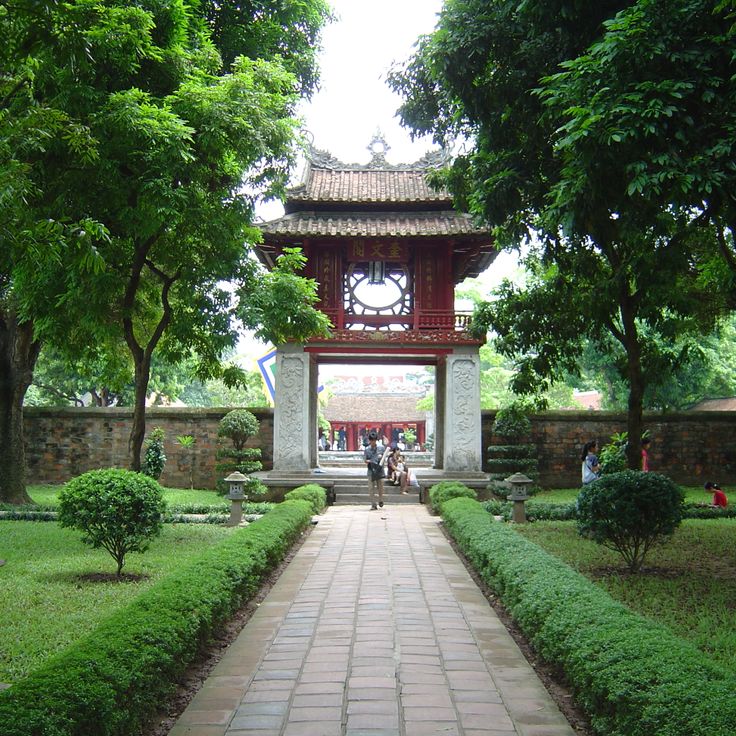
This temple was built in 1070 as Vietnam's first university and spreads across five successive courtyards with gates, gardens, and ceremonial spaces. The complex houses 82 stone stelae mounted on turtle-shaped pedestals that record the names of 1307 scholars who passed the national university exams since 1484. The architecture combines Chinese influences with Vietnamese design elements and shows the importance of Confucianism in the country's educational tradition. This Temple of Literature served for more than 700 years as a teaching institution for the sons of the elite and became the most important intellectual training center in northern Vietnam.
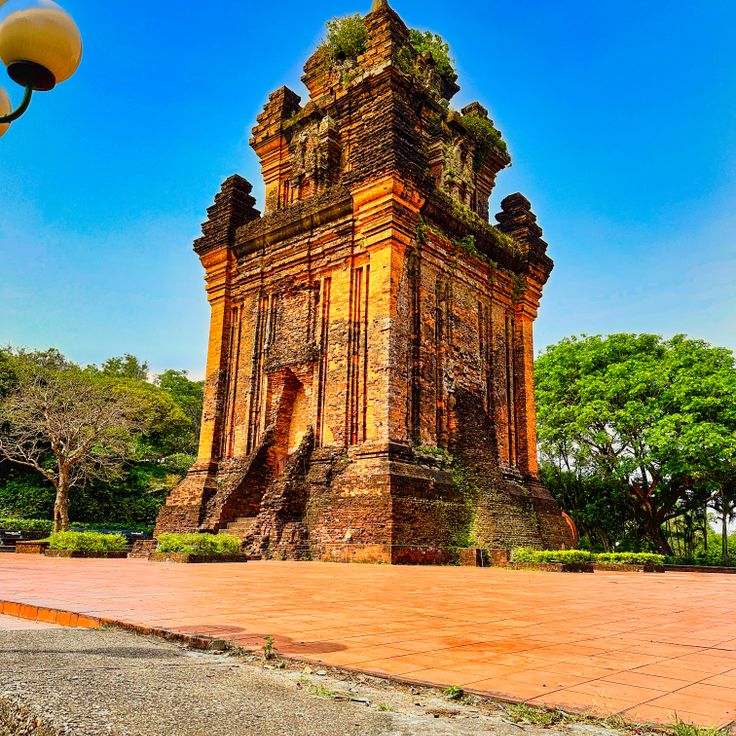
The Champa Tower in Binh Dinh dates back to the 11th century and demonstrates the skilled craftsmanship of the Champa civilization. Built from carefully fitted bricks without mortar, the tower displays geometric patterns and carved details on its surfaces. The decorations depict Hindu deities and show how Indian influences shaped the architecture of central Vietnam. This tower stands as a testament to a period when the Champa culture thrived in this region.
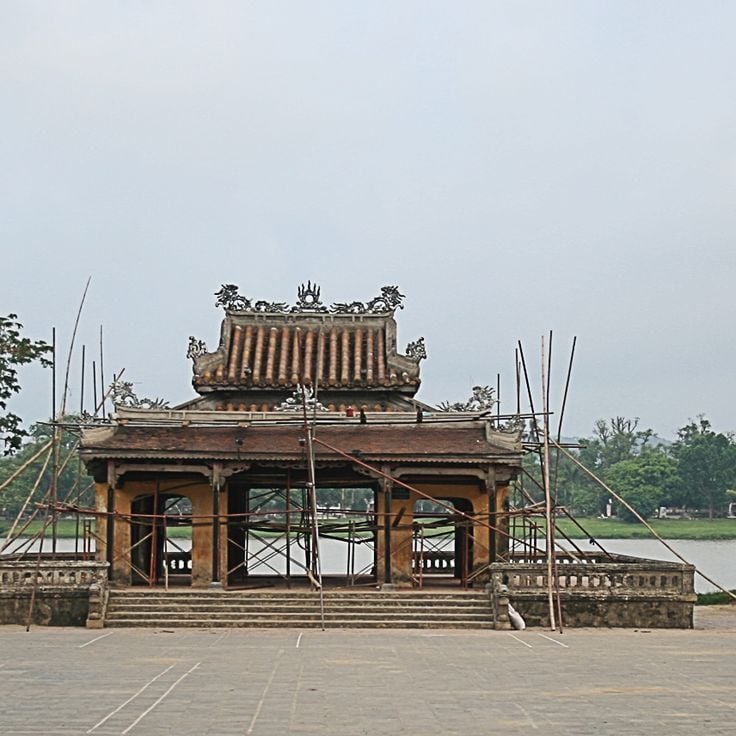
The Nghênh Lương Đình Pavilion has stood since the 19th century on the banks of the Perfume River in Hué, serving the Nguyen emperors as a place for rest and reflection. The architecture follows traditional principles of Vietnamese court buildings, with a curved tile roof, wooden pillars, and open side walls that frame views of the river. From this pavilion, the imperial family watched boat processions and ceremonies held on the water.
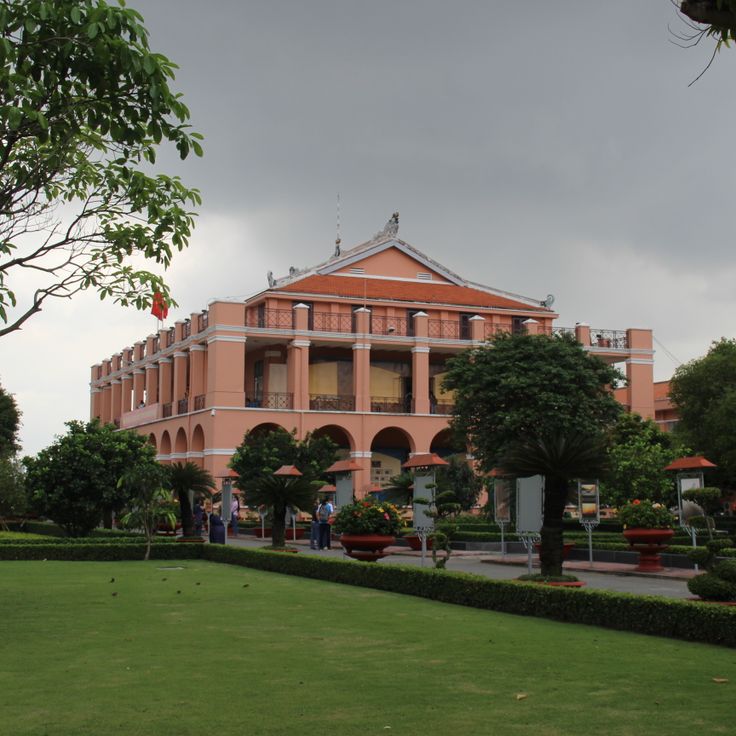
Nhà Rồng Port in Ho Chi Minh City is a historical site where Ho Chi Minh departed on his journey to Europe in 1911. The young Nguyen Tat Thanh left the port as a ship's cook's assistant aboard a French steamship. The original port building from the colonial period has been transformed into a museum documenting Vietnam's revolutionary history. The exhibition rooms display photographs, personal belongings, and documents from Ho Chi Minh's life, along with materials related to the independence movement. The building exemplifies French colonial architecture from the early 20th century with its characteristic yellow walls and rectangular floor plan.
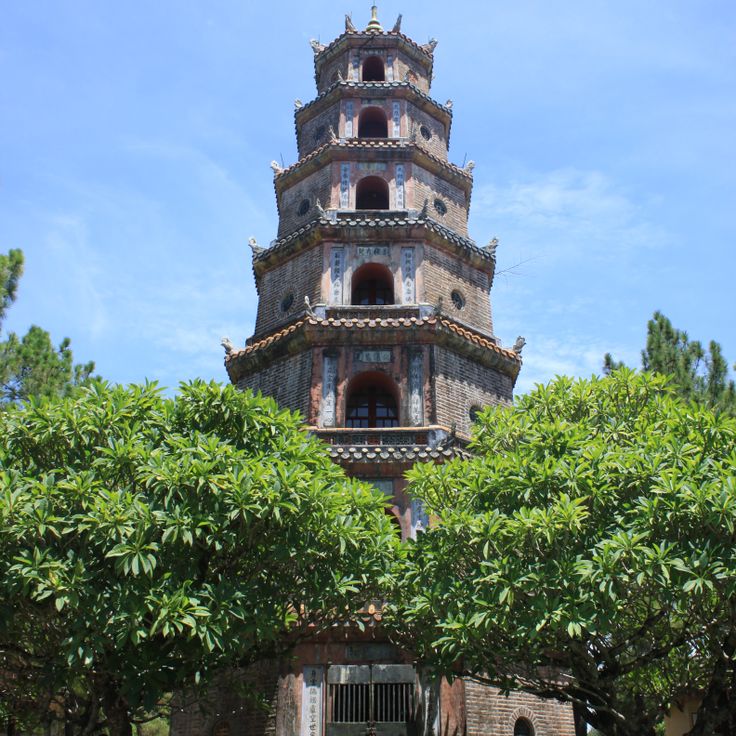
Thien Mu Pagoda rises on the northern bank of the Perfume River since 1601 and stands among the major religious structures of central Vietnam. Its seven-story tower reaches 21 meters high and serves as the bell tower for the entire complex. Each of the seven levels represents an incarnation of Buddha. The monastery comprises several pavilions, an interior courtyard, and residential buildings where monks continue to live and practice today. The rear section holds a garden with ancient trees and the tombs of former abbots. This pagoda played a role in Vietnam's political history during the 1900s and still preserves the automobile of monk Thich Quang Duc, who expressed his protest against the regime through self-immolation in Saigon in 1963.
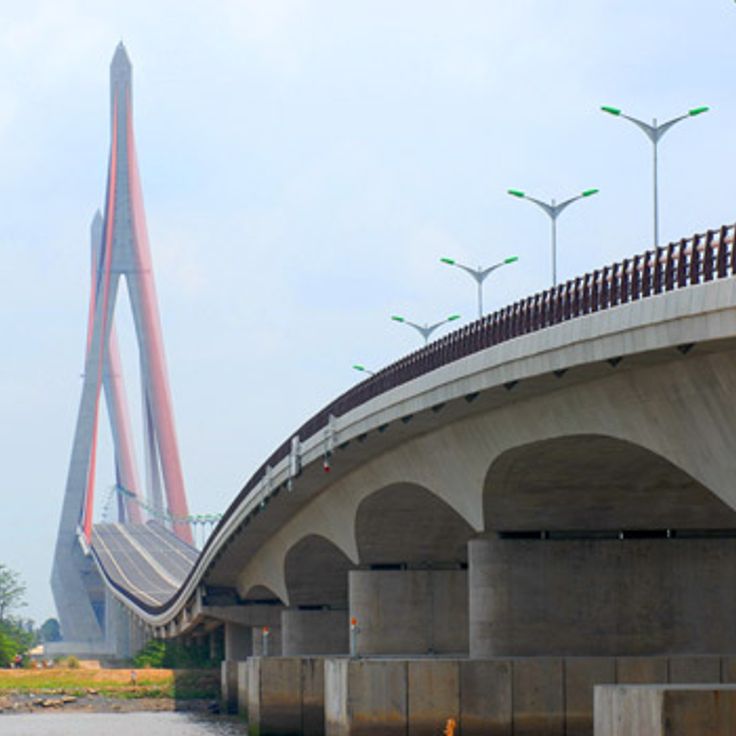
This cable-stayed bridge in Can Tho crosses the Hau River, the main southern arm of the Mekong. Completed in 2010, it connects the provinces of Can Tho and Vinh Long across roughly 2 miles (3 km). It forms part of National Route 1A, which runs from Hanoi to the southernmost point of Vietnam. The bridge has significantly sped up the movement of goods through the Mekong Delta and has cut travel time between the provinces from several hours to about 20 minutes.
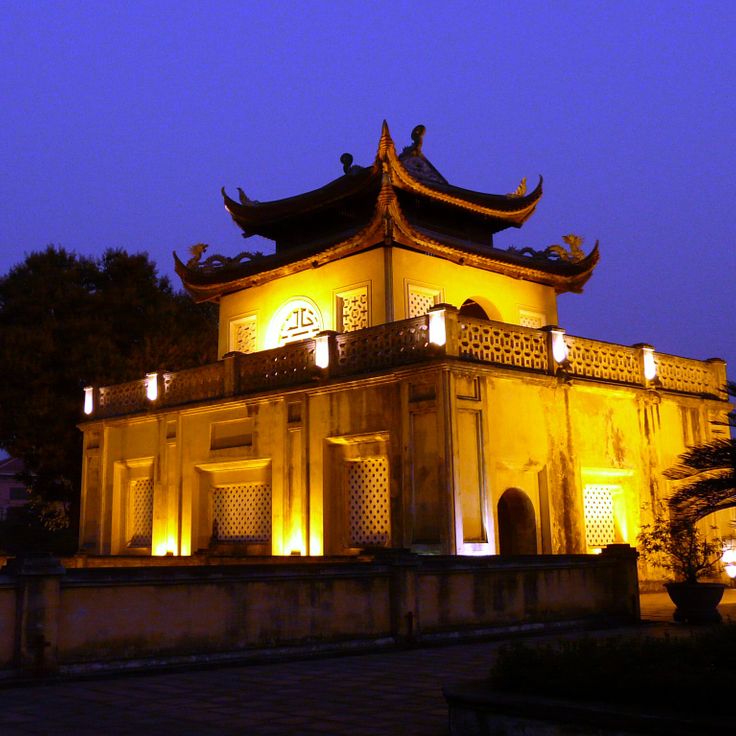
The Imperial Citadel of Thang Long served as Vietnam's political center from the 11th to the 19th century and contains archaeological sites spanning multiple dynasties. The complex includes the Flag Tower built in 1805, the main gate Doan Mon, and underground bunkers from the 20th century. Excavations since 2002 have uncovered foundations of imperial palaces, ceramic fragments, and everyday objects documenting over a thousand years of occupation. The site shows continuous use as a seat of power under the Ly, Tran, Le, and Nguyen dynasties and received UNESCO World Heritage status in 2010.
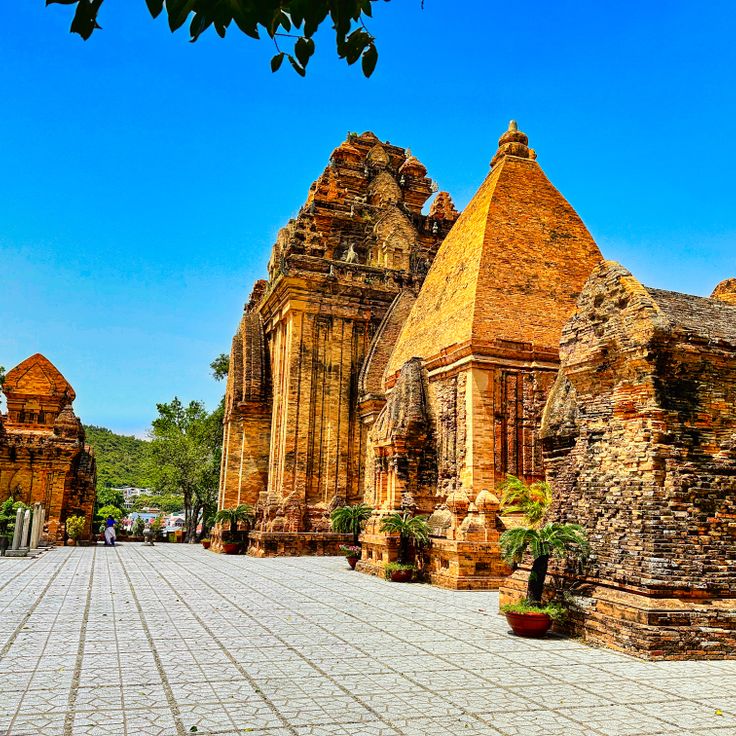
The Cham Towers of Po Nagar are a temple complex from the 7th century standing on Cu Lao hill above the Cai River. Eight brick towers show different building phases between the 7th and 12th centuries and were originally dedicated to the Hindu goddess Bhagavati. The main tower reaches 23 meters in height and preserves stone carvings and decorative elements that document religious practices of the Cham civilization. Today the complex functions as a historical monument and active place of worship.
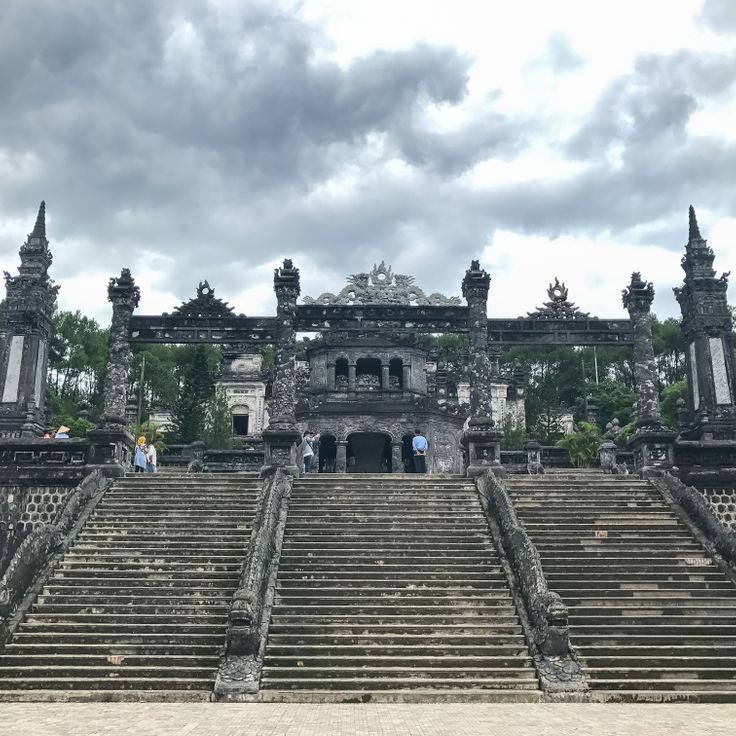
This tomb was completed in 1925 and combines Vietnamese architecture with European elements. It sits about 10 kilometers south of Hue on the side of Mount Chau Chu. A staircase of 127 steps leads to the main structure. The three-story Thien Dinh building features glass mosaics, porcelain works, and ceramic decorations covering the walls and ceilings. Emperor Khải Định commissioned the monument between 1920 and 1925, blending French architectural influences with traditional Vietnamese building methods. The tomb was added to the UNESCO World Heritage List in 1993 as part of Hue's monuments.
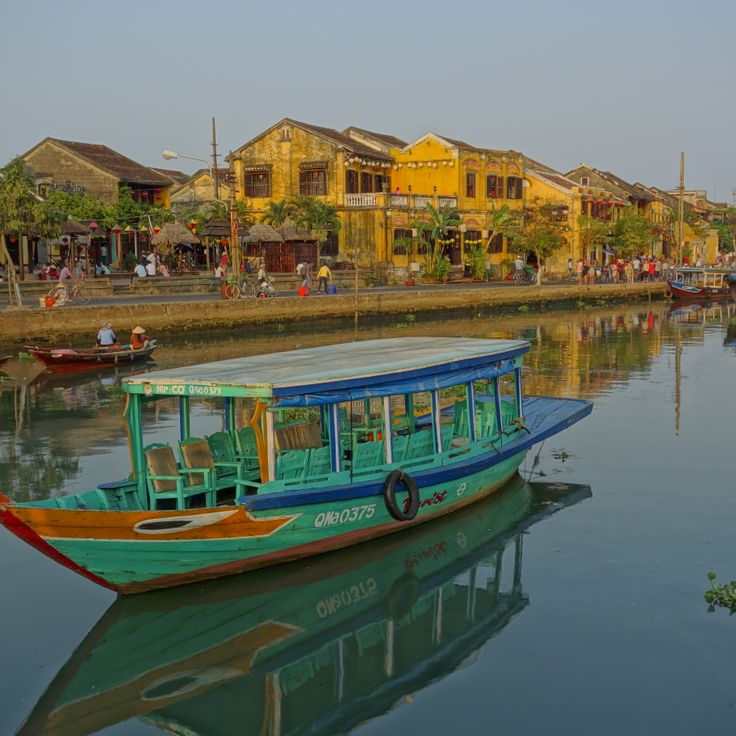
Hoi An is an ancient port city in central Vietnam that served as an important trading hub from the 15th to 19th century. Over 800 buildings shape the townscape and display different architectural influences from China, Japan, and Europe. The old merchant houses feature wooden frames with Chinese tiles, Japanese joinery techniques, and French balconies. The city center spreads across both banks of the Thu Bon River, where narrow alleyways lead to assembly halls, pagodas, and craft workshops. The Japanese Bridge from 1593 connects two districts through a covered passage with a small temple inside. Families have lived in centuries-old houses for generations and share their history with visitors. This city shows the maritime trade routes that connected Vietnam with China, Japan, India, and Europe.
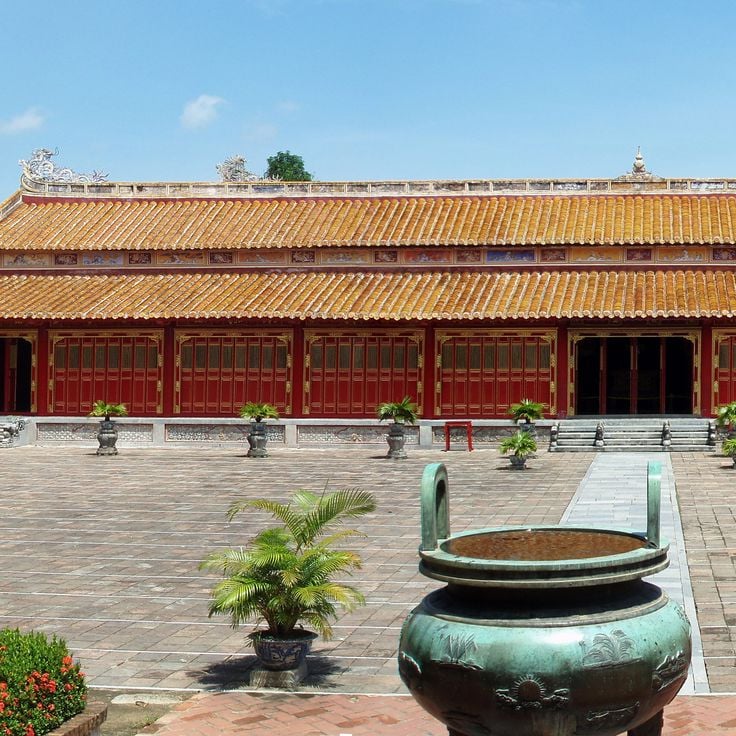
The monuments of Hue display the imperial power of the Nguyen Dynasty, which ruled Vietnam from 1802 to 1945. The citadel stretches along the Perfume River and holds the Imperial Palace, temples, pavilions, and royal theaters. Along the river stand the imperial tombs, each designed as a separate architectural complex with courtyards of honor, stele pavilions, and burial chambers. The tomb of Emperor Minh Mang shows strict symmetry following Chinese models, while the Tu Duc complex includes a lakeside palace and theater structures. The Thien Mu Pagoda with its seven stories has marked the riverbank since 1601. French artillery caused considerable damage to the citadel during the fighting of 1885 and 1947, and the Tet Offensive of 1968 left further destruction on the walls and gates.
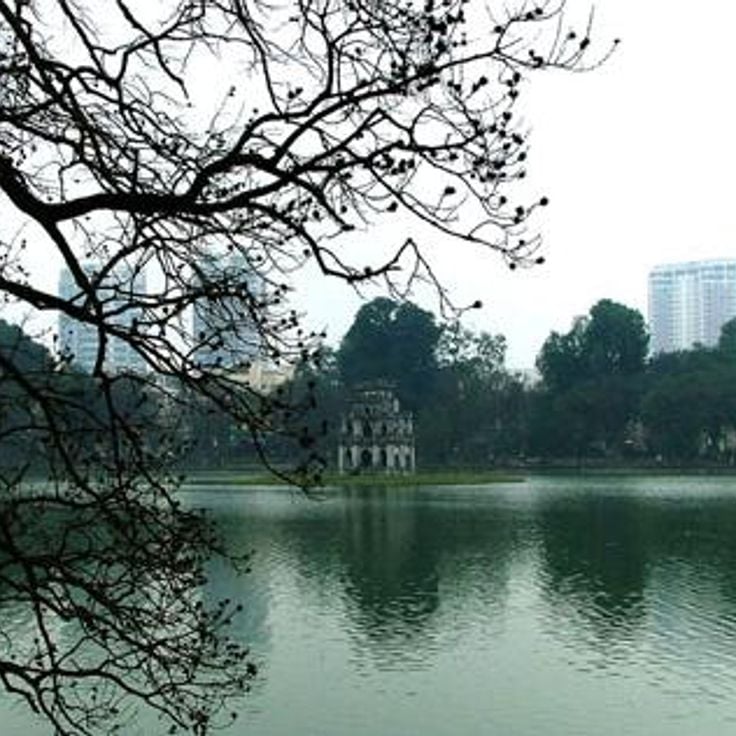
Lac Hoan Kiem is a large lake in the heart of Hanoi and has served for centuries as a landmark for the city's inhabitants. A red wooden bridge connects the shore to a small island where the Turtle Tower from the 18th century stands. This tower refers to the legend of a golden turtle that asked Emperor Le Loi in the 15th century to return his magical sword. The lake sits near the old town and serves as a natural starting point for walks through the historic district.
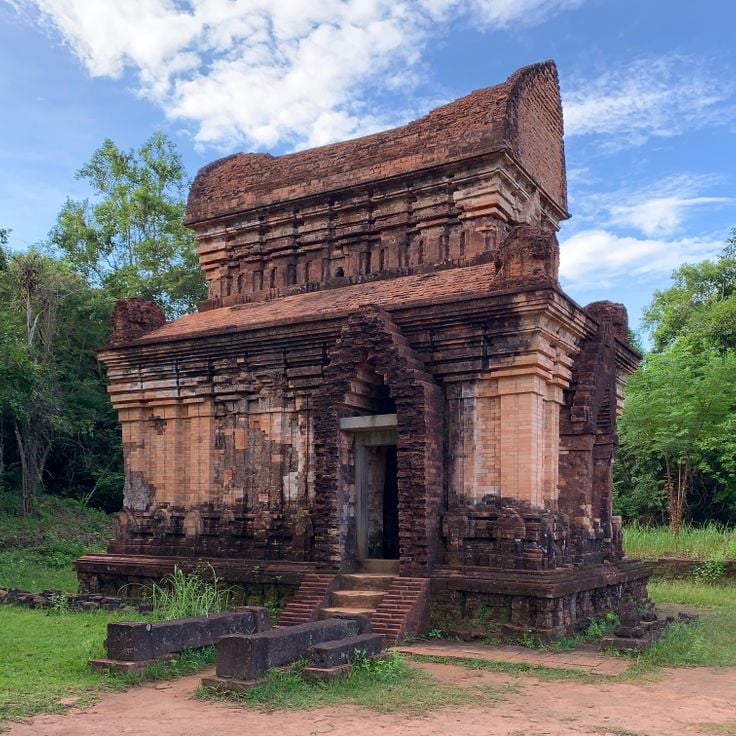
Mỹ Sơn is a temple complex built from red brick between the 4th and 14th centuries, serving as a religious center for the Champa kingdom. The buildings display architectural elements from Indian and Southeast Asian origins, with towers that show features of Cham art. The site functioned for several centuries as an important setting for Hindu ceremonies and illustrates the cultural development of this civilization in central Vietnam.
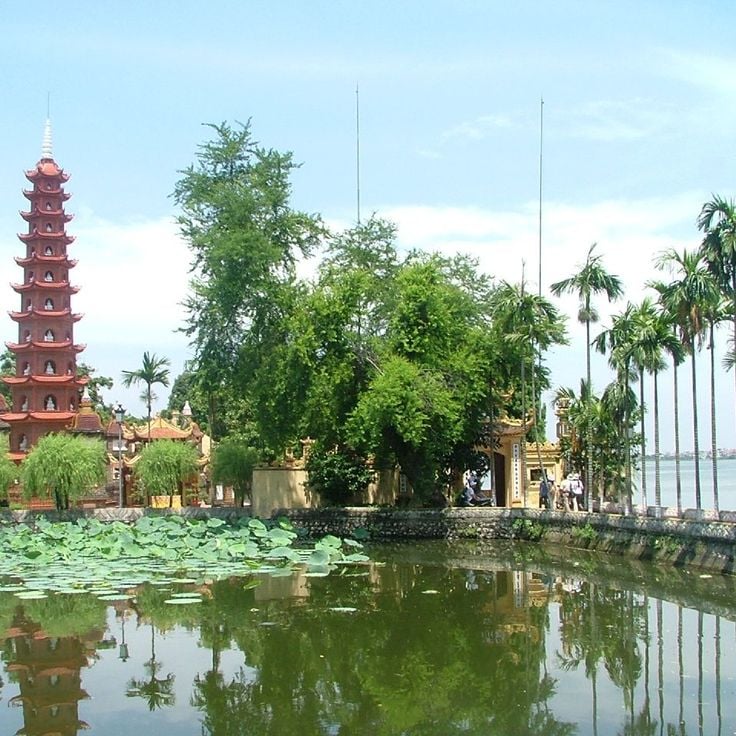
This pagoda on a small island in Hanoi's West Lake stands as one of Vietnam's oldest active Buddhist temples, dating to the 6th century. The current structure was rebuilt in 1815 after the original site was relocated due to erosion. The 15-story tower rises about 50 feet (15 meters) and holds Buddhist relics within its walls. The monastery contains wooden and stone statues that document different periods of Vietnamese religious art. The pagoda functions as an active place of worship where followers gather for celebrations according to the lunar calendar.
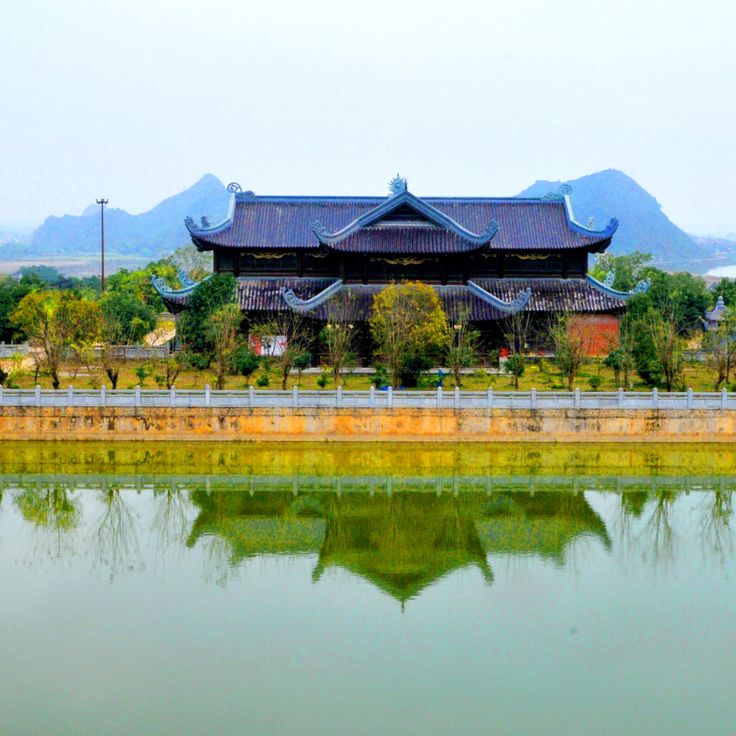
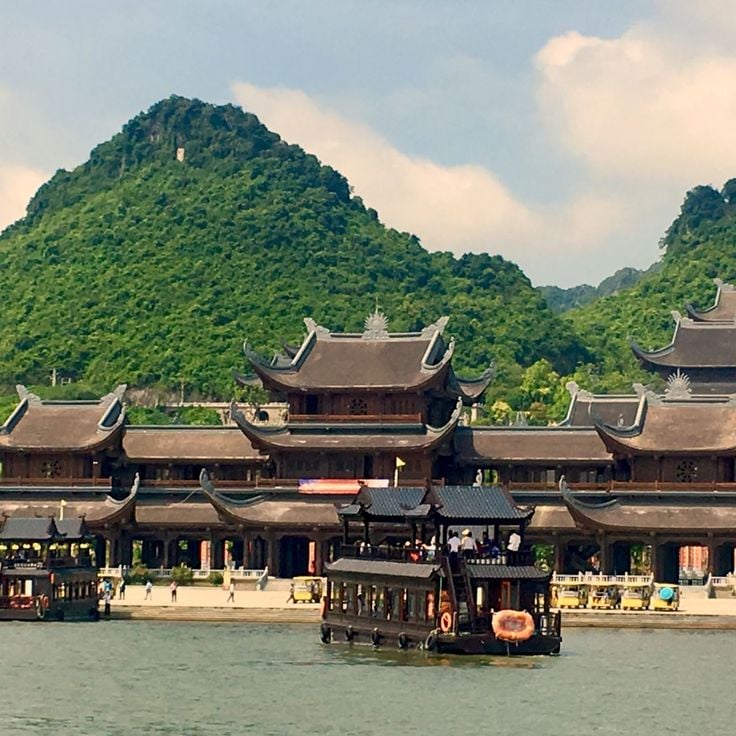
Bái Đính Pagoda is a large Buddhist religious complex in Ninh Bình Province that was built between 2003 and 2010. The site combines an old pagoda from the 10th century located on a mountain with modern structures at the mountain's base. Visitors encounter a bronze Buddha statue, a bell tower with a large bell, and several pavilions connected by staircases and paved paths. The architecture blends traditional Vietnamese building elements with contemporary forms, showing how Buddhism is practiced in modern Vietnam.
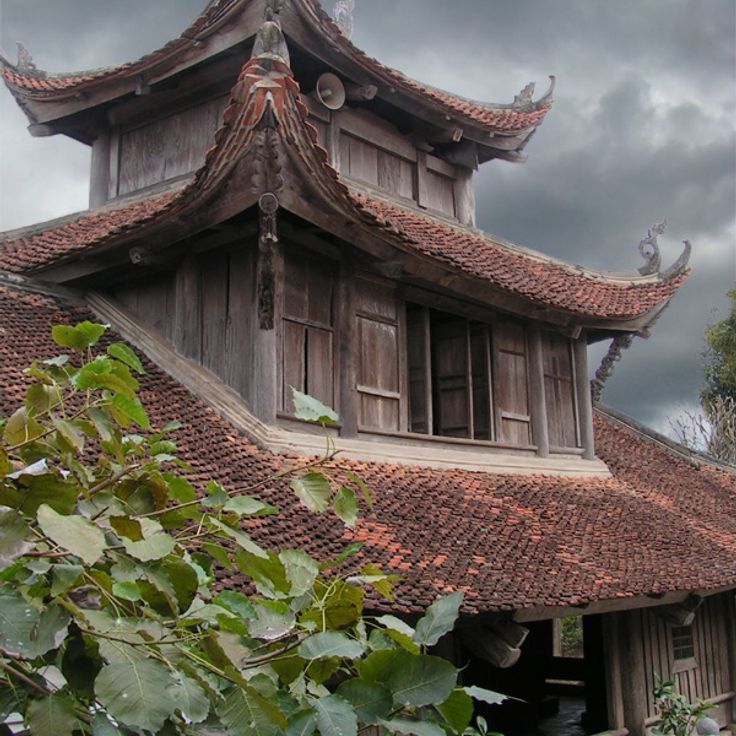
Built in the 13th century under the Tran Dynasty, Bút Tháp Temple in Bắc Ninh Province takes its name from a tower shaped like a brush. The temple complex consists of several buildings arranged along a central axis with successive courtyards. The main hall displays wooden statues from the 17th century depicting arhats and bodhisattvas carved with careful attention to detail. Stone inscriptions throughout the temple document its history and donations made over the centuries. The architecture reflects the style typical of northern Vietnamese temples, with multi-tiered roofs and carved wooden ornaments.
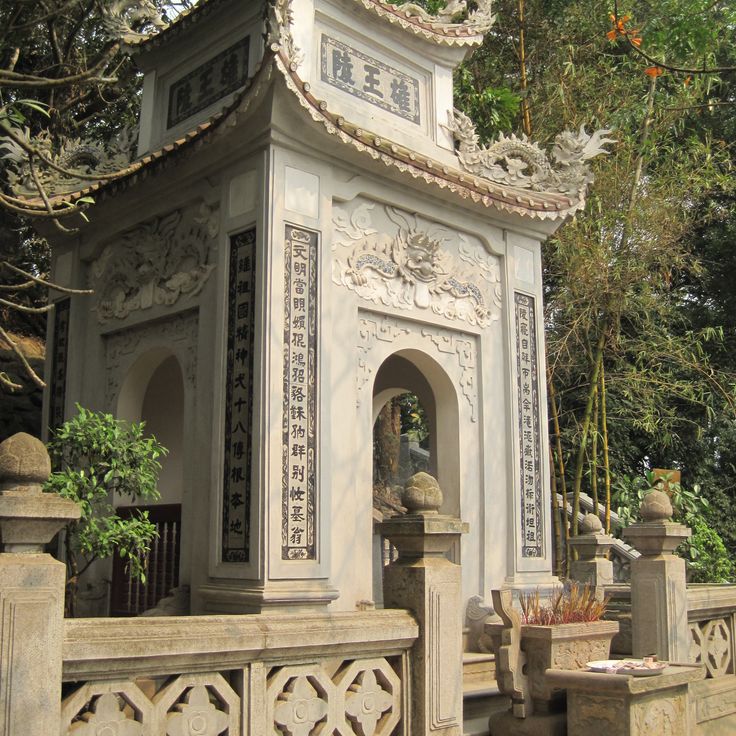
This temple complex in Phú Thọ honors the Hùng Kings, regarded as the legendary founders of Vietnam. The site sits on Nghĩa Lĩnh Mountain and contains several structures built between the 11th and 18th centuries. The main temple Den Thuong stands at the summit after 200 steps. Annual ceremonies honoring ancestors take place here on the tenth day of the third lunar month. The complex serves as a national pilgrimage site and shows how foundational myths shape Vietnamese culture.
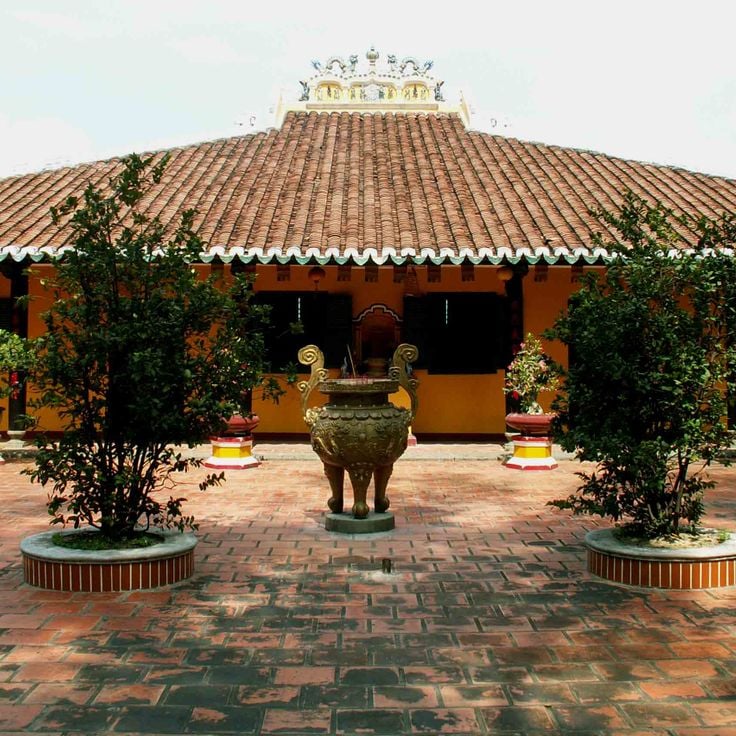
Giác Lâm Temple in Ho Chi Minh City was built in 1744 and is one of the oldest active pagodas in the city. The architecture follows traditional principles of southern Vietnamese temples with successive courtyards and buildings aligned along a central axis. The temple houses a collection of ancient statues, memorial stelae, and a seven-story tower that once served as a landmark for travelers arriving by canal. The garden contains old trees and pools that create a space for meditation. The temple continues to be used by an active monastic community and holds Buddhist ceremonies according to the lunar calendar.
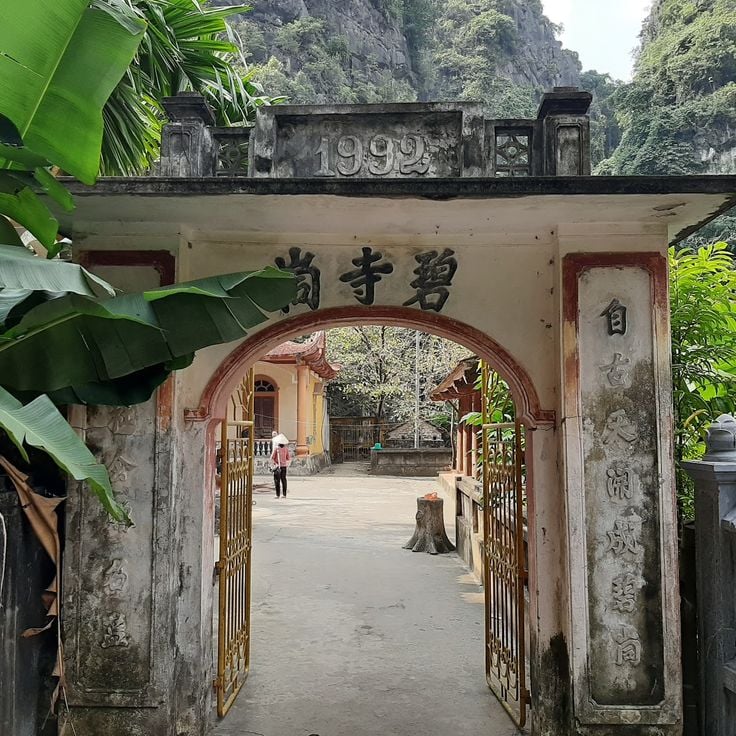
Bích Động Pagoda in Ninh Bình makes use of natural caves and sits on three levels built into a mountainside. Built in the 15th century during the Le period, this pagoda blends human construction with limestone formations. Three pagodas - Ha at the base, Trung in the middle, and Thuong at the top - are connected by stone staircases cut into the rock. Buddhist altars and statues carved directly into the stone walls occupy the caves. A small stream flows beneath the site, and a stone bridge leads to the main entrance.
This Buddhist temple complex in Hà Nam province, west of Hanoi, was completed in 2019 and spreads across the area around Tam Chuc Lake. The main pagoda contains a prayer hall of 1000 square meters that can hold several thousand people. A white jade statue of Buddha stands 4 meters high within the complex. The site was designed to host large religious events and holds Buddhist art collections from various regions across Asia. The architectural ensemble combines traditional Vietnamese building elements with modern dimensions that reflect its role as a contemporary center for Vietnamese Buddhism.
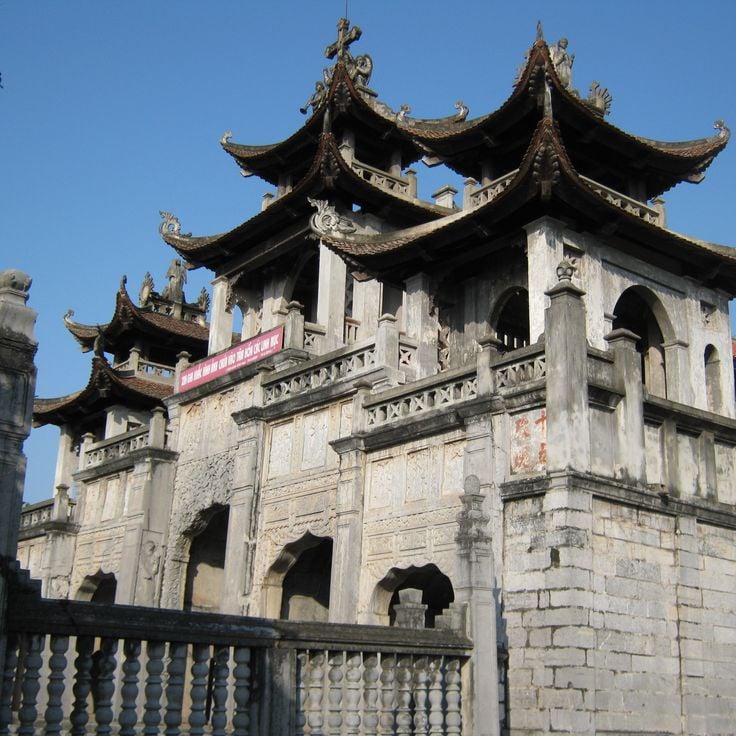
This cathedral in Ninh Binh was built between 1875 and 1899 and blends European religious architecture with Vietnamese building techniques. The complex sits on a large site with a main stone cathedral, four smaller chapels arranged around an artificial lake, and a separate bell tower. Wooden and stone columns support a roof covered with tiles in the style of Buddhist pagodas. The cathedral shows how religious forms from Europe were adapted to fit the Vietnamese context during the 19th century.
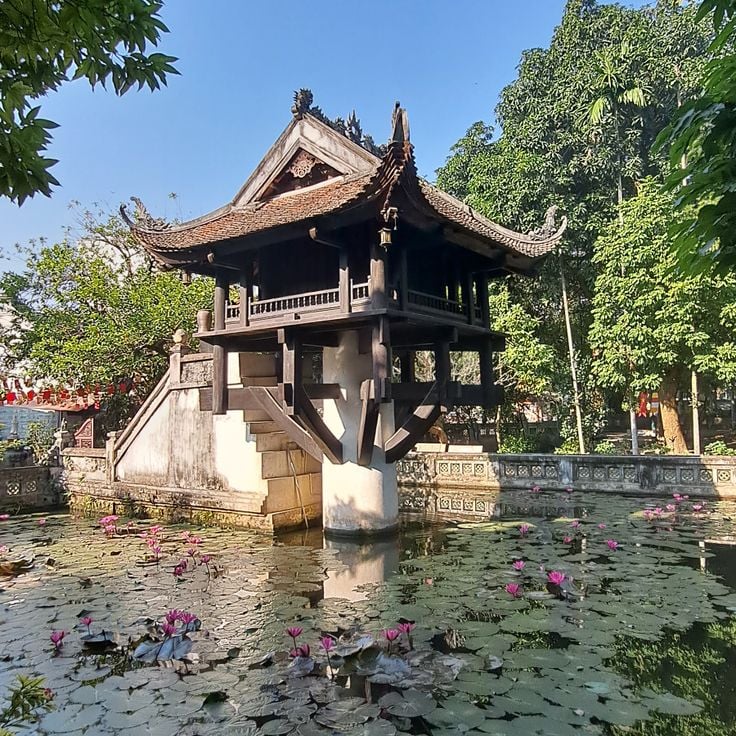
The One-Pillar Pagoda in Hanoi is a Buddhist temple built in 1049 during the Ly Dynasty. It stands on a single stone pillar in the middle of a water basin and resembles a lotus flower emerging from the water. In Buddhist tradition, the lotus represents purity and spiritual awakening. French forces destroyed the original structure in 1954 when leaving Hanoi, but the Vietnamese government rebuilt it shortly after. Today, the pagoda shows how architects of that time combined function with deep spiritual meaning, creating something both simple and powerful.
This temple was built in 1070 as Vietnam's first university and spreads across five successive courtyards with gates, gardens, and ceremonial spaces. The complex houses 82 stone stelae mounted on turtle-shaped pedestals that record the names of 1307 scholars who passed the national university exams since 1484. The architecture combines Chinese influences with Vietnamese design elements and shows the importance of Confucianism in the country's educational tradition. This Temple of Literature served for more than 700 years as a teaching institution for the sons of the elite and became the most important intellectual training center in northern Vietnam.
The Champa Tower in Binh Dinh dates back to the 11th century and demonstrates the skilled craftsmanship of the Champa civilization. Built from carefully fitted bricks without mortar, the tower displays geometric patterns and carved details on its surfaces. The decorations depict Hindu deities and show how Indian influences shaped the architecture of central Vietnam. This tower stands as a testament to a period when the Champa culture thrived in this region.
The Nghênh Lương Đình Pavilion has stood since the 19th century on the banks of the Perfume River in Hué, serving the Nguyen emperors as a place for rest and reflection. The architecture follows traditional principles of Vietnamese court buildings, with a curved tile roof, wooden pillars, and open side walls that frame views of the river. From this pavilion, the imperial family watched boat processions and ceremonies held on the water.
Nhà Rồng Port in Ho Chi Minh City is a historical site where Ho Chi Minh departed on his journey to Europe in 1911. The young Nguyen Tat Thanh left the port as a ship's cook's assistant aboard a French steamship. The original port building from the colonial period has been transformed into a museum documenting Vietnam's revolutionary history. The exhibition rooms display photographs, personal belongings, and documents from Ho Chi Minh's life, along with materials related to the independence movement. The building exemplifies French colonial architecture from the early 20th century with its characteristic yellow walls and rectangular floor plan.
Thien Mu Pagoda rises on the northern bank of the Perfume River since 1601 and stands among the major religious structures of central Vietnam. Its seven-story tower reaches 21 meters high and serves as the bell tower for the entire complex. Each of the seven levels represents an incarnation of Buddha. The monastery comprises several pavilions, an interior courtyard, and residential buildings where monks continue to live and practice today. The rear section holds a garden with ancient trees and the tombs of former abbots. This pagoda played a role in Vietnam's political history during the 1900s and still preserves the automobile of monk Thich Quang Duc, who expressed his protest against the regime through self-immolation in Saigon in 1963.
This cable-stayed bridge in Can Tho crosses the Hau River, the main southern arm of the Mekong. Completed in 2010, it connects the provinces of Can Tho and Vinh Long across roughly 2 miles (3 km). It forms part of National Route 1A, which runs from Hanoi to the southernmost point of Vietnam. The bridge has significantly sped up the movement of goods through the Mekong Delta and has cut travel time between the provinces from several hours to about 20 minutes.
The Imperial Citadel of Thang Long served as Vietnam's political center from the 11th to the 19th century and contains archaeological sites spanning multiple dynasties. The complex includes the Flag Tower built in 1805, the main gate Doan Mon, and underground bunkers from the 20th century. Excavations since 2002 have uncovered foundations of imperial palaces, ceramic fragments, and everyday objects documenting over a thousand years of occupation. The site shows continuous use as a seat of power under the Ly, Tran, Le, and Nguyen dynasties and received UNESCO World Heritage status in 2010.
The Cham Towers of Po Nagar are a temple complex from the 7th century standing on Cu Lao hill above the Cai River. Eight brick towers show different building phases between the 7th and 12th centuries and were originally dedicated to the Hindu goddess Bhagavati. The main tower reaches 23 meters in height and preserves stone carvings and decorative elements that document religious practices of the Cham civilization. Today the complex functions as a historical monument and active place of worship.
This tomb was completed in 1925 and combines Vietnamese architecture with European elements. It sits about 10 kilometers south of Hue on the side of Mount Chau Chu. A staircase of 127 steps leads to the main structure. The three-story Thien Dinh building features glass mosaics, porcelain works, and ceramic decorations covering the walls and ceilings. Emperor Khải Định commissioned the monument between 1920 and 1925, blending French architectural influences with traditional Vietnamese building methods. The tomb was added to the UNESCO World Heritage List in 1993 as part of Hue's monuments.
Hoi An is an ancient port city in central Vietnam that served as an important trading hub from the 15th to 19th century. Over 800 buildings shape the townscape and display different architectural influences from China, Japan, and Europe. The old merchant houses feature wooden frames with Chinese tiles, Japanese joinery techniques, and French balconies. The city center spreads across both banks of the Thu Bon River, where narrow alleyways lead to assembly halls, pagodas, and craft workshops. The Japanese Bridge from 1593 connects two districts through a covered passage with a small temple inside. Families have lived in centuries-old houses for generations and share their history with visitors. This city shows the maritime trade routes that connected Vietnam with China, Japan, India, and Europe.
The monuments of Hue display the imperial power of the Nguyen Dynasty, which ruled Vietnam from 1802 to 1945. The citadel stretches along the Perfume River and holds the Imperial Palace, temples, pavilions, and royal theaters. Along the river stand the imperial tombs, each designed as a separate architectural complex with courtyards of honor, stele pavilions, and burial chambers. The tomb of Emperor Minh Mang shows strict symmetry following Chinese models, while the Tu Duc complex includes a lakeside palace and theater structures. The Thien Mu Pagoda with its seven stories has marked the riverbank since 1601. French artillery caused considerable damage to the citadel during the fighting of 1885 and 1947, and the Tet Offensive of 1968 left further destruction on the walls and gates.
Lac Hoan Kiem is a large lake in the heart of Hanoi and has served for centuries as a landmark for the city's inhabitants. A red wooden bridge connects the shore to a small island where the Turtle Tower from the 18th century stands. This tower refers to the legend of a golden turtle that asked Emperor Le Loi in the 15th century to return his magical sword. The lake sits near the old town and serves as a natural starting point for walks through the historic district.
Mỹ Sơn is a temple complex built from red brick between the 4th and 14th centuries, serving as a religious center for the Champa kingdom. The buildings display architectural elements from Indian and Southeast Asian origins, with towers that show features of Cham art. The site functioned for several centuries as an important setting for Hindu ceremonies and illustrates the cultural development of this civilization in central Vietnam.
This pagoda on a small island in Hanoi's West Lake stands as one of Vietnam's oldest active Buddhist temples, dating to the 6th century. The current structure was rebuilt in 1815 after the original site was relocated due to erosion. The 15-story tower rises about 50 feet (15 meters) and holds Buddhist relics within its walls. The monastery contains wooden and stone statues that document different periods of Vietnamese religious art. The pagoda functions as an active place of worship where followers gather for celebrations according to the lunar calendar.
Bái Đính Pagoda is a large Buddhist religious complex in Ninh Bình Province that was built between 2003 and 2010. The site combines an old pagoda from the 10th century located on a mountain with modern structures at the mountain's base. Visitors encounter a bronze Buddha statue, a bell tower with a large bell, and several pavilions connected by staircases and paved paths. The architecture blends traditional Vietnamese building elements with contemporary forms, showing how Buddhism is practiced in modern Vietnam.
Built in the 13th century under the Tran Dynasty, Bút Tháp Temple in Bắc Ninh Province takes its name from a tower shaped like a brush. The temple complex consists of several buildings arranged along a central axis with successive courtyards. The main hall displays wooden statues from the 17th century depicting arhats and bodhisattvas carved with careful attention to detail. Stone inscriptions throughout the temple document its history and donations made over the centuries. The architecture reflects the style typical of northern Vietnamese temples, with multi-tiered roofs and carved wooden ornaments.
This temple complex in Phú Thọ honors the Hùng Kings, regarded as the legendary founders of Vietnam. The site sits on Nghĩa Lĩnh Mountain and contains several structures built between the 11th and 18th centuries. The main temple Den Thuong stands at the summit after 200 steps. Annual ceremonies honoring ancestors take place here on the tenth day of the third lunar month. The complex serves as a national pilgrimage site and shows how foundational myths shape Vietnamese culture.
Giác Lâm Temple in Ho Chi Minh City was built in 1744 and is one of the oldest active pagodas in the city. The architecture follows traditional principles of southern Vietnamese temples with successive courtyards and buildings aligned along a central axis. The temple houses a collection of ancient statues, memorial stelae, and a seven-story tower that once served as a landmark for travelers arriving by canal. The garden contains old trees and pools that create a space for meditation. The temple continues to be used by an active monastic community and holds Buddhist ceremonies according to the lunar calendar.
Bích Động Pagoda in Ninh Bình makes use of natural caves and sits on three levels built into a mountainside. Built in the 15th century during the Le period, this pagoda blends human construction with limestone formations. Three pagodas - Ha at the base, Trung in the middle, and Thuong at the top - are connected by stone staircases cut into the rock. Buddhist altars and statues carved directly into the stone walls occupy the caves. A small stream flows beneath the site, and a stone bridge leads to the main entrance.
This Buddhist temple complex in Hà Nam province, west of Hanoi, was completed in 2019 and spreads across the area around Tam Chuc Lake. The main pagoda contains a prayer hall of 1000 square meters that can hold several thousand people. A white jade statue of Buddha stands 4 meters high within the complex. The site was designed to host large religious events and holds Buddhist art collections from various regions across Asia. The architectural ensemble combines traditional Vietnamese building elements with modern dimensions that reflect its role as a contemporary center for Vietnamese Buddhism.
This cathedral in Ninh Binh was built between 1875 and 1899 and blends European religious architecture with Vietnamese building techniques. The complex sits on a large site with a main stone cathedral, four smaller chapels arranged around an artificial lake, and a separate bell tower. Wooden and stone columns support a roof covered with tiles in the style of Buddhist pagodas. The cathedral shows how religious forms from Europe were adapted to fit the Vietnamese context during the 19th century.
The One-Pillar Pagoda in Hanoi is a Buddhist temple built in 1049 during the Ly Dynasty. It stands on a single stone pillar in the middle of a water basin and resembles a lotus flower emerging from the water. In Buddhist tradition, the lotus represents purity and spiritual awakening. French forces destroyed the original structure in 1954 when leaving Hanoi, but the Vietnamese government rebuilt it shortly after. Today, the pagoda shows how architects of that time combined function with deep spiritual meaning, creating something both simple and powerful.
This temple was built in 1070 as Vietnam's first university and spreads across five successive courtyards with gates, gardens, and ceremonial spaces. The complex houses 82 stone stelae mounted on turtle-shaped pedestals that record the names of 1307 scholars who passed the national university exams since 1484. The architecture combines Chinese influences with Vietnamese design elements and shows the importance of Confucianism in the country's educational tradition. This Temple of Literature served for more than 700 years as a teaching institution for the sons of the elite and became the most important intellectual training center in northern Vietnam.
The Champa Tower in Binh Dinh dates back to the 11th century and demonstrates the skilled craftsmanship of the Champa civilization. Built from carefully fitted bricks without mortar, the tower displays geometric patterns and carved details on its surfaces. The decorations depict Hindu deities and show how Indian influences shaped the architecture of central Vietnam. This tower stands as a testament to a period when the Champa culture thrived in this region.
The Nghênh Lương Đình Pavilion has stood since the 19th century on the banks of the Perfume River in Hué, serving the Nguyen emperors as a place for rest and reflection. The architecture follows traditional principles of Vietnamese court buildings, with a curved tile roof, wooden pillars, and open side walls that frame views of the river. From this pavilion, the imperial family watched boat processions and ceremonies held on the water.
Nhà Rồng Port in Ho Chi Minh City is a historical site where Ho Chi Minh departed on his journey to Europe in 1911. The young Nguyen Tat Thanh left the port as a ship's cook's assistant aboard a French steamship. The original port building from the colonial period has been transformed into a museum documenting Vietnam's revolutionary history. The exhibition rooms display photographs, personal belongings, and documents from Ho Chi Minh's life, along with materials related to the independence movement. The building exemplifies French colonial architecture from the early 20th century with its characteristic yellow walls and rectangular floor plan.
Thien Mu Pagoda rises on the northern bank of the Perfume River since 1601 and stands among the major religious structures of central Vietnam. Its seven-story tower reaches 21 meters high and serves as the bell tower for the entire complex. Each of the seven levels represents an incarnation of Buddha. The monastery comprises several pavilions, an interior courtyard, and residential buildings where monks continue to live and practice today. The rear section holds a garden with ancient trees and the tombs of former abbots. This pagoda played a role in Vietnam's political history during the 1900s and still preserves the automobile of monk Thich Quang Duc, who expressed his protest against the regime through self-immolation in Saigon in 1963.
This cable-stayed bridge in Can Tho crosses the Hau River, the main southern arm of the Mekong. Completed in 2010, it connects the provinces of Can Tho and Vinh Long across roughly 2 miles (3 km). It forms part of National Route 1A, which runs from Hanoi to the southernmost point of Vietnam. The bridge has significantly sped up the movement of goods through the Mekong Delta and has cut travel time between the provinces from several hours to about 20 minutes.
The Imperial Citadel of Thang Long served as Vietnam's political center from the 11th to the 19th century and contains archaeological sites spanning multiple dynasties. The complex includes the Flag Tower built in 1805, the main gate Doan Mon, and underground bunkers from the 20th century. Excavations since 2002 have uncovered foundations of imperial palaces, ceramic fragments, and everyday objects documenting over a thousand years of occupation. The site shows continuous use as a seat of power under the Ly, Tran, Le, and Nguyen dynasties and received UNESCO World Heritage status in 2010.
The Cham Towers of Po Nagar are a temple complex from the 7th century standing on Cu Lao hill above the Cai River. Eight brick towers show different building phases between the 7th and 12th centuries and were originally dedicated to the Hindu goddess Bhagavati. The main tower reaches 23 meters in height and preserves stone carvings and decorative elements that document religious practices of the Cham civilization. Today the complex functions as a historical monument and active place of worship.
This tomb was completed in 1925 and combines Vietnamese architecture with European elements. It sits about 10 kilometers south of Hue on the side of Mount Chau Chu. A staircase of 127 steps leads to the main structure. The three-story Thien Dinh building features glass mosaics, porcelain works, and ceramic decorations covering the walls and ceilings. Emperor Khải Định commissioned the monument between 1920 and 1925, blending French architectural influences with traditional Vietnamese building methods. The tomb was added to the UNESCO World Heritage List in 1993 as part of Hue's monuments.
Hoi An is an ancient port city in central Vietnam that served as an important trading hub from the 15th to 19th century. Over 800 buildings shape the townscape and display different architectural influences from China, Japan, and Europe. The old merchant houses feature wooden frames with Chinese tiles, Japanese joinery techniques, and French balconies. The city center spreads across both banks of the Thu Bon River, where narrow alleyways lead to assembly halls, pagodas, and craft workshops. The Japanese Bridge from 1593 connects two districts through a covered passage with a small temple inside. Families have lived in centuries-old houses for generations and share their history with visitors. This city shows the maritime trade routes that connected Vietnam with China, Japan, India, and Europe.
The monuments of Hue display the imperial power of the Nguyen Dynasty, which ruled Vietnam from 1802 to 1945. The citadel stretches along the Perfume River and holds the Imperial Palace, temples, pavilions, and royal theaters. Along the river stand the imperial tombs, each designed as a separate architectural complex with courtyards of honor, stele pavilions, and burial chambers. The tomb of Emperor Minh Mang shows strict symmetry following Chinese models, while the Tu Duc complex includes a lakeside palace and theater structures. The Thien Mu Pagoda with its seven stories has marked the riverbank since 1601. French artillery caused considerable damage to the citadel during the fighting of 1885 and 1947, and the Tet Offensive of 1968 left further destruction on the walls and gates.
Lac Hoan Kiem is a large lake in the heart of Hanoi and has served for centuries as a landmark for the city's inhabitants. A red wooden bridge connects the shore to a small island where the Turtle Tower from the 18th century stands. This tower refers to the legend of a golden turtle that asked Emperor Le Loi in the 15th century to return his magical sword. The lake sits near the old town and serves as a natural starting point for walks through the historic district.
Mỹ Sơn is a temple complex built from red brick between the 4th and 14th centuries, serving as a religious center for the Champa kingdom. The buildings display architectural elements from Indian and Southeast Asian origins, with towers that show features of Cham art. The site functioned for several centuries as an important setting for Hindu ceremonies and illustrates the cultural development of this civilization in central Vietnam.
This pagoda on a small island in Hanoi's West Lake stands as one of Vietnam's oldest active Buddhist temples, dating to the 6th century. The current structure was rebuilt in 1815 after the original site was relocated due to erosion. The 15-story tower rises about 50 feet (15 meters) and holds Buddhist relics within its walls. The monastery contains wooden and stone statues that document different periods of Vietnamese religious art. The pagoda functions as an active place of worship where followers gather for celebrations according to the lunar calendar.
Bái Đính Pagoda is a large Buddhist religious complex in Ninh Bình Province that was built between 2003 and 2010. The site combines an old pagoda from the 10th century located on a mountain with modern structures at the mountain's base. Visitors encounter a bronze Buddha statue, a bell tower with a large bell, and several pavilions connected by staircases and paved paths. The architecture blends traditional Vietnamese building elements with contemporary forms, showing how Buddhism is practiced in modern Vietnam.
Built in the 13th century under the Tran Dynasty, Bút Tháp Temple in Bắc Ninh Province takes its name from a tower shaped like a brush. The temple complex consists of several buildings arranged along a central axis with successive courtyards. The main hall displays wooden statues from the 17th century depicting arhats and bodhisattvas carved with careful attention to detail. Stone inscriptions throughout the temple document its history and donations made over the centuries. The architecture reflects the style typical of northern Vietnamese temples, with multi-tiered roofs and carved wooden ornaments.
This temple complex in Phú Thọ honors the Hùng Kings, regarded as the legendary founders of Vietnam. The site sits on Nghĩa Lĩnh Mountain and contains several structures built between the 11th and 18th centuries. The main temple Den Thuong stands at the summit after 200 steps. Annual ceremonies honoring ancestors take place here on the tenth day of the third lunar month. The complex serves as a national pilgrimage site and shows how foundational myths shape Vietnamese culture.
Giác Lâm Temple in Ho Chi Minh City was built in 1744 and is one of the oldest active pagodas in the city. The architecture follows traditional principles of southern Vietnamese temples with successive courtyards and buildings aligned along a central axis. The temple houses a collection of ancient statues, memorial stelae, and a seven-story tower that once served as a landmark for travelers arriving by canal. The garden contains old trees and pools that create a space for meditation. The temple continues to be used by an active monastic community and holds Buddhist ceremonies according to the lunar calendar.
Bích Động Pagoda in Ninh Bình makes use of natural caves and sits on three levels built into a mountainside. Built in the 15th century during the Le period, this pagoda blends human construction with limestone formations. Three pagodas - Ha at the base, Trung in the middle, and Thuong at the top - are connected by stone staircases cut into the rock. Buddhist altars and statues carved directly into the stone walls occupy the caves. A small stream flows beneath the site, and a stone bridge leads to the main entrance.
This Buddhist temple complex in Hà Nam province, west of Hanoi, was completed in 2019 and spreads across the area around Tam Chuc Lake. The main pagoda contains a prayer hall of 1000 square meters that can hold several thousand people. A white jade statue of Buddha stands 4 meters high within the complex. The site was designed to host large religious events and holds Buddhist art collections from various regions across Asia. The architectural ensemble combines traditional Vietnamese building elements with modern dimensions that reflect its role as a contemporary center for Vietnamese Buddhism.
This cathedral in Ninh Binh was built between 1875 and 1899 and blends European religious architecture with Vietnamese building techniques. The complex sits on a large site with a main stone cathedral, four smaller chapels arranged around an artificial lake, and a separate bell tower. Wooden and stone columns support a roof covered with tiles in the style of Buddhist pagodas. The cathedral shows how religious forms from Europe were adapted to fit the Vietnamese context during the 19th century.
The One-Pillar Pagoda in Hanoi is a Buddhist temple built in 1049 during the Ly Dynasty. It stands on a single stone pillar in the middle of a water basin and resembles a lotus flower emerging from the water. In Buddhist tradition, the lotus represents purity and spiritual awakening. French forces destroyed the original structure in 1954 when leaving Hanoi, but the Vietnamese government rebuilt it shortly after. Today, the pagoda shows how architects of that time combined function with deep spiritual meaning, creating something both simple and powerful.
Respect the dressing codes: inside temples, cover your shoulders and knees. Remove your shoes before entering sacred spaces. These simple actions show respect to monks and local people.