Olbia, Ancient Greek archaeological site in Parutyne, Ukraine.
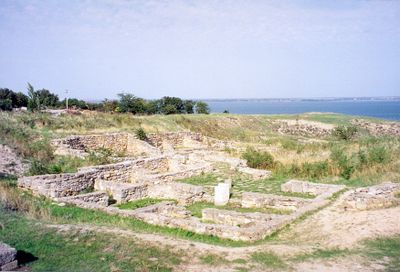
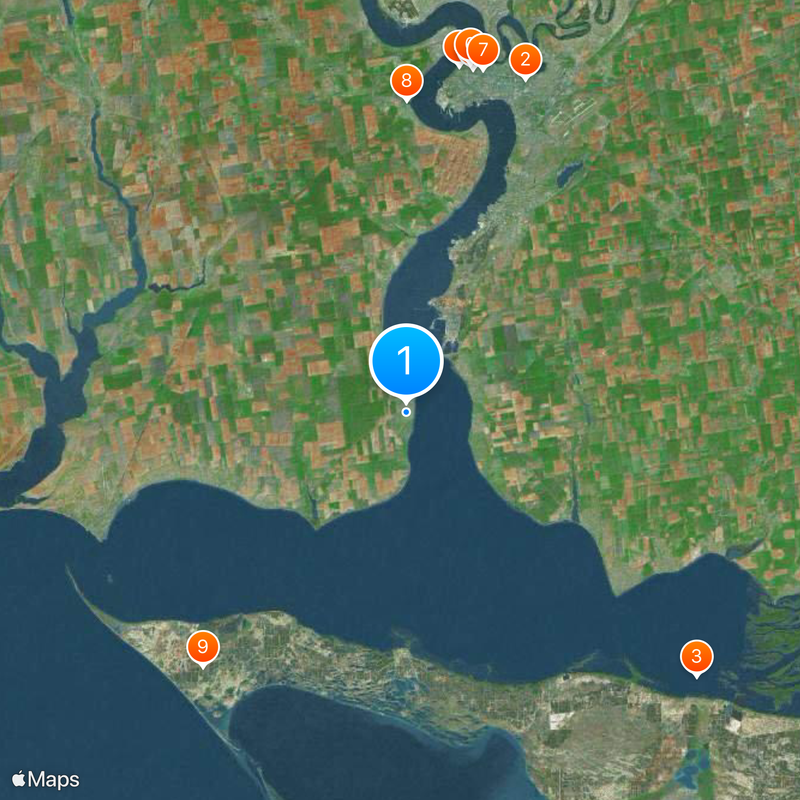
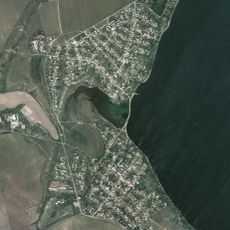
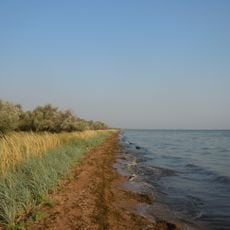
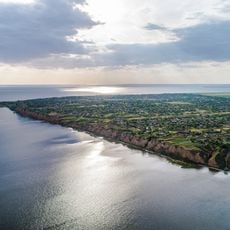
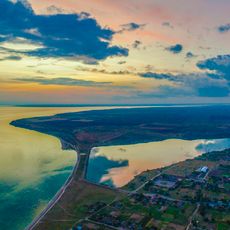
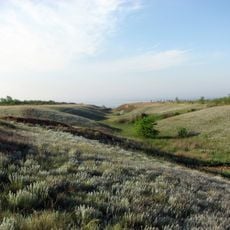
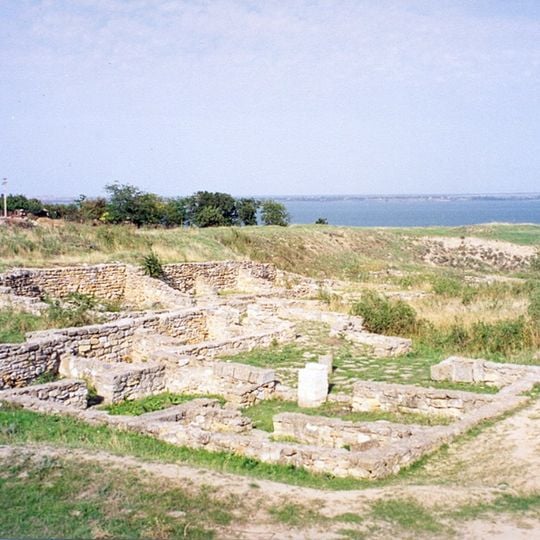
Olbia lies on the right bank of the Dnieper-Bug estuary near the village of Parutino, not on the river itself. The excavated site shows low walls of small rectangular cut stones in pale beige, grey and yellowish tones, with broken tops and grass growing between them. These are the foundations of city blocks, the agora, the East and West temenos, and temples of Apollo, Zeus and Asclepius; a single flat stone slab stands upright near the centre.
Milesian Greeks founded Olbia in the first quarter of the 6th century BC on the right bank of the Dnieper-Bug estuary. In 331 BC the general Zopyrion besieged the city and, though the siege was lifted, fires destroyed the settlements of its rural territory. In 55 BC the Getian king Burebista conquered it; in 198 AD it entered the Roman Empire, and it was destroyed during the Hun invasion of the 370s AD.
This settlement served as a meeting point where Greek merchants and local communities conducted trade and cultural exchange. The market areas and harbor layout reveal how commerce shaped daily life and social connections in this ancient port.
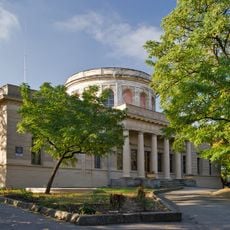
The site displays visible stone walls, a grid-pattern upper town section, and a museum with objects from different periods. Wear sturdy footwear as the terrain is uneven and the area spans considerable ground to explore.
Among the finds at Olbia are bronze voting tokens (psephoi) and potsherds scratched with names (ostraka), discovered in the basement of the dicastery, the city court. These show that Olbian citizens voted by ballot there, the practice behind the word "ostracism".
The community of curious travelers
AroundUs brings together thousands of curated places, local tips, and hidden gems, enriched daily by 95,316 contributors worldwide.