Brooklyn Bridge
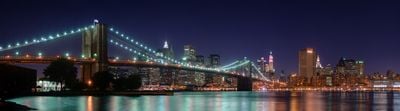
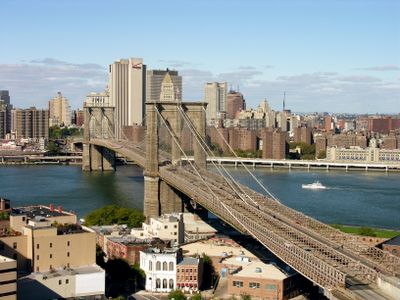
Brooklyn Bridge, Steel suspension bridge between Manhattan and Brooklyn, United States.
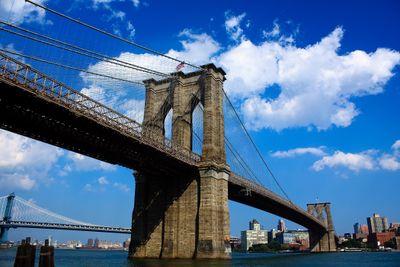
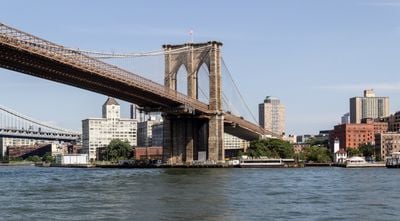
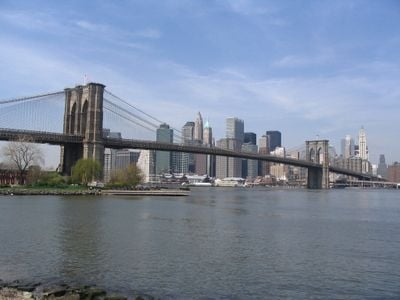
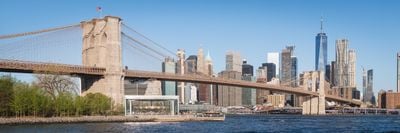
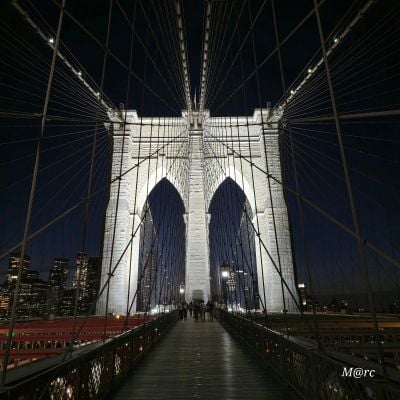
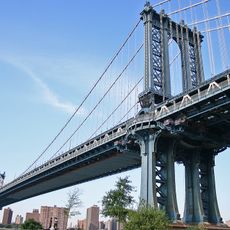
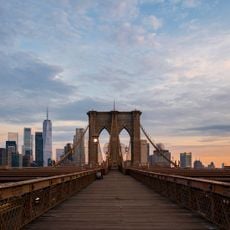
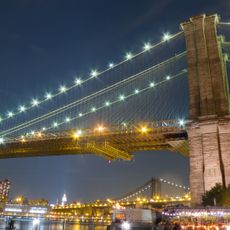
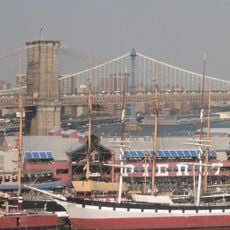
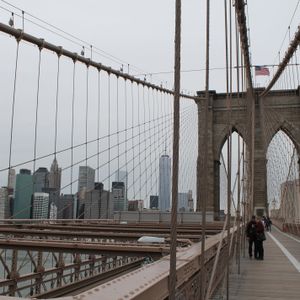
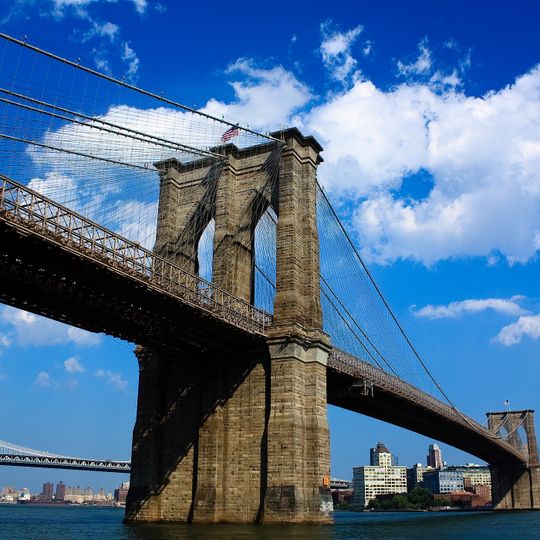
This crossing extends nearly 1800 meters (around 6000 feet) over the East River, supported by two granite towers in a neo-Gothic design that stand 84 meters (276 feet) above the water. Four thick steel cables, each roughly 40 centimeters (16 inches) across, hold the roadway and elevated pedestrian level in place between the towers and the shore.
Work started in January 1870 under John Augustus Roebling, who died that year from an accident on site. His son Washington Roebling took over but fell ill with caisson disease in 1872, leaving his wife Emily Warren Roebling to oversee progress until the opening in May 1883.
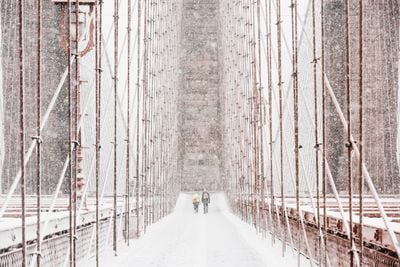
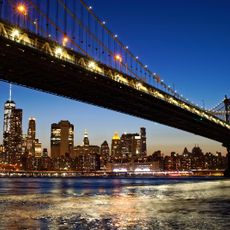
Locals often jog or stroll across the walkway in early mornings or after work, while tourists regularly stop at midpoint to photograph each other against the Manhattan skyline. On weekends, street musicians and portrait artists frequently set up along the promenade, creating a lively urban gathering spot where people pause and linger.
The elevated walkway sits above car lanes and connects with City Hall Park on the Manhattan side or Cadman Plaza in Brooklyn. Mornings before nine and evenings after sunset tend to be quieter, and the crossing usually takes 30 to 40 minutes on foot while cyclists share the same path.
During assembly, workers strung over 14000 miles of wire strand by strand to form the main cables, with each one containing more than 5000 individual galvanized steel wires bundled and compacted hydraulically into a circular shape after installation. This process took several months and required careful coordination to maintain even tension and strength across the entire span.
Location: Manhattan
Location: Brooklyn
Architects: John Augustus Roebling
Official opening: May 24, 1883
Architectural style: Gothic Revival
Height: 84 m
Longest Span: 486.3 m
Width: 25.9 m
Made from material: steel, stone
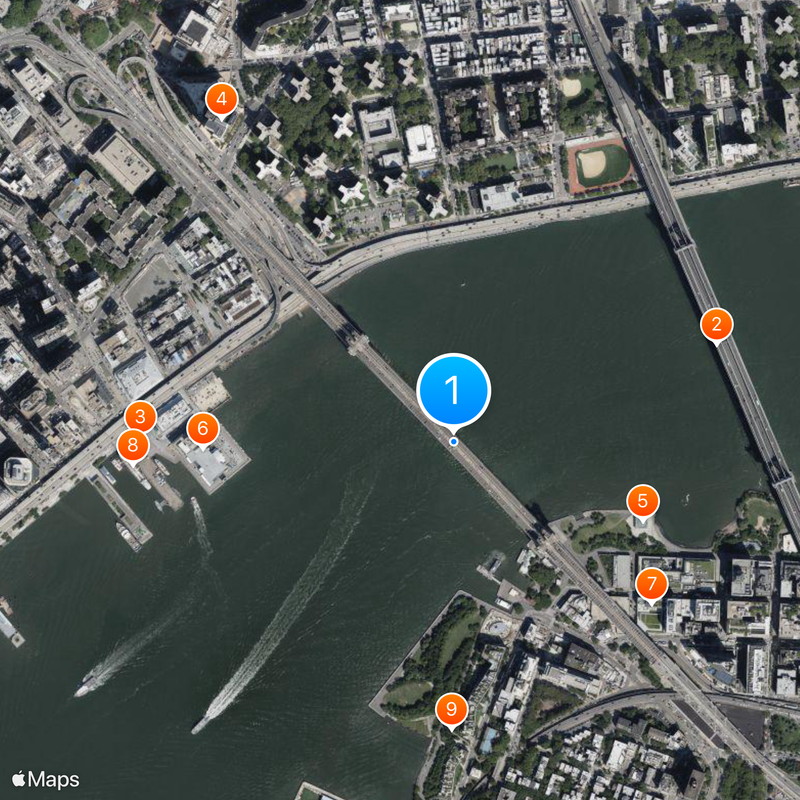
GPS coordinates: 40.70567,-73.99633
Latest update: December 2, 2025 21:43
This collection brings together major technical achievements that have marked the history of modern engineering. From the Hoover Dam on the Colorado, built in 1936 to produce hydroelectric power, to the ITER nuclear fusion project in France, which represents the future of energy research, these structures exemplify human boldness and skill. Each structure serves a specific purpose: crossing natural obstacles like the Brooklyn Bridge, connecting Manhattan to Brooklyn since 1883, facilitating maritime trade with the Panama Canal between the Atlantic and Pacific, or pushing height limits with the Burj Khalifa at 828 meters. These achievements are visited around the world and often offer remarkable experiences. The Eiffel Tower welcomes 7 million visitors each year who ascend to discover Paris from its 324-meter height. Shanghai's Maglev allows travel at 430 kilometers per hour thanks to magnetic levitation. The Millau Viaduct crosses the Tarn Valley at 343 meters above sea level over 2,460 meters in length. These engineering landmarks invite understanding of how industrial architecture has shaped our modern world, combining functional necessity with technical prowess that continues to fascinate visitors worldwide.
This collection presents suspension bridges recognized for their engineering solutions and their role in urban development. The Akashi Kaikyō Bridge in Japan spans 1,991 meters between its two towers, the longest distance of its kind in the world. The Golden Gate Bridge in San Francisco demonstrates 1930s engineering with its 1,280-meter main span. In New York, the Brooklyn Bridge has connected Manhattan to Brooklyn since 1883 and serves as an early reference point in modern bridge construction. The Humber Bridge in England held the record for the longest span from 1981 to 1998. In Istanbul, the Bosphorus Bridge has linked Europe to Asia since 1973 across a span of 1,074 meters. The Tower Bridge in London has combined a bascule bridge with suspension elements since 1894. These structures document the evolution of construction techniques over more than a century and remain important transportation routes in their respective regions.
Manhattan Bridge
495 m
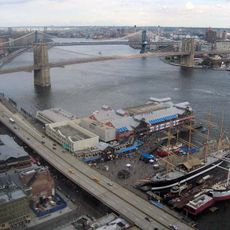
South Street Seaport
555 m
375 Pearl Street
704 m
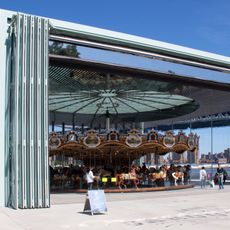
Jane's Carousel
361 m
Pier 17
444 m
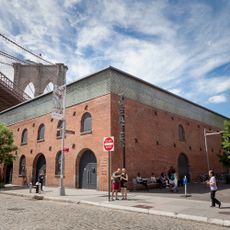
St. Ann's Warehouse
451 m
Wavertree
568 m
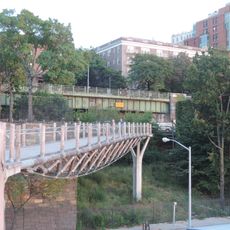
Squibb Park Bridge
507 m
Lettie G. Howard
673 m
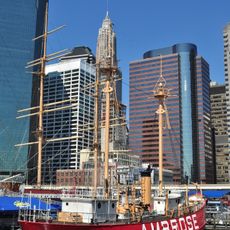
United States lightship Ambrose (LV-87)
526 m
Franklin Square
607 m
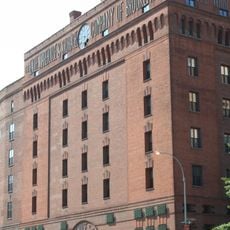
Eagle Warehouse & Storage Company
426 m
Admiral Dewey
569 m
Pioneer
531 m
Schermerhorn Row Block
614 m
170–176 John Street Building
676 m
Fulton Market Building
568 m
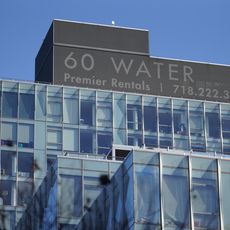
60 Water Street
470 m
House at 51 Market Street
677 m
W. O. Decker
569 m
Pier 16 Tickets
570 m
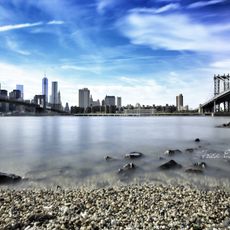
Pebble Beach
505 m
Brooklyn Bridge
84 m
John A. Lynch
501 m
South Street Seaport Museum
629 m
Fulton Ferry District
415 m
South Street Seaport Historic District
558 m
Titanic Memorial
659 mDiscover hidden gems everywhere you go!
From secret cafés to breathtaking viewpoints, skip the crowded tourist spots and find places that match your style. Our app makes it easy with voice search, smart filtering, route optimization, and insider tips from travelers worldwide. Download now for the complete mobile experience.

A unique approach to discovering new places❞
— Le Figaro
All the places worth exploring❞
— France Info
A tailor-made excursion in just a few clicks❞
— 20 Minutes