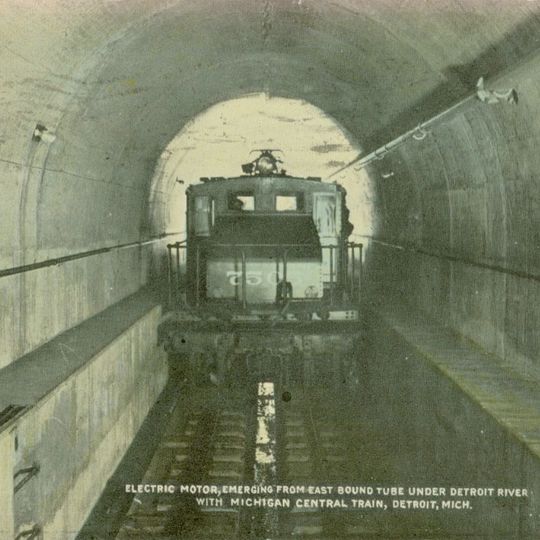
Michigan Central Railway Tunnel, railway tunnel
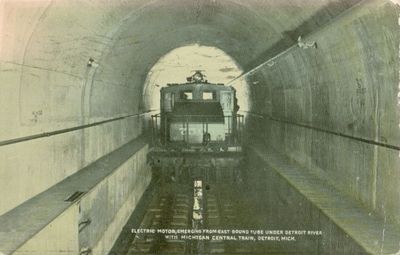
The Michigan Central Railway Tunnel is an underground railway passage that runs beneath the Detroit River, connecting Detroit in Michigan with Windsor in Ontario. The facility consists of two parallel tubes stretching about 2,557 meters and remains in daily use for freight transport.
Construction began in 1906 and was completed in 1910 using an innovative immersed tube method, where tunnel sections were sunk into the riverbed. This engineering achievement replaced ferry crossings and marked a major advance in cross-border rail transportation between the United States and Canada.
The tunnel is named after the Michigan Central Railroad, the railway company that built and operated it. For Detroit and Windsor, it represents a historical connection that enabled trade and cooperation between the United States and Canada.
The tunnel is not open to the public and remains hidden beneath the river. Visitors can observe the entrances on the American side near Porter Street in Detroit and on the Canadian side near the riverbank in Windsor, where active rail operations are visible.
It was the first tunnel of its kind built underwater using the immersed tube method, which later became the standard for major underwater tunnel projects. This construction technique proved faster and more cost-effective than traditional digging methods, demonstrating an innovative approach to river crossing engineering challenges.
The community of curious travelers
AroundUs brings together thousands of curated places, local tips, and hidden gems, enriched daily by 90,847 contributors worldwide.