Museu de les Ciències Príncipe Felipe, Science museum in City of Arts and Sciences, Valencia, Spain
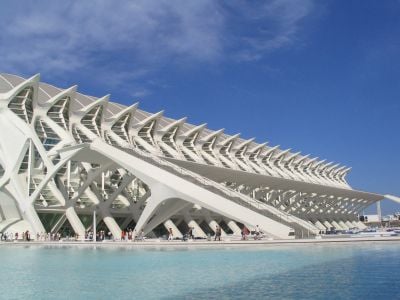
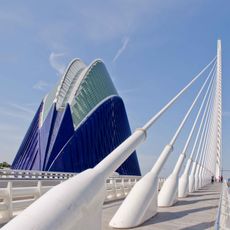
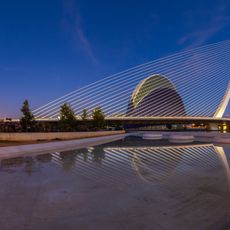
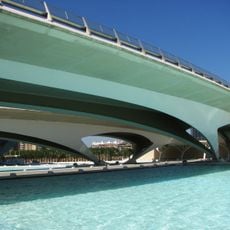
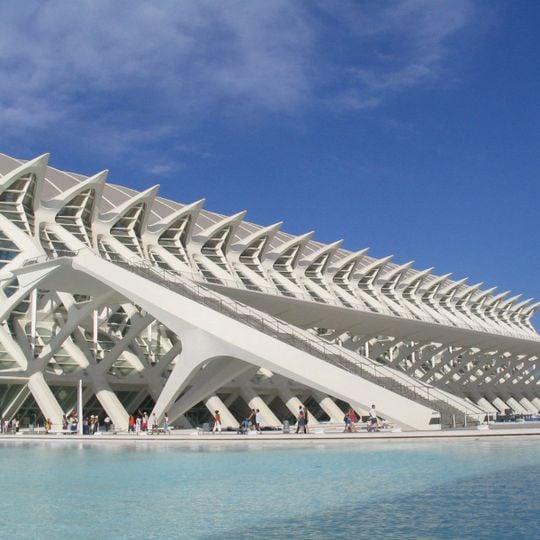
The facility displays a skeleton-like architecture of white concrete and steel, extending across 430,000 square feet (40,000 square meters) on three levels. The building's elongated form resembles a whale bone, while extensive glass surfaces channel natural light into exhibition spaces and create contrast with the surrounding water features.
Santiago Calatrava designed this educational facility as part of a comprehensive urban development project following the diversion of the Turia River in the 1960s. The complex opened on November 13, 2000, marking an important step in Valencia's transformation into an international tourist destination with contemporary architecture.
The museum presents interactive scientific exhibitions that appeal to visitors of all ages, reinforcing Valencia's position as a modern educational center. Families regularly use the facility for educational outings, while local schools run organized programs to spark interest in science among young people and encourage hands-on experimentation with various scientific concepts.
Visitors purchase separate admission tickets for different exhibition areas, with main zones open from 10:00 AM to 7:00 PM on weekends and until 6:00 PM on weekdays. Metro line 3 and several bus routes connect the site to the city center, while parking facilities and accessible entrances are available on-site.
The facility follows a philosophy of hands-on learning with a motto that prohibits visitors from not touching, not thinking, and not feeling the exhibits. This unusual phrasing underscores the approach of conveying scientific concepts through direct physical interaction rather than passive observation.
The community of curious travelers
AroundUs brings together thousands of curated places, local tips, and hidden gems, enriched daily by 91,983 contributors worldwide.