Lusitania Bridge, Modern bridge in Mérida, Spain
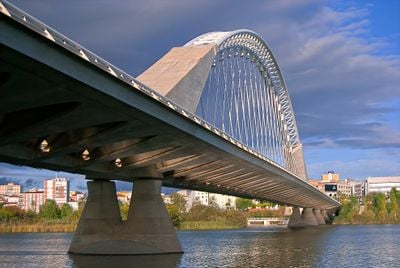
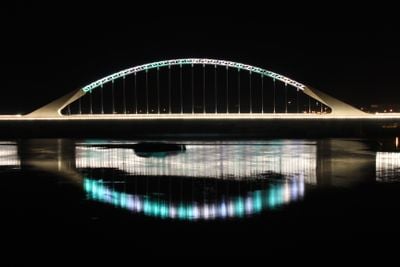
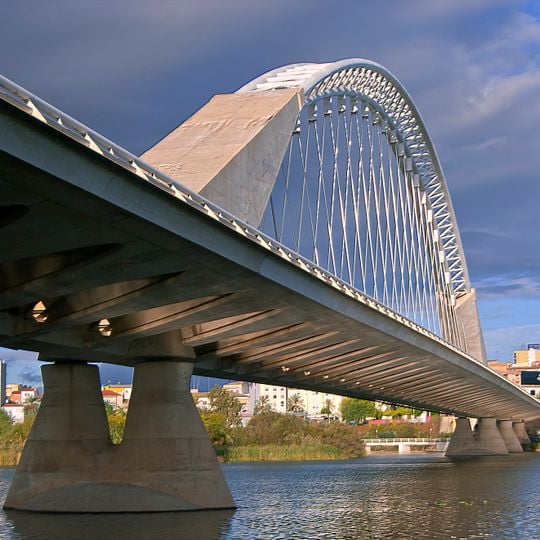
The Lusitania Bridge is a contemporary structure that spans the Guadiana River using a distinctive steel arch as its main structural element. A raised central pathway carries pedestrians and cyclists, physically separated from the vehicle lanes that run on either side.
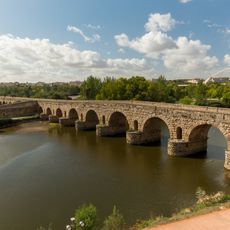
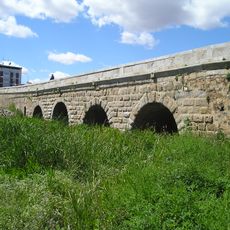
The bridge opened in 1991 to redirect traffic away from the ancient Roman crossing that had served the city for centuries. This marked a turning point in how people and vehicles moved through the region.
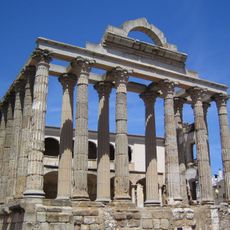
The name references Lusitania, the Roman province whose capital was located here in ancient times. Walking across it, visitors connect with the city's long-standing Roman identity through this geographical reference.
The bridge is easily accessible from both riverbanks, with the central walkway offering the most comfortable passage for those on foot. During daylight hours the crossing is well-lit and offers views across the river valley.
The structure was designed by architect Santiago Calatrava and employs an innovative cable system with steel tension rods hanging from the central arch. This engineering approach creates a visually distinctive form that stands apart from conventional bridge designs.
The community of curious travelers
AroundUs brings together thousands of curated places, local tips, and hidden gems, enriched daily by 91,725 contributors worldwide.