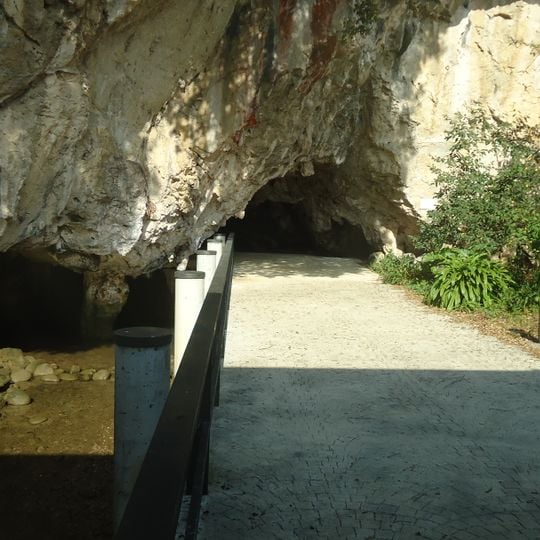
Tito Bustillo Cave, Prehistoric art cave in Ribadesella, Spain
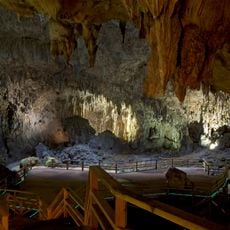
Tito Bustillo Cave is a cave with prehistoric paintings located on Spain's northern coast that runs through limestone formations containing red and black paintings of horses, deer, and reindeer. The artwork appears throughout different sections of the cave and demonstrates the artistic skill of the people who created it.
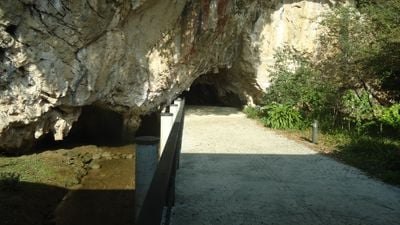
The cave was discovered in 1968 by the Torreblanca speleology group, guided by local youths. Three weeks later, Celestino Fernández Bustillo, known as Tito Bustillo, died in a mountain accident, and the cave was renamed in his honor. In 1969 the original entrance was reopened, and in 1970 a 165-metre tunnel was drilled to provide access. It has been part of the UNESCO World Heritage Site "Cave of Altamira and Paleolithic Cave Art of Northern Spain" since 2008.
The walls display animal forms and female shapes created during the Magdalenian period using mineral pigments like ochre and copper oxide. These artistic compositions show how people connected with their natural surroundings.
Access is limited to specific days and visitors should book in advance since groups are kept small. It is wise to wear comfortable shoes and prepare for damp, uneven surfaces inside.
The oldest painting in the cave, an anthropomorphic figure part male and part female, lies in its deepest, least accessible part and dates to about 33,000 years ago by radiocarbon dating. Some scientists suggest it may have been made by Neanderthals, a thesis that remains unconfirmed.
The community of curious travelers
AroundUs brings together thousands of curated places, local tips, and hidden gems, enriched daily by 93,614 contributors worldwide.