Garden of the Prince of Anglona, Historic garden in La Latina district, Madrid, Spain
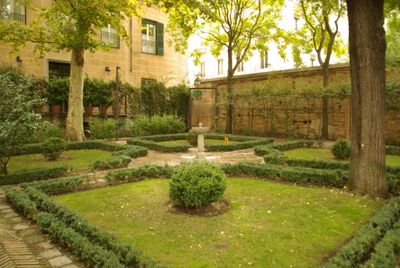
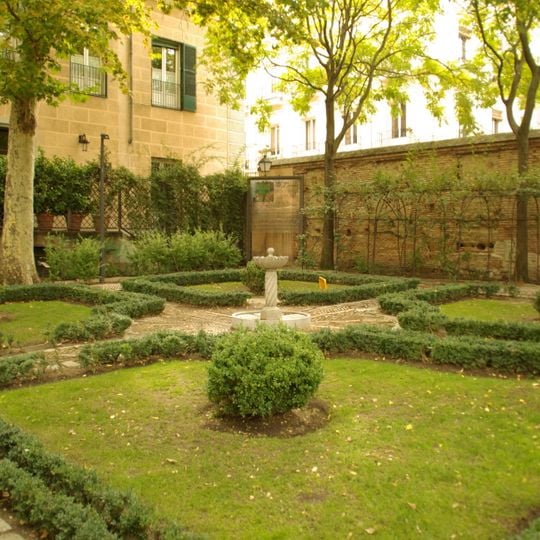
The Garden of the Prince of Anglona occupies about 500 m² on an artificial terrace between Plaza de la Paja and Segovia Street. A brick wall with lattice sections encloses three areas: a central parterre divided into four quadrants by brick paths, a pergola walk with a rose garden, and an iron gazebo in the corner by the plaza. At the crossing of the paths stands a small granite fountain carved as a salomonic column with a basin.
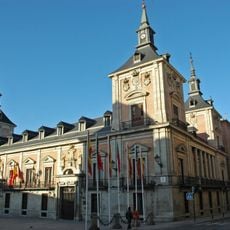
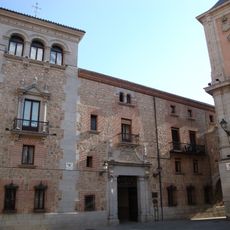
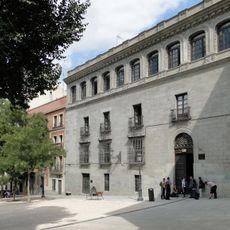
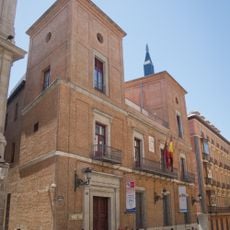
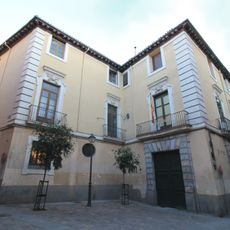
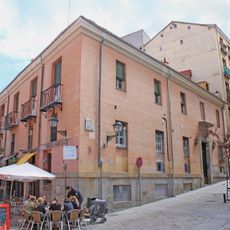
The garden was laid out in the 18th century beside the palace, whose present appearance dates from an 1802 renovation; the palace itself was built around 1530 as the residence of Francisco de Vargas, adviser to the Catholic Monarchs and Charles I. The garden follows a 1761 design by Nicolas Chalmandrier, neoclassical with features of Hispano-Arab gardens, and was altered in the early 20th century. After decades of neglect it passed to the Madrid city council in 1978 and was rebuilt by architect Eduardo Barceló de Torres in 1987, opening to the public in 2002.
The garden reflects Spanish horticultural traditions through its structured pathways, Mediterranean plants, and geometric flower beds arranged in classical patterns that preserve design methods from an earlier era.
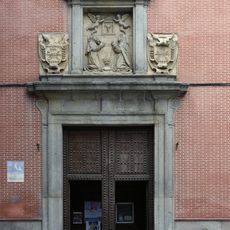
The garden lies on an artificial terrace between Plaza de la Paja and Calle de Segovia, so the entrance is reached from the square side. It opened to the public in 2002 and is managed by the Ayuntamiento de Madrid. The brick perimeter wall and lattice screen it from the street; the central quadrants, pergola walk and iron gazebo are the three areas to look for.
The garden sits on artificial elevation that compensates for the slope of Segovia Street, creating multiple levels within the enclosed walls. These height differences shape how space feels as you move through it and make each garden area visually distinct.
The community of curious travelers
AroundUs brings together thousands of curated places, local tips, and hidden gems, enriched daily by 93,500 contributors worldwide.