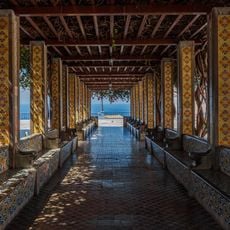
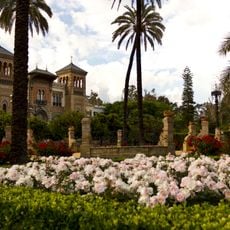
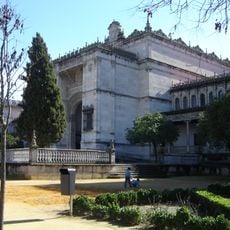
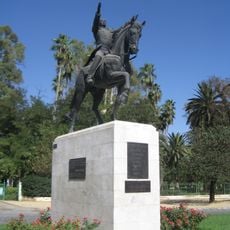
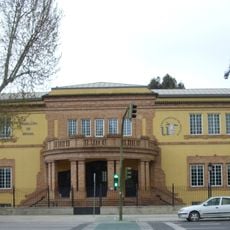
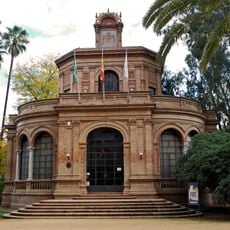
Pabellón Real para la Exposición Iberoamericana de 1929, Exhibition pavilion in Parque de María Luisa, Spain.
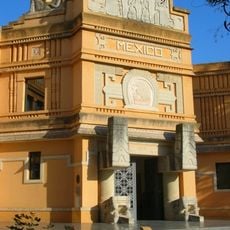
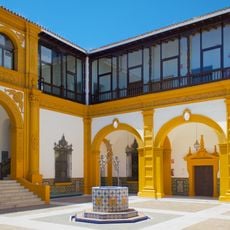
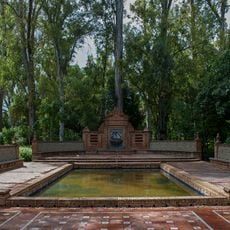
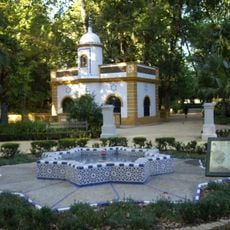
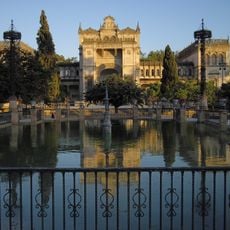
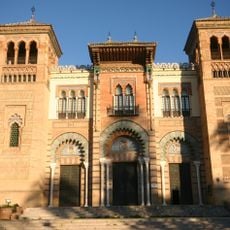
The Royal Pavilion is a polygonal building with Neo-Gothic decoration, built between 1911 and 1916 to a design by Aníbal González. Ceramic coats of arms of Spain adorn the front and three other sides, and two ceramic statues of royal pages stand at the front corners. In front is a square with six eagles by José Ordóñez holding shields of Spain and its territories.
The building was created as part of preparations for the 1929 Ibero-American Exhibition in Seville under the direction of architect Aníbal González. It shaped the park alongside many other structures and marked a turning point in Seville's urban development.
The pavilion displays Spanish architectural features with ceramic work and decorative details that reflect the craftsmanship of that era. Visitors can see how regional building styles and artistic techniques came together in a single structure.
The pavilion is located in the southern section of the park and is easily reached from the main pathways. Visitors should allow time to explore the exterior architecture and surrounding garden landscape.
The six eagles in the square in front of the pavilion were designed by José Ordóñez; they hold ceramic shields of Spain and of various Spanish territories, a detail easily missed by visitors who only look at the building's facade.
The community of curious travelers
AroundUs brings together thousands of curated places, local tips, and hidden gems, enriched daily by 93,574 contributors worldwide.