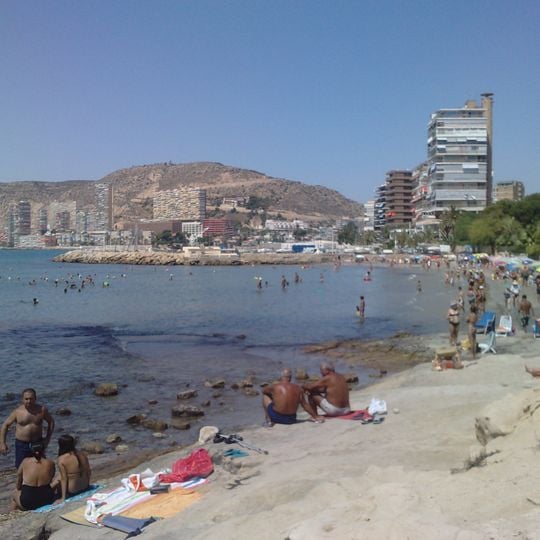
Playa de la Almadraba, Beach in Cabo de las Huertas, Alicante, Spain
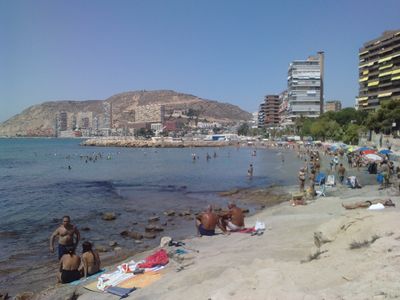
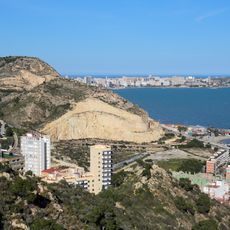
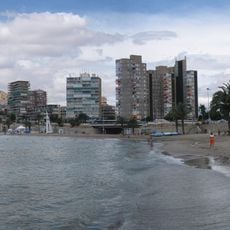
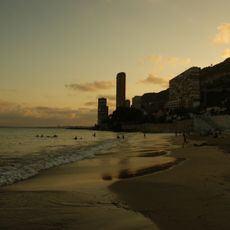
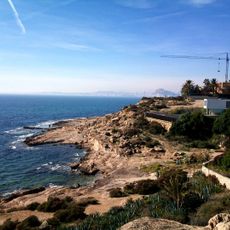
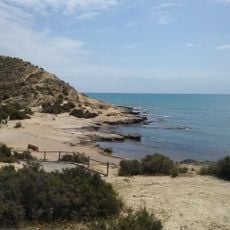
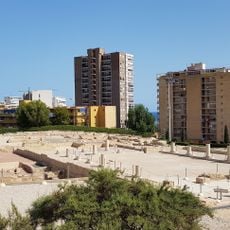
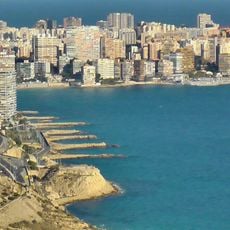
Playa de la Almadraba is a beach of dark, fine sand and rocks in the Cabo de las Huertas neighbourhood of Alicante, about 750 metres long and 6 metres wide. It lies between the Albufereta beach to the south, separated by a small nautical club, and the Cabo de las Huertas to the north. Freshwater springs from an underground aquifer seep out beneath the sand, leaving muddy patches in places.
The name comes from an ancient tuna fishing technique that Phoenician people used in Mediterranean waters centuries ago. This fishing method shaped the area's development and remains connected to its modern identity.
The beach takes its name from the almadraba, a tuna-fishing method once used in these Mediterranean waters. Today the small nautical club separating it from the Albufereta marks the southern end, and in summer the lack of night surveillance lets young people hold outdoor gatherings on the sand.
The beach is reached easily on foot or by road, next to the residential area of Cabo de las Huertas. It lies between the Albufereta beach to the south, separated by a small nautical club, and the Cabo de las Huertas to the north. There is no night surveillance, and in summer young people gather there at night.
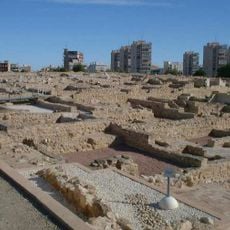
In May 2026, during environmental regeneration work, archaeologists found a white marble Roman head in the sand here, dated to the 1st–2nd century AD. Nicknamed the "Venus of Alicante", it measures 22.22 cm and weighs about 14 kg. Excavations also uncovered a coastal Roman villa with coins, ceramics and amphorae linked to Lucentum.
The community of curious travelers
AroundUs brings together thousands of curated places, local tips, and hidden gems, enriched daily by 95,499 contributors worldwide.