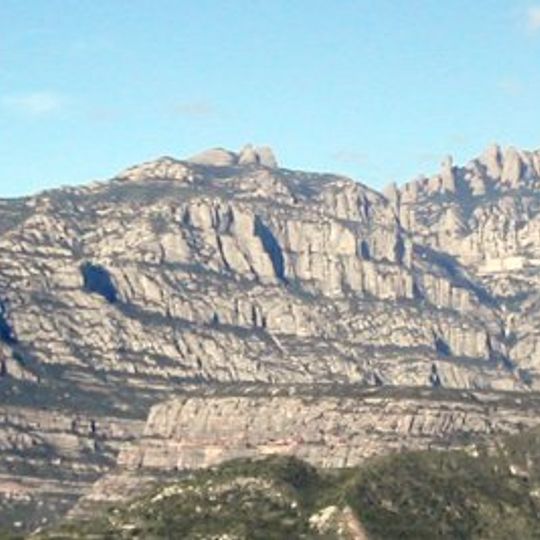
Montserrat Natural Park, Protected mountain area in Catalonia, Spain.
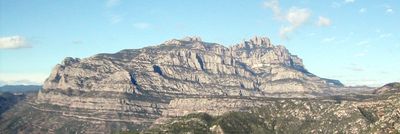
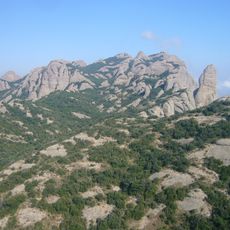
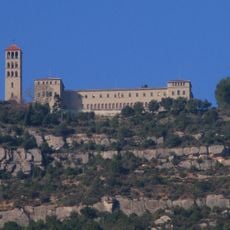
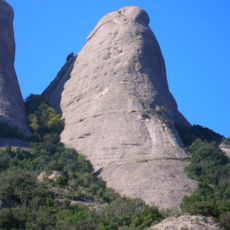
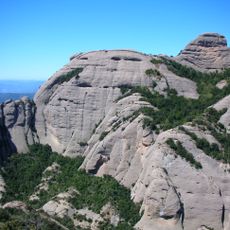
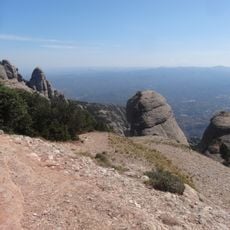
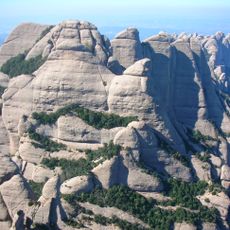
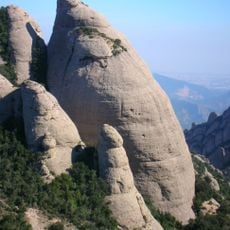
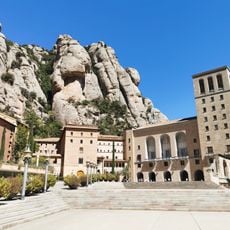
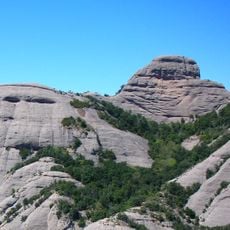
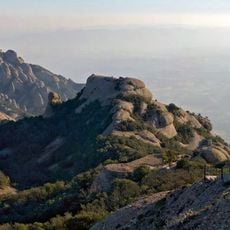
Montserrat Natural Park protects part of the Montserrat massif, a ridge about 10 km long and 5 km wide between the Llobregat gorge at Cairat and the Coll de Can Maçana. Its rounded crags are conglomerate rock, called pinyolenc locally, harder than the surrounding clays and sandstones. The Benedictine monastery of Santa Maria sits on a shelf on the eastern side, below the Sant Jeroni summit at 1,236 m.
The mountain's religious and cultural importance led to the creation of the Patronat de la Muntanya de Montserrat by decree-law on 16 October 1950. It became a natural park under Decree 59/87 of 29 January 1987, covering 3,630 hectares, including 1,981 hectares of nature reserve, plus a 4,039-hectare protection zone.
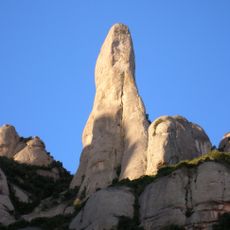
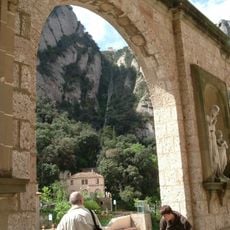
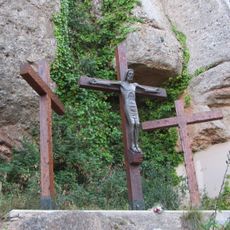
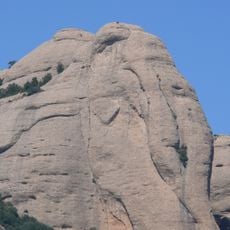
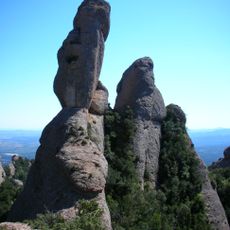
The Benedictine monastery of Santa Maria de Montserrat, seat of the Mare de Déu de Montserrat, forms the religious, historical and patriotic heart of the massif. The mountain's many rock pinnacles and outcrops all carry names, often given by the climbers who use the massif as one of their preferred climbing grounds, such as El Cavall Bernat, La Mòmia or El Cilindre.
The park spans 3,630 hectares, with a further 4,039-hectare protection zone, across the Anoia, Bages, Baix Llobregat and Vallès Occidental comarques. Access points include El Bruc, Collbató, Monistrol de Montserrat and Marganell. The highest summit, Sant Jeroni at 1,236 m, lies between the Cairat gorge and the Coll de Can Maçana.
The mountain's rock is a conglomerate called pinyolenc, made of pebbles and sand cemented by hard limestone. Because it resists erosion far better than the surrounding clays and sandstones, the massif stands out sharply. Climbers have named nearly every needle and outcrop, including El Cavall Bernat and La Mòmia.
The community of curious travelers
AroundUs brings together thousands of curated places, local tips, and hidden gems, enriched daily by 95,189 contributors worldwide.