Monument a Mossèn Jacint Verdaguer, Noucentista monument in Dreta de l'Eixample, Barcelona, Spain
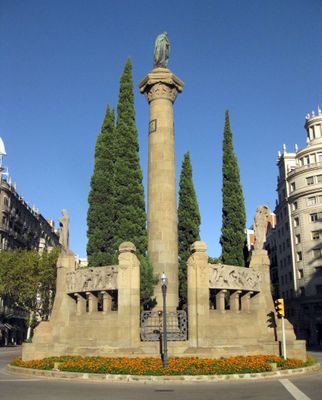
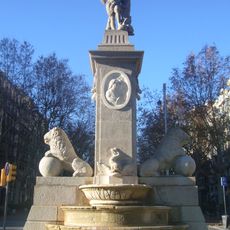
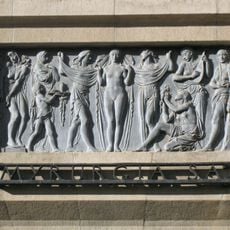
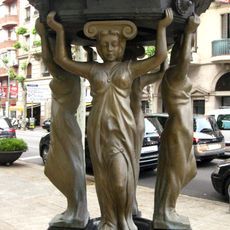
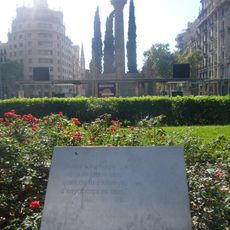
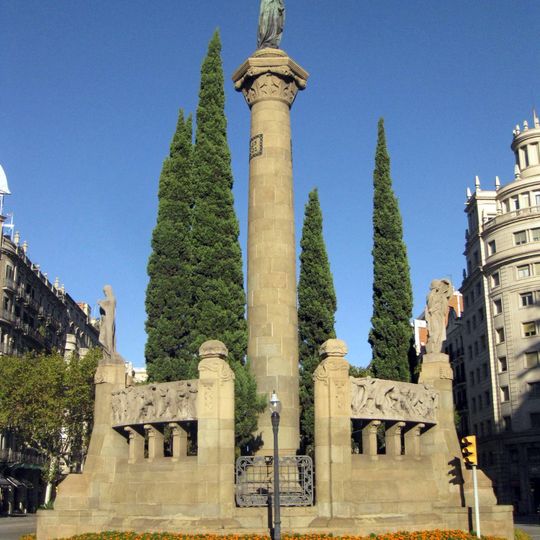
Monument a Mossèn Jacint Verdaguer is a 20-metre stone column topped by a statue of the priest and poet, rising from a circular balustrade with small gardens and tall cypresses. Three allegorical figures on the balustrade represent mystical, popular and epic poetry, while reliefs on the base depict scenes from his poem La Atlàntida. The eclectic design mixes Modernisme and classicism with a Viennese Sezession influence.
Construction began in 1914 and the monument was officially unveiled in 1924 with notable state figures in attendance. The completion coincided with Catalonia's effort to express its cultural identity through monumental art of this era.
The monument is popularly called El cuervo (the raven) or La palmatoria (the candlestick). The three allegorical figures on the balustrade stand for mystical, popular and epic poetry, while the reliefs on the same balustrade, carved by the Oslé brothers, show scenes from Verdaguer's poem La Atlántida.
The monument stands at the intersection of Passeig de Sant Joan and Avinguda Diagonal, immediately next to Verdaguer metro station. Its central location makes it easily accessible by public transportation.
The Oslé brothers did not sculpt the monument: runners-up in the 1913 competition, Miquel and Llucià Oslé carved only the reliefs on the base, scenes from Verdaguer's poem L'Atlàntida. The poet's figure and the balustrade statues are by the competition winner, Joan Borrell i Nicolau, working with architect Josep Maria Pericas.
The community of curious travelers
AroundUs brings together thousands of curated places, local tips, and hidden gems, enriched daily by 95,332 contributors worldwide.