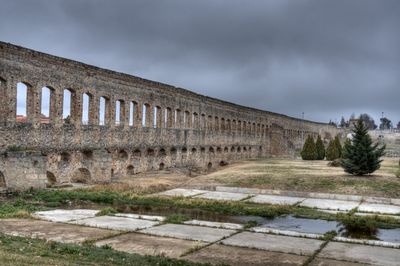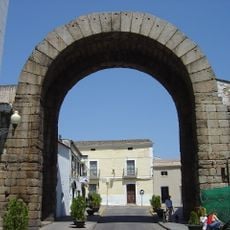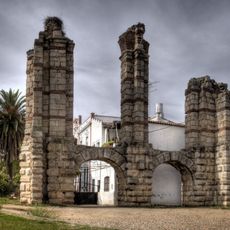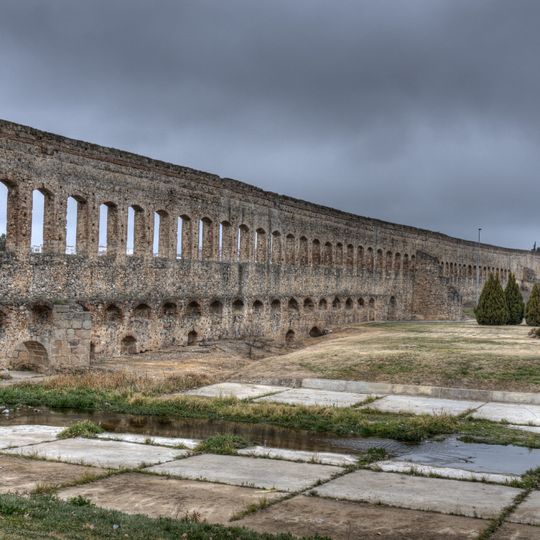
Acueducto de San Lázaro, Roman aqueduct in Mérida, Spain.
The Acueducto de San Lázaro is a Roman structure composed of multiple stone arches built to carry water across the landscape above ground level. The arches rest on sturdy pillars that support the water channel, demonstrating the direct approach Romans used to move water over long distances.
The structure was built during the Roman period as part of the water system serving Emerita Augusta in the 1st century. Its construction reflects how systematically Romans developed infrastructure to support their cities and settlements.
The aqueduct was essential for supplying water to the Roman city of Emerita Augusta and shaped how the settlement developed and functioned. It stands today as proof of how water access determined where and how Romans chose to build their towns.
The site can be viewed from walking paths that run around the structure and offer different perspectives of the arches. Informational panels are placed along these paths to explain how the system worked and its role in supplying water.
The granite blocks are fitted together without mortar, held in place solely by precise positioning and weight distribution. This building method allowed Romans to create lasting structures without adhesive, revealing the remarkable craftsmanship of ancient builders.
The community of curious travelers
AroundUs brings together thousands of curated places, local tips, and hidden gems, enriched daily by 60,000 contributors worldwide.