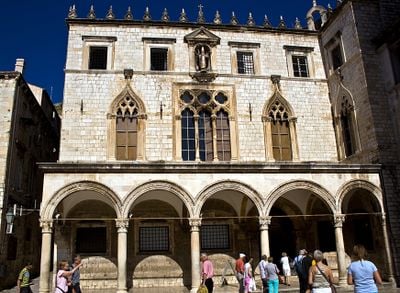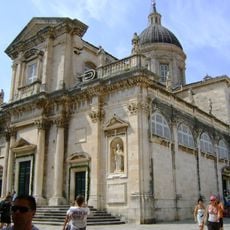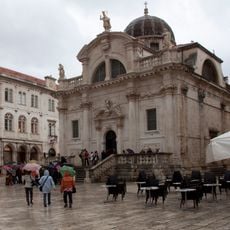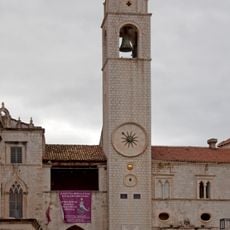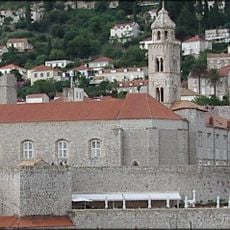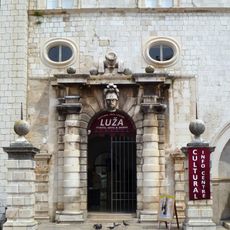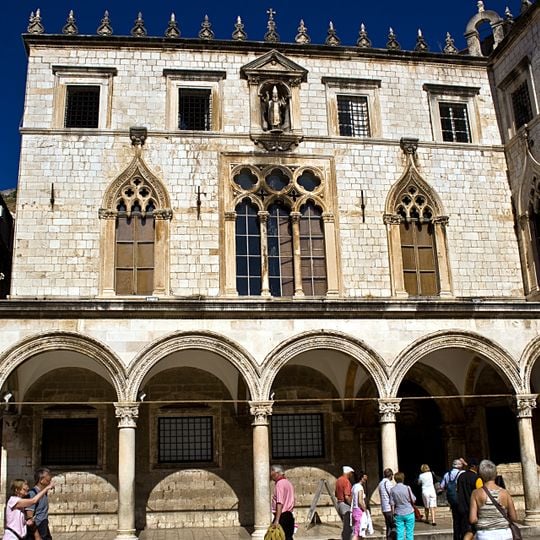
Sponza Palace, Gothic palace in Dubrovnik, Croatia.
The Sponza Palace features a Renaissance portico with six Corinthian columns, Gothic first-floor windows, and Renaissance-style second-floor windows with an alcove.
Built between 1516 and 1522, the palace functioned as a customs house, mint, treasury, and armory before surviving the devastating earthquake of 1667.
The Memorial Room of the Defenders displays black-and-white photographs of individuals who lost their lives between 1991 and 1995 during Dubrovnik's defense.
The State Archives, located on the first and second floors, contain a collection of manuscripts dating back nearly 1000 years, with selected copies exhibited downstairs.
The name Sponza originates from the Latin word 'spongia,' indicating the location where rainwater collection occurred in medieval Dubrovnik.
Location: Dubrovnik
Architectural style: Gothic architecture
GPS coordinates: 42.64111,18.11056
Latest update: May 11, 2025 17:13
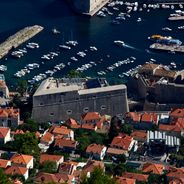
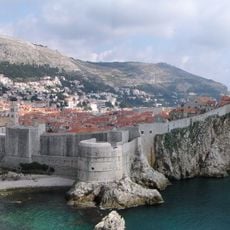
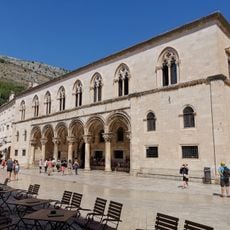
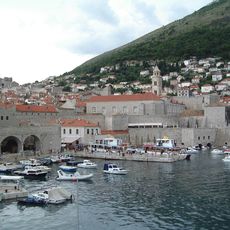
The old town of Dubrovnik sits on the Adriatic coast and shows buildings from the 13th to the 17th centuries. The city was an independent maritime republic for hundreds of years and developed its own architecture that combines Venetian and local elements. The city walls enclose a compact core of palaces, churches and public squares built on limestone. The main street Stradun runs straight through the town and connects the main gates. At both ends stand fountains from the 15th century that once secured the water supply. The Rector's Palace shows how the elected rulers lived and worked, while Sponza Palace once served as a customs house and mint. The city wall itself is walkable and offers views of the sea and the rooftops of the old town. Several fortresses reinforced the defenses: Fort Lovrijenac perches on a rock outside the walls, Revelin Fortress protected the eastern approach, and the sea wall ends at St. John's Fortress, which now houses a maritime museum. Lokrum Island lies just a short boat ride away and was once a monastic site. Today plants from different climates grow there. The beaches around Dubrovnik often sit in small coves between rocks, where the water is clear and deep. The Dominican Monastery and Franciscan Monastery preserve art and manuscripts from the republic's era. The cathedral was rebuilt in baroque style after an earthquake in the 17th century destroyed the older church.
Walls of Dubrovnik
243 m
Rector's Palace, Dubrovnik
95 m
Dubrovnik Cathedral
135 m
Orlando's Column
24 m
Lazzarettos of Dubrovnik
226 m
St Blaise's Church
66 m
Franciscan Church and Monastery
259 m
Saint Ignatius Church
204 m
Minčeta
250 m
Holy Annunciation Orthodox church
140 m
Clock tower
18 m
Dominican Church and Monastery in Dubrovnik
89 m
Onofrio fountain
277 m
City Guard Building
28 m
Cableway Srđ
229 m
Fort Revelin
176 m
Saint John's Fortress
194 m
Porporela
219 m
Mala Onofrijeva česma
24 m
Skočibuha palace
186 m
Kaše
203 m
The State Archives in Dubrovnik
47 m
Maritime Museum
205 m
Marin Držić Theatre
73 m
Natural History Museum (Dubrovnik)
180 m
Dominican Monastery
95 m
Crkva Domino
212 m
War Photo Limited
162 mReviews
Visited this place? Tap the stars to rate it and share your experience / photos with the community! Try now! You can cancel it anytime.
Discover hidden gems everywhere you go!
From secret cafés to breathtaking viewpoints, skip the crowded tourist spots and find places that match your style. Our app makes it easy with voice search, smart filtering, route optimization, and insider tips from travelers worldwide. Download now for the complete mobile experience.
A unique approach to discovering new places❞
— Le Figaro
All the places worth exploring❞
— France Info
A tailor-made excursion in just a few clicks❞
— 20 Minutes