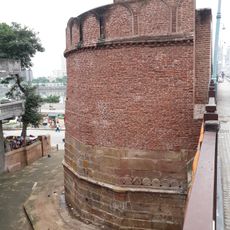
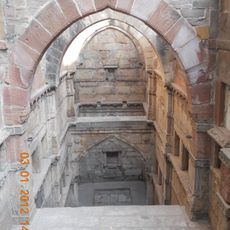
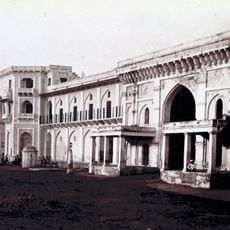
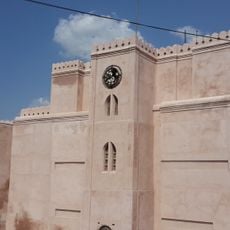
Rani Sipri's Mosque and Tomb, Islamic monument in Astodia, Ahmedabad, India.
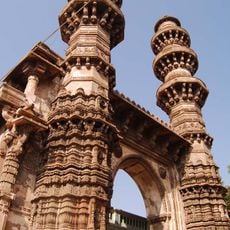
Rani Sipri's Mosque and Tomb is a building complex in Astodia featuring minarets, domed roofs, and intricate floral patterns on jali screens. The ensemble combines a prayer space with a mausoleum in a compact footprint.
Queen Sipri, the Hindu wife of Sultan Mahmud Begada, commissioned the mosque in 1514 after the sultan killed her son Abā Khān for an offence. She was buried inside it after her death. In 2006–07 the Ahmedabad Municipal Corporation proposed demolishing part of the monument to widen a road.
The mosque is known locally as Masjid-e-Nagina, the Jewel of a Mosque, for the jali screens carved with flowering plants and trees. Queen Sipri, the Hindu wife of Sultan Mahmud Begada, commissioned it in 1514; after her death she was buried here. A jenana, a separate area for women to worship, stands inside.
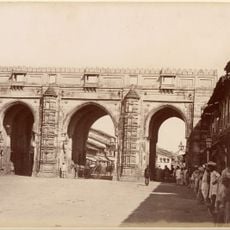
The mosque stands in the walled city of Ahmedabad, in the Astodia area near the Astodia gate. Visitors enter the prayer hall and the tomb of Queen Sipri; the jali screens are best examined in daylight. Modest dress and quiet behaviour are expected in this active place of worship.
The complex contains a separate upstairs prayer chamber reserved specifically for women. This architectural feature demonstrates early thinking about gender-specific spaces in Islamic design.
The community of curious travelers
AroundUs brings together thousands of curated places, local tips, and hidden gems, enriched daily by 94,755 contributors worldwide.