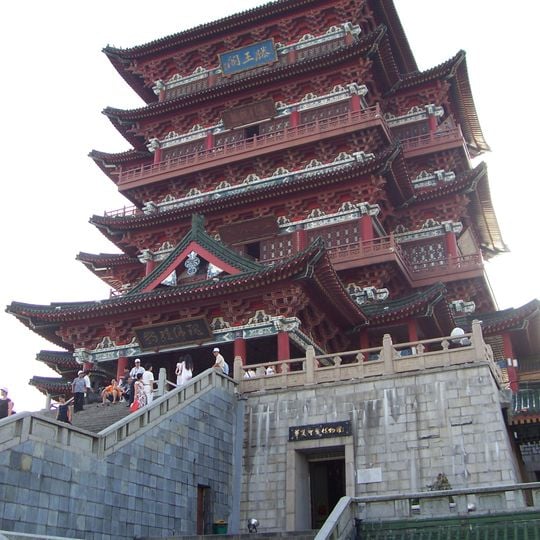
Pavilion of Prince Teng, Ancient pavilion in Donghu District, China
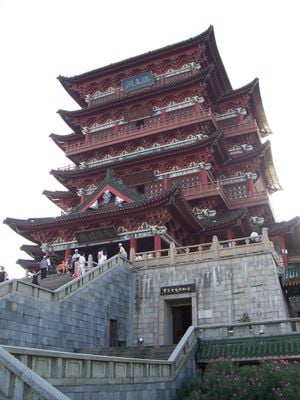
The Pavilion of Prince Teng rises from the eastern bank of the Gan River and displays nine stories with curved roofs, red pillars and gilded ornaments in traditional Tang style. Each level contains exhibition rooms with antique paintings, wood carvings and scrolls, while the upper floors offer a panoramic view over Nanchang and the river.
Li Yuanying, brother of Emperor Taizong, erected the original building in the year 653 during his time as governor of Nanchang. The structure was repeatedly destroyed by wars and fires over the centuries and rebuilt on the same spot.
The pavilion takes its name from Prince Li Yuanying, whose courtesy name was Teng, and gained a permanent place in collective memory through Wang Bo's classical poem. Visitors today see how calligraphy and poetry recitations keep the literary tradition of the place alive.
The upper floors are reached by stairs or an elevator, with each level offering rest benches and viewing points. On weekends and holidays it can get more crowded, so a visit on weekdays allows for more quiet.
The current reconstruction follows the plans of Liang Sicheng, one of the most influential architects of China in the 20th century. His designs were based on studies of historical paintings and texts, as no original drawings existed anymore.
The community of curious travelers
AroundUs brings together thousands of curated places, local tips, and hidden gems, enriched daily by 60,000 contributors worldwide.