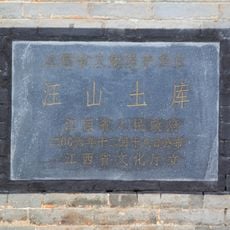
Tomb of Marquess of Haihun, Archaeological tomb site in Jiangxi, China
The Tomb of Marquess of Haihun is an archaeological site in Jiangxi that consists of several underground chambers and ceremonial buildings from the Western Han Dynasty. The central burial chambers are surrounded by additional burial rooms equipped with wooden structures and earthen walls.
The tomb belongs to Liu He, a Western Han emperor deposed after 27 days on the throne, later made Marquis of Haihun. In March 2011 a villager reported looters on Gundun Hill; a 14.8-metre shaft had stopped just short of the coffin chamber. Rescue excavation began that April, and in 2016 the finds confirmed Liu He as the occupant. A Tang-era earthquake that submerged part of the cemetery is thought to have helped protect it.
The north storage chamber held two sets of bronze bells, a set of stone chimes, and complete qin, se and panpipes, with nearly two hundred wooden musician figurines; their hanging and placement show Western Han marquisate musical protocol. A bronze dou from the west chamber carries the cast inscription "Nanchang". Lacquer boxes from the same chamber contained caterpillar fungus, and a bronze still was filled with chestnuts, water chestnuts and water caltrop.
The burial mound and the excavated pits lie in Guanzhuang village, Datangping township, Xinjian district, southwest of the Zijin City site; the grounds are open and uneven, so wear sturdy shoes. The site is reached from Nanchang by road. Excavation continues, so some trenches and the laboratory where the inner coffin was opened are closed to visitors.
Researchers found an unknown version of the Analects of Confucius inside the chambers, which had been considered lost for nearly two millennia. The texts were written on bamboo strips and reveal philosophical discussions that no longer appear in later editions.
The community of curious travelers
AroundUs brings together thousands of curated places, local tips, and hidden gems, enriched daily by 93,148 contributors worldwide.