Bayi Bridge, Cable-stayed bridge in Nanchang, China.
Bayi Bridge is a cable-stayed bridge over the Gan River in Nanchang, linking Yangming Road and Yanjiang North Avenue in Donghu District on the east bank with Lushan South Avenue in Honggutan New District on the west. Its deck carries four motor-vehicle lanes plus two non-motorized lanes. Built 50 metres upstream of the old bridge, it was Jiangxi's first cable-stayed bridge.
The first bridge on the site, a 10-metre-wide wooden-decked structure called Zhongzheng Bridge, opened in 1936. After 1949 it was rebuilt and renamed Bayi Bridge. Because it could no longer handle traffic, work on a new cable-stayed bridge began on 5 November 1995, 50 metres upstream. The old bridge was demolished by explosives once the new one opened, but its stone bridgehead pillars beneath the eastern approach ramp remain.
The bridge's name comes from the People's Liberation Army's founding day, August 1, and replaced the old name Zhongzheng Bridge after 1949. At the south bridgehead stand two cat sculptures, a white one in white marble and a black one in Fuding black stone from Fujian, designed by Zhou Shu of Nanchang University and completed in May 1997 for the 20th anniversary of reform and opening-up. They refer to Deng Xiaoping's saying about black and white cats catching mice.
The bridge is accessible to vehicles and pedestrians throughout the day and links several major city routes. Be aware that traffic can be heavy during peak hours and crossing times may be longer at these times.
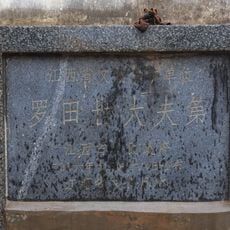
The stone pillars of the old Zhongzheng Bridge, demolished by explosives after the new bridge opened, still stand beneath the eastern approach ramp of the new bridge. The two stone lions on the north side carry the phrase "emancipate the mind, seek truth from facts".
The community of curious travelers
AroundUs brings together thousands of curated places, local tips, and hidden gems, enriched daily by 93,852 contributors worldwide.